

More news on this day
Thai Airways is adding a special extra flight from Bangkok to Paris on March 18, in a one-off capacity boost aimed at easing a sharp surge in demand on the busy Thailand–France corridor.
Get the latest news straight to your inbox!
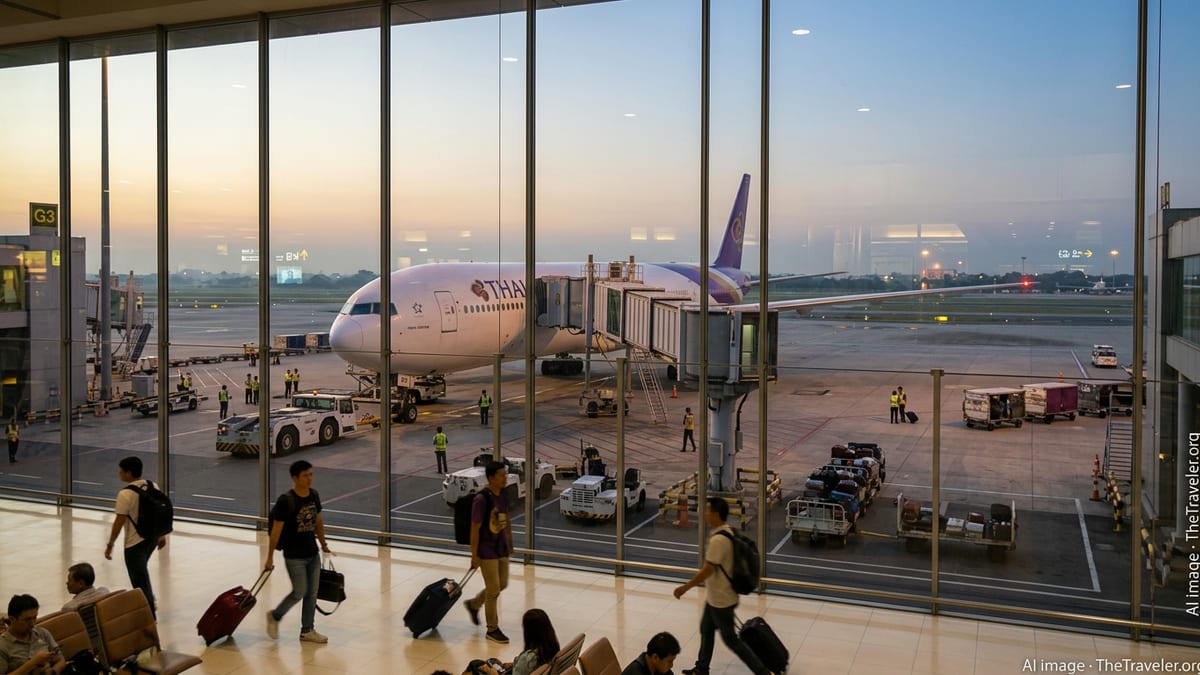
Additional Capacity on a High-Demand Corridor
The Bangkok–Paris route has been one of Thai Airways’ key long-haul links to Europe, with regularly scheduled non-stop services already operating between Suvarnabhumi Airport and Charles de Gaulle. Industry timetable data shows Thai Airways running multiple weekly frequencies under flight number TG930, complementing services from European carriers on the same city pair. The newly announced March 18 operation is structured as an extra rotation layered on top of the existing schedule, rather than a replacement for any current flight.
Publicly available booking data indicates that seats on Bangkok–Europe routes have tightened in recent weeks, with load factors rising as travelers adjust plans around disruptions on other long-haul corridors and shift to alternative hubs. Paris has emerged as a particularly popular gateway for Thai travelers heading to Western Europe, as well as for European visitors routing to Southeast Asia at the tail end of the winter season.
The additional March 18 service is designed as a short-notice response to this wave of demand. By inserting a one-off extra flight, Thai Airways can offer several hundred more seats on a peak day without permanently altering its broader summer timetable. For travelers who were facing limited availability or higher fares on nearby dates, the supplemental flight opens new booking and rebooking options.
While the carrier has not framed the service as part of a long-term expansion, its timing underscores the strategic importance of maintaining strong connectivity between Bangkok and major European capitals. The March 18 addition also sits against the backdrop of wider capacity adjustments on other routes, where airlines have recently introduced “relief” or “sweeper” flights to clear backlogs of stranded or re-accommodated passengers.
What Travelers Can Expect on the March 18 Flight
Based on the existing TG930 pattern between Bangkok and Paris, travelers on the March 18 service can expect a standard long-haul Thai Airways experience, with a full-service cabin layout, checked baggage allowances aligned with current international policies, and access to advance seat selection through online channels. The flight is expected to operate from Suvarnabhumi Airport’s main international concourses, arriving into Paris Charles de Gaulle’s long-haul terminals that handle most intercontinental services.
Operational history on the BKK–CDG route shows Thai Airways typically deploying widebody aircraft such as the Boeing 777-300ER, configured with both premium cabins and economy seating. This allows the airline to cater to a mix of leisure passengers, long-stay visitors, and corporate travelers using Paris as a gateway for onward rail or intra-European flights. Cabin products, including lie-flat business class on most current long-haul equipment, are anticipated to remain consistent with the airline’s standard Europe offerings.
Ancillary services, including special meals and advance requests for seating preferences, generally follow Thai Airways’ usual timelines for flights departing Bangkok. Travelers planning to use these options are advised, according to publicly available guidance, to submit their requests well ahead of departure, as cut-off windows are usually set at least 24 hours before take-off for ex-Bangkok services.
At destination, passengers arriving at Charles de Gaulle on the extra March 18 flight will have access to the airport’s existing ground transportation network, including regional and high-speed rail links, airport buses, and taxis into central Paris and beyond. For many long-haul passengers, CDG continues to serve as a critical interchange point to connect onward across France and neighboring countries.
Why March 18 Is Emerging as a Pressure Point
Booking and schedule patterns across several European gateways indicate that mid-March 2026 has become a pressure period for long-haul capacity. A combination of late-winter holiday travel, early spring tourism, and rebooked itineraries from disrupted flights elsewhere has contributed to fuller cabins on Southeast Asia–Europe routes. Reports from aviation trackers and consumer travel platforms highlight particularly strong demand on days surrounding March 18.
Paris, already a high-demand hub for both inbound and outbound tourism, has seen interest from travelers seeking alternatives to routings through the Middle East, where capacity and reliability have fluctuated on certain corridors. As a result, carriers like Thai Airways are using targeted extra flights to smooth out spikes without overcommitting to permanent schedule increases that might not be sustainable year-round.
Thai Airways’ decision to focus its extra capacity on a single, clearly defined date allows the airline to calibrate crew rosters, aircraft utilization, and maintenance windows with minimal disruption to the rest of its network. From a planning perspective, a one-off March 18 operation offers more flexibility than a multi-week increase in weekly frequencies, which would require a sustained redeployment of assets.
For passengers, the selection of March 18 as an extra-flight date effectively creates a new travel opportunity exactly when regular services are filling quickly. Those able to adjust by a day forward or back may find better availability or more favorable pricing on the added rotation compared with heavily booked surrounding flights.
Booking Tips and Flexibility Options for Passengers
Travel platforms tracking Thai Airways inventory indicate that extra sections such as the March 18 Bangkok–Paris service tend to appear first in the airline’s own booking channels and then propagate to online travel agencies and meta-search engines. Travelers looking to take advantage of the additional capacity may benefit from checking multiple booking interfaces to compare remaining seat availability and fare classes.
Given the dynamic state of long-haul demand, passengers are also monitoring ticket conditions, including change fees and fare differences, should they wish to move an existing booking to the March 18 flight. Publicly available fare rules for Thai Airways show that flexibility varies by ticket type, with some promotional fares carrying more restrictions than standard or fully flexible options. Travelers considering a switch are encouraged to review their fare conditions carefully before making changes.
Those booking fresh itineraries around the March 18 date may find that combining the extra Bangkok–Paris rotation with flexible return dates yields a better balance of cost and peace of mind. In the current environment, many travelers prize the ability to adjust plans in response to evolving conditions in both departure and destination markets.
Passengers with onward connections from Paris, whether by air or rail, are paying particular attention to minimum connection times. While an extra non-stop from Bangkok can ease the first long-haul leg, the surge in regional travel around mid-March means that connecting services may also run busy. Aligning arrival times with realistic ground-transfer buffers remains an important part of planning.
Implications for Thailand–Europe Travel in the Months Ahead
The deployment of a special March 18 Bangkok–Paris service is the latest signal that Thailand–Europe travel is entering a new phase of robust demand. Airlines across the region are gradually rebuilding and reshaping their long-haul networks, and selective capacity additions, such as Thai Airways’ extra flights to major European cities, point to confidence in continued passenger interest.
For Thailand, strong links to European hubs like Paris support both inbound tourism and outbound travel for Thai nationals and residents. Additional long-haul seats help distribute visitor flows more evenly, relieving some pressure on peak-season departures and giving tour operators, hotels, and local businesses more predictability around arrivals.
Looking ahead, industry schedules and promotional materials already show Thai Airways positioning Bangkok as a central hub for travel between Europe and other parts of Asia-Pacific. Promotional fare sheets for 2026 highlight Bangkok–Paris–Bangkok itineraries among key long-haul offerings, suggesting that the route will remain a strategic focus in the carrier’s portfolio.
While the March 18 Bangkok–Paris flight is currently framed as a one-time capacity boost, its performance will likely inform future network decisions. Strong bookings on the extra rotation could encourage further targeted additions around peak travel periods, offering travelers more options on one of the region’s most important intercontinental corridors.