

More news on this day
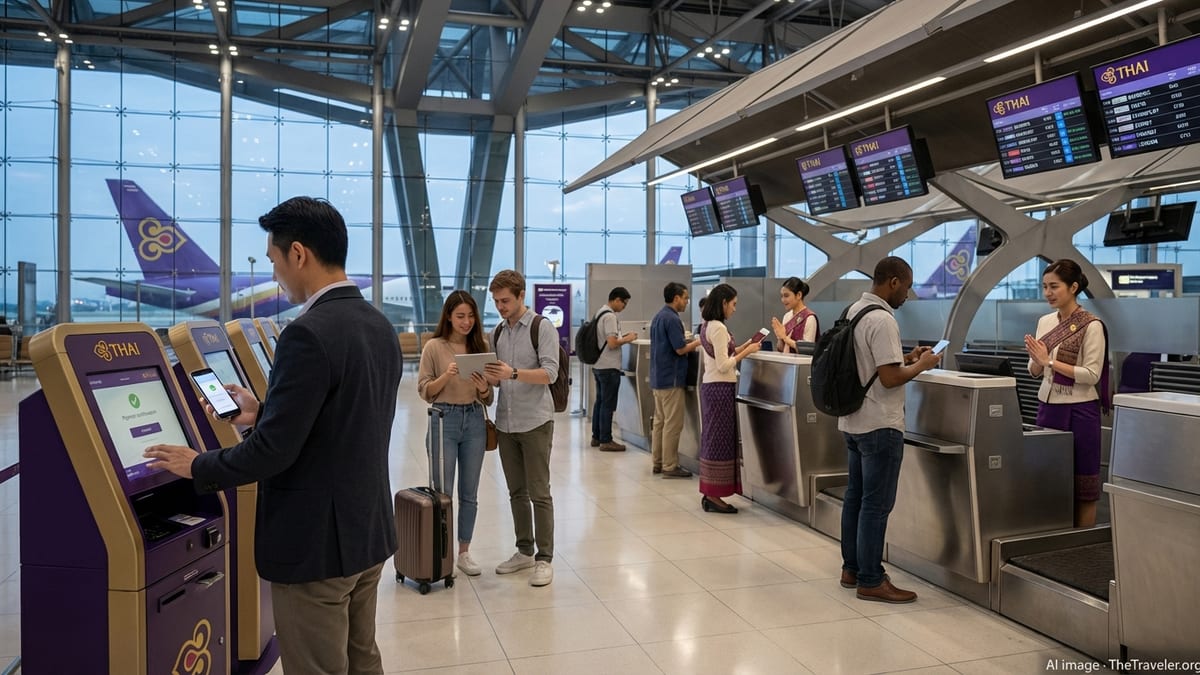
Thai Airways is set to significantly upgrade how it designs, prices and sells travel with a new wave of retailing tools from Amadeus, a move that reflects both the carrier’s post-restructuring ambition and a wider transformation sweeping through global aviation technology.
The partnership, which builds on an existing relationship between the airline and the European travel-tech giant, is expected to give passengers more personalized offers, smoother booking flows and more flexible payment options as Thai Airways aligns itself with the industry’s shift toward modern, offer and order based retailing.
More News
- Caribbean Travel to U.S. Upended by New Visa Freezes and Expanded Bans
- Mexico Restores E-Visas for Brazilians, Paving the Way for Borderless Tourism
- Philippine Airlines Joins Regional Carriers Powering Southeast Asia’s Tourism Boom
A Flag Carrier in the Midst of Digital Reinvention
The decision to deepen cooperation with Amadeus comes at a critical moment for Thai Airways. Having emerged from a painful restructuring and debt rehabilitation process, the Bangkok based carrier is seeking to reposition itself as a more agile, customer centric airline, with digital modernization at the core of its strategy. The company now operates a fleet of around 80 aircraft from its hub at Suvarnabhumi Airport and plans to expand both capacity and destinations in the coming years as Thailand consolidates its status as one of Asia’s most competitive aviation markets.
Behind the scenes, technology has become a key battleground. Revenue recovery has been strong, but competition on routes across Asia, Europe and Australia remains intense, with low cost and full service rivals alike investing in smarter pricing, ancillary sales and distribution. For Thai Airways, the partnership with Amadeus is less about incremental improvements to legacy systems and more about laying down the technical foundations needed to behave like a modern digital retailer, rather than a traditional transport provider selling commoditized seats.
In parallel, the carrier has also signed agreements with other technology specialists, from pricing intelligence to revenue accounting and fare optimization. These moves underscore a broader shift away from siloed, manually intensive processes toward data driven platforms designed to respond quickly to market demand, streamline workflows and create more compelling offers for passengers. The Amadeus tools now being adopted sit at the heart of this new ecosystem, connecting commercial decision making with what travelers actually see and experience when they search, shop and pay for flights.
Inside the New Amadeus Retailing Stack
Central to the expanded relationship is Thai Airways’ move to implement Amadeus Network Revenue Management alongside a suite of advanced retailing and payment solutions. Network Revenue Management is designed to optimize pricing and seat availability across an entire route map, taking into account connecting itineraries, codeshare flows and partnerships rather than treating each flight in isolation. The tool uses machine learning and customer choice modeling to better predict how different types of passengers will respond to various price points and product configurations, and then calibrates availability to maximize network wide profitability.
On the payment side, Thai Airways is adopting the Xchange Payment Platform from Outpayce, the payments business of Amadeus. The platform allows the airline to accept a wide range of card schemes and alternative payment methods while connecting to multiple specialist partners for services such as cross border acquiring, risk checks and fraud management. For passengers, the result should be more localized and convenient payment options during booking, while the airline gains higher authorization rates, richer analytics and improved control over payment costs.
These technologies plug into Thai Airways’ broader transition toward a more modular, offer centric architecture. Although full adoption of next generation offer and order standards will be a multi year process for most global carriers, the Amadeus tools being deployed now are explicitly designed to be compatible with that future model. That means decisions about pricing, ancillaries and payment orchestration can ultimately be surfaced consistently across direct channels like the airline’s website and mobile app, as well as indirect channels including travel agencies and corporate booking tools.
From Schedules and Fares to Personalized Offers
One of the most tangible changes for passengers is expected to be how Thai Airways packages and presents its products. Rather than relying primarily on static fare classes and a limited menu of add ons, modern retailing tools allow an airline to create targeted offers based on trip purpose, booking window, historical behavior and real time demand conditions. While each carrier implements personalization differently, the direction of travel is clear: travelers can expect more tailored combinations of seat type, baggage, flexibility, Wi Fi, lounge access and destination services.
In practical terms, a Bangkok based leisure traveler booking a family holiday in advance could see different options than a last minute business traveler flying to Europe. The leisure customer might be offered bundled seats, bags and meal upgrades at a discount, presented as an easy to understand package rather than a long checklist of extras. The business traveler could see flexible change conditions, priority services and onboard connectivity highlighted as value drivers. The technology powering these offers is intended to work quietly in the background so that, on the surface, the booking experience feels simpler and more intuitive.
For Thai Airways, this approach is not only about upselling. The same systems can help avoid overcomplicating the choice set, which risks confusing customers and depressing conversion. By analyzing booking behavior and testing different configurations, the airline can find the sweet spot between offering meaningful choice and keeping the path to purchase short and clear. Over time, this data led experimentation should feed into everything from cabin product strategy to how promotions are targeted in key origin markets such as Thailand, Europe, Japan and Australia.
What the Shift Means for Travel Agencies and Partners
While passengers interact directly with Thai Airways through its website, mobile app and call centers, a significant share of the airline’s bookings still flows through travel agencies, online intermediaries and corporate travel programs. For these partners, the move to a more modern retailing architecture powered by Amadeus has important implications. A more granular understanding of demand and willingness to pay can enable Thai Airways to craft differentiated offers by channel or segment, while still maintaining consistent brand messaging and service standards.
Agencies connected to Amadeus systems will, over time, be better positioned to access richer content from the airline, potentially including branded fares, seat attributes, ancillary services and dynamic offers that go beyond simple fare filing. The airline’s work with Amadeus on payment solutions also matters here, since smoother B2B payment flows can reduce friction and cost in how agents pay the airline for tickets and services, and how refunds or changes are processed when plans inevitably shift.
For alliance and codeshare partners, particularly within the Star Alliance network, Thai Airways’ technology upgrade promises more consistent handling of connecting itineraries and a more accurate view of demand over shared routes. By optimizing availability at the network level instead of on a flight by flight basis, the carrier can better align its capacity and pricing strategies with those of partner airlines feeding traffic into Bangkok and beyond. That, in turn, can support more reliable connection options and potentially more attractive through fares for passengers.
Competitive Context in Asia’s Tech Driven Aviation Market
Thai Airways’ expanded partnership with Amadeus is part of a wider digital arms race among Asia Pacific airlines as they emerge from the disruptions of the past few years. Full service rivals in the region have been moving steadily toward dynamic retailing, often through similar collaborations with large global technology providers. Low cost carriers are likewise investing in more flexible ecommerce platforms, ancillary merchandising and automated revenue tools to extract more value from each seat sold while keeping base fares sharp.
This environment leaves little room for complacency. Passengers now routinely compare booking experiences across airlines within a single trip or over the course of a year. Elements like transparent pricing, ease of seat selection, clear change rules, simple payment options and real time notifications about disruptions increasingly shape perceptions of quality as much as in flight catering or cabin design. For Thai Airways, a national icon that trades heavily on Thai hospitality, aligning the digital journey with the onboard service promise has become a strategic imperative rather than a back office concern.
The chosen timing also reflects Thailand’s broader tourism trajectory. With inbound travel volumes trending back toward, and in some markets above, pre pandemic levels, the ability to target high value segments, respond to seasonal peaks and create differentiated products on trunk and regional routes could have a direct impact on the carrier’s financial recovery. Amadeus’ analytics and optimization capabilities are expected to play a prominent role in how Thai Airways calibrates capacity and pricing on key corridors linking Bangkok with Europe, Northeast Asia, South Asia and Australia.
Building Blocks for an Offer and Order Future
Beyond immediate revenue gains and customer facing enhancements, Thai Airways’ technology roadmap with Amadeus is best understood as a stepping stone toward the industry’s next structural shift: the move away from traditional passenger service systems built around e tickets and reservation records and toward an offer and order model. While full scale implementations are still in early stages globally, leading airlines and technology providers are already investing heavily in the underlying components.
In an offer and order world, every customer transaction is represented as a single order that can contain flights, ancillaries and third party services, rather than being split across tickets, electronic miscellaneous documents and separate reference numbers. This architecture simplifies servicing, improves data consistency and allows for more sophisticated retailing logic to be applied at the time of shopping. By working with Amadeus on revenue management, distribution and payment platforms that are designed with this end state in mind, Thai Airways is attempting to future proof its investments and avoid another disruptive system overhaul in a few years’ time.
For travelers, the benefits of such a transition will be gradual but meaningful. Over time, they could see more unified itineraries that are easier to modify, clearer visibility of what is included in a particular offer and more responsive handling of disruptions, as airlines use order level data to rebook and re accommodate passengers. The partnership with Amadeus positions Thai Airways to participate in these developments rather than playing catch up, aligning it with the path being taken by some of the world’s largest airline groups.
FAQ
Q1. What exactly are the new Amadeus retailing tools Thai Airways is adopting?
Thai Airways is deploying Amadeus solutions for network revenue management and payments, including Network Revenue Management to optimize pricing and seat availability across its route map and the Outpayce Xchange Payment Platform to broaden accepted payment methods and improve authorization, fraud control and analytics.
Q2. How will these tools change the booking experience for passengers?
Passengers can expect more personalized and clearly structured offers, with fares and ancillaries such as seats, baggage, flexibility and onboard services grouped into intuitive packages, along with more localized and convenient payment options at checkout.
Q3. Will ticket prices go up because of the new technology?
The goal of the technology is not simply to raise prices but to match offers more precisely to what different customers value, which can mean attractive bundled deals for some travelers while ensuring that those seeking flexibility or premium services pay appropriately for those benefits.
Q4. How does Network Revenue Management help Thai Airways’ operations?
Network Revenue Management uses data and machine learning to understand how seats should be allocated across origin and destination markets, connecting itineraries and partner flows so that the airline can make better decisions on which fares to offer on each flight and route combination.
Q5. What role does the Xchange Payment Platform play for travelers?
The platform allows Thai Airways to accept a wider range of cards and alternative payment methods, connect to multiple payment partners and apply advanced fraud checks, which should result in smoother transactions, fewer payment declines and more familiar local payment options in different markets.
Q6. How does this partnership affect travel agencies that sell Thai Airways flights?
Agencies connected to Amadeus can expect richer, more detailed content from Thai Airways over time, including branded fares and ancillary services, as well as more efficient payment and settlement processes that can reduce administrative overhead and improve servicing.
Q7. Is this part of a broader digital strategy for Thai Airways?
Yes, the Amadeus collaboration complements other technology initiatives at Thai Airways, including pricing intelligence, revenue accounting and fare optimization projects, all aimed at modernizing the carrier’s commercial systems after its restructuring.
Q8. What is meant by offer and order based retailing in aviation?
Offer and order based retailing refers to a new industry model in which each customer transaction is captured as a single order containing flights and related services, replacing today’s mix of tickets and various document types and enabling more flexible, retail like selling and servicing.
Q9. Will these changes impact frequent flyer benefits for Royal Orchid Plus members?
While the core loyalty program structure is not defined by the new tools, better retailing and data capabilities can, over time, support more targeted offers and recognition for loyal customers, including tailored bundles and potentially more personalized promotions.
Q10. When will passengers start to notice the impact of the new Amadeus tools?
Some improvements, such as enhanced payment options and more coherent fare and ancillary packaging, can appear relatively quickly as systems are integrated, while deeper changes tied to advanced optimization and future offer and order capabilities will roll out progressively over the coming years.