

More news on this day
Thai Airways International has announced plans to raise ticket prices by 10 to 15 percent, citing a sharp spike in fuel costs and overwhelming demand for Europe-bound flights as geopolitical tensions reroute global air traffic.
Get the latest news straight to your inbox!
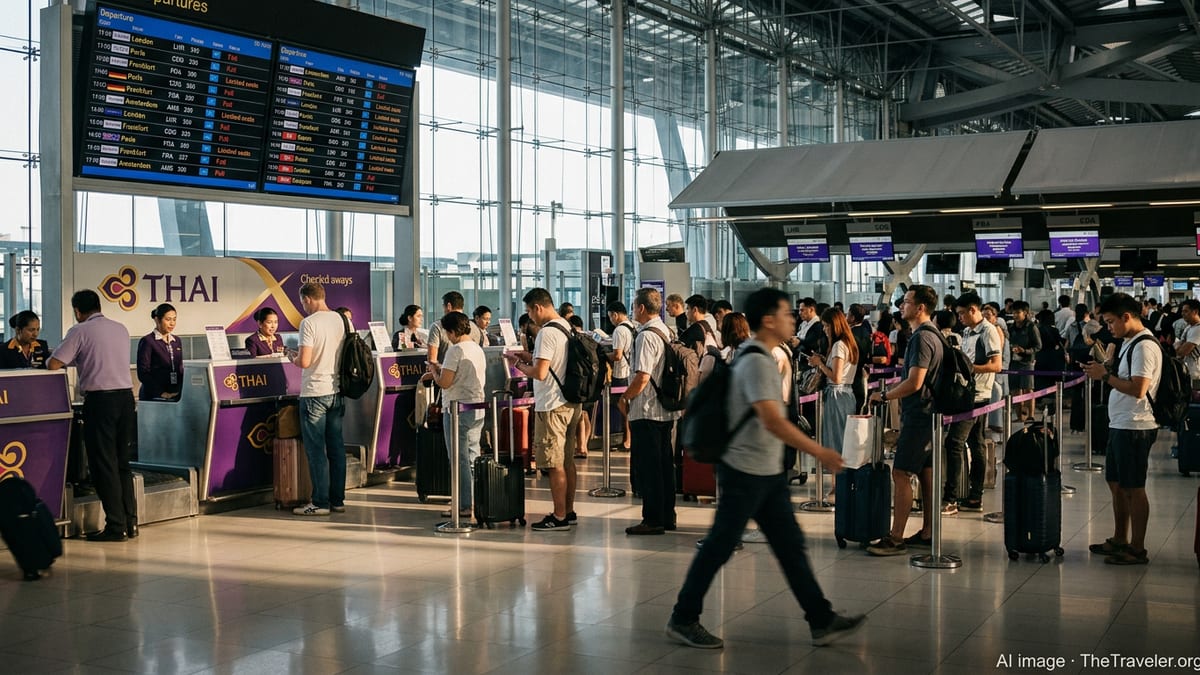
Fuel Price Shock Ripples Through Thai Flag Carrier
The state-controlled airline confirmed on March 11 that it will adjust fares upward in the coming days to offset a rapidly rising fuel bill, a cost that already accounts for one of the largest portions of any carrier’s operating expenses. Executives say the move is essential to protect the company’s fragile post-restructuring recovery as oil markets react to conflict in the Middle East.
Chief financial officer Cherdchom Therdthirasak said the airline has little choice but to pass part of the fuel burden to passengers after jet fuel prices jumped in recent weeks. While Thai Airways purchases much of its fuel through short-term contracts to smooth volatility, the scale and speed of the latest spike have outpaced earlier assumptions, compressing margins on long-haul services.
The fare adjustment will be implemented across international routes, with the steepest impact expected on long-haul sectors that consume the most fuel per flight hour. Industry analysts note that carriers globally are scrambling to recalibrate pricing models, warning that if oil prices remain elevated, the 10 to 15 percent increase announced today may not be the last.
Thai Airways is also signaling that separate fuel surcharges, especially tied to cargo carried in the belly of passenger aircraft, could be reviewed if energy markets stay tight. That would further embed higher fuel costs into ticket prices, making sustained relief for travelers unlikely in the near term.
Unprecedented Demand for Europe Drives Fares Higher
The timing of the fare increase coincides with an extraordinary surge in demand on Thai Airways’ European network. With parts of West Asian airspace constrained and major Gulf carriers forced to curtail or reroute flights, tens of thousands of passengers who once transited through Middle Eastern hubs are now booking direct services between Asia and Europe.
Thai regulators recently reported that airfares on some Thailand–Europe routes have already jumped dramatically as capacity tightened. On the busy Bangkok–London corridor, one-way economy fares on Thai Airways have at times climbed to more than twice their pre-disruption averages, reflecting a market that has rapidly moved toward price ceilings as seats sell out.
Cherdchom described current demand levels as overwhelming, with Europe-bound flights close to or at full capacity for the coming weeks. The airline’s booking data show load factors on European routes well above last year, even before the latest fare hikes filter through, indicating that travelers are still prepared to pay sharply higher prices to secure non-stop connections.
For leisure travelers and Thai diaspora communities, the squeeze is already visible. Agents in Bangkok and European cities report limited seat availability and rapidly changing price quotes, particularly for departures over the next two weeks, when Thai Airways expects tickets on many European services and other long-haul destinations to be extremely scarce.
Travelers Face Tight Capacity and Limited Short-Term Relief
For passengers hoping that today’s announcement is a temporary blip, there are few immediate signs of relief. Middle East airspace disruptions have reduced overall seat supply between Asia and Europe at the same time that pent-up post-pandemic travel demand remains strong, particularly among Europeans heading to Thailand and Southeast Asia for late winter and spring holidays.
With routes effectively funneled away from traditional Gulf transit hubs, direct carriers such as Thai Airways find themselves operating at or near maximum utilization. Tourism operators say that even flexible travelers willing to shift dates or accept less convenient flight times are struggling to find affordable options on peak days. Budget-conscious passengers are increasingly being pushed onto multi-stop itineraries or off-peak travel windows.
Industry experts point out that airlines cannot rapidly unlock additional widebody capacity. Aircraft deliveries, crew availability and regulatory approvals limit how quickly more seats can be added, particularly on long-haul sectors. That structural constraint means that, in the short term, pricing is being set by scarcity, with higher fares acting as a rationing mechanism on the most popular routes.
Travel consultants are advising customers bound for Europe from Bangkok or other Thai cities to book as far in advance as possible and to monitor fares daily. Last-minute bargain hunters, who before the current crisis could often find discounted tickets in the final weeks before departure, now face the opposite reality as remaining inventory is snapped up at premium prices.
Financial Recovery and Strategic Shift for Thai Airways
The fare hikes come as Thai Airways is still navigating a delicate turnaround following its court-supervised debt restructuring during the pandemic era. The airline recently reported higher annual revenue and improved operating performance, aided by Thailand’s tourism rebound and strong international traffic, but profitability remains closely tied to managing costs on long-haul routes.
In recent investor disclosures, the carrier has highlighted Europe as one of its most important and fastest-recovering regions, supported by increased frequencies and high load factors. The latest demand shock is accelerating that trend, effectively transforming European services into a key profit center, provided that higher fuel expenses can be offset through pricing and careful capacity management.
Analysts note that while the immediate pressure on passengers is severe, the environment could bolster Thai Airways’ balance sheet if elevated fares persist through the peak travel season. Stronger yields on Europe and other long-haul routes may support fleet investments and network expansion plans outlined in the airline’s medium-term strategy, including additional direct services that bypass congested hubs.
However, there are risks. Prolonged high fares may start to suppress demand from price-sensitive segments, including students, migrant workers and lower-budget tourists who are vital to Thailand’s broader travel economy. Policymakers will be watching closely to see whether rising ticket prices begin to weigh on arrival numbers from key European markets later in the year.
What This Means Now for Europe-Bound Travelers
For travelers planning trips between Thailand and Europe in the coming weeks, Thai Airways’ announcement effectively confirms what many have already noticed in search results and agency quotes. Tickets that were once considered expensive are now becoming the new baseline, and previously rare four-figure economy fares on some routes are appearing more frequently, especially for departures closer to travel dates.
Passengers who must travel soon are being urged by agents to secure seats immediately, even if that means accepting slightly less favorable timings or connections. Those with flexibility are advised to explore shoulder-season dates, midweek departures and alternative European gateways where competition from other carriers may soften the blow, although options remain limited in the near term.
Seasoned travelers are also paying closer attention to fare rules, change fees and refund conditions, recognizing that volatile geopolitics and fuel markets could lead to further schedule changes or pricing adjustments. Travel insurance that covers disruptions and sudden changes in routing is gaining renewed interest as uncertainty lingers over how long current pressures will endure.
For now, Thai Airways is betting that demand for Europe will remain robust enough to absorb higher prices, even as households worldwide grapple with rising living costs. Until fuel prices stabilize and airspace patterns normalize, passengers eyeing a European escape from Thailand should brace for higher fares and book earlier than ever before.