

More news on this day
Thai Airways is adding Changsha to its growing regional network with new daily nonstop flights from Bangkok scheduled to begin on 10 May 2026, creating one of the most convenient air links yet to the heart of China’s Hunan Province and its lesser-known natural and cultural attractions.
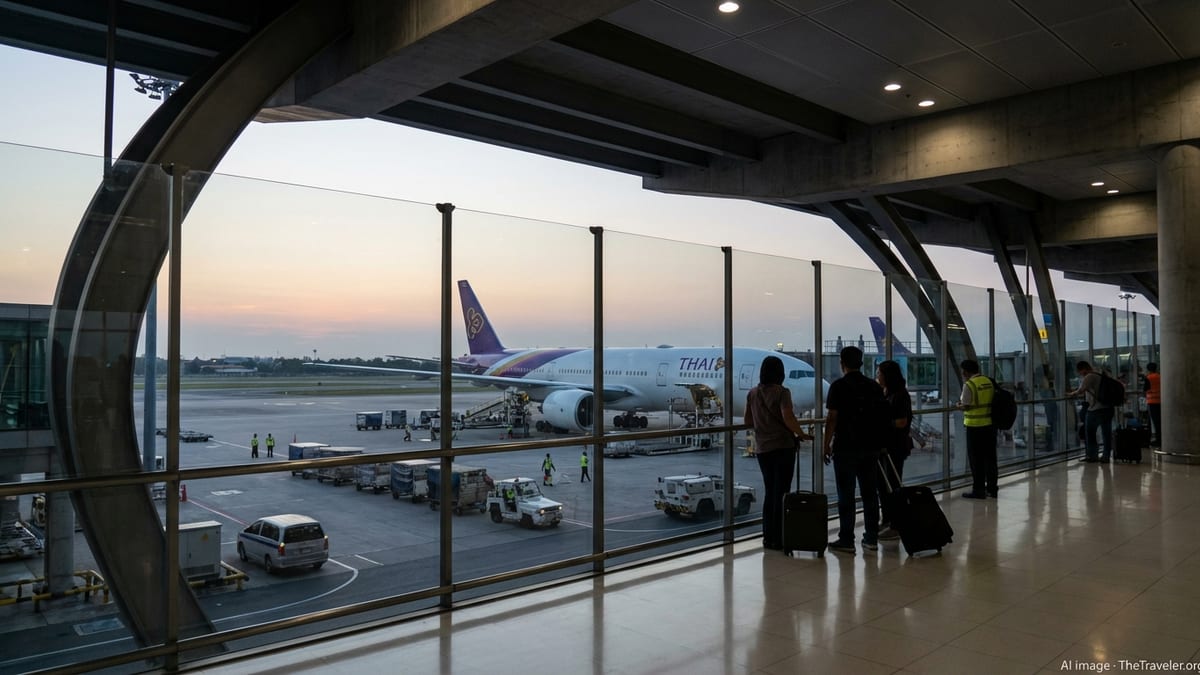
A Strategic New Link Between Bangkok and Central China
The Bangkok–Changsha launch marks a fresh phase in Thai Airways’ regional expansion, aligning with the carrier’s broader push to strengthen its position as a connector between Southeast Asia and secondary Chinese cities. The new service will operate from Bangkok’s Suvarnabhumi Airport to Changsha Huanghua International Airport, cutting travel times and simplifying itineraries that previously required connections through hubs such as Guangzhou, Kunming or Shanghai.
The daily nonstop schedule is designed to appeal to both leisure and business travelers, offering afternoon departures from Bangkok and evening arrivals into Changsha, with late-evening returns suitable for maximizing time on the ground. By pairing the route with onward connectivity across Thai Airways’ regional network, passengers from destinations across Southeast Asia and Australasia will gain faster, single-stop access to central China.
Industry analysts see the move as a logical progression following Thai Airways’ renewed focus on high-potential regional markets and improved fleet efficiency. As airlines across Asia recalibrate their networks for post-pandemic travel patterns, mid-size Chinese cities with strong domestic tourism appeal and growing economic clout are drawing increased interest from full-service carriers.
For Thai tourism authorities, the route adds another channel to attract Chinese visitors via Bangkok, while also giving Thai and international travelers an alternative gateway into China that is less congested than the country’s coastal mega-hubs.
Gateway to Hunan’s Hidden Landscapes and Heritage
Changsha, the capital of Hunan Province, is more than just a provincial seat: it is the primary jumping-off point for some of China’s most striking mountain scenery and historically rich towns. From here, travelers can easily continue by high-speed rail or domestic flights to Zhangjiajie National Forest Park, a UNESCO-recognized landscape famous for its towering sandstone pillars and cloud-wreathed cliffs.
Beyond Zhangjiajie, the region offers a network of destinations that have long been popular with domestic tourists yet remain under the radar for many international travelers. Fenghuang Ancient Town, with its stilted riverside houses and stone bridges, provides an atmospheric look at traditional architecture, while the slopes of Tianmen Mountain and the glass walkways that cling to its cliffs are fast becoming iconic in adventure travel photography.
For culture-focused visitors, Changsha itself holds plenty of appeal. The city is home to the Hunan Provincial Museum, renowned for the Mawangdui Han tombs and exquisitely preserved artifacts that shed light on daily life, ritual and craftsmanship from more than two millennia ago. Historic Yuelu Mountain and its ancient academy provide green respite and a close-up look at one of China’s oldest institutions of learning.
By positioning Changsha as a central hub for exploring Hunan’s landscapes and heritage, the new Thai Airways route effectively opens a direct door from Southeast Asia to a part of China that blends dramatic natural backdrops with deep-rooted cultural narratives.
Boost for Tourism Flows and Regional Connectivity
The Bangkok–Changsha launch is expected to stimulate two-way tourism flows at a time when both Thailand and China are actively courting international visitors. For Chinese travelers, a nonstop connection to Bangkok offers streamlined access not only to Thailand’s beaches and cultural hotspots, but also to onward destinations served by Thai Airways across the wider Asia-Pacific region.
For Thai and international passengers starting their journeys in Bangkok, the new route offers a practical alternative to more crowded Chinese gateways. Shorter transit times and simplified itineraries could encourage more travelers to add Hunan to multi-country trips that combine Thailand with other Asian destinations, supporting longer stays and higher spending per visitor.
Tour operators in both countries are expected to respond by developing new packages that pair Bangkok with Changsha and Hunan’s surrounding highlights. The combination of urban nightlife, historic temples and culinary experiences in Bangkok with Hunan’s mountains, ancient towns and riverside scenery is likely to appeal to travelers seeking contrast within a single journey.
Economically, the route may also support growing business links. Hunan’s manufacturing, technology and logistics sectors have expanded in recent years, and improved air access from Bangkok can facilitate corporate travel, trade missions and meetings with partners across Southeast Asia.
Passenger Experience and Fleet Strategy
Thai Airways has been progressively refreshing its fleet and optimizing aircraft deployment to match regional demand profiles, with a particular emphasis on fuel-efficient narrowbody jets and next-generation widebodies. While final aircraft assignments for the Bangkok–Changsha service will be confirmed closer to launch, the route length and expected demand profile make it well suited to the carrier’s newer single-aisle aircraft equipped for regional flights.
On board, passengers can expect Thai Airways’ hallmark touches, including full-service catering, in-flight entertainment on most services and the airline’s signature cabin hospitality. Timings aligned for late-evening arrivals back into Bangkok are aimed at ensuring that travelers returning from Hunan can connect to late-night departures or overnight services to onward destinations, while still having a relatively compact overall journey.
The new service further reinforces Bangkok’s role as a springboard for intricate regional itineraries. With Thai Airways and partner airlines offering onward links to cities such as Singapore, Hanoi, Phnom Penh and Sydney, the Changsha route plugs directly into a wider network that caters to both tourists and business travelers moving around Asia.
As carriers across the region compete to capture pent-up demand and reshape travel corridors, Thai Airways’ decision to reach deeper into central China signals that secondary city connectivity is set to play a larger role in the next phase of Asia’s aviation recovery.
Changsha’s Dynamic City Life and Distinctive Cuisine
While many travelers will use Changsha as a springboard for Hunan’s mountain landscapes, the city itself offers enough attractions to justify a dedicated stay. The skyline mixes modern high-rises and landmark shopping complexes with older neighborhoods, while the Xiang River waterfront and lively walking streets come into their own after dark.
Food is one of Changsha’s biggest draws. As the heartland of Hunan cuisine, the city is known for bold, spicy dishes that emphasize fresh chilies, smoked ingredients and complex aromas. Street stalls and casual eateries serve everything from fragrant rice noodles to fiery crayfish, while night markets provide opportunities to sample snacks and local specialties in a convivial setting.
The new Thai Airways route is expected to make it easier for culinary travelers to build Changsha into tasting-focused itineraries, pairing the city’s punchy Hunan flavors with the lighter, aromatic dishes found across Thailand. For many visitors, the journey itself will become a cross-cultural dining experience, beginning with Thai-inspired meals on board and continuing with local specialties on arrival.
With nonstop flights set to begin on 10 May 2026, Changsha is poised to step out from behind China’s better-known coastal cities and claim a place on more international travel maps, supported by a direct air bridge from Bangkok that highlights central China’s lesser-explored, yet increasingly compelling, attractions.