

More news on this day
Soaring jet fuel prices and new cost pressures across the aviation sector are rippling through Thailand’s airlines, prompting fare hikes and capacity reviews that threaten to slow the country’s hard-won tourism and hospitality rebound in 2026.
Get the latest news straight to your inbox!
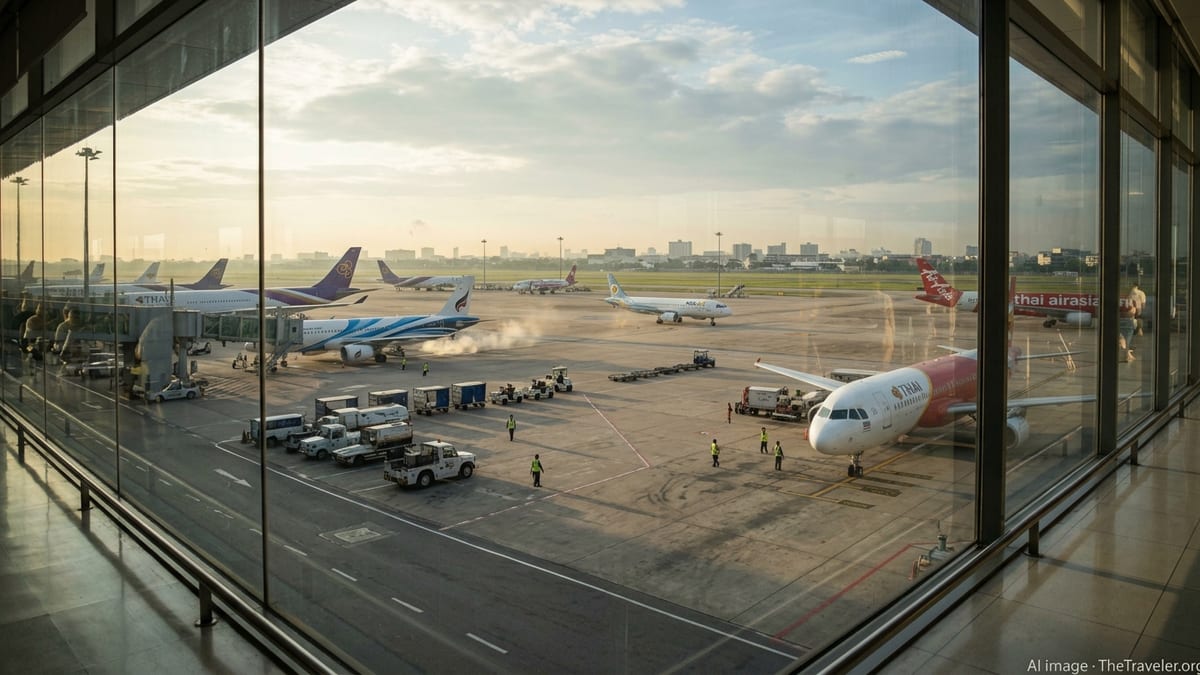
Fuel Price Shock Hits Thai Skies at a Delicate Moment
The latest spike in jet fuel prices, driven by renewed instability in the Middle East and tighter energy markets, is colliding with a crucial recovery year for Thailand’s tourism industry. Aviation data released in early March 2026 shows global passenger demand still growing, but analysts highlight fuel as the single largest variable cost facing airlines, often accounting for a quarter or more of operating expenses. With benchmark aviation fuel in Asia nearly doubling since January, regional carriers are under mounting pressure to pass costs on to travelers.
Publicly available information shows that Thai Airways, Bangkok Airways, Thai AirAsia and Nok Air have all been recalibrating their networks and pricing strategies after several years of volatile demand and restructuring. Until recently, many of these airlines were counting on relatively stable fuel prices to lock in the gains of 2024 and 2025, when higher fares and strong pent-up demand helped repair balance sheets. The latest surge in fuel costs has upended those assumptions and is now emerging as a key risk to Thailand’s 2026 arrival and revenue targets.
Industry forecasts compiled by research houses and multilateral aviation bodies had pencilled in a more moderate fuel environment for 2026, helping Asia Pacific carriers ride a wave of returning long-haul traffic. Instead, the conflict-driven jump in crude and refined product prices has added a fresh layer of uncertainty just as airlines finalise summer schedules and tourism operators ramp up capacity across Thailand’s islands, cities and secondary destinations.
Thai Airways Moves First With Fare Hikes and Route Adjustments
National carrier Thai Airways has been one of the earliest movers in Thailand to respond directly to higher fuel costs. Recent coverage in Thai business media indicates the airline has begun lifting international fares by roughly 10 to 15 percent, particularly on long-haul routes where fuel burn is higher and flight paths have been lengthened to avoid sensitive airspace. The moves come as part of a broader turnaround plan that hinges on improved yields and disciplined capacity growth through 2026.
Reports on upcoming fleet plans suggest Thai Airways aims to expand to slightly more than 100 aircraft by late 2026, adding widebody capacity on Europe and North Asia routes that are central to Thailand’s premium tourism push. However, each additional aircraft also magnifies exposure to fuel volatility. Analysts note that the carrier has limited flexibility to absorb sustained cost increases without undermining the balance-sheet repair it has achieved since emerging from court-supervised rehabilitation.
At the same time, forward bookings on key European routes remain robust, helped by travelers rerouting away from the Middle East. Travel trade commentary indicates cabin factors on some Europe–Thailand services remain near or above 80 percent. The combination of strong demand and higher operating costs has emboldened Thai Airways to test the market’s tolerance for higher fares, effectively using pricing power to offset the fuel shock while betting that Thailand’s destination appeal will keep planes full.
Bangkok Airways, Thai AirAsia and Nok Air Face Margin Squeeze
While the flag carrier has some room to lean on premium cabins and long-haul yields, Thailand’s other major airlines are confronting a more delicate balance between cost recovery and price sensitivity. Bangkok Airways, which specialises in regional and leisure-focused routes such as Bangkok and Samui, has been highlighted in recent brokerage research as a key beneficiary of Thailand’s tourism revival, with projections of record earnings in 2026. Those projections, however, were built on expectations of gradually easing fuel costs rather than the sharp spike now unfolding.
Low-cost operator Thai AirAsia, heavily exposed to domestic and short-haul regional traffic, is particularly vulnerable to swings in fuel prices. Public presentations and prior disclosures show the airline lobbying in past years for relief on jet fuel taxes and airport charges, arguing that higher input costs quickly erode the affordability edge that underpins its business model. With fuel now climbing again, industry observers expect renewed calls from low-cost carriers for targeted tax adjustments or operational incentives to help keep base fares competitive.
Nok Air, another budget-focused carrier with a concentration on domestic routes and secondary cities, faces similar pressures. Domestic travelers and regional visitors are more price sensitive than long-haul tourists, limiting how far airlines such as Thai AirAsia and Nok Air can push fares without dampening demand. Even modest increases in ticket prices can have an outsized impact on seat loads to emerging destinations, potentially slowing the spread of tourism revenue beyond Thailand’s established hotspots.
Collectively, this group of airlines forms the backbone of Thailand’s internal connectivity, linking major international gateways with resort islands and provincial cities. Any sustained margin squeeze from fuel costs could slow planned fleet upgrades, frequency increases and route launches that tourism authorities had hoped would underpin a more geographically balanced recovery.
Tourism and Hospitality Sector Braces for Ripple Effects
The aviation cost shock arrives as Thailand’s tourism and hospitality sector is again gaining altitude. Government targets for 2026 envision international visitor numbers edging closer to or surpassing pre-pandemic peaks, with higher-spending long-haul markets and returning Chinese travelers playing central roles. Hotel performance in key destinations such as Bangkok, Phuket and Chiang Mai has been trending upward, with rising occupancy and average daily rates signalling renewed confidence.
However, recent assessments in domestic tourism media and regional business reports warn that higher airfares could trim these gains, particularly in the price-sensitive segments that fill midscale hotels, guesthouses and tour buses. Long-haul travelers from Europe and the Middle East, who already face longer flying times and elevated ticket prices due to airspace restrictions, may begin to shorten trips, trade down in accommodation, or opt for nearer destinations if costs continue to climb.
Industry groups have also flagged concerns about Thai outbound travel, which competes directly with domestic tourism for consumer spending. As international tickets from Thailand become more expensive, some residents may opt to holiday at home, partially cushioning domestic hospitality operators from any downturn in foreign arrivals. At the same time, elevated operating costs for airlines could translate into fewer promotional fares and reduced capacity on shoulder-season dates, limiting the ability of tourism businesses to smooth out demand throughout the year.
Additional headwinds are building on the non-fuel side. Published information from Airports of Thailand points to higher passenger service charges from June 2026, adding a further layer of cost to tickets issued for travel from the country’s main airports. While the increase is modest relative to total trip expenses, it comes on top of costlier fuel, making Thailand’s overall price competitiveness a renewed focus of debate within the travel trade.
Policy Responses and Sustainability Targets Add Complexity
The fuel price surge is unfolding against a backdrop of regulatory change and longer-term sustainability commitments that carry their own cost implications. Across Southeast Asia, governments are moving ahead with sustainable aviation fuel policies, levies and blending mandates aimed at cutting the sector’s climate impact. Regional examples, including new ticket levies in nearby hubs to fund cleaner fuels, are being closely watched in Bangkok as Thailand prepares its own sustainable aviation framework.
Publicly available information on Thai energy and transport policy indicates that authorities are working toward domestic sustainable aviation fuel standards, with early-stage discussions of minimum blending requirements from 2026 onward. While such measures are central to long-term decarbonization goals, they are likely to increase airlines’ fuel bills in the near term, given that sustainable aviation fuel remains significantly more expensive than conventional jet fuel.
For Thai Airways, Bangkok Airways, Thai AirAsia and Nok Air, this creates a complex cost environment where conventional fuel prices, green fuel obligations and higher airport charges converge. Carriers are expected to lean more heavily on strategies such as fleet renewal, route optimisation, higher load factors and dynamic pricing tools to protect margins. Some have already signalled a shift toward more capacity on routes with strong premium demand and resilient yield, as well as closer coordination with tourism partners to target higher-spending visitor segments.
As 2026 unfolds, Thailand’s ability to sustain its tourism and hospitality momentum may depend on how quickly energy markets stabilise and whether policymakers can calibrate new fees, taxes and sustainability mandates without undermining the country’s reputation as an accessible, good-value destination. For now, the alarm being sounded by Thailand’s leading airlines underscores how closely the fortunes of hotels, restaurants and local businesses remain tied to the price of jet fuel.