

More news on this day
Thailand is sharpening its focus on high-value wellness tourism with a new Healing Journey campaign showcased in London, positioning the southern destinations of Krabi, Trang and Ko Muk as restorative escapes for travelers seeking nature, calm and holistic health experiences.
Get the latest news straight to your inbox!
Wellness at the Heart of Thailand’s New Tourism Era
Publicly available information indicates that Thailand’s tourism strategy is undergoing a structural shift as the country seeks to move beyond volume-driven, low-cost travel and toward higher-spending visitors interested in wellness, sustainability and meaningful experiences. Policy outlines released for 2026 emphasize experiential and wellness travel as central pillars, linking tourism growth to well-being, local culture and environmental stewardship.
In this context, the Healing Journey concept being promoted in London is aligned with a wider push to present Thailand as a destination for restoration as much as recreation. Coverage of Thailand’s most recent international marketing efforts shows recurring themes of “healing,” “balance” and “inner peace,” framing wellness as the new form of luxury rather than purely material indulgence. The messaging targets travelers who are willing to stay longer, spend more and engage more deeply with local communities.
Industry reports on global travel patterns point to growing demand for nature-based wellness breaks, from hot springs and forest retreats to mindfulness-focused beach escapes. Thailand’s long-established spa traditions, herbal therapies and massage culture are being reframed within this global trend, with coastal provinces such as Krabi and Trang highlighted as natural stages for “healing journeys” that combine sea, jungle and small-island life.
By bringing the Healing Journey campaign to London, Thai tourism promoters are focusing on one of their most important long-haul markets at a time when European travelers are showing heightened interest in well-being, slow travel and sustainability. Trade-show coverage suggests that the message is designed to both reassure repeat visitors who know the Andaman coast well and inspire first-time travelers to look beyond Thailand’s busiest beach hubs.
Krabi: Hot Springs, Limestone Cliffs and Slow-Sea Wellness
Krabi has long been known for its postcard scenery, with sheer limestone cliffs, mangrove-lined bays and a scattering of islands that have become staples of Andaman itineraries. Tourism Authority of Thailand materials now frame many of these landscapes as ideal environments for active and restorative wellness, from kayaking through quiet mangrove channels to rock climbing at Railay and sunrise yoga on secluded beaches.
Wellness-focused information distributed by Thai tourism channels places particular emphasis on natural hot springs and integrated spa retreats around Krabi. Facilities such as hot spring and wellness complexes in the Khlong Thom area are promoted as places where visitors can alternate between mineral-rich pools, hydrotherapy circuits and nature walks under dense tropical canopy, often combined with traditional Thai massage and herbal treatments.
At the same time, there is growing acknowledgement in public forums and traveler commentary of the pressures facing Krabi’s busiest areas, particularly Ao Nang and the most popular island excursions. Discussions about overtourism, reef damage and crowding on marquee beaches have become more prominent, prompting calls for stricter carrying-capacity management and incentives for visitors to spread out to lesser-known corners of the province.
The Healing Journey framing encourages a slower style of visit to Krabi that looks beyond one-day island-hopping to multi-day stays focused on well-being. Sample itineraries promoted in trade and consumer materials increasingly feature longer retreats, community-based activities such as homestays in local fishing villages, and low-impact pursuits like paddle-boarding in sheltered bays rather than high-speed, high-volume boat tours.
Trang and Ko Muk: Quiet Islands and Community-Based Wellbeing
South of Krabi, Trang province and its small islands are gaining visibility as calmer alternatives for travelers seeking restorative stays close to nature. Tourism promotion content frequently describes Trang’s coast as less developed and more community-oriented, with mangroves, rubber plantations and long, undeveloped beaches offering a contrast to busier Andaman destinations.
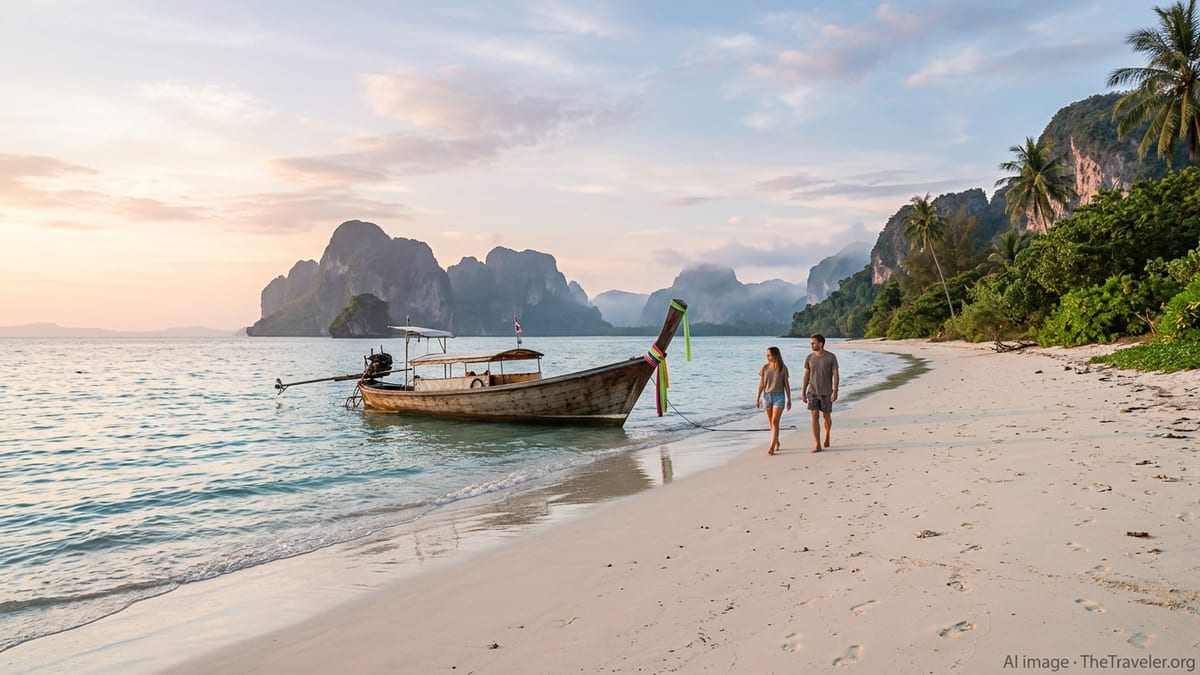
Ko Muk, one of Trang’s best-known islands, is often highlighted as a showcase for low-rise, small-scale accommodation and a more tranquil rhythm of life. Publicly available travel features describe laid-back beach resorts, small local guesthouses and day trips by longtail boat to swim in hidden coves and explore sea caves, including routes that require visitors to pass through narrow rock openings into sheltered lagoons surrounded by cliffs.
These experiences fit neatly into Thailand’s broader wellness and sustainability narrative. Provincial initiatives referenced in regional tourism documents emphasize support for local fishing and farming communities, promotion of eco-friendly marine excursions, and encouragement of longer stays that reduce the environmental footprint per travel day. Wellness in this context is presented as a combination of simple comforts, fresh food, time in nature and direct contact with local ways of life rather than purely spa-centered luxury.
As attention turns to the future of tourism in southern Thailand, Trang and Ko Muk are increasingly framed as testing grounds for how to balance growth with preservation. Travelers are being encouraged through campaign messaging to visit outside peak months, choose operators with visible environmental commitments and respect local customs, all of which aligns with the Healing Journey focus on holistic well-being for visitors and host communities alike.
What the London Healing Journey Campaign Means for Travelers
The Healing Journey activities in London, showcased through trade fairs, roadshows and consumer-facing promotions, serve as a window into how Thailand expects its tourism to evolve in the next several years. According to published coverage, the campaign builds on earlier branding such as “Amazing Thailand” and more recent wellness-focused slogans that highlight emotional renewal, mindful experiences and a sense of care for both visitors and the environment.
For travelers in the United Kingdom and wider Europe, this means that itineraries built around Krabi, Trang and Ko Muk are likely to become easier to plan and book within a wellness framework. Tour operators and online platforms are starting to package beach stays with yoga sessions, spa programs, plant-based dining and guided nature excursions, while also foregrounding lower-impact transport options where feasible, such as shared boat transfers and community-led tours.
Reports indicate that Thailand is targeting longer average stays and higher per-visitor spending, especially among visitors interested in wellness. This may translate into a wider range of mid- to upper-scale wellness retreats and boutique resorts along the Andaman coast, while budget travelers may see more simple beach bungalows and homestays marketed with well-being themes like digital detox, forest immersion and locally sourced vegetarian cuisine.
At the same time, the campaign’s presence in London highlights Thailand’s intention to engage proactively with travelers who are more conscious about sustainability. Messaging around Krabi, Trang and Ko Muk increasingly includes references to marine conservation, plastic reduction and partnerships with local communities, signaling that the success of future tourism will be judged not only in arrival numbers, but also in the health of reefs, beaches and village economies.
Looking Ahead: The Future of Tourism in Krabi, Trang and Ko Muk
Thailand’s national tourism plans for 2026 and beyond point toward a future in which destinations like Krabi, Trang and Ko Muk are marketed less as mass-market sun-and-sand escapes and more as gateways to holistic wellness and meaningful travel. Government strategy documents emphasize experiential, cultural and wellness tourism as priorities, indicating that infrastructure investment, marketing budgets and training programs are likely to follow this direction.
For Krabi, this may mean continued development of wellness-oriented properties set away from the busiest strips, expansion of hot spring and spa facilities, and more structured efforts to manage visitor flows to sensitive marine areas. Efforts to reposition the province as a “wellness and nature” hub are likely to sit alongside ongoing debates about how to curb overcrowding and improve environmental protection in heavily visited zones.
Trang and Ko Muk, by contrast, are expected to be promoted as models of small-island sustainability and community-centric tourism. Available planning materials and tourism features describe ambitions to support local ownership of tourism businesses, maintain low-rise development along beaches and preserve mangroves and seagrass beds that are vital for marine life. If these goals are realized, the islands could emerge as flagship examples of how Thailand’s wellness narrative can be grounded in everyday coastal life rather than in large-scale resort complexes alone.
Ultimately, the Healing Journey campaign in London signals that Thailand sees its future tourism growth tied not only to numbers, but to how visitors feel and how destinations endure. For travelers considering Krabi, Trang and Ko Muk in the coming seasons, the evolving focus on wellness, authenticity and environmental care suggests a region in the midst of redefining what a Thai beach holiday can be.