

More news on this day
Thailand is preparing for one of its busiest Songkran holiday periods in years, with transport forecasts pointing to record passenger volumes and airlines mobilising extra aircraft and discounted fares on popular domestic routes to keep millions of travellers moving.
Get the latest news straight to your inbox!
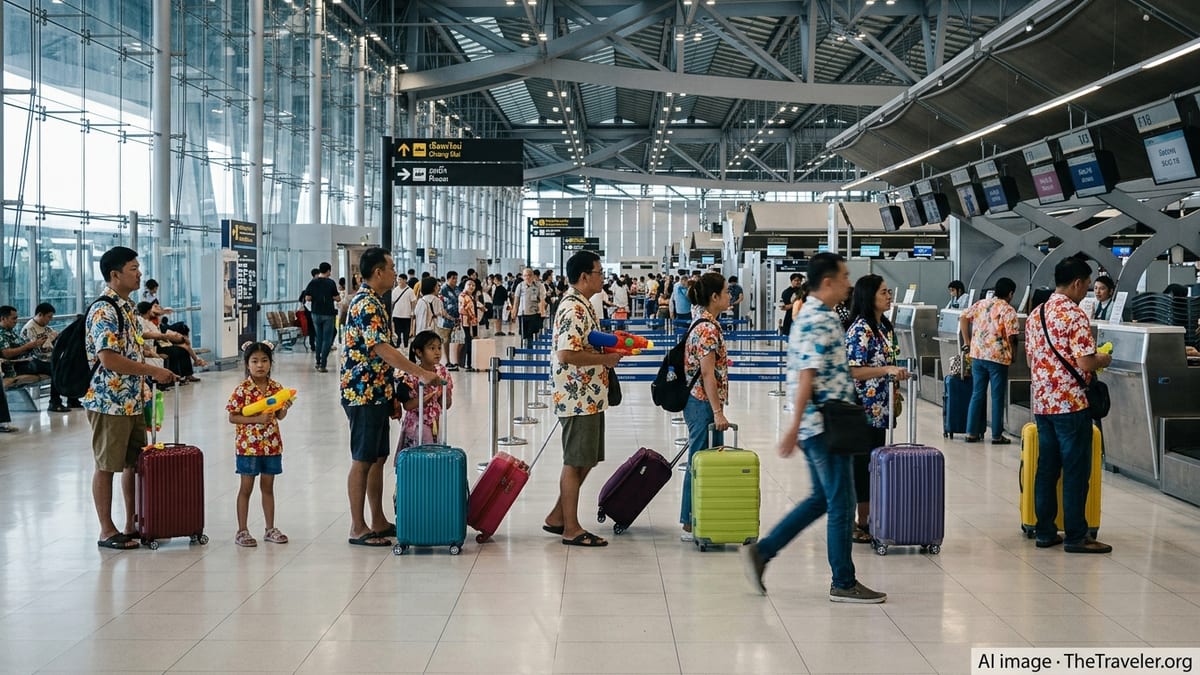
Holiday Demand Surges Ahead of April Water Festival
Songkran, celebrated nationwide from 13 to 15 April, traditionally triggers the largest annual migration within Thailand as city residents return to their home provinces and tourists flock to major festival hubs such as Bangkok, Chiang Mai, Phuket and Pattaya. Recent forecasts from Thai transport and aviation agencies indicate that domestic air travel demand in April is set to climb above pre-pandemic norms, helped by a rebound in tourism and a calendar that places the main holiday squarely in the middle of the month.
Passenger traffic at Bangkok’s two main airports, Suvarnabhumi and Don Mueang, has been rising steadily, supported by the completion of runway upgrades at Suvarnabhumi that have increased the airport’s hourly flight capacity. Publicly available infrastructure data shows that the additional runway, brought into full operation in late 2024, has enabled more take-off and landing slots at peak times, giving airlines room to schedule extra departures on domestic routes during peak holiday periods.
Industry assessments also point to robust demand at major regional gateways such as Chiang Mai, Hat Yai, Phuket and Udon Thani, where Songkran events and family visits drive a sharp spike in bookings. Analysts tracking Airports of Thailand passenger volumes note that domestic flows have been particularly resilient, with strong point to point travel between Bangkok and the northern and southern regions during festival weeks.
Reports from local tourism boards and hotel operators in destinations such as Chiang Mai indicate high advance bookings over the 12 to 16 April window, including Songkran surcharges at some properties. These patterns are feeding into airline planning models that anticipate full or near full flights on many trunk routes, especially in the evenings of the days immediately before and after the official public holiday.
Airlines Add Capacity and Deploy Larger Jets
Thai full service and low cost carriers are responding to the anticipated surge by adding extra frequencies and upgauging aircraft on heavily used domestic routes. According to published scheduling data and airline statements, additional flights are being laid on between Bangkok and cities including Chiang Mai, Phuket, Hat Yai, Khon Kaen and Ubon Ratchathani, with some carriers temporarily switching from smaller narrow body aircraft to larger jets to maximise seat supply.
Thai Airways and Bangkok Airways have highlighted enhanced domestic timetables and promotional campaigns for travel in the first half of April, including Songkran week, with emphasis on classic holiday routes linking Bangkok to Chiang Mai, Phuket, Krabi and Koh Samui. Timetables lodged with aviation regulators show extra rotations and seasonal capacity increases on several of these sectors, alongside coordination with regional airports on handling higher traffic volumes.
Low cost operators such as Thai AirAsia, Thai Vietjet and Thai Lion Air are also adjusting their networks to capture Songkran demand, with early morning and late night departures added on peak days to allow travellers to maximise their time with family or at festival events. Public booking systems show multiple additional services around the core holiday dates, often clustered on Fridays and Mondays to accommodate long weekend travel patterns.
At Bangkok’s Don Mueang Airport, which serves as a hub for low cost carriers, operations are expected to be particularly busy. Aviation forecasts suggest that the combination of extra domestic flights and returning international traffic will push utilisation close to available capacity at certain hours, though expanded ground handling and staggered schedules are expected to ease pressure at check in and security.
Fare Promotions Aim to Keep Travel Affordable
Alongside capacity increases, airlines are seeking to moderate costs for travellers by rolling out targeted fare cuts and promotions on domestic routes. Publicly available fare sheets and promotional material from Thai Airways’ recent travel fair campaigns show discounted economy class prices on routes such as Bangkok to Chiang Mai and Bangkok to Phuket, valid for travel periods that cover the Songkran holidays when booked in advance.
Bangkok Airways has published revised domestic fare structures that reflect regulatory ceilings set by the Civil Aviation Authority of Thailand, while highlighting competitive sale prices below those maximums on selected dates. The official fare tables list capped all inclusive fares for routes such as Bangkok to Sukhothai and Chiang Mai to Phuket, and airline marketing materials are promoting lower promotional levels around the holiday to stimulate early bookings and spread demand more evenly.
Low cost carriers are advertising limited time sales for travel in April, including Songkran week, with one way base fares reduced on routes linking Bangkok with Chiang Mai, Udon Thani, Surat Thani and other provincial centres. While taxes and ancillary fees can add to the final ticket price, comparison of current sale levels with historical averages suggests that headline fares on several trunk routes are being discounted to encourage price sensitive travellers to fly rather than use long distance buses or private cars.
Industry analysts note that the combination of added capacity and aggressive promotions is designed both to capture pent up leisure demand and to prevent excessive fare spikes on the busiest travel days. By encouraging travellers to shift to off peak departures and book earlier, airlines aim to smooth load factors and reduce the risk of last minute seat shortages that might otherwise disrupt family travel plans.
Coordinated Planning Across Transport Modes
The aviation sector’s preparations are part of a wider national effort to keep holiday travel flowing smoothly during Songkran. Publicly available information from transport agencies describes integrated plans covering road, rail, air and urban transit, with extended services, safety campaigns and targeted relief measures such as free or discounted rides for certain passenger groups.
In Bangkok, urban rail operators have previously introduced promotional or free ride schemes for older passengers during Songkran, and similar measures are being discussed for the 2026 festival period to encourage people to use public transport rather than private vehicles. Metropolitan traffic management plans typically include adjustments to traffic lights and road restrictions near major festival sites, easing transfers between the city’s airports and central districts despite road closures in water fight zones.
On intercity corridors, long distance bus and rail operators are adding extra departures to complement the increased flight schedules. Reports from previous years show that millions of travellers still rely on road and rail, particularly those heading to smaller towns without commercial air service, meaning that airlines are one critical component of a broader national transport operation rather than the sole focus.
Coordination between Airports of Thailand, the Civil Aviation Authority and transport ministries extends to contingency planning for adverse weather and potential congestion at security checkpoints. Public advisories typically encourage passengers to arrive at airports earlier than usual during Songkran and to use online check in facilities where possible, helping to reduce queues at check in counters and self service kiosks.
Travellers Urged to Plan Ahead as Peak Days Near
With flight schedules, hotel availability and promotional fares now widely published for the April holiday period, travel experts in Thailand are urging passengers to plan ahead. Analysis of booking data from previous Songkran seasons shows that the heaviest outbound traffic from Bangkok usually occurs in the two days before the official holiday, while return flows peak on the final evening of the festival and the following day.
Prospective travellers are being advised through public channels to secure seats on preferred flights as early as possible, particularly on evening departures between Bangkok and major provincial cities. Those with flexible schedules are encouraged to consider midday or late night flights, which can be less crowded and more affordable than early morning or post work departures on the busiest days.
Airlines and airports are also placing emphasis on passenger preparedness, reminding travellers through public campaigns to check baggage allowances, confirm terminal information and allow extra time for transfers between urban transport and airport check in areas. With more flights and higher passenger volumes in play, small delays at check in or security can cascade quickly, making personal time management an important factor in maintaining overall punctuality.
Despite the challenges posed by record holiday travel volumes, the combination of expanded infrastructure, additional aircraft, and more competitive fares places Thailand’s aviation sector in a stronger position to handle the Songkran rush. For millions of passengers planning to take to the skies between Bangkok and the regions, this year’s festival is expected to offer more choice, better prices and smoother journeys than in many previous seasons.