

More news on this day
Thailand is accelerating its shift toward low-impact, high-value travel in 2026, as new national strategies, international accolades and changing visitor expectations converge around sustainability.
Get the latest news straight to your inbox!
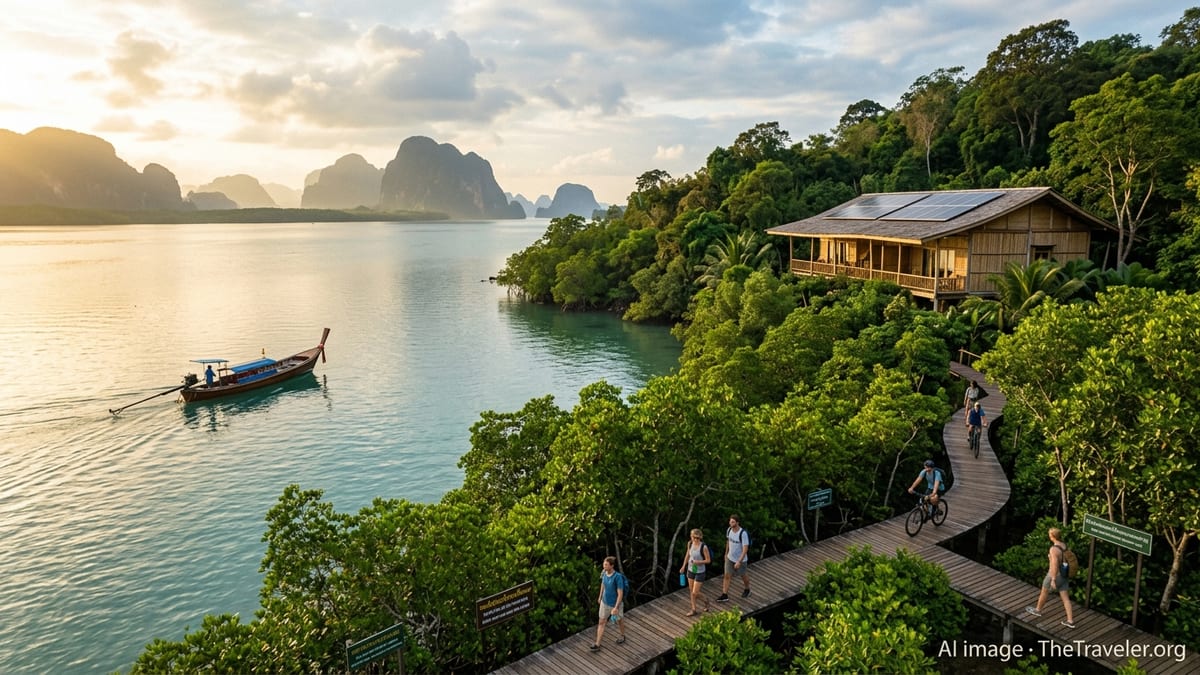
New National Strategy Puts Sustainability at the Core of Tourism
Thailand’s tourism authorities are using 2026 as a milestone year to recast the country’s visitor economy around quality and environmental responsibility. Under a long-term vision promoted in recent years, tourism planners are prioritising value over volume and emphasising experiences that spread benefits more evenly across communities while reducing pressure on popular hotspots.
The Tourism Authority of Thailand has framed its 2026 direction under concepts such as “Value is the New Volume” and “The New Thailand,” which place sustainable growth and balanced development at the centre of marketing and investment decisions. Public information on these strategies points to nature-focused trips, wellness and cultural immersion as key product pillars, supported by standards for greener operations and community participation.
Recent updates on Thailand’s tourism targets for 2026 reflect this pivot. Rather than simply chasing pre-pandemic arrival records, policy documents highlight a mix of moderate growth in visitor numbers and higher average spending, underpinned by measures to curb environmental impacts, encourage responsible behaviour and support small businesses in rural and secondary destinations.
The sustainability narrative is also tied to broader economic policy, including Thailand’s focus on a bio-circular-green growth model. Tourism planners are aligning with national climate and resource-efficiency goals by encouraging lower-carbon travel patterns, backing conservation projects and promoting itineraries that integrate protected areas, cultural heritage and low-impact outdoor activities.
Global Recognition and Flagship Events Boost Thailand’s Profile
Thailand’s sustainability push is gaining visibility on the global stage in 2026 through major trade events and awards. At the ITB Berlin 2026 travel fair in early March, Thailand presented what it described in public materials as “The New Thailand” vision, spotlighting sustainable routes, hidden destinations and eco-friendly tourism products tailored for long-haul markets.
Coverage of ITB Berlin 2026 indicates that Thailand also received international recognition for progress in sustainable tourism development, including honours from organisations focused on green destinations. Initiatives in coastal areas such as Krabi and island destinations like Ko Lanta have been cited in the Thai and regional press as examples of how local authorities, businesses and communities are working together to manage waste, protect marine ecosystems and diversify tourism offerings beyond crowded beaches.
Thailand’s role as host of the Global Sustainable Tourism Council Conference in 2026, scheduled in the resort province of Phuket, is adding further weight to its leadership claims. Provincial tourism planners have been promoting a vision of Phuket as a “sustainable tourism city,” using the conference and related events to highlight projects from public transport improvements to waste-management upgrades and community-based tourism networks.
Sporting and cultural events are also being woven into the sustainability narrative. From the ASEAN Para Games held in Nakhon Ratchasima in early 2026 to a growing calendar of art biennales and smart-city expos, organisers are increasingly emphasising inclusive access, local sourcing and environmental standards as part of Thailand’s wider tourism transformation.
National Parks and Green Infrastructure Showcase On-the-Ground Change
Evidence of shifting traveller preferences is visible in Thailand’s protected areas. Local media reporting on the New Year 2025 holiday period, widely discussed again in early 2026, noted that around 1.5 million visitors travelled to national parks as part of a surge in interest in nature and eco-friendly trips. Authorities responsible for parks have introduced measures such as stricter carrying-capacity controls, expanded recycling facilities and campaigns to encourage visitors to minimise waste and respect wildlife.
These changes align with Thailand’s longer-running efforts to channel tourism demand into conservation-friendly experiences. Popular destinations such as marine parks in the Andaman Sea and forest reserves in the North are increasingly managed with seasonal closures, limited daily entries and mandatory guides in sensitive zones, aiming to protect coral reefs, forests and wildlife corridors from the worst effects of overcrowding.
Urban infrastructure is evolving in parallel. Projects such as Bangkok’s elevated “Green Bridge,” which links two of the capital’s largest parks via a landscaped pedestrian and cycling route, are being promoted domestically as symbols of a shift toward greener city living. While primarily built for residents, such initiatives also appeal to international travellers seeking walkable, low-carbon ways to experience major Asian cities.
Municipal campaigns around waste sorting, clean-energy public transport and riverside regeneration add to this picture. Together, these infrastructure and park-management efforts support marketing messages that present Thailand not only as a destination for beaches and nightlife but also as a laboratory for more sustainable urban and nature-based tourism models.
Travelers Demand Eco-Friendly Choices and Lower-Impact Experiences
Regional tourism outlook reports released in early 2026 describe a marked rise in awareness of tourism’s impact among travellers to Southeast Asia, with sustainable travel now considered mainstream rather than niche. Surveys cited in these reports indicate that a strong majority of respondents regard sustainable travel as important, with many saying they intend to choose accommodation, activities and transport options that reduce environmental harm and support local communities.
Thailand is directly benefiting from this shift. Booking patterns reported by industry analysts show increasing interest in off-peak travel, alternative destinations beyond the main beach resorts and experiences that emphasise cultural immersion, community interaction and outdoor recreation. This dovetails with Thailand’s move to promote secondary provinces, homestays, agritourism, cycling routes and soft-adventure activities such as hiking and kayaking.
Hotel groups and tour operators in Thailand are responding by scaling up green certifications, cutting single-use plastics, investing in renewable energy and designing itineraries with lighter footprints. Industry reports highlight examples ranging from eco-camping operations along the River Kwai to resorts in Phuket that showcase herb gardens, water-saving systems and waste-reduction programmes as core parts of the guest experience rather than optional extras.
Digital tools are reinforcing the trend. From carbon-footprint calculators integrated into booking platforms to mobile guides that steer visitors toward lesser-known temples, markets and nature trails, technology is making it easier for travellers to match their values with their choices on the ground. This, in turn, is nudging more businesses in Thailand to publish sustainability commitments and measurable environmental targets.
Balancing Visitor Growth With Long-Term Environmental Goals
Despite the positive momentum, Thailand faces the complex challenge of balancing ambitions for tourism-driven income with the need to protect fragile ecosystems and manage congestion. Official visitor data for early 2026 shows strong recovery, with more than five million international arrivals recorded between 1 January and mid-February, signalling that the country is on track for another busy year.
Analysts caution that if growth is not carefully managed, familiar pressures such as overcrowding in historic districts, coastal erosion in resort areas and strain on water and waste systems could re-emerge. The focus on higher-spending, longer-staying visitors is partly intended to counter this risk by decoupling revenue from raw arrival numbers, but implementation at local level remains uneven.
To address these concerns, Thailand is experimenting with a mix of regulatory tools and incentives. Measures include visitor caps in specific marine parks, variable pricing for peak and off-peak periods, stricter rules on beach-use concessions and support for businesses that invest in renewable energy or community projects. Pilot schemes in some provinces are testing how destination-wide sustainability standards can be embedded into zoning, licensing and marketing.
Observers say the next few years will determine whether Thailand can convert its 2026 sustainability narrative into lasting structural change. If current policies, infrastructure investments and consumer trends continue to align, the country is well positioned to remain one of the most visible laboratories for sustainable tourism in the Asia-Pacific region, offering a model that other destinations watching the rise of eco-conscious travel may seek to adapt.