

Timing a trip to Thailand around the country’s biggest festivals can transform a good holiday into an unforgettable one. From exuberant water fights in the hot season to rivers glowing with candlelit offerings at the end of the rains, Thailand’s calendar is packed with celebrations that blend spirituality, spectacle, and community. Understanding what happens when, and what each event feels like on the ground, will help you choose the right moment to go and the right place to be.
Understanding Thailand’s Festival Calendar
Thailand’s festivals are closely tied to the Buddhist lunar calendar, the agricultural cycle, and regional traditions, so dates shift slightly from year to year. Broadly, the most important events cluster around three periods: the cool, dry season from November to February, the hot season from March to May, and the early rainy season from June to September. Each brings its own character, from seaside music festivals and New Year fireworks to temple fairs and rice‑field rituals.
For visitors, this means that planning “by month” is more useful than locking into exact dates far in advance. Songkran, the Thai New Year water festival, typically falls in mid‑April, while Loy Krathong and its sister lantern festivals usually arrive in November. Other events, such as the Phuket Vegetarian Festival or the northeastern Rocket Festivals, follow the lunar calendar but remain broadly predictable within a given month.
Weather is a crucial part of the experience. The cool season, roughly November to February, is the most comfortable time to be on the move and coincides with many major cultural events, including Chinese New Year celebrations and the Surin Elephant Festival. The hot season brings intense heat but also some of the most high‑energy festivals, while the rainy months can deliver dramatic skies, lush landscapes, and smaller crowds.
Because Thailand is geographically diverse, it is often better to “follow the festival” to its spiritual home rather than expecting every event to feel the same nationwide. Loy Krathong, for example, is celebrated around the country, but the atmosphere in Chiang Mai’s Old City feels different to that along Bangkok’s Chao Phraya River or in small northern towns beside misty rivers and lakes. Building your itinerary around a few key hubs will help you capture the richest experiences.
Songkran: Thai New Year and the World’s Biggest Water Fight
Songkran is Thailand’s most famous festival and, for many visitors, the single best reason to plan an April trip. Officially marking the traditional Thai New Year, it usually takes place around 13 to 15 April, although celebrations in some cities can stretch across nearly a week. Historically, Songkran involved gentle rituals of water pouring over Buddha images and elders’ hands, symbolizing cleansing, respect, and renewal.
Today, those rituals still take place in temples across the country, but they coexist with a city‑wide water battle that transforms streets into temporary canals. In Bangkok, main thoroughfares such as Silom Road and Khao San Road are closed to traffic and fill with revelers armed with water pistols and buckets. In Chiang Mai, pickup trucks circulate endlessly around the Old City moat, drenching everyone they pass, while music blares from temporary stages.
If you plan to travel for Songkran, prepare for near‑constant soaking and an atmosphere closer to a giant street party than a sedate religious ceremony. Waterproofing your phone, carrying minimal valuables, and booking central accommodation well ahead of time are essential. It is also wise to build in downtime; the midday heat can be intense, and the noise and crowds are exhilarating but tiring.
For a more traditional experience, visit local temples early in the morning, when families make merit by offering food to monks and pouring perfumed water over Buddha statues. Cities such as Chiang Mai and Ayutthaya often host processions of Buddha images that residents sprinkle with water respectfully. Balancing quiet temple visits with a few hours in the thick of the water fight allows you to experience both sides of Songkran’s personality.
Loy Krathong and Yi Peng: Lanterns, Rivers, and Night‑Time Magic
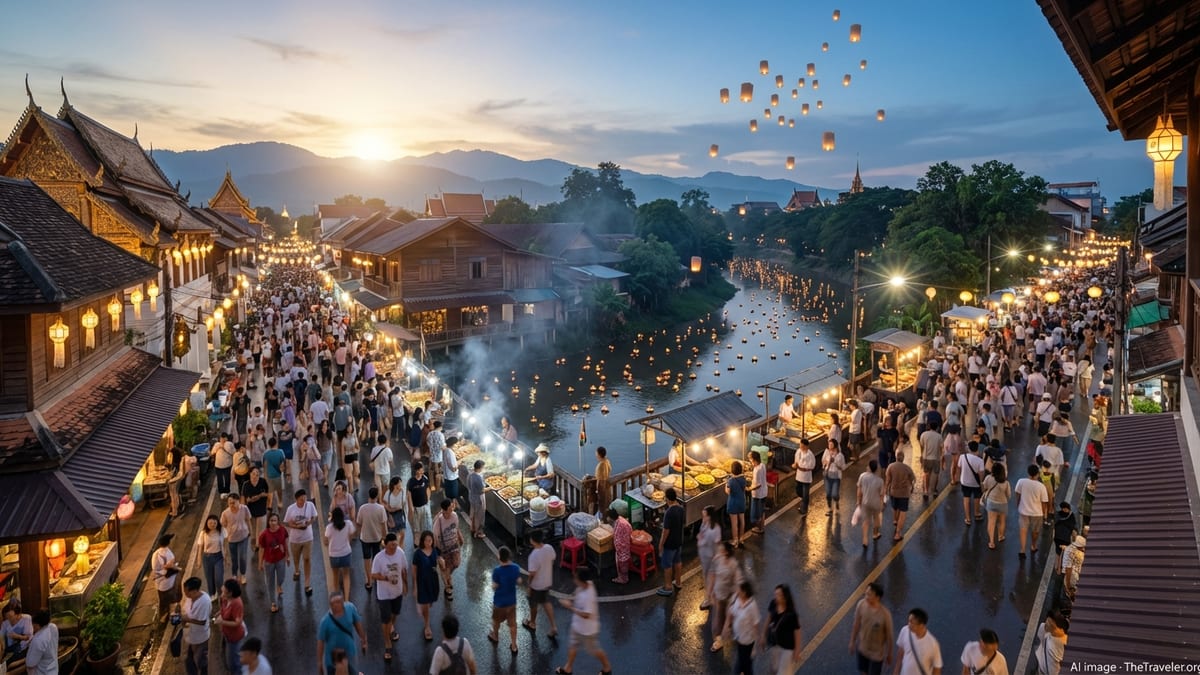
As the rainy season ends, usually in November, Thailand celebrates Loy Krathong, a festival of light that many consider the most beautiful time of year. On the night of the full moon, people gather beside rivers, canals, and lakes to float small decorated offerings known as krathong. Traditionally made from banana leaves, flowers, candles, and incense, these miniature rafts are set adrift with quiet wishes for forgiveness from the river goddess and for good fortune in the year ahead.
Bangkok’s riverside parks and hotel piers fill with families in traditional dress, food stalls, and live performances. In Sukhothai Historical Park, the ruined temples are illuminated, and cultural shows and fireworks create a romantic, almost theatrical setting. Smaller towns often have a softer mood, with fewer crowds and darker, quieter rivers where each krathong’s candle seems to burn brighter against the black water.
In northern Thailand, especially Chiang Mai, Loy Krathong coincides with Yi Peng, the Lanna lantern festival. Here, the focus shifts from water to sky: homes, temples, and streets are decorated with hanging lanterns, and in some years organized events coordinate the release of thousands of paper lanterns into the air. The sight of glowing orbs rising quietly into the night can feel transformative, though in recent years authorities have become more cautious about safety, air traffic, and environmental concerns, so large‑scale releases are carefully regulated.
To make the most of Loy Krathong and Yi Peng, aim to stay in a walkable part of town and arrive at riversides or key temples before sunset to watch the scene slowly build. Many hotels and tour operators offer special dinners and viewing platforms, but wandering on foot often delivers more unexpected, intimate encounters, such as local families teaching children how to gently push their krathong into the current.
Vegetarian Festival and Surin Elephant Round‑Up: Spectacle in the Cool Season
As the rains taper off and the cool season approaches, Thailand’s calendar fills with events that combine spiritual devotion and sheer spectacle. One of the most intense is the annual Vegetarian Festival, particularly renowned on the island of Phuket and in Thai‑Chinese neighborhoods in Bangkok and southern cities. Usually held in the ninth lunar month, around October, this nine‑day event centers on purification through strict vegetarian or vegan diets, white clothing, and temple rituals dedicated to Chinese deities.
In Phuket, the festival is famous for its processions of medium‑possessed devotees who perform feats of body piercing, fire walking, and other acts believed to absorb misfortune on behalf of the community. Drums, firecrackers, and clouds of incense fill the streets as shrines send out processions at dawn. For visitors, witnessing these rituals can be powerful but confronting. Observing at a respectful distance, dressing modestly, and following instructions from shrine volunteers are key to engaging responsibly.
A few weeks later, in November, the northeastern province of Surin hosts the Surin Elephant Round‑Up, a multi‑day event that celebrates the region’s long relationship with elephants. Hundreds of elephants and their mahouts arrive in town, parading through streets and participating in shows at the local stadium. Morning buffets of fruits and vegetables laid out for the animals have become an iconic photo opportunity, while historical reenactments and cultural performances connect the elephants to the region’s traditions.
Both the Vegetarian Festival and the Surin Elephant Round‑Up attract increasing numbers of international visitors, which means accommodation in Phuket and Surin can sell out well in advance. If attending, look for operators and experiences that emphasize animal welfare and community benefit. Many travelers now prefer to watch parades and cultural shows rather than riding elephants, in line with growing awareness of ethical tourism.
Rocket Festivals, Candle Processions, and Rural Isan Traditions
The northeast of Thailand, known as Isan, has its own rich festival calendar shaped by rice farming, local spirits, and cross‑border influences from Laos and Cambodia. One of the most distinctive events is the Rocket Festival, or Bun Bang Fai, which usually takes place in May or early June, just before the start of the rainy season. In provinces such as Yasothon and Roi Et, villagers build large homemade rockets, decorate them colorfully, and launch them from communal fields.
The festival mixes lightheartedness, bawdy humor, and sincere hope for good rains. Parades of costumed dancers, drumming troupes, and floats snake through town before the launches, and local musicians keep the party going from day to night. Visitors can expect muddy fields, loud explosions, and an atmosphere that feels simultaneously ancient and improvisational. Safety measures have improved over time, but it is still wise to follow marked spectator zones and heed local advice.
Later in the rainy season, typically in July, Ubon Ratchathani hosts one of Thailand’s most visually striking religious events: the Candle Festival, held at the start of Buddhist Lent. Teams of artisans carve enormous wax sculptures depicting scenes from Buddhist mythology and Thai folklore, which are then paraded on elaborately decorated floats. The level of detail in the carvings is astonishing, and the atmosphere in the city is festive yet reverent.
Traveling to Isan for these festivals offers a different side of Thailand from the beach and nightlife image often portrayed abroad. Infrastructure is improving but remains more modest than in Bangkok or the southern islands, so planning ahead is important. Booking local guesthouses, allowing extra travel time between provinces, and being open to basic conditions will be rewarded with warm hospitality and the chance to experience traditions that have stayed closely rooted in local life.
Chinese New Year, Pride, Sports, and New Mega‑Events
In recent years, Thailand has been positioning itself as a regional hub for international events while continuing to celebrate long‑standing cultural festivals. Chinese New Year, usually falling in late January or February, has grown into a major nationwide celebration. Bangkok’s Yaowarat district transforms into a sea of red lanterns, street performances, and food stalls, while other cities with significant Chinese heritage, such as Hat Yai and Chiang Mai, host their own parades and lion dances. Visitors can expect crowded streets, late‑night markets, and a blend of Thai and Chinese traditions.
Thailand has also embraced new forms of celebration that highlight diversity and contemporary culture. Pride festivals and parades, particularly in Bangkok and Phuket, have become high‑profile events featuring marches, concerts, discussions, and creative performances. These gatherings typically take place in the middle of the year and attract both local and international visitors, reflecting Thailand’s reputation as a welcoming destination for many LGBTQ+ travelers, even as social conversations continue to evolve.
The country is increasingly hosting large‑scale international sporting events and music festivals. Multi‑sport competitions, regional games, and high‑profile marathons bring waves of athletes and spectators to host cities such as Bangkok, Chiang Mai, and Nakhon Ratchasima, often in the cooler months when conditions are better for outdoor competition. On the music side, Thailand’s coastal and countryside venues have become home to multi‑day festivals combining international line‑ups with art installations and wellness activities.
Looking ahead, announcements for new mega‑events continue to emerge, including globally recognized music brands planning multi‑day festivals in Chonburi and other coastal provinces. For travelers, this creates opportunities to pair a beach holiday with a major concert or to experience Thai hospitality in the context of a global gathering. It also means that popular hubs can become very busy during festival weekends, so checking event calendars and booking early is increasingly important.
Planning Your Trip Around Festivals
Choosing which festival to build your trip around starts with clarifying the kind of experience you want. If you are drawn to lively street parties and do not mind crowds or getting wet, Songkran in April or a major music festival in the cool season might be ideal. If you prefer contemplative moments and atmospheric evenings, Loy Krathong, Yi Peng, or the candle processions of Ubon Ratchathani will feel more aligned. Families with younger children may find the daytime parades, lantern displays, and cultural shows of Chinese New Year or the Surin Elephant Festival more accessible than late‑night concerts.
Once you have chosen your anchor event, sketch an itinerary that allows for a few days before and after the festival itself. Arriving early helps you acclimatize to the climate and time zone, explore key neighborhoods before they become crowded, and secure essentials such as local SIM cards or transit cards. Staying on a few extra days afterward gives you a chance to wind down by heading to a quieter beach, a national park, or a small town unaffected by the festivities.
Practicalities matter more than usual during major festivals. Transport can be heavily booked, so securing flights, trains, and long‑distance buses as early as possible is wise, especially around national holidays. In cities, ride‑hailing apps and public transit can be slower when roads are closed for processions or street parties, so plan to walk more than usual and choose centrally located accommodation even if it costs a little extra.
Budgeting should factor in seasonal price shifts. Hotel rates in destinations such as Bangkok, Chiang Mai, Phuket, and Pattaya often rise around major festivals and long weekends. Booking well in advance, considering weekday stays instead of weekends, and looking at lesser‑known neighborhoods or nearby towns can help keep costs manageable. At the same time, many festival activities themselves, especially temple rituals and street processions, are free to watch, which can balance out the higher cost of rooms and transport.
Experiencing Festivals Respectfully and Safely
Thailand’s festivals are rooted in religious belief, local identity, and communal memory, and most events are first and foremost for Thai communities rather than visitors. Approaching them with curiosity, humility, and patience will make your experience richer and more welcome. Modest clothing that covers shoulders and knees is advisable for temple visits and many processions, even when the weather is hot. Removing shoes before entering temple buildings is standard, and following the cues of local worshippers is the best guide to what is appropriate.
Photography is a big part of how many travelers remember festivals, but it is important not to let cameras or phones become intrusive. Asking permission before taking close‑up portraits, avoiding flash during religious rituals, and not blocking others’ view can go a long way. In more intense settings, such as Phuket’s Vegetarian Festival or certain rocket launches, keeping a respectful distance is also a matter of safety. Local authorities and volunteers generally mark safe spectator areas and may restrict access when crowds become too dense.
Environmental and ethical considerations are increasingly central to how festivals are organized and experienced. Concerns about plastic krathong harming waterways have led some communities to encourage biodegradable materials, and visitors can support this by choosing natural options and collecting any personal trash. Similarly, when animals are involved in festivals, opting to observe from the stands and supporting organizations that prioritize welfare sends a clear signal about the kinds of experiences travelers value.
Finally, travel insurance, basic health precautions, and common‑sense crowd awareness are essential. Festivals can be noisy, smoky, and physically demanding, especially in the heat. Staying hydrated, taking regular breaks in air‑conditioned spaces, and having a clear meeting point arranged with companions in case you become separated will make the difference between a stressful day and a memorable celebration.
The Takeaway
Thailand’s festivals and events offer a powerful lens into the country’s soul, revealing how communities balance joy and reverence, tradition and change. Whether you find yourself soaked during Songkran, entranced by floating lights on a river at Loy Krathong, or swept up in the drums and firecrackers of Chinese New Year, timing your trip to coincide with a major celebration will deepen your understanding of the places you visit.
No single itinerary can capture every highlight, and you do not need to. Choosing one or two anchor festivals, giving yourself unhurried time in each destination, and approaching every gathering with respect will yield a journey full of vivid memories. As Thailand continues to blend time‑honored traditions with new international events, its festival calendar will only grow more dynamic, offering fresh reasons to return in different seasons and see the country from new angles.
FAQ
Q1. When is the best time of year to visit Thailand for festivals?
The cool season from November to February offers comfortable weather and many major events, but April’s Songkran and October’s Vegetarian Festival are also memorable.
Q2. How far in advance should I book accommodation for big Thai festivals?
For major events such as Songkran, Loy Krathong in Chiang Mai, or Phuket’s Vegetarian Festival, booking at least three to six months ahead is advisable.
Q3. Is it safe to bring children to Thailand’s festivals?
Many festivals are family friendly, especially daytime parades and temple fairs, though very loud, late‑night, or crowded events may be overwhelming for young children.
Q4. What should I wear when attending festivals in Thailand?
Lightweight, breathable clothing that covers shoulders and knees is ideal, especially for temple visits. Comfortable shoes and a hat are useful for long days outside.
Q5. Do I need to buy tickets for most Thai festivals?
Many street processions and temple rituals are free. Reserved seats, special viewing areas, concerts, or private events may require tickets or advance reservations.
Q6. Can I drink alcohol during festivals like Songkran?
Alcohol is widely available in tourist areas, but public drunkenness can cause problems. It is best to drink moderately and avoid bringing glass bottles into crowded streets.
Q7. How can I experience festivals respectfully as a visitor?
Dress modestly for religious sites, follow local instructions, avoid intrusive photography, and remember that many rituals are acts of worship, not performances.
Q8. Are festivals in rural areas harder to reach than those in big cities?
Rural festivals can require extra planning, with fewer transport options and limited accommodation, but they often offer more intimate and community‑focused experiences.
Q9. Will festivals make it harder to get around cities like Bangkok or Chiang Mai?
Yes, road closures and crowds can slow traffic and public transport. Staying in central areas and allowing extra time for journeys will reduce stress.
Q10. How do I find out exact festival dates before I book my trip?
Because many festivals follow the lunar calendar, checking official tourism announcements and local event calendars for the specific year of travel is essential.