

More news on this day
Travellers passing through Bangkok’s Suvarnabhumi Airport faced unexpected disruption this week after key services operated by Thai Airways and Bangkok Airways were abruptly cancelled, severing important links to Singapore and Koh Samui and leaving passengers scrambling to rebook at one of Asia’s busiest hubs.
Early Morning Bangkok Airways Flight to Samui Scrapped
Bangkok Airways passengers bound for Koh Samui were among the first to feel the impact when an early morning departure from Suvarnabhumi failed to operate as scheduled. The airline confirmed the cancellation of a peak-hour flight between Bangkok and Samui, a high-demand domestic route that serves both resort travellers and business commuters.
The affected service, scheduled to leave shortly after sunrise, was due to operate with an ATR turboprop aircraft and had been heavily booked, according to passengers at the terminal. Many travellers had planned tight same-day connections to island resorts, private transfers and boat departures, leaving little margin for disruption.
Although only a single flight was officially cancelled on the route, the timing amplified the impact. Early departures from Bangkok to Samui are widely used by international visitors landing on overnight long-haul services who aim to reach the island on the same day, especially during the current high season for Gulf of Thailand tourism.
Airport staff at Suvarnabhumi reported lengthy queues at Bangkok Airways counters as stranded passengers sought alternative seats later in the day or rerouting via Surat Thani and ferry connections. Some travellers told local media they were offered rebooking options, but limited availability meant others faced overnight delays in Bangkok.
Thai Airways Cancellation Hits Regional Connectivity
While domestic travellers were contending with delays to Koh Samui, international passengers saw their own plans disrupted when a Thai Airways service linking Bangkok with Singapore was cancelled at short notice. The flight, part of the flag carrier’s core regional network, is typically used by business travellers, regional tourists and those connecting onward to long-haul departures from Changi.
Passengers at Suvarnabhumi reported receiving cancellation notifications only hours before departure, triggering a rush to airline service desks and call centres. Some were offered seats on later Thai Airways departures or rebooked on partner airlines, but others said they were left waiting in crowded seating areas with limited information on when they would be able to travel.
The disruption comes at a time when regional demand between Thailand and Singapore has been steadily recovering, with both leisure and corporate traffic rebounding. Any reduction in capacity on this route can quickly ripple across the network, affecting connecting itineraries to Australia, Europe and North Asia for passengers on both ends of the corridor.
Thai Airways has not publicly detailed the cause of the isolated cancellation, but aviation analysts note that tight aircraft utilisation and high load factors across Southeast Asia leave little slack in the system when operational issues arise.
Scenes of Frustration at Suvarnabhumi Airport
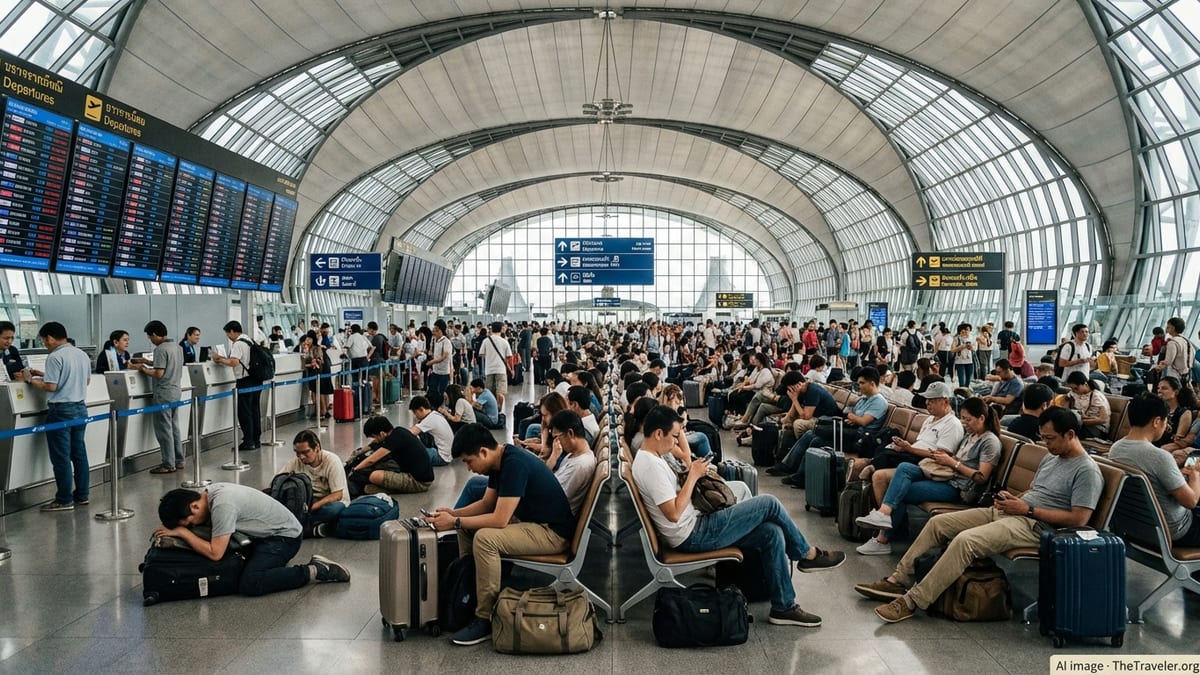
Across the terminal, scenes at Suvarnabhumi mirrored the mounting frustration. Passengers described growing queues at airline counters, with travellers sitting on the floor near departure gates surrounded by luggage as they waited for updates. Families heading to Samui on long-planned holidays and business travellers with firm schedules to keep were among those most affected.
Several stranded customers recounted difficulties reaching airline hotlines and said they relied on real-time flight tracking apps and airport display boards for the latest information. Others reported confusion over meal vouchers, hotel accommodation and rebooking priorities, particularly for those travelling on separate tickets or budget itineraries.
The disruption added pressure to an airport that has already come under scrutiny for customer service standards. In recent days, Suvarnabhumi’s management has issued apologies and pledged improvements following criticism over staff behaviour at security screening checkpoints, promising better training and closer supervision of frontline personnel.
On Wednesday, additional support staff and ground handling teams were observed assisting with crowd management and wayfinding in affected concourses, helping travellers locate airline help desks, lounge facilities and transit hotels while they waited for new travel arrangements.
Knock-on Effects for Thailand’s Tourism Hotspots
The cancellations highlight the vulnerability of Thailand’s tourism supply chain to even small disruptions on key routes. Koh Samui in particular is heavily reliant on a limited number of flight operators, and a cancelled service during peak season can mean fully booked alternatives and few same-day options for visitors.
Local hoteliers and tour operators on Samui expressed concern that guests facing delays in Bangkok could miss prepaid stays, excursions and transfers. Many resorts reported working directly with travel agents and guests to adjust check-in times, reschedule island tours and waive some change fees in an effort to soften the blow.
In Singapore, travel planners noted that last-minute disruptions on the Bangkok route can have outsize consequences for multi-leg itineraries that use the city-state as a hub. Missed connections can cascade into lost business meetings, reissued tickets and increased costs for both leisure and corporate travellers.
Tourism authorities have been closely monitoring flight reliability across Thailand’s main gateways as the country courts higher-spending visitors and pushes to restore confidence in its aviation infrastructure. While Wednesday’s cancellations remain limited in number, they serve as a reminder that operational resilience is crucial as traffic volumes climb back toward pre-pandemic levels.
What Travellers Should Do If Their Flight Is Cancelled
Travel experts advise passengers affected by cancellations at Suvarnabhumi to act quickly but methodically. Travellers are encouraged to head straight to their airline’s transfer or ticketing desk inside the terminal while simultaneously checking airline apps and websites for self-service rebooking options, which can sometimes confirm new seats faster than queuing at a counter.
Those with tight connections to Samui or Singapore are urged to keep detailed records of all expenses incurred, including meals, accommodation and ground transport, in case partial reimbursement is available under the airline’s policies. Travellers should also contact their hotel or tour operator as soon as possible to adjust arrival times and avoid potential no-show penalties.
For future trips, travel planners recommend allowing extra buffer time between long-haul arrivals and domestic connections to island destinations, especially during peak travel periods and holidays. Flexible tickets, comprehensive travel insurance and booking all segments on a single itinerary can also provide additional protection when irregular operations occur.
With airlines and airports in the region operating close to full capacity once again, even a single cancelled departure can have far-reaching consequences. The events at Suvarnabhumi this week underscore the importance of clear communication, rapid rebooking and proactive contingency planning for both carriers and travellers.