

More news on this day
Thailand is preparing for what forecasts describe as one of its busiest Songkran travel seasons on record, with domestic airlines adding aircraft capacity, introducing discounted fares and coordinating with state support measures to move millions of passengers across the country’s most popular holiday routes.
Get the latest news straight to your inbox!
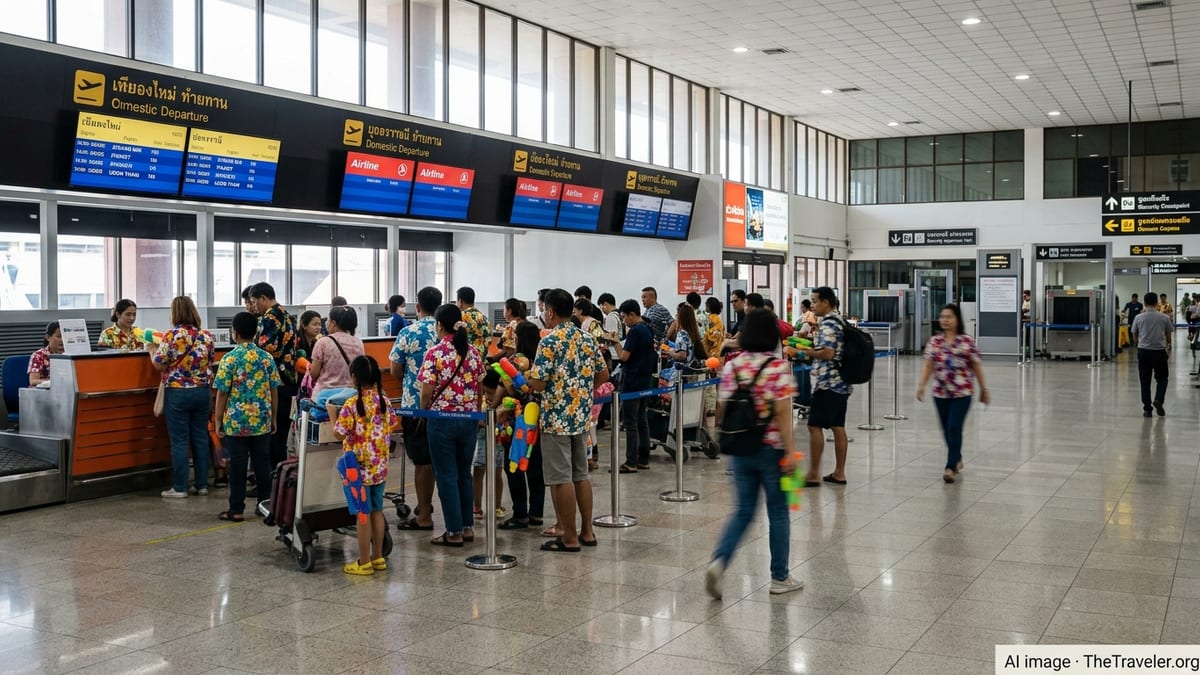
Songkran 2026 expected to test Thailand’s aviation network
Songkran, the Thai New Year holiday held from 13 to 15 April, is traditionally the country’s peak domestic travel period as residents return to their hometowns or head to major festival hubs such as Bangkok, Chiang Mai and Phuket. Tourism planners expect 2026 to bring another heavy wave of movements, building on robust domestic tourism and large-scale festival investments under national tourism campaigns.
Government documents on Songkran planning and tourism promotion for 2025 and 2026 highlight the Maha Songkran World Water Festival and the wider Amazing Thailand Grand Tourism and Sports Year framework as key drivers for both domestic and inbound trips. Publicly available information from tourism agencies indicates that Songkran remains one of the most important contributors to domestic hotel occupancy, interprovincial travel and air passenger throughput each year.
Airports of Thailand statistics and sector research show that the country’s main hubs, including Bangkok’s Suvarnabhumi and Don Mueang airports, have been operating near or above designed capacity for years, even outside holiday peaks. The anticipated Songkran wave in 2026 is therefore being treated as a fresh stress test for terminals, runways and airside operations, particularly as travel demand has recovered strongly on key domestic routes.
Monetary and tourism outlook assessments released in 2025 and early 2026 acknowledge recent headwinds for international arrivals, but they also underline the resilience of domestic travel. Analysts note that holiday periods such as Songkran remain relatively insulated, supported by cultural importance, pent-up demand for family visits and targeted travel incentives that lower the cost of flying.
Airlines add extra flights and deploy additional aircraft
In the run-up to the April festival period, Thai carriers have been reallocating capacity to domestic routes expected to see the highest concentrations of travelers. Information in published coverage about previous Songkran operations shows that airlines have typically mounted special flights from Bangkok to northern and northeastern cities, and similar patterns are emerging for 2026 scheduling.
Reports from local travel news outlets describe Thai AirAsia’s approach during the 2025 Songkran peak as a template being refined for 2026, with dedicated additional services on popular routes linking Don Mueang to Chiang Mai, Chiang Rai, Udon Thani, Ubon Ratchathani and Nakhon Phanom. Airlines are again preparing to upgauge aircraft and stage more frequent departures on these corridors, aiming to smooth passenger flows across the three official holiday days and adjacent weekends.
National and regional carriers are also taking delivery of new aircraft under previously announced fleet plans, and those jets are being incorporated into domestic rotations. Publicly accessible fleet expansion timelines for airlines such as Thai Airways and Bangkok Airways indicate a gradual rise in the number of narrow-body and wide-body aircraft available, which in turn supports short-haul capacity boosts during compressed peaks like Songkran.
At the same time, internal airport expansion programs, especially at Suvarnabhumi, are intended to raise overall passenger handling capacity in coming years. While only some of this capacity will be in place for the 2026 holiday, operators are relying on a combination of infrastructure upgrades, operational measures and close coordination with airlines to accommodate what is expected to be record or near-record holiday throughput.
Fare promotions and tax measures aim to keep travel affordable
Affordability remains a central concern for domestic travelers facing higher living costs and elevated airfares. In response, Thai carriers and policymakers are aligning Songkran 2026 preparations with a suite of promotional and fiscal measures designed to ease the burden on passengers while still supporting airline viability.
Recent coverage from regional business media describes a government-backed reduction in excise tax on jet fuel for domestic flights in 2026, agreed with the Airlines Association of Thailand and several major carriers. Publicly available information indicates that this fuel tax cut is intended to give airlines more room to offer promotional fares and special holiday schemes on domestic routes without eroding margins to unsustainable levels.
In parallel, airlines have been marketing Songkran-specific discounts and campaigns. Reports from Thai travel and news outlets on previous seasons highlight how Thai AirAsia, among others, deployed percentage-based fare reductions for passengers booking direct on digital channels during March for travel over the April holiday. Similar discount frameworks, flash sales and bundled offers are now being advertised for the upcoming festival, particularly on trunk routes between Bangkok and key provincial cities.
Industry commentary suggests that these measures are also designed to counter perceptions of soaring domestic airfares in Thailand, which have been the subject of public debate. By combining tax relief with targeted Songkran promotions, policymakers and airlines are seeking to demonstrate tangible price benefits for travelers while channeling demand into scheduled and extra services rather than informal or overland alternatives.
Key domestic routes and regional airports brace for crowds
Bangkok’s twin airports remain the primary gateways for Songkran air traffic, but secondary and regional airports are also taking steps to manage the expected surge. Historical traffic data show that Chiang Mai, Phuket, Hat Yai, Khon Kaen and Udon Thani airports typically see sharp spikes in passenger movements during the holiday, reflecting their roles as both tourism centers and regional homecoming hubs.
Operational plans reported by Thai-language media ahead of recent Songkran periods detail measures such as extended check-in counter hours, temporary staffing increases, additional security and baggage handling teams, and closer coordination with ground transport providers. Similar arrangements are anticipated for 2026, particularly at airports serving provinces that host large water festival events or have strong outbound labor migration patterns.
Carriers are also adjusting flight times to distribute departures more evenly through the day, which can ease pressure on airport infrastructure and reduce the likelihood of knock-on delays. Earlier morning and late-night departures on peak days are becoming more common features of Songkran schedules, especially on heavily trafficked Bangkok to Chiang Mai and Bangkok to Phuket sectors.
For many provincial airports, the Songkran rush is not only a logistical challenge but also a significant economic opportunity. High load factors on domestic flights translate into increased revenue for local service providers, from airport concessions to ground transport operators, reinforcing incentives for local authorities and airport managers to maintain smooth passenger experiences during the holiday.
Balancing record demand with safety and service standards
As airlines push capacity higher and lower fares to stimulate bookings, there is growing attention on maintaining safety and service quality during the compressed Songkran operating window. Guidance from the Civil Aviation Authority of Thailand and related agencies in recent years has emphasized adherence to crew duty limits, aircraft maintenance schedules and passenger rights even as flights become fuller and timetables busier.
Public information from regulatory and airport operators highlights ongoing investments in air traffic management, runway safety systems and terminal crowd control protocols, all of which are critical when weather disruptions or operational issues arise during high-demand periods. These measures are particularly important over Songkran, when many travelers are infrequent flyers or are undertaking long journeys that combine air, rail and road segments.
Service standards are also under scrutiny, with consumer expectations shaped by experiences in previous peak seasons. Airlines are promoting digital tools such as mobile check-in, self-service bag drops and real-time flight updates to reduce queues and manage crowding, while airport operators have been expanding seating, wayfinding and basic amenities at busy terminals.
With Songkran 2026 shaping up to be a major test of Thailand’s aviation and tourism systems, the combination of extra aircraft, discounted domestic fares and expanded operational planning is being positioned as a signal that the country is ready to support unprecedented levels of holiday travel, even amid broader volatility in the global tourism landscape.