

More news on this day
Travelers flying out of Thailand will face higher ticket prices from mid-2026, as authorities approve a more than 50 percent hike in international departure taxes to help finance a major expansion of the country’s airport infrastructure.
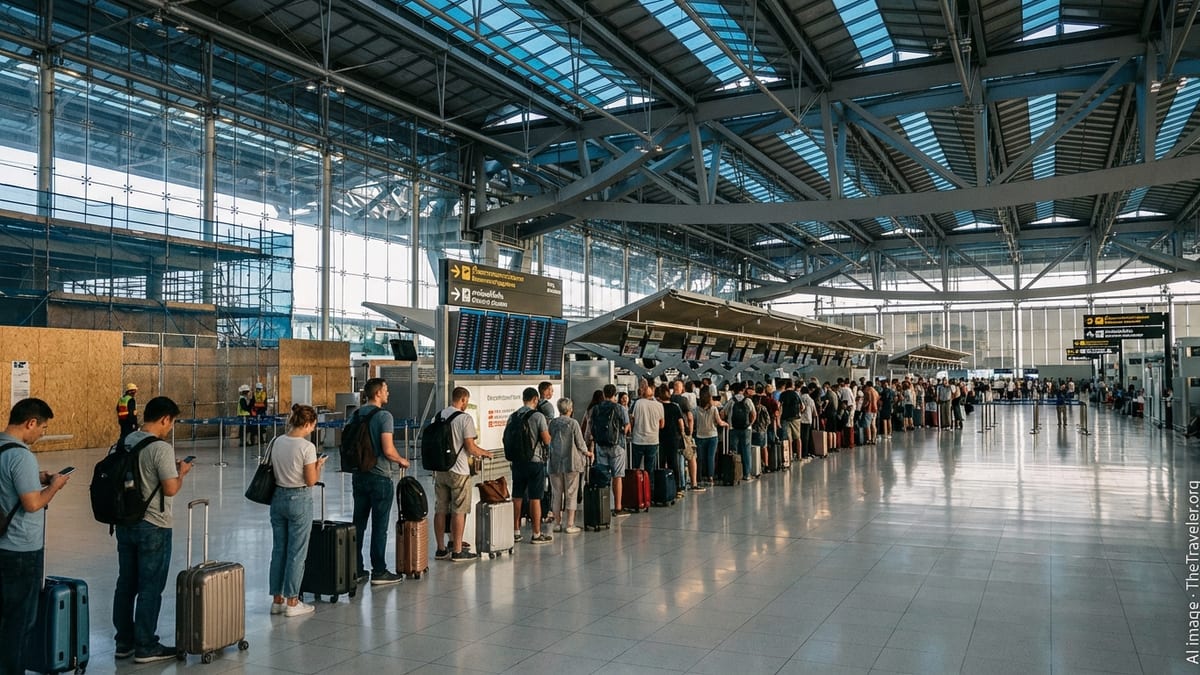
What Is Changing For Passengers Departing Thailand
Airports of Thailand, the state-controlled operator of the country’s six busiest airports, has secured approval in principle to lift the international Passenger Service Charge on outbound travelers from 730 baht to 1,120 baht per person, an increase of 53 percent. The higher levy will be embedded in airfares rather than paid separately at the airport, so most passengers will only notice the change in the final ticket price.
The new rate will apply at Bangkok Suvarnabhumi, Bangkok Don Mueang, Phuket, Chiang Mai, Hat Yai and Chiang Rai airports, which together handle the vast majority of Thailand’s international traffic. Domestic departure charges are not affected by this latest decision and are set to remain at 130 baht per passenger.
Because airlines must publish taxes and fees well in advance, regulators have indicated that the higher charge will take effect around mid-2026, with some reports pointing to implementation between May and June. Carriers will be required to give at least four months’ notice before the new rates begin appearing on tickets.
For the typical long haul economy ticket, the higher Passenger Service Charge represents a modest share of the overall fare. Thai aviation officials argue that, in relative terms, the increase is unlikely to deter most visitors, especially compared with fluctuations in base ticket prices driven by fuel costs and capacity.
Why Thailand Is Raising Its Departure Tax Now
The Passenger Service Charge hike is part of a broader effort to modernize and expand Thailand’s airport infrastructure after a strong rebound in travel demand. Airports of Thailand has outlined a multiyear investment program centered on a new South Terminal at Suvarnabhumi Airport, a project valued at more than 200 billion baht that will roll out in phases over the next decade.
The planned terminal and associated runway and access upgrades are designed to lift Suvarnabhumi’s capacity from current levels to as many as 120 million passengers per year once fully completed. That expansion is seen as critical to easing chronic congestion at Bangkok’s main hub and supporting Thailand’s ambition to position itself as a leading aviation and tourism hub in Southeast Asia.
Airports of Thailand expects the higher international Passenger Service Charge to generate roughly 10 to 13 billion baht in additional revenue annually once fully implemented. Management has emphasized that the extra money will be earmarked for capital investment, safety and security systems, and facility upgrades, and is intended to reduce reliance on borrowing rather than to boost short term profits.
Regulators also note that more than 90 percent of major airports worldwide now impose charges not only on departing passengers but also on transit and transfer travelers. Thailand has historically levied its main airport fee only on departures, placing it among a small minority of markets. Officials are studying whether to bring Thai practices closer to international norms in future rounds of reform.
How Thailand Compares With Singapore, UK, Japan, US, France And Sweden
Thailand’s move comes as many countries use departure taxes or passenger charges to fund airport infrastructure, manage demand or support environmental goals. In the United Kingdom, the long established Air Passenger Duty is set to rise again from April 2026, with rates for most long haul economy tickets reaching triple digit pound figures per traveler. The UK duty applies to nearly all departures and is among the highest such levies in the world.
Singapore is preparing to add a green levy on all outbound flights from late 2026, collected by airlines and shown as a separate line on tickets. The charge will help pay for the higher cost of sustainable aviation fuel as the city state works toward its net zero aviation targets. The levy will sit alongside existing airport and government fees already included in fares.
Countries such as Japan, France and Sweden have also introduced or expanded their own departure or solidarity taxes in recent years, typically tiered by distance and cabin class. Sweden’s aviation tax, for example, increases for longer flights, while France applies an eco contribution on tickets that helps fund greener transport projects. The United States does not use a single nationwide departure tax in the same way, but various federal and local fees and security charges are bundled into ticket prices and support airport and air traffic infrastructure.
By lifting its international Passenger Service Charge to 1,120 baht, Thailand will remain mid range in global terms when converted into major currencies, but much closer to peers than when the fee stood at 730 baht. Thai officials argue that aligning the country’s charging structure with other major aviation markets is essential if it is to sustain investment without undermining its competitive position as a regional hub.
Impact On Airfares, Airlines And Travel Planning
For individual travelers, the increase in Thailand’s departure tax translates to an additional 390 baht per international ticket, roughly the cost of a modest meal in Bangkok. That amount is small compared with the swings in base fares that can result from seasonal demand or capacity constraints, but it will be a fixed, unavoidable part of every outbound international journey sold once the new rates take effect.
Airlines will be responsible for collecting the higher charge and remitting it to Airports of Thailand and, where relevant, the Department of Airports. Because the Passenger Service Charge is built into the advertised fare, passengers will not need to pay any extra fee at check in or at the boarding gate, a practice Thailand phased out years ago when it moved away from cash collection at departure.
Travel industry analysts expect limited impact on overall demand, particularly from long haul markets, given that Thailand remains a relatively affordable destination and air connectivity continues to expand. However, price sensitive regional travelers and low cost carriers operating around the margins may feel the effect more sharply, especially on routes where total taxes and charges form a larger share of the ticket price.
Frequent travelers and tour operators are being advised to factor the higher departure tax into 2026 and 2027 budgets, especially for large groups and inclusive packages where small per passenger increases can add up quickly. Passengers booking far in advance for travel that straddles the implementation date should pay close attention to the tax breakdown on their tickets, as fares issued before the effective date may still reflect the lower charge.
What Visitors Should Watch For Ahead Of Mid 2026
With the new departure tax still several months away, travelers planning trips to or from Thailand in late 2026 and beyond should monitor airline communications and booking platforms for confirmation of when the higher Passenger Service Charge is applied to specific routes. Because authorities require a notice period, the change will be signposted in advance in fare conditions and tax summaries.
Visitors should also be aware that Thailand is rolling out other aviation and border modernizations in parallel, including digital arrival documentation for foreign nationals. While these initiatives do not add new costs, they may slightly change pre travel formalities and timelines, particularly for those used to paper based entry forms.
For now, the key financial change is confined to international departures from the six main Airports of Thailand hubs. Regional airports managed by the Department of Airports are working on their own, smaller adjustments to service fees, particularly where new common use passenger processing systems are being installed, but those changes are more limited in scale than the flagship Passenger Service Charge hike.
As construction work on the South Terminal and other projects ramps up, passengers using Bangkok Suvarnabhumi and Thailand’s other gateways can expect more visible signs of expansion over the coming years. Authorities argue that accepting a higher departure tax today is the price of securing larger, more efficient and less congested airports tomorrow, positioning the country to handle the next wave of tourism and air travel growth.