

More news on this day
International passengers flying out of Thailand face higher costs from June 20, 2026, after Airports of Thailand approved a sharp increase in departure fees at major gateways including Bangkok, Phuket and Chiang Mai.
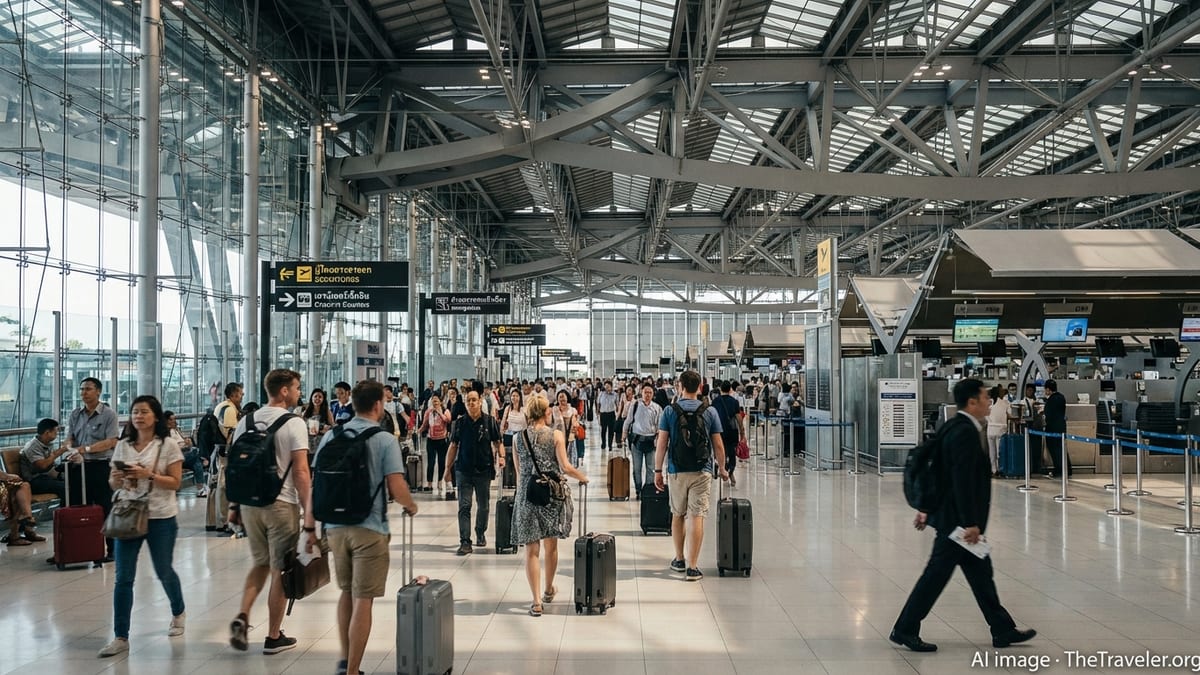
What Is Changing at Thailand’s Major Airports
Airports of Thailand, the state-controlled operator of the country’s busiest air gateways, has confirmed that the international Passenger Service Charge on outbound flights will rise from 730 baht to 1,120 baht per traveler. The hike, equivalent to a 53 percent increase, will be applied to tickets for flights departing from June 20, 2026.
The revised charge covers all six airports managed by Airports of Thailand: Bangkok’s Suvarnabhumi and Don Mueang, Phuket International Airport, Chiang Mai International Airport, Mae Fah Luang Chiang Rai International Airport and Hat Yai International Airport. For international passengers, the fee is typically bundled into the total airfare rather than paid separately at the airport.
While outbound international travelers will shoulder the higher cost, the domestic Passenger Service Charge remains frozen at 130 baht per person. Authorities argue that maintaining the lower domestic levy helps protect local connectivity and keeps fares for Thai residents and domestic visitors relatively affordable.
The decision follows a period of consultation and regulatory review, culminating in December 2025 approval by Thailand’s Civil Aviation Board. Airports of Thailand executives say the new rate reflects the need to fund infrastructure, security and service upgrades as passenger numbers recover across the country’s main hubs.
Bangkok, Phuket and Chiang Mai Among the Hardest Hit
The impact of the increase will be felt most acutely at Thailand’s busiest international gateways, led by Bangkok’s Suvarnabhumi Airport. As the country’s primary long haul and regional hub, Suvarnabhumi handles the largest share of international departures, including direct links to Europe, the Middle East, North America and major Asian capitals.
Don Mueang Airport, Bangkok’s second international gateway and a major base for low cost carriers, will also apply the higher fee. This is likely to be particularly noticeable for budget conscious travelers flying short haul routes around Southeast Asia, where the fixed passenger charge makes up a larger proportion of the total ticket price.
Phuket and Chiang Mai, the main entry points for beach and cultural tourism respectively, are expected to see the increase passed through quickly in outbound ticket prices. Airlines serving these destinations typically bundle local charges into their published fares, meaning leisure travelers heading home from Thailand’s most popular holiday regions will encounter slightly higher costs from late June.
Smaller but strategically important airports in Hat Yai and Chiang Rai are covered as well, ensuring that nearly all international passengers departing Thailand through major commercial hubs will be subject to the new rate. For many visitors on multi city itineraries who depart via Bangkok or Phuket, the higher fee will be embedded in their return leg.
Why the Fee Is Going Up and How Much Revenue It Brings
Officials at Airports of Thailand and the Ministry of Transport present the higher Passenger Service Charge as a financial tool to support airport operations and long planned investments. Benchmarking studies submitted to regulators argue that the previous 730 baht rate had not kept pace with rising operating costs, modern security requirements and passenger expectations for faster processing and better amenities.
By moving to 1,120 baht, Airports of Thailand expects to generate several billion baht in additional annual revenue, with some local estimates placing the figure around 10 billion baht if international traffic continues to recover. That money is earmarked in principle for projects such as terminal expansions, improved baggage handling systems, digital check in and biometric screening, as well as security and airside infrastructure.
Supporters of the increase say that Thailand needs sustained investment to remain competitive against regional hubs in Singapore, Kuala Lumpur and Ho Chi Minh City. They contend that improved facilities and smoother passenger flows can enhance the overall travel experience, encouraging higher spending and repeat visits, even if the upfront cost per ticket is marginally higher.
Critics, however, question whether the extra income will be clearly and transparently directed toward passenger facing improvements. Opposition politicians and consumer advocates have called for detailed investment plans and progress reports, warning that travelers may feel short changed if service quality and congestion do not visibly improve in parallel with the higher fees.
What It Means for Airfares and Tourists’ Budgets
For most international travelers, the higher airport fee will appear as a modest but noticeable increase in the total cost of a ticket departing Thailand. On many routes, particularly those flown by low cost carriers, analysts estimate the new Passenger Service Charge could add roughly 7 to 10 percent to the final fare for a one way outbound journey.
On a short regional flight where the base fare might be around 4,000 to 5,000 baht, the 390 baht increase in the charge becomes significant relative to the overall price. Budget travelers and backpackers, a key segment for Thailand’s tourism industry, may feel the pinch most strongly, especially if they are combining multiple regional flights as part of a longer journey through Southeast Asia.
For long haul travelers flying in premium cabins, the higher fee represents a much smaller share of the total ticket cost, which often runs into tens of thousands of baht. In those cases, the airport charge is unlikely to be a decisive factor in choosing Thailand over rival destinations, although tour operators and travel agents are already updating package prices and cost estimates.
Travel industry insiders advise passengers to pay close attention to the fine print when booking flights that involve a departure from Thailand after June 20, 2026. Because the Passenger Service Charge is included in the ticket, return fares that start in another country but include a Thai departure segment later in the itinerary may rise as airlines adjust their pricing in advance of the new implementation date.
Tourism Industry Concerns Over Timing and Competitiveness
The timing of the fee hike has sparked an intense debate within Thailand’s tourism and aviation sectors. Some airline and hotel operators argue that the decision comes just as the country is working to rebuild visitor numbers, which have not yet returned to their pre pandemic peak. Recent data show that international arrivals in 2025 remained below 2024 levels, and early figures for 2026 suggest a further softening in demand.
Critics warn that raising the cost of departure risks eroding Thailand’s long standing reputation as an affordable holiday destination. Competing markets in the region, including Vietnam, Indonesia and the Philippines, are stepping up promotions and in some cases offering incentives or fee waivers to attract more international visitors. Against that backdrop, a headline rise of more than 50 percent in a widely reported airport fee can be a sensitive signal.
Former officials and industry analysts have publicly questioned whether the higher charge will put Thai airports at a price disadvantage compared with leading global hubs that offer more extensive facilities and higher international rankings. They note that if airlines and tour companies perceive Thailand as a relatively more expensive endpoint, they might shift some capacity elsewhere, especially on marginal or seasonal routes.
Government representatives counter that the Passenger Service Charge is only one element in a much broader cost equation that includes airfares, accommodation, food, local transport and activities. They argue that Thailand’s overall value proposition remains strong and that investments funded by the new revenue will ultimately make its airports more attractive and efficient.
How Thailand’s Airport Fees Compare Globally
The rise in the international Passenger Service Charge has brought renewed attention to how Thai airports stack up against their peers around the world. Some domestic commentators highlight that after the adjustment, international departure fees at Suvarnabhumi will be on par with, or higher than, those charged at several top rated airports in East Asia and the Middle East.
Supporters of the increase point out that a number of leading global hubs, such as Singapore’s Changi Airport, already levy higher combined passenger and facility charges, reflecting their extensive services, modern infrastructure and ongoing investment cycles. They argue that Thailand’s previous rates were comparatively low for a country handling tens of millions of international passengers each year.
The comparison is complicated by differences in how countries structure aviation fees. In some markets, passenger service charges are bundled with security or tourism levies, while elsewhere they appear as separate line items on the ticket. Currency fluctuations and varying airport ownership models further muddy like for like assessments.
Nevertheless, the perception of relative cost matters in the highly competitive world of global aviation. If travelers and airlines come to view Thai airports as more expensive without a corresponding jump in service quality, that perception could weigh on route planning and travelers’ destination choices over the medium term.
Government and Airport Operator Justifications
Airports of Thailand and the Ministry of Transport have moved swiftly to frame the fee increase as a necessary, carefully considered step rather than a simple revenue grab. Officials emphasize that the Civil Aviation Board’s approval followed formal studies of passenger behavior, cost structures and international benchmarks, which suggested that the higher charge would not significantly deter travel.
They argue that maintaining safety and security standards, handling growing aircraft movements and modernizing facilities all require sustained capital expenditure. In their view, asking international passengers to pay a higher service charge is a reasonable way to finance these needs without placing additional strain on the national budget or domestic travelers.
The government has also stressed that the adjustment is the first major revision to the international Passenger Service Charge in several years, during which time inflation, energy prices and labor costs have risen. Officials contend that without an increase, there was a risk of underinvestment, congestion and service shortfalls that could damage Thailand’s reputation in the long run.
At the same time, regulators insist that they will continue to monitor the impact of the new rate on passenger numbers and airline operations. Should there be clear evidence that the higher fee is materially discouraging travel or undermining connectivity, they say the structure of charges can be revisited in future regulatory reviews.
What Travelers Should Do Before June 20, 2026
For travelers planning trips that involve flying out of Thailand, the key date to keep in mind is June 20, 2026, when the new charge takes effect. Tickets issued for departures on or after that date are expected to reflect the higher fee, regardless of when they were booked, depending on airline policy and how quickly carriers adjust their pricing systems.
Travel agents recommend that passengers who are highly price sensitive consider locking in itineraries where the outbound segment from Thailand falls before the implementation date, if that aligns with their plans. For those traveling later, the increase may be unavoidable, but understanding that the change relates to a regulated airport fee can help explain fluctuations in fares.
Frequent visitors to Thailand, including business travelers and regional holidaymakers, may want to factor the higher cost into their annual travel budgets. While the additional 390 baht per international trip is not dramatic in absolute terms, it can add up for those who pass through Thai airports several times a year.
Above all, observers say the development underscores the importance of transparency in how aviation fees are presented and used. As Thailand seeks to maintain its position as one of the world’s most visited countries, tourists and airlines alike will be watching closely to see whether the higher international Passenger Service Charge delivers the promised improvements at airports in Bangkok, Phuket, Chiang Mai and beyond.