

More news on this day
Residents in South Pattaya are raising fresh alarms over traffic dangers, late-night youth motorcycle racing and aggressive stray dogs, prompting renewed scrutiny of traveler safety in one of Thailand’s busiest beach cities.
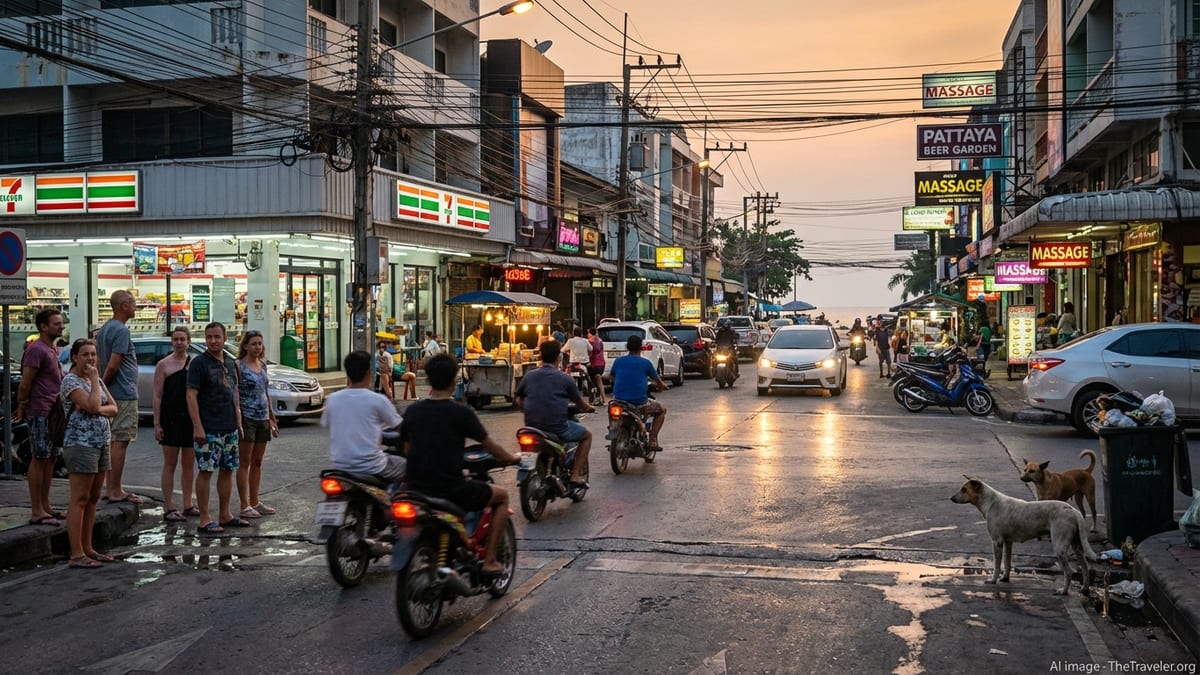
Locals Sound Alarm Over Traffic and Tourist Safety
South Pattaya, long known for its neon nightlife and crowded streets, is facing intensifying criticism from residents who say uncontrolled traffic and unruly motorbike behavior are putting both locals and tourists at risk. Complaints have surged in recent months as visitor numbers rebound and congestion returns on key routes connecting South Pattaya, Jomtien and the city’s main entertainment zones.
Residents describe a patchwork of traffic schemes, one-way conversions and parking restrictions that have failed to keep pace with rising vehicle volumes. On narrow roads where cars, motorcycles, delivery trucks and pedestrians compete for limited space, near misses and minor collisions are described as a daily occurrence. Tourists unfamiliar with Thai driving norms, especially those renting motorcycles, are seen as particularly vulnerable.
Longtime Pattaya observers note that city hall has announced several rounds of traffic-management measures, such as expanded odd-even parking zones and targeted rush-hour controls, aimed at smoothing flows on major arteries. Yet in South Pattaya’s smaller streets and busy beach-adjacent corridors, residents say the reality on the ground remains chaotic, with enforcement uneven and physical road conditions often poor.
For travelers, the result is a landscape where crossing the street or hopping on a rented scooter can carry more risk than expected in a major tourist hub. Travel agents and hotel staff have begun quietly reminding guests to use licensed taxis or ride-hailing cars where possible, and to avoid driving themselves after dark or in heavy rain.
Youth Motorcycle Racing and Late-Night Noise Complaints
Adding to concerns is a pattern of youth motorcycle racing and high-speed group riding reported in and around South Pattaya, particularly late at night. Local media and residents describe groups of young riders, including visiting tourists from the Middle East during their school holidays, using city streets as informal race tracks, revving engines, removing mufflers and weaving through traffic at high speed.
Police operations have periodically targeted these riders, with checkpoints set up on key approach roads and along popular cruising routes to check licenses, seize modified exhausts and deter drunk or reckless driving. Authorities in Chonburi province have publicly acknowledged that repeated complaints from residents and business owners about noise and dangerous riding have prompted these crackdowns.
Despite these efforts, locals report that the problem tends to ebb and flow rather than disappear. Social media posts and community forums from late 2025 and early 2026 show videos of packs of motorcycles racing along coastal and secondary roads at all hours, sometimes without helmets or plates, and in defiance of one-way systems. Expat residents describe hearing “screaming motorcycles” on major roads near Jomtien and South Pattaya at both mid-afternoon and the early hours of the morning.
Tourism operators say the racing and exhaust noise are more than just a nuisance. Guests have complained of sleepless nights, while some families report avoiding certain streets after dark because they feel unsafe walking close to fast-moving bikes. Hotel managers worry that if the issue persists into the next high season, it could damage Pattaya’s attempt to broaden its appeal as a family-friendly beach city.
Stray Dogs and Rabies Concerns Near Tourist Areas
Beyond traffic and motorbikes, South Pattaya residents are again drawing attention to a longstanding but under-reported hazard: stray dogs roaming streets, alleys and beachfronts close to hotels and nightlife zones. Packs of semi-owned or unvaccinated dogs are common in many Thai cities, but locals say the concentration around South Pattaya’s side streets has become more worrying as foot traffic increases.
Animal welfare groups and veterinary clinics in the Pattaya area have for years highlighted cases of dogs injured in traffic or involved in minor attacks on pedestrians and motorcyclists. Residents recall repeated incidents in which dogs darted into the road, causing sudden braking, skids and crashes. Others describe being chased while walking or cycling at night, forcing them into the path of oncoming vehicles or back into busy intersections.
Health professionals stress that Thailand remains a country with endemic rabies risk, and any dog bite or scratch should be taken seriously. Travelers are advised to avoid feeding or petting stray animals and to seek immediate medical care, including post-exposure vaccination, if they are bitten or licked on broken skin. Local clinics in Pattaya are accustomed to treating such cases, but residents argue that prevention through better population control and vaccination campaigns is still unevenly implemented.
City officials have periodically partnered with volunteer groups to conduct sterilization and vaccination drives in beach neighborhoods, but residents report that new dogs continue to appear and that enforcement of feeding bans in certain public areas is sporadic. For visitors strolling between South Pattaya and nearby beaches at night, the presence of stray packs lingering around food stalls and rubbish points remains an unsettling part of the urban landscape.
Authorities Tighten Measures as Tourism Rebounds
Local authorities insist they are responding to safety concerns in South Pattaya and surrounding districts, pointing to a series of traffic and public-order campaigns rolled out over the past year. Police have stepped up late-night checkpoints targeting intoxicated and unlicensed riders, while municipal officials have expanded regulated parking zones and floated new traffic flows designed to ease bottlenecks on key tourist corridors.
These efforts come as Thailand’s broader tourism industry accelerates its recovery, with Pattaya among the destinations seeing strong demand from regional and Middle Eastern markets. City leaders are under pressure to balance the economic benefits of nightlife and independence-loving young visitors with the need to maintain an image of safety and order fit for families, couples and long-stay retirees.
Beyond Pattaya, national authorities have also launched campaigns against crimes affecting tourists, including recent investigations into motorcycle snatch-and-grab gangs targeting passengers in open vehicles in Bangkok. Security officials say lessons from these cases, such as physical protections on vehicles and more visible policing at night, are likely to inform future measures in other major tourist cities.
Business associations in Pattaya are calling for more predictable enforcement rather than short, highly publicized crackdowns. They argue that consistent policing of speed limits, helmet use, drunk driving and unruly street racing, coupled with better lighting and signage, would improve safety without undermining the city’s reputation for fun and freedom.
What Travelers to South Pattaya Need to Know Now
For visitors planning trips to South Pattaya in the coming months, local voices and safety experts are urging a more cautious approach to getting around. Renting a motorcycle without prior experience in Southeast Asian traffic is widely discouraged, particularly at night, during heavy rain or after drinking. Travelers are instead advised to rely on registered taxis, app-based ride services or the city’s songthaews and baht buses when moving between beaches, hotels and nightlife areas.
Pedestrians are encouraged to use marked crossings where available, to stay alert at intersections even when lights are red, and to avoid walking in the roadway on narrow streets where sidewalks are blocked or missing. When encountering groups of youths on modified bikes, stepping well back from the curb and allowing them to pass is considered a prudent precaution.
With regard to stray dogs, travelers should avoid approaching or feeding animals, keep a respectful distance in alleys or construction areas, and carry the contact details of nearby clinics recommended by their hotel in case of a bite or scratch. Those spending extended periods in Thailand, such as digital nomads or long-stay retirees, may wish to consider pre-exposure rabies vaccination after consulting with a medical professional.
Despite the concerns raised by South Pattaya residents, the city remains one of Thailand’s most visited coastal destinations, with most trips passing without serious incident. However, the latest wave of complaints about traffic, motorcycle racing and stray dogs underscores that visitors cannot assume big-city safety standards. For now, authorities and locals alike are urging travelers to enjoy Pattaya’s beaches and nightlife while exercising extra care on its streets.