

More news on this day
Thailand is preparing to introduce a 300 baht entry fee for foreign tourists arriving by air, positioning itself alongside destinations such as Indonesia, Japan, Malaysia, New Zealand, Spain and Norway that levy similar charges to support tourism infrastructure and visitor services.
Get the latest news straight to your inbox!
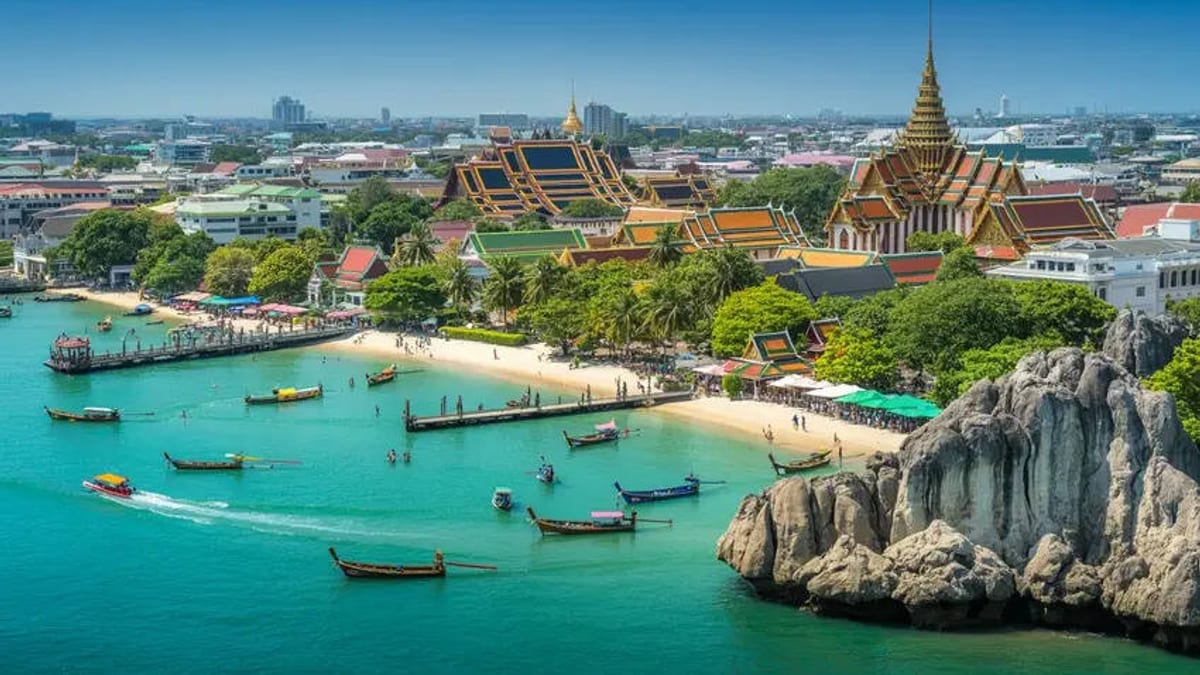
Image by Global Travel Alerts, Advisories, International Travel Alerts
Details of Thailand’s New Tourist Entry Fee
Publicly available information indicates that the long-discussed 300 baht fee will apply to international visitors entering Thailand by air for tourism purposes, with plans for a differentiated structure for land and sea entries having been repeatedly revised. Earlier cabinet approvals outlined a 300 baht charge for air arrivals and a 150 baht fee for those crossing by land or sea, but more recent coverage points to an initial focus on air travelers as the most practical starting point for collection.
Reports describe the levy as a one-time charge per trip, comparable in value to roughly 8 to 9 US dollars at recent exchange rates. Industry commentary notes that the fee is expected to be incorporated into airline ticket pricing rather than collected at immigration counters, an approach already used by several other countries. This method is seen as minimizing congestion at airports while keeping administration costs manageable for Thai authorities and carriers.
The measure follows several postponements over recent years as Thailand weighed the risk of discouraging visitors against the need for new funding streams. Coverage in regional business and travel outlets suggests that the current government views 2026 as a more favorable window, with arrival numbers closer to pre-pandemic levels and a clearer roadmap for how the funds will be earmarked.
Funding Infrastructure, Safety and Basic Visitor Coverage
Government policy documents and tourism-focused analyses indicate that revenue from the entry fee is intended to flow into a ring-fenced tourism fund, rather than general public finances. The stated priorities include improvements to basic infrastructure at popular destinations, such as restrooms, walkways, accessibility features and signage in multiple languages, all areas where visitor surveys have highlighted gaps.
Another major focus is safety and emergency response. Commentaries on the proposed fund describe allocations for enhanced lifeguard coverage at beaches, better-equipped national park rangers, and upgraded rescue and medical facilities in resort areas that see high volumes of adventure and marine tourism. These investments are framed as essential if Thailand is to sustain higher visitor numbers without a rise in high-profile accidents or overcrowding complaints.
Available reporting also notes that a portion of the fee has been earmarked for basic accident coverage or short-term insurance for foreign tourists. While details vary across drafts, the broad concept is that visitors would receive limited financial protection in the event of incidents such as transport accidents or emergency medical needs, reducing the burden on public hospitals and formalizing support that has often been provided informally in the past.
How Thailand Compares With Other Tourist Taxes Worldwide
Thailand’s move places it among a growing list of destinations that have introduced specific tourist levies to fund infrastructure and sustainability initiatives. Bali in Indonesia, for example, began charging a dedicated visitor levy in 2024 on international arrivals, with the proceeds directed toward environmental protection and cultural preservation programs on the island. Travel industry coverage notes that the fee, collected once per trip, is positioned as a contribution to maintaining Bali’s beaches, temples and waste management systems.
Japan applies a departure tax on nearly all outbound passengers, often referred to as the “sayonara tax,” which is included in airfares and helps finance tourism promotion and border-processing upgrades. Malaysia imposes a per-room, per-night charge on hotel stays, while New Zealand’s International Visitor Conservation and Tourism Levy is generally bundled with visa or travel authorization costs and supports national parks, biodiversity and infrastructure in high-pressure destinations.
In Europe, parts of Spain apply per-night tourist taxes on accommodation, particularly in the Balearic Islands, to manage the impacts of high visitor volumes on local communities and natural resources. Norway and several other Nordic countries historically relied on value-added tax across tourism services rather than standalone visitor levies, but public debate there has increasingly focused on dedicated fees for cruise tourism and heavily visited fjord regions. By opting for a flat per-trip entry charge, Thailand is aligning itself more closely with long-haul and island destinations that favor simple, easy-to-collect mechanisms.
Economic Rationale and Industry Reactions
Analysts tracking Thailand’s tourism strategy describe the entry fee as part of a broader shift from volume-focused growth to a model centered on higher-value, more sustainable visitation. The country has set ambitious medium-term arrival targets while also facing pressure to address overcrowding, waste and environmental degradation at flagship locations such as Phuket, Krabi and parts of the Gulf of Thailand. A dedicated levy is presented in policy discussions as a way to ensure that international visitors share more directly in the cost of maintaining these destinations.
From an economic perspective, the fee is relatively small compared with typical long-haul airfare costs, and commentators in regional travel media suggest it is unlikely to significantly deter most tourists. However, there is ongoing debate within the hospitality and aviation sectors about timing and communication. Airlines have sought clarity on how the charge will be integrated into ticket systems, while hotel and tour operators emphasize the importance of clear messaging so that travelers see tangible benefits from the extra cost.
Consumer reactions in online travel forums and regional commentary have ranged from acceptance of the fee as a reasonable contribution to skepticism over whether the funds will be transparently used. Comparisons are often drawn with tourist levies elsewhere, where visible improvements to facilities and conservation projects have helped build public support. Observers note that Thailand’s ability to demonstrate early wins on infrastructure upgrades, safety enhancements and environmental projects may play a decisive role in how the fee is perceived in the years ahead.
What Travelers Should Expect When the Fee Takes Effect
For international visitors planning future trips to Thailand, the most immediate impact of the 300 baht entry fee is expected to be a modest increase in the overall ticket price for flights into the country. Current reporting suggests that travelers will not need to take any additional steps at the border, as the fee is set to be collected automatically through airline reservation systems and remitted onward through official channels.
Prospective visitors are advised by travel industry guidance to check their booking breakdowns and carrier notices once implementation dates are formally confirmed, since airlines may label the new charge differently in fare components. Package tour operators are also expected to roll the fee into advertised prices, meaning that many travelers may only see it as part of an overall total rather than a standalone line item.
As Thailand implements the levy, travel analysts anticipate that the policy will be closely watched by neighboring countries that are considering similar measures. With Bali’s levy, Japan’s departure tax, Malaysia’s hotel-based charges, New Zealand’s conservation-focused fee and Europe’s expanding network of city and regional tourist taxes, the Thai entry fee underscores a wider shift toward explicit visitor contributions to the upkeep of the places they come to enjoy.