

More news on this day
As Thailand prepares for Songkran in April 2026, the country’s traditional New Year is taking on added significance, arriving as a fully UNESCO‑recognised celebration that now blends centuries‑old water rituals with a fast‑evolving lineup of large‑scale festivals and regional experiences aimed at both domestic and international travelers.
Get the latest news straight to your inbox!
UNESCO Recognition Elevates Thailand’s Water New Year
Songkran, long celebrated as Thailand’s traditional New Year, enters 2026 with strengthened global status after “Songkran in Thailand, traditional Thai New Year festival” was added to UNESCO’s Representative List of the Intangible Cultural Heritage of Humanity in 2023. Publicly available information from UNESCO and Thai cultural institutions describes the festival as a living tradition built around water blessings, family reunions, and community merit‑making, now formally recognised as a heritage practice that should be safeguarded for future generations.
This recognition has prompted renewed attention to the non‑commercial heart of Songkran. Cultural agencies and museums emphasise the values of gratitude, respect for elders, and intergenerational bonds that underpin the festival’s rituals, from pouring scented water over Buddha images to asking forgiveness from parents and grandparents. The UNESCO listing is also encouraging a stronger focus on regional diversity, highlighting that Songkran customs vary from the Lanna‑influenced north to central royal court traditions and coastal communities in the south.
Travel planners report that the UNESCO status is already influencing visitor behaviour. Instead of viewing Songkran purely as a water‑fight holiday, more travelers are seeking ways to participate respectfully in temple ceremonies, observe local processions, and learn about the symbolism behind the water rituals, floral offerings, and traditional costumes that now feature more prominently in destination marketing.
Key Dates and How 2026 Is Shaping Up
In 2026, Thailand’s official Songkran public holidays fall on April 13, 14, and 15, aligning with the modern fixed dates used nationwide. Transport advisories, public‑holiday calendars, and tour‑operator schedules point to these three days as the core of the break, when government offices, many local businesses, and schools close, and traffic volumes spike on interprovincial roads and at major airports.
However, the experience for travelers increasingly stretches well beyond this long weekend. Recent patterns, including the extended Songkran programme in 2024 and festival round‑ups for 2025 and 2026, indicate that many cities now launch Songkran‑themed activities earlier in April and keep them running into the following week. Water‑splashing zones, concerts, and cultural fairs commonly operate from the preceding weekend, while some destinations, such as coastal Chon Buri province, continue festivities with late‑Songkran events known for drawing large domestic crowds.
Travel companies are responding by treating roughly April 10 to April 20 as Songkran high season in 2026. Package itineraries, booking advisories, and blackout‑date notices show that flight seats, intercity trains, and centrally located accommodation in Bangkok and major resort areas are expected to be under pressure throughout that window. Travelers are being encouraged to secure rooms near preferred celebration areas and factor in additional transit time, particularly if they plan to move between destinations during the peak days.
Traditions Behind the World‑Famous Water Fights
While Songkran is widely associated with exuberant water battles, the festival’s origins are deeply spiritual. Cultural research and museum resources describe Songkran as a time to symbolically wash away misfortune and welcome the new year with purity and merit. Early mornings are traditionally dedicated to visiting temples, offering alms to monks, and participating in bathing rituals for Buddha images using jasmine‑scented water.
Another core practice involves “rod nam dam hua,” a gentle ceremony in which younger family members pour fragrant water over the hands of elders, often accompanied by well‑wishes and apologies. In many communities, sand pagoda building at temples, traditional music, and folk games also play a central role, underscoring Songkran’s identity as a family‑oriented, community‑based festival rather than only a street party.
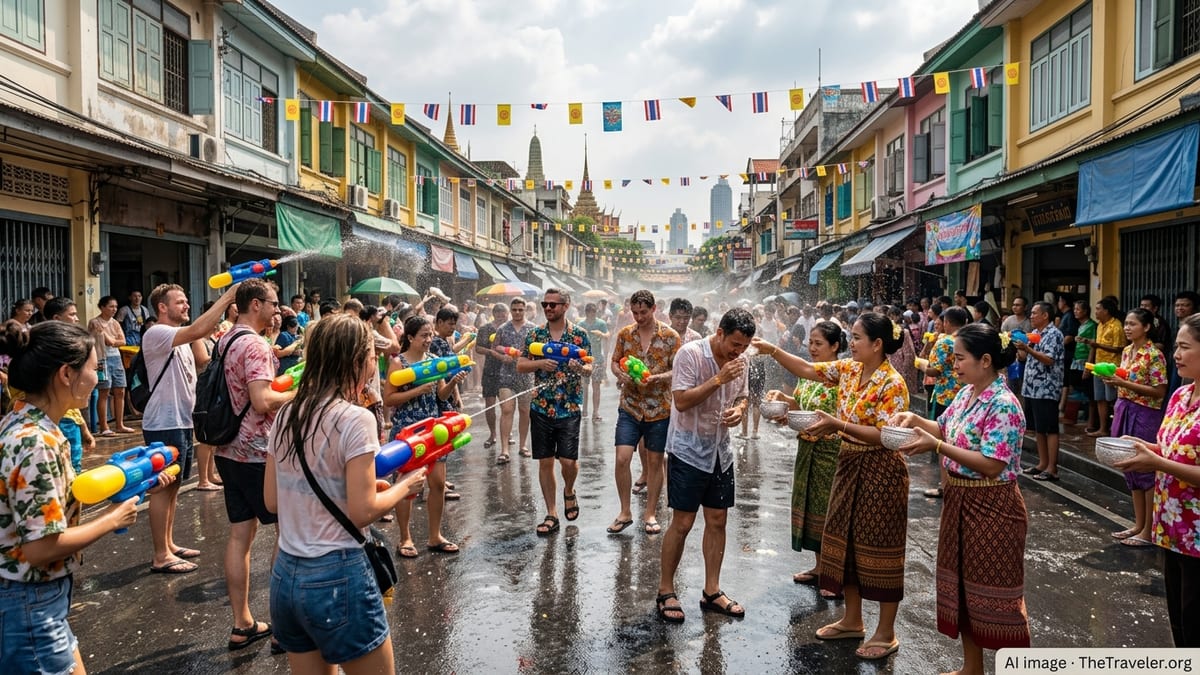
The modern water‑splashing culture has evolved from these purification beliefs. City streets now fill with plastic water pistols, hoses, and cooling sprays in the April heat, but public campaigns continue to highlight respectful behaviour, moderated water pressure, and attention to vulnerable groups such as small children and the elderly. Safety advisories for 2026 again stress road safety, responsible alcohol consumption, and awareness of local rules around protected zones where quieter observance is encouraged.
Top Destinations for Songkran 2026
Bangkok is set to remain the most visible stage for Songkran 2026. Popular travel coverage points to major water‑play zones in central commercial districts, along with large‑scale music and dance events that turn key streets into festival corridors. At the same time, the capital’s historic core along the river offers a contrasting experience, with temples hosting more traditional ceremonies, flower‑laden processions, and cultural performances that foreground the UNESCO‑recognised heritage elements.
Chiang Mai in the north continues to be one of the most sought‑after destinations, with tourism forecasts in previous years citing six‑figure visitor numbers during Songkran. The city’s moat‑lined old town and surrounding streets become an almost continuous ring of water activity, while Lanna‑style traditions, including processions of Buddha images and local dance performances, give the festival a distinctive character. Rail and air services into the city around the April 13 to 15 period are expected to be particularly busy in 2026.
On the Gulf and Andaman coasts, Pattaya and Phuket offer beach‑adjacent interpretations of Songkran. Pattaya’s celebrations regularly extend beyond the official dates, culminating in Wan Lai festivities that draw domestic travelers for one last major wave of water‑splashing and concerts. Phuket combines seaside parties in resort districts with more sedate cultural observances at Sino‑Portuguese shophouses and local temples in Phuket Town, appealing to visitors looking to balance nightlife with heritage exploration.
For travelers seeking a quieter and more traditional perspective, historical centres such as Ayutthaya and secondary cities along the Mekong and in the lower north are being highlighted more often in 2026 itineraries. These areas tend to focus on temple fairs, folk performances, and community rituals, giving visitors a closer view of the practices that helped earn Songkran its UNESCO recognition.
Planning a Respectful and Rewarding Songkran Trip
As Songkran grows in scale and international awareness, travel advisories increasingly emphasise cultural sensitivity. Publicly available guidance recommends that visitors dress modestly when entering temples, avoid throwing water at monks, the elderly, young children, or motorcyclists, and be prepared for temporary road closures and crowd control measures around major celebration streets. Lightweight clothing that dries quickly, waterproof phone cases, and respect for no‑splash zones all feature in current packing and planning advice.
Booking strategies for 2026 are also evolving. Airline and tourism platforms point to expanded domestic capacity around the festival period but still advise early reservations, particularly for evening flights on April 11 and 12 and return travel after April 16. Within cities, staying within walking distance of either a major water‑play area or a preferred temple district can minimise transit challenges and allow travelers to experience sunrise rituals and late‑afternoon street celebrations without long commutes.
For many visitors, the appeal of Songkran 2026 lies in balancing the festival’s two faces. Morning hours can be devoted to temple offerings, quiet observation of rituals, and learning about the meaning behind the fragrant water, floral garlands, and traditional attire that define the New Year. Afternoons and early evenings then open into a more exuberant atmosphere of music, spontaneous water fights, and public performances. With its new UNESCO‑recognised status and an increasingly diverse map of destinations, Songkran in April 2026 is positioned to be one of Thailand’s most compelling cultural travel experiences of the year.