

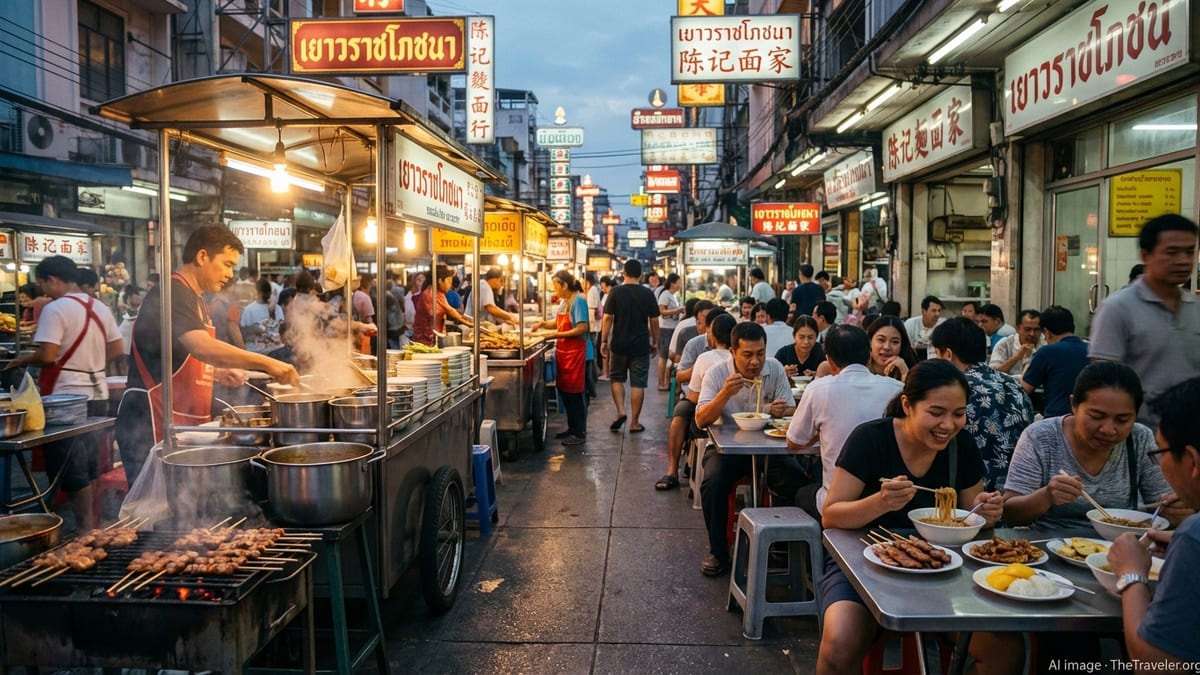
Few travel experiences are as vivid and immediate as eating on the streets of Thailand. Smoke from charcoal grills drifts over crowded sidewalks, woks hiss and pop in alleyway kitchens, and plastic stools fill with families, office workers, and travelers sharing the same bowls of noodles. For visitors, street food is not just a cheap meal; it is a window into everyday Thai life. This guide offers a practical, up-to-date overview of what to eat, where to find it, and how to enjoy it confidently and respectfully.
Understanding Thailand’s Street Food Culture
Street food in Thailand is deeply woven into daily routines. Many people rely on neighborhood stalls for breakfast on the way to work, a quick lunch, or late-night snacks after socializing. Rather than being a novelty for tourists, these vendors are an informal extension of Thai home kitchens, passing down recipes through generations and feeding the same communities day after day.
In larger cities such as Bangkok and Chiang Mai, food stalls cluster around transport hubs, office districts, schools, and temples. Morning markets serve rice porridge and grilled pork skewers to commuters, daytime stands dish out fast one-plate meals, and evening markets light up with everything from seafood to desserts. Travelers who time their meals around these daily rhythms will see a side of Thailand that rarely appears in glossy brochures.
Street food is also shaped by regional diversity. Central Thailand leans toward aromatic stir-fries and noodle dishes, the north is known for slow-cooked curries and sausage, the northeast for bold salads and sticky rice, and the south for spicy, coconut-rich dishes and fresh seafood. Even familiar dishes like pad thai or papaya salad can taste very different from one region to another.
Importantly, street vendors contribute significantly to local economies. Many are family-run operations that support several generations on modest margins. Choosing to eat at busy stalls and returning to favorite vendors spreads your travel spending directly into local communities while rewarding the people who keep Thai street food culture alive.
Where to Find Street Food Across Thailand
Bangkok is the easiest starting point for most travelers. Districts such as Yaowarat in Chinatown, Victory Monument, and the backpacker hub around Khao San Road are famous for long rows of stalls operating from late afternoon until well past midnight. Elsewhere, clusters of vendors line side streets off major avenues, gather beneath elevated train stations, or occupy small corners that locals have used for decades.
In Chiang Mai, the pace slows but the food is no less compelling. Night markets near Chiang Mai Gate and the Sunday Walking Street Market showcase northern specialties like khao soi and grilled sausages alongside national favorites. Breakfast and lunch stands appear around the moat and inside the old city, serving quick bowls of noodles and rice dishes to students, office workers, and monks.
On the islands and in southern beach towns, street food tends to orbit fresh markets, bus terminals, and local neighborhoods rather than resort strips. Travelers who venture a few streets back from the beach usually find simple grills offering whole fish, skewered meats, and som tam salads, with plastic tables set up under trees or tin roofs. Prices in tourist-heavy areas may be slightly higher, but the basic format remains the same: fast, flavorful, and casual.
Even smaller provincial towns have lively evening markets several days a week or nightly. Ask your guesthouse staff where locals go for dinner on weeknights. Often the best experiences involve following crowds of students in school uniforms or families around sunset and seeing where they stop to eat.
Must-Try Dishes and Regional Specialties
Some Thai street foods have become global ambassadors. Pad thai, a stir-fried rice noodle dish seasoned with tamarind, palm sugar, and fish sauce, is almost universally available from wok-wielding vendors. It typically comes with shrimp, tofu, egg, bean sprouts, and crushed peanuts, with lime and chili flakes on the side so you can adjust the flavor to your liking.
Another common dish is pad krapow, a quick stir-fry of minced pork, chicken, or seafood with holy basil, garlic, and chilies, served over rice and often topped with a fried egg. It is a favorite workplace lunch for many Thais, prized for its speed and intense aroma. Spice levels can be high, so first-timers may want to ask for less chili if they are unsure.
Noodle soups are a pillar of street food culture. Varieties range from clear-broth soups with fish balls and greens to richly seasoned boat noodles served in small bowls, often eaten in multiples. Travelers can choose their preferred noodle width, from thin rice vermicelli to thick, flat rice noodles, and season the broth themselves with chili, sugar, vinegar, and fish sauce placed on the table.
Regional specialties add depth for travelers who go beyond the main tourist hubs. In the north, khao soi is iconic: egg noodles in a creamy, curry-like broth, topped with crispy noodles, pickled greens, and lime, usually with chicken. The northeast, or Isan region, is known for grilled chicken, sticky rice, and salads such as som tam made from shredded green papaya, fish sauce, lime, and chili. In the south, look for coconut-based curries with seafood, roti pancakes influenced by neighboring Malaysia, and spicy salads featuring local herbs and chilies.
Eating Street Food Safely and Confidently
For many first-time visitors, food safety is a common concern. In practice, Thai street food is generally considered safe when a few simple guidelines are followed. The most reliable rule is to eat where the locals eat. Long lines and a steady turnover of customers usually mean ingredients are fresh and dishes have not been sitting out for long.
Observing a stall for a few minutes can tell you a lot. Clean cutting boards, covered ingredients, separate tongs for raw and cooked foods, and vendors who regularly wipe surfaces are positive signs. Stalls that cook dishes to order over high heat, such as stir-fries and noodle soups, are often lower risk than places relying heavily on pre-cooked trays kept at room temperature.
Travelers with sensitive stomachs may want to ease in gradually, starting with grilled or deep-fried items and freshly cooked noodles before experimenting with raw salads or shellfish. In large cities, ice in drinks is generally made from purified water, but cautious travelers can choose bottled beverages if they are unsure. Hand hygiene is easily overlooked; carrying a small bottle of sanitizer or wet wipes can reduce the chance that your own hands introduce unwanted bacteria.
Even when precautions are taken, mild stomach upsets can occur simply from adjusting to new ingredients, oils, or spice levels. Staying hydrated, resting, and having basic over-the-counter remedies on hand usually helps in minor cases. If symptoms are severe or persist, especially in hot weather, seeking medical advice is prudent. Private clinics in major Thai cities are accustomed to treating visitors and can often provide English-speaking staff.
How to Order Like a Local
Ordering at a busy food stall can seem intimidating at first, especially when menus are written only in Thai. Fortunately, most vendors are used to serving visitors. Pointing to ingredients, dishes being cooked, or photos displayed on the stall is an accepted and effective way to communicate. Having the name of a dish written in Thai script on your phone can also be extremely useful.
A few basic phrases go a long way. Terms such as “not spicy,” “a little spicy,” or “very spicy” are worth practicing, as are polite words for please and thank you. Many vendors will automatically tone down the heat for foreigners unless asked otherwise. If you have dietary restrictions, keep your explanations simple and concrete, such as no fish sauce, no egg, or no peanuts, and be prepared to repeat or clarify.
Payment is straightforward. Most stalls accept only cash, and small denominations are appreciated. Prices for single dishes often fall in the budget range compared with restaurant meals, and vendors usually display prices clearly. Tipping is not expected at simple food stands, though rounding up small amounts as a gesture of appreciation is welcomed in tourist areas.
Seating arrangements vary. Some stalls share plastic tables and stools with neighboring vendors, and it is common for strangers to sit at the same table during busy periods. Simply order from the stall where you will pay, sit where there is space, and staff will remember who ordered what. Condiment caddies with chili, vinegar, sugar, and fish sauce are meant for you to customize your dish; adjusting flavors at the table is part of the experience, not a sign of disrespect to the cook.
Etiquette, Customs, and Sustainability
Eating on the street in Thailand comes with a few unspoken rules. Thais typically eat with a spoon and fork rather than chopsticks, except for noodle soups and some Chinese-style dishes. The spoon is used to bring food to the mouth, with the fork guiding food onto the spoon. Holding the rice bowl close to your face or using fingers for most dishes is less common, although casual settings are forgiving of travelers still learning the norms.
Respect for shared space is important. Avoid blocking narrow sidewalks with large luggage or backpacks while you eat, and be mindful of queues. If you are not sure whether a group of tables belongs to a specific stall, a simple smile and gesture to the seat will usually prompt staff to wave you in or point you elsewhere.
Street food generates a significant amount of single-use plastic, from bags and cups to cutlery. Environmentally conscious travelers can reduce their impact by carrying a reusable water bottle, refusing extra plastic bags when food is eaten on the spot, and traveling with their own chopsticks or cutlery set. Some markets now offer reusable containers or ask for a small deposit for plates and cups, an encouraging trend supported when visitors participate.
As tourism has grown and local regulations evolve, some long-running street food areas have relocated or adjusted their operating hours. Checking with recent local sources, hotel staff, or resident expats can help you find current hotspots if a famous lane appears quieter than guidebooks suggest. Being open to new locations often leads to discovering lesser-known stalls that locals already love.
The Takeaway
Thailand’s street food landscape offers a rare combination of accessibility, flavor, and cultural depth. From early-morning rice porridge in a neighborhood market to a midnight bowl of noodles under fluorescent lights, every meal is an invitation into daily Thai life. The dishes may be simple, but the stories behind them reach into family kitchens, regional traditions, and a national love of shared food.
By following a few common-sense safety practices, learning how and where locals eat, and approaching each stall with curiosity and respect, travelers can enjoy a wide range of dishes with confidence. Street food is not just a way to save money; it is one of the most rewarding ways to understand Thailand.
Whether you are spending a weekend in Bangkok, wandering the temples of Chiang Mai, or exploring coastal towns in the south, giving yourself time to eat on the streets will enrich your journey. Pack an open mind, a small stack of banknotes, and a willingness to try something new, and Thailand’s sidewalks will quickly become your favorite dining room.
FAQ
Q1. Is street food in Thailand safe for most travelers?
Street food in Thailand is generally safe when you choose busy stalls with high turnover, watch for basic hygiene, and favor freshly cooked dishes over items that have been sitting out.
Q2. How much should I expect to pay for a typical street food meal?
Prices vary by location, but a single dish such as noodles or rice with stir-fry is usually very affordable compared with sit-down restaurants, making street food excellent value for budget-conscious travelers.
Q3. Can I find vegetarian or vegan options at Thai street stalls?
Yes, many dishes can be prepared without meat or egg if you ask. In some areas you can look for signs that indicate vegetarian food, and vendors often understand simple requests like no meat, no egg, or no fish sauce.
Q4. What should I do if I have food allergies?
If you have serious allergies, carry a translated card listing your restrictions and show it to vendors, choose simple dishes with clearly visible ingredients, and consider eating first at stalls recommended by your accommodation or local guides who understand your needs.
Q5. Are there specific times of day when street food is most available?
Morning markets are best for breakfast foods, lunchtime stalls cluster around offices and schools, and many of the most atmospheric street food areas operate in the evening and at night when temperatures are cooler.
Q6. Do I need to speak Thai to order street food?
No, you can usually order using gestures, pointing, and a few basic words. Learning the names of a handful of favorite dishes and simple phrases about spice level or ingredients will make the experience smoother and more enjoyable.
Q7. Is it acceptable to take photos of street food vendors and their stalls?
Most vendors are used to being photographed, but it is polite to make eye contact, smile, and, if possible, gesture to ask permission before taking close-up photos of people or their workspace.
Q8. How spicy is typical Thai street food?
Spice levels vary widely by dish and region, and many vendors will adjust the heat if asked. If you are unsure, start with milder dishes and request less chili, then increase the spice level as you learn your own limits.
Q9. Can I drink tap water in Thailand when eating street food?
It is generally recommended that visitors drink bottled or purified water rather than tap water. Many stalls sell sealed bottles, and using them reduces the risk of minor stomach problems.
Q10. What is the best way to find authentic, non-touristy street food areas?
Ask local residents where they eat on weeknights, follow crowds of office workers or students around meal times, and be willing to walk a few blocks beyond main tourist streets to discover markets and stalls aimed primarily at locals.