

More news on this day
Thailand’s tourism sector is experiencing a sharp, unexpected setback as widespread flight cancellations and rerouting linked to the Gulf conflict disrupt key air corridors, reducing international arrivals and forcing hotels in major destinations to discount aggressively to keep occupancy from collapsing.
Get the latest news straight to your inbox!
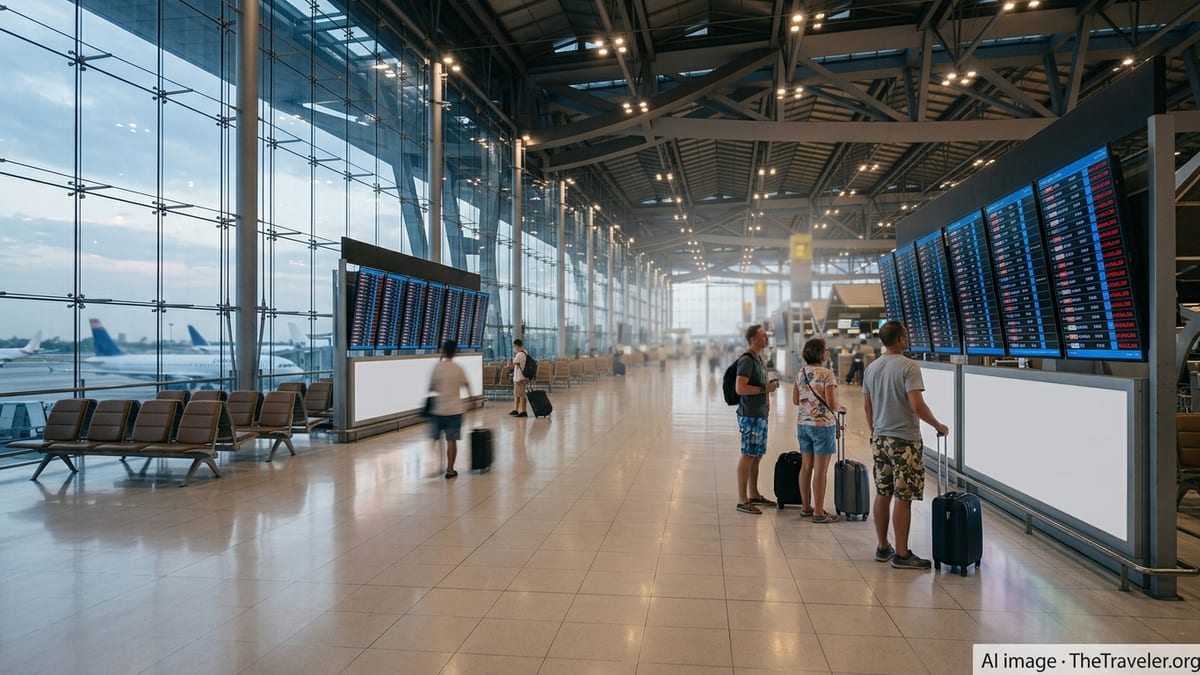
Gulf Conflict Sends Shockwaves Through Regional Aviation
The escalation of conflict involving Iran, the United States and regional Gulf states since late February 2026 has reshaped global aviation patterns almost overnight. Published coverage describes extensive missile and drone strikes, airspace closures across parts of the Middle East, and damage or precautionary shutdowns at major hubs that traditionally handle traffic between Europe, the Middle East and Asia.
Reports on the economic impact of the Iran war note that multiple Middle Eastern airspaces form a crucial bridge for east–west routes linking Europe with South and Southeast Asia. With key corridors partially or fully closed and airports in the Gulf handling a large share of global traffic operating at reduced capacity, airlines have been forced to cancel services, consolidate schedules and reroute aircraft along longer paths that avoid high-risk skies.
Travel and aviation analyses indicate that international carriers serving the Middle East have suspended or curtailed numerous routes while others add hours to flight times by detouring around the region. These operational changes raise fuel and crew costs and have driven a surge in fares on some long-haul routes, especially those that previously relied on Gulf stopovers. The disruption is rippling into markets far beyond the immediate conflict zone, including Thailand.
Industry commentary suggests that until airspace restrictions ease and missile and drone activity declines, airlines will prioritize safety and cost control over rapid capacity restoration. That reality is narrowing options for travelers whose journeys to Thailand once depended on efficient connections through Gulf hubs.
Inbound Flights to Thailand Cut or Rerouted
Thailand’s position as a long-haul destination for European, Middle Eastern and some North American travelers has long depended on an intricate network of one-stop connections. A sizable share of those itineraries has traditionally routed through Gulf hubs such as Dubai, Abu Dhabi and Doha, as well as neighboring airspaces that are now subject to temporary closures or heightened restrictions.
According to regional aviation reports, the closure or partial shutdown of several Gulf airports and adjacent airspace has triggered waves of cancellations on connecting routes linking Europe and South Asia to Southeast Asia. Some carriers have introduced emergency repatriation and limited replacement services, but capacity on these new routings remains far below pre-conflict levels, and schedules are volatile.
Travel disruption megathreads maintained by passenger communities and specialist travel media show that flights involving Middle Eastern stopovers have been disproportionately affected, with many travelers bound for Asia forced to rebook via alternative hubs in Europe, Central Asia or East Asia. For Thailand, which had been rebuilding long-haul demand through competitive fares and plentiful connections, the sudden contraction in capacity is translating directly into fewer arrivals at Bangkok, Phuket and other gateways.
While direct services to Thailand from some markets continue to operate, the loss of relatively low-cost, high-frequency connections via the Gulf is deterring price-sensitive travelers and complicating itineraries for those willing to pay more. Industry observers note that this shift is particularly damaging for segments such as European winter-sun tourists and multi-destination Asia trips that relied heavily on Gulf-based networks.
Arrivals Nosedive as Booking Confidence Erodes
Tourism analysts tracking booking patterns across Asia say Thailand is facing a sudden dip in inbound demand that contrasts with earlier expectations of steady growth through 2026. Publicly available commentary highlights that travelers are increasingly wary of itineraries that could be disrupted by changing airspace rules, last-minute cancellations or military activity, even when their final destination lies far from any conflict zone.
Forward booking data referenced in regional tourism and airline analyses shows a softening of demand on Europe–Thailand routes that previously relied on Gulf stopovers. Some travelers have opted to postpone trips, while others have redirected holidays to destinations perceived as easier to reach without transiting near the conflict area, such as Greece, Portugal or other Mediterranean markets that can be served on more direct European routes.
In online travel forums focused on Thailand, would-be visitors discuss higher fares, complicated rerouting and the risk of being stranded in a hub if airspace restrictions tighten again. Although a portion of routes via alternative hubs remain stable, the overall uncertainty is eroding confidence and reducing spontaneous long-haul bookings, especially among families and budget-conscious travelers.
Before the Gulf conflict escalated, Thailand had been gradually restoring international arrivals, with government and industry forecasts pointing to a near-complete recovery from the pandemic in the next two years. The present downturn is now being viewed by many observers as a new, conflict-driven shock layered on top of lingering economic and competitive pressures in the region’s tourism market.
Hotels Respond With Steep Discounts and Added Perks
The sudden shortfall in arrivals is being felt most acutely in Thailand’s hotel sector, particularly in major tourism centers such as Bangkok, Phuket, Pattaya and Chiang Mai. Market research from regional real estate and hospitality consultancies had already identified an intensely competitive landscape, with new supply entering key markets and operators relying on promotional campaigns to maintain occupancy.
With inbound demand softening again, hotel operators are responding by cutting rates and layering on incentives. Dynamic pricing data and anecdotal reports from travelers suggest that mid-range and even upscale properties are offering discounted room nights, extended-stay packages, complimentary breakfasts, airport transfers or spa credits in an effort to attract both international visitors and domestic guests.
Observers note that some properties in beach destinations have trimmed high-season rates to levels more typical of shoulder periods, while city hotels that rely on a mix of leisure and business travel are pivoting to domestic staycation offers. Online travel platforms show an uptick in flash sales and limited-time promotions targeting last-minute bookers who can still reach Thailand via unaffected routes.
Despite these efforts, analysts warn that aggressive rate-cutting risks undermining average daily rate performance and yields, especially if the Gulf conflict and related aviation issues persist into the next peak travel season. Many hotels are walking a fine line between preserving cash flow through occupancy and avoiding a prolonged price war that could take years to unwind.
Tourism Strategy Shifts Toward Diversity and Resilience
The latest turbulence has sharpened debate around Thailand’s dependence on a limited number of long-haul corridors and transit hubs. Economic research published over the past year had already stressed the importance of diversifying source markets, growing direct connectivity from emerging economies and strengthening regional travel within Asia to cushion external shocks.
In light of the Gulf conflict, tourism experts now emphasize that reliance on vulnerable air corridors exposes destinations to sudden, uncontrollable disruptions. Commentaries on regional tourism strategy highlight moves to deepen ties with markets that can reach Thailand via more resilient routes, including increased focus on direct services from East Asia, South Asia and within ASEAN, as well as efforts to stimulate domestic tourism to offset shortfalls in international arrivals.
Travel advisors and industry analysts also underscore the need for clearer communication with visitors about routing options that avoid conflict-affected airspace, flexible booking policies, and the potential role of travel insurance that explicitly addresses war-related disruptions. Transparent information, they argue, can help restore some measure of confidence even while flight schedules remain in flux.
For now, Thailand’s tourism sector is navigating a familiar pattern of external shock and rapid adjustment. The scale and duration of the Gulf conflict will determine whether the current wave of flight cancellations and hotel discounts proves to be a short-lived setback or a longer-term turning point in how the country attracts and serves international travelers.