

Long-distance trains are one of the most atmospheric, affordable, and practical ways to cross Thailand. From overnight sleepers between Bangkok and Chiang Mai to coastal routes heading deep into the south, Thailand’s rail network offers a slower, more scenic alternative to domestic flights and buses. This guide explains how the system works today, which routes are most useful for travelers, how to book tickets, and what to expect on board.
Understanding Thailand’s Long-Distance Rail Network
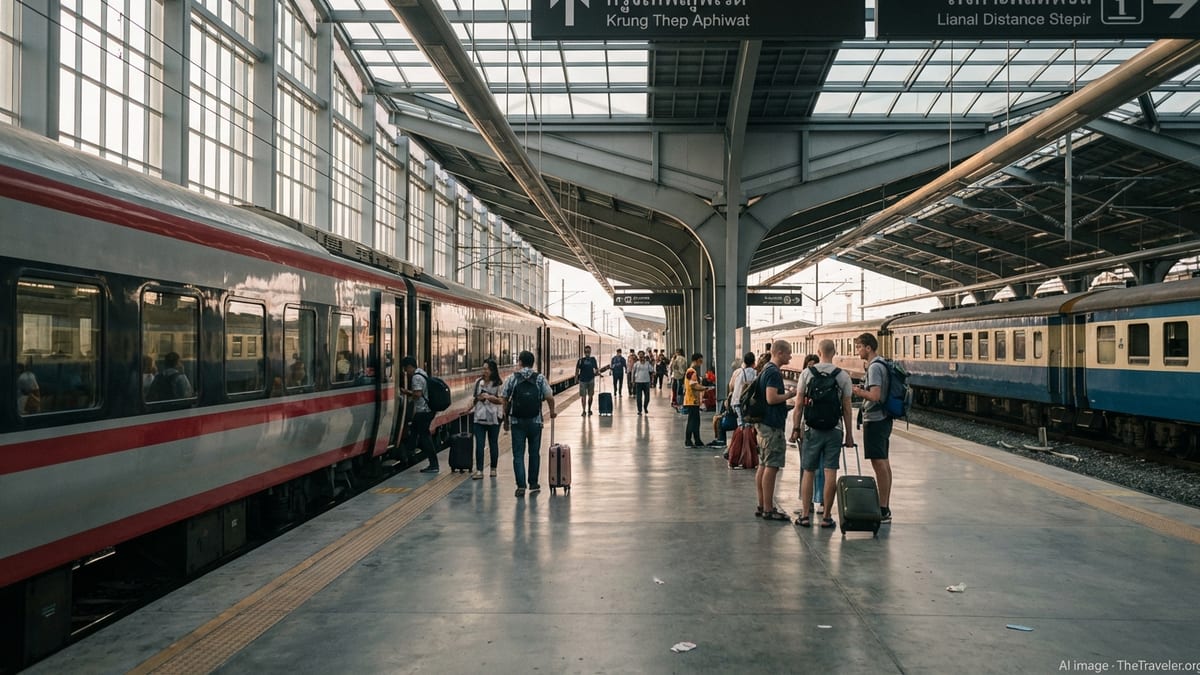
Thailand’s long-distance trains are operated by the State Railway of Thailand, which runs a classic, mostly non high-speed network radiating out from Bangkok. The main hub for long-distance routes is Krung Thep Aphiwat Central Terminal, the modern station that has taken over most intercity services from the historic Hua Lamphong terminus. From here, lines spread north toward Chiang Mai, northeast toward Nong Khai and Ubon Ratchathani, south toward Surat Thani and Hat Yai, and west toward Kanchanaburi.
The network is in the middle of a major upgrade program, with many lines being converted to double track and new tunnels and bridges opening in stages. These projects are designed to improve punctuality and reduce travel times, particularly on busy corridors that link Bangkok with major provincial cities and beach destinations. Some high-speed rail segments are under construction, but for now almost all long-distance passenger services use conventional diesel or electric-hauled trains with a top speed typically around 100 to 120 kilometers per hour.
For travelers, this means that journey times can be long but the experience is relaxed and social, especially overnight. On popular routes, newer air conditioned sleeper trains operate alongside older rolling stock, and you will often have a choice between different service types and comfort levels on the same route. Understanding the basic layout of the network and the categories of service will help you pick the journeys that suit your schedule, budget, and preferred travel style.
Schedules and rolling stock can change as new sections of track open, so treat any timetable information as indicative only and always confirm closer to your travel date. Seasonal or special excursion services may also appear around Thai holidays and during the cooler months, offering additional options to explore scenic regions by rail.
Key Long-Distance Routes Worth Taking
The classic overnight journey between Bangkok and Chiang Mai on the Northern Line is still the signature Thai rail experience for many visitors. This route connects the capital with the country’s northern cultural hub, passing rice fields, small towns, and misty hills. A typical overnight service leaves Bangkok in the early evening and arrives in Chiang Mai around sunrise, allowing you to sleep on board and save a night of accommodation. Modern air conditioned sleepers, sometimes referred to as red trains or CNR sleepers, operate on key departures and are usually the most comfortable choice.
To the south, the main line runs from Bangkok toward Hua Hin, Chumphon, Surat Thani, Hat Yai, and onward to the Malaysian border at Padang Besar. This Southern Line is particularly useful if you are heading to the Gulf islands such as Koh Samui and Koh Phangan via Surat Thani, or to the Andaman Sea coast via connections from Surat Thani, Trang, or Nakhon Si Thammarat. Overnight trains typically serve Surat Thani and Hat Yai, with both seated and sleeper options, while daytime services cover shorter hops such as Bangkok to Hua Hin.
The Northeastern Line splits into two important branches. One runs toward Nong Khai on the Mekong River, gateway to Laos and Vientiane via the Thai–Lao Friendship Bridge. The other heads toward Ubon Ratchathani, a key city for exploring the lower Isan region. Both routes are popular with domestic travelers and international visitors heading overland to Laos or exploring Thailand’s less visited northeast. Modern air conditioned sleepers now run on both branches on selected departures, offering a similar standard to the Northern Line’s best trains.
There are also shorter, scenic routes that can be combined with longer journeys. The line to Kanchanaburi and the River Kwai is famous for its historic bridges and landscapes, while coastal services running no farther than Prachuap Khiri Khan or Chumphon make relaxed day trips from Bangkok. As double tracking and infrastructure projects continue, some of these routes are gradually seeing faster and more frequent trains, turning them into practical alternatives to long highway bus rides.
Classes, Sleeper Types, and Onboard Comfort
Thailand’s long-distance trains are generally divided into first class, second class, and third class, with important variations between seated and sleeper configurations. First class cabins on overnight services are air conditioned, usually arranged as two-berth private compartments with a door that can be locked from the inside. In many cases there is a washbasin in the cabin and shared toilets at the end of the carriage. These cabins are the most expensive option but offer the greatest privacy, making them popular with couples and solo travelers prepared to pay a premium.
Second class is the most commonly used category for long-distance journeys and typically offers the best value. Second class sleepers can be air conditioned or fan cooled. In open plan sleeper coaches, seats are arranged in pairs facing each other on either side of a central aisle. At night, staff convert these seats into lower and upper berths with mattresses, sheets, pillows, and curtains for modest privacy. The lower berth is wider and usually more expensive than the upper berth. These coaches are social and comfortable for most travelers and are the recommended default for many overnight routes.
Third class on long-distance trains is usually basic and aimed at budget or short distance travelers. Seating is often in open saloon layout with either padded benches or harder seats, usually with fans rather than air conditioning. While deeply authentic and extremely affordable, third class can be crowded and is not ideal for overnight trips unless you are very flexible and speak some Thai. For daytime hops of a few hours, however, it can be a memorable local experience.
Onboard facilities vary by train and class. Air conditioned coaches tend to be quieter, cleaner, and more comfortable in Thailand’s heat, especially in the hot and rainy seasons. Basic toilets are available at the ends of most carriages, with squat and Western-style options depending on the coach. Lighting is usually dimmed at night, and staff pass through the aisles to make up or take down beds at set times. On some premium services, especially newer sleepers, there may be digital displays, power sockets at seats or berths, and improved luggage racks. Older trains can feel more worn, but many travelers appreciate their character and open windows for fresh air during daytime runs.
Booking Tickets and Choosing the Right Departure
For long-distance trains, it is strongly recommended to book in advance, especially if you want first or second class sleepers on popular routes such as Bangkok to Chiang Mai, Surat Thani, Nong Khai, or Ubon Ratchathani. Busy periods include Thai public holidays, New Year and Songkran in April, and the cool season from roughly November to February, when domestic tourism peaks and special excursion trains operate on some scenic routes.
The most reliable way to reserve seats is through official booking channels run by the national railway operator. Tickets can be purchased in person at major stations across the country, including Krung Thep Aphiwat and other principal terminals, where staff can explain options and help you select specific trains and classes. Many travelers now prefer to use official online and app based systems, which typically allow payment by major cards and generate an electronic ticket that can be presented at boarding with a passport.
Third party booking sites and travel agents can be helpful for planning and for travelers who prefer to avoid language barriers, but they often add service fees and may not display real time availability for every coach type. Some unofficial websites mimic official branding, so it is important to verify that you are using a genuine national rail platform. When in doubt, cross check train numbers, departure times, and service types at a staffed station or through a confirmed operator hotline.
When choosing a departure, consider your tolerance for overnight travel, your budget, and what you want to see. Daytime trains may be slower but offer better views of countryside and allow you to arrive in the evening. Overnight sleepers effectively bundle transport and accommodation, arriving early in the morning ready for a full day. In general, the latest generation air conditioned sleepers with evening departures and early morning arrivals are the most efficient and comfortable way to cover long distances, especially between Bangkok and the north or south.
Life On Board: Food, Scenery, and Etiquette
Life on a long-distance Thai train is part of the appeal. On many services, staff or concessionaires pass through the aisles selling hot meals, snacks, and drinks. Some trains have a basic dining car or cafe counter where you can order set meals, instant noodles, or simple Thai dishes, although menus and opening hours vary. Bringing your own food and water is entirely acceptable and wise for travelers with dietary restrictions, noting that strong smelling items should be kept contained out of courtesy to fellow passengers.
Scenery is a major reason to travel by rail. The Northern Line climbs gradually into forested hills and passes small towns and farmland; the Northeastern branches traverse wide plateaus and rice fields; the Southern Line runs through coconut groves, rubber plantations, and, in stretches, close to the Gulf of Thailand. If you want to enjoy the views, consider booking a daytime sector or at least choosing a departure that gives you a few hours of daylight at either end of the journey. On older non air conditioned trains, open windows and ceiling fans create a classic tropical railway atmosphere, albeit with more noise and dust.
Thai trains are generally relaxed and family friendly, but observing a few etiquette guidelines helps the journey go smoothly. Keep your voice low at night so others can sleep, avoid occupying empty berths without permission, and store baggage in racks or under seats rather than blocking aisles. Alcohol policies can vary between services and may be tightened at short notice, so do not assume that drinking on board is allowed, and always be discreet and respectful of local norms.
Security staff and conductors pass through coaches to check tickets, and on overnight trains you can usually sleep with reasonable peace of mind if you keep your valuables close. A small luggage lock and a daypack that you can secure to the berth or keep under your head gives extra reassurance. Overall, incidents involving foreign travelers are relatively rare on long-distance trains, and most journeys pass without problems beyond occasional delays or minor mechanical issues.
Current Upgrades, New Trains, and Future Developments
Thailand is investing heavily in its rail infrastructure, and regular travelers will see signs of change across the network. Double tracking projects on key corridors are intended to reduce bottlenecks, separate freight and passenger traffic more efficiently, and enable more frequent trains. On parts of the Southern and Northeastern Lines, upgraded sections with new tunnels and bridges are gradually shortening travel times and improving punctuality, though construction works can also lead to temporary schedule changes or speed restrictions.
New generation long-distance sleepers have been introduced on the flagship routes linking Bangkok to Chiang Mai, Nong Khai, Ubon Ratchathani, and Hat Yai. These trains feature cleaner interiors, better lighting, more effective air conditioning, and a generally smoother ride compared to older coaches. They have quickly become the preferred choice for many travelers and tend to sell out earlier than older stock, especially in peak months. Over the coming years, additional refurbished or newly built carriages may replace some of the oldest rolling stock still in use.
Looking further ahead, a high-speed route linking Bangkok with Nakhon Ratchasima and eventually Nong Khai is under construction, with phased openings projected later in this decade. Another high-speed corridor is planned to connect Bangkok’s airports with the eastern seaboard. While these projects target future intercity travel rather than today’s backpacker style sleepers, they signal a shift toward faster rail options for both domestic and international passengers. For now, however, most visitors will continue to rely on conventional overnight and daytime services for long-distance routes.
Seasonal excursion trains and charter services are another emerging trend, particularly during the cooler months from roughly October to February. Refurbished heritage style trains sometimes operate special trips from Bangkok to historic towns, national parks, or scenic coastal stretches. These services are usually marketed primarily to Thai travelers but can be a memorable way for visitors with flexible schedules to experience lesser known lines and rolling stock that evoke an earlier era of rail travel.
Planning Your Journey: Practical Tips and Seasonal Considerations
When planning long-distance train travel in Thailand, start by checking the rough duration of your preferred route and how it aligns with your wider itinerary. For example, the Bangkok to Chiang Mai overnight train pairs well with spending several days in the north before flying or taking a daytime bus elsewhere. The Southern Line can anchor a multi-stop journey that includes Hua Hin, Chumphon, Surat Thani for the islands, and Hat Yai for overland connections into Malaysia. Building in buffer time for possible delays is sensible, especially if you plan to connect with flights or long distance ferries.
Thailand’s climate should also shape your planning. The cool and dry season, roughly November to February, is the most comfortable time for rail travel, with lower humidity and more pleasant temperatures if you choose fan cooled coaches or older trains with open windows. During the hot season, air conditioned classes can make a significant difference to comfort, especially on daytime services that cross exposed plains. In the rainy season, downpours are common but usually short lived; heavy rain can occasionally cause local disruptions, so it is wise to monitor announcements if you are traveling through rural or flood prone areas.
Pack light, with one main piece of luggage that you can manage on stairs and through station crowds, plus a small daypack for valuables. Soft sided bags are easier to stow in overhead racks or under berths than large hard shell suitcases. Essential items for overnight journeys include earplugs, an eye mask, a light sweater or scarf against strong air conditioning, and basic toiletries. Having small change for station snacks or simple platform meals is helpful, as not every stall takes cards.
Language is rarely a major barrier for everyday processes such as ticket checks or finding your coach. Station signage on main routes increasingly includes English, and staff on popular tourist trains are accustomed to foreign passengers. Still, it helps to know the Thai names of your departure and arrival stations and your train number, which will appear on departure boards and printed tickets. Taking a photo of your ticket as a backup and noting the carriage and seat or berth number can save time if you misplace the original.
The Takeaway
Long-distance train travel in Thailand offers far more than simple transportation. It links major cities and islands at a human pace, turns overnight movement into part of the adventure, and opens vistas of countryside that you will never glimpse from 30,000 feet. With a mix of modern sleepers and classic carriages, the system caters both to comfort seekers and to those who want a more local, budget friendly experience.
The key to a smooth journey is preparation. Choose routes that fit your itinerary, book popular sleepers well ahead during peak seasons, and match your class of travel to your comfort needs and budget. Keep expectations flexible regarding punctuality, especially while the country’s rail network is being upgraded, and treat minor delays as an opportunity to linger over platform snacks or to watch the shifting life of stations and small towns.
As new lines and rolling stock continue to come online in the years ahead, Thailand’s long-distance trains are likely to become faster and more frequent while still retaining much of their traditional character. For now, they remain one of the country’s most rewarding slow travel experiences. Whether you board a freshly refurbished overnight sleeper to Chiang Mai or a humble daytime local train along the coast, rail is a richly atmospheric way to understand Thailand’s scale, diversity, and rhythms.
FAQ
Q1. How far in advance should I book long-distance train tickets in Thailand?
For popular overnight routes and high season travel, aim to book several weeks ahead, especially for first and second class sleepers. Outside peak periods, a few days in advance is often enough, but booking early still gives you more choice of berths and departure times.
Q2. Are overnight trains in Thailand safe for solo travelers?
Overnight trains are generally considered safe for solo travelers, including women, provided you take normal precautions such as keeping valuables with you, locking your bags, and choosing a well used class like second class air conditioned sleepers. Staff and other passengers are accustomed to solo travelers on these routes.
Q3. What is the difference between first and second class sleepers?
First class sleepers usually offer private two berth cabins with a door and sometimes a small washbasin, providing more privacy and quiet. Second class sleepers are open plan coaches with curtained berths arranged along the aisle, which are cheaper and more social but less private.
Q4. Do I need to print my ticket or is a mobile ticket enough?
Policies can vary by booking channel and route, but on many services an official electronic ticket displayed on your phone, along with your passport, is accepted. It is still wise to carry a printed copy if easily available, in case of device problems or staff preference for paper.
Q5. Can I charge my phone or laptop on long-distance trains?
Newer air conditioned sleepers and some upgraded coaches offer power sockets at seats or near berths, but availability is not guaranteed on every train. Carry a fully charged power bank and do not rely entirely on onboard outlets, especially in older rolling stock.
Q6. What should I wear on an overnight train in Thailand?
Choose light, comfortable clothing that respects local modesty, such as long shorts or trousers and a T shirt. Air conditioned coaches can feel cool at night, so bring a light sweater or scarf. Slip on shoes or sandals are convenient for moving between your berth and the toilets.
Q7. Are there vegetarian or special diet options on board?
Food choices on trains are usually simple and may not reliably cater to vegetarian, vegan, or other special diets. It is best to bring your own snacks or meals that meet your needs, and supplement them with fruit or packaged items bought at stations along the way.
Q8. How punctual are long-distance trains in Thailand?
Punctuality has improved on some upgraded sections, but delays of an hour or more can still occur, especially on busy single track stretches or during heavy rain. Do not schedule tight connections after long-distance trains, and allow generous buffers for flights or ferries.
Q9. Can I bring large luggage on the train?
You can bring large luggage, but space is limited to overhead racks, under berths, and small luggage areas at carriage ends. Soft bags or backpacks are easier to stow than rigid suitcases. For comfort and security, try to travel with one main bag you can lift easily yourself.
Q10. Is it better to take a day train or overnight train?
Day trains are better if you value scenery and prefer to sleep in a hotel bed, while overnight trains save daytime hours and a night of accommodation. For long distances such as Bangkok to Chiang Mai or Surat Thani, overnight sleepers are often the most efficient balance of comfort, time, and cost.