

More news on this day
Thailand has become the latest major travel market to feel the shockwaves from sweeping Middle East airspace closures, with soaring airfares, thinner flight schedules and mounting delays now rippling through routes linking Bangkok with Europe, the Gulf and beyond.
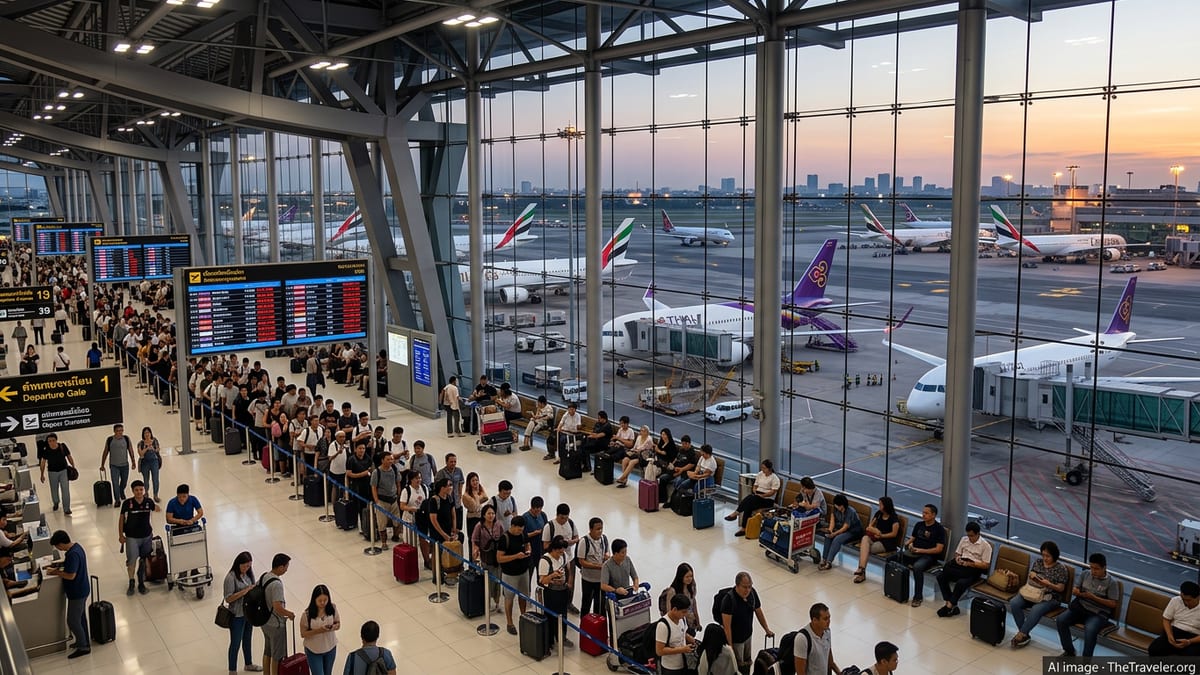
Bangkok Feels the Squeeze from Middle East Shutdown
As war in Iran intensifies and airspace across the Middle East remains partly shut, Thailand’s role as a key Asia gateway is being tested. Airports of Thailand has confirmed that all six of its airports are technically operational, yet the country is heavily exposed to cancellations and rerouting decisions taken thousands of kilometers away in Gulf and Levant skies. Disruptions at hub airports in Dubai, Abu Dhabi and Doha have broken up the usual flow of passengers shuttling between Europe, the Middle East and Southeast Asia.
Between February 28 and March 4, Airports of Thailand reported more than 300 flights cancelled or delayed as a direct result of the crisis, affecting upwards of 49,000 passengers. The bulk of those services were operated by Middle Eastern and Israel-based carriers, along with Asian airlines that rely on Gulf overflight corridors. While Thai airports remain open, the sharp reduction in inbound and transit capacity is already reshaping how travelers get in and out of the country.
For now, Thai authorities are stressing that runways, terminals and core systems are functioning normally. The pressure point is not infrastructure, they say, but access to international airspace and the operational constraints facing airlines that connect Thailand with long-haul markets. Officials are warning that knock on effects, from missed connections to last minute rebookings, are likely to persist so long as Middle Eastern skies remain restricted.
Soaring Airfares on Thailand–Europe and Gulf Routes
The most immediate pain for travelers is showing up in ticket prices. Thailand’s Civil Aviation Authority reports that eight Middle Eastern airlines operating in the country have suspended or drastically curtailed flights, slashing seat supply on high demand corridors between Bangkok and European cities such as London, Frankfurt and Paris. Fewer seats, coupled with detours that add several hours to flight times, are driving fares sharply higher.
Industry trackers in Bangkok say economy class return fares between Thailand and major European gateways have climbed steeply in recent days, with some routes pricing several hundred dollars above average for early March. A combination of fuel hungry reroutings, war risk insurance premiums and tight capacity is feeding into base fares and surcharges. Travelers who once relied on competitively priced one stop itineraries via Gulf hubs are finding fewer options and steeper prices when they search.
The pressure is not limited to Thailand. Carriers based in the United Arab Emirates, Saudi Arabia, Qatar, Oman and Egypt are all grappling with the same cost spiral as they navigate patchwork closures and military no fly zones. United Kingdom bound traffic is also feeling the strain, with London positioned as both a destination in its own right and a major connection point for onward travel to North America. For passengers in Thailand, this global squeeze is collapsing into higher fares at the booking screen.
Looking ahead, there is concern that the impact could extend beyond the immediate crisis. Airports of Thailand has already approved a rise in international passenger service charges from June, a step critics argue could embed higher pricing just as airlines are struggling to rebuild stable schedules. If elevated fuel and insurance costs persist, analysts warn that today’s emergency surcharges risk becoming tomorrow’s new normal on many long haul routes touching Thailand.
Longer Routes, Thinner Schedules and Delays at Key Hubs
With airspace over Iran, Iraq and parts of the Gulf effectively off limits, airlines serving Thailand are stitching together alternative paths between Asia, Europe and Africa. Flights that once cut directly across the Middle East are now being sent north through crowded Caucasus corridors or south across Egypt, Saudi Arabia and Oman before turning east towards the Indian Ocean. These detours can add two to five hours to a typical Europe Asia sector, with cascading consequences for rotations and crew duty times.
Thai Airways and other long haul operators have begun trimming frequencies and adjusting departure waves to accommodate longer block times. Some overnight departures from Bangkok to Europe are now arriving in the early morning rather than late at night, compressing turnaround windows and placing additional pressure on airport ground handling. On days when conflict flares or new restrictions are announced, last minute cancellations are still occurring, forcing hurried rebookings at airport ticket counters.
At the same time, hubs in the United Arab Emirates, Qatar and Saudi Arabia are operating with a mix of partial suspensions and heavily managed traffic flows. When limited evacuation flights do leave Dubai or Abu Dhabi, they often do so on circuitous routings that thread through the few remaining safe air corridors. That in turn constrains the number of flights that can safely transit those pathways, creating a bottleneck for travelers trying to reach Thailand from Europe, the United Kingdom or North America via traditional one stop Gulf itineraries.
For airports in Thailand, this translates into unpredictable arrival banks and peaks of stranded passengers whenever a wave of diverted or delayed flights lands at once. Airport operators have activated contingency plans to manage congested check in areas and transit lounges, while urging passengers to arrive early, monitor airline channels closely and be prepared for extended waits even after flights are confirmed.
Tourism and Economy Face Mounting Headwinds
The timing of the crisis is particularly sensitive for Thailand, which was counting on robust tourism flows to support growth in 2026. Government economic planners have warned that a protracted Middle East conflict could shave forecast gross domestic product expansion to near 1.3 percent, largely through higher energy costs and weaker external demand. Aviation disruptions are adding a second front of risk by constraining the flow of high spending visitors from Europe and the Gulf.
Travel trade executives say bookings for the upcoming shoulder season remain positive but increasingly fragile. Tour operators are scrambling to adjust itineraries, shifting some European clients onto non stop or one stop routes via East Asian and Central European hubs that avoid the Gulf altogether. While that has preserved some travel, it often comes at a higher cost or with longer total journey times, both of which may deter price sensitive travelers considering long haul holidays in Thailand.
The Middle Eastern market itself is also at risk. Visitors from the United Arab Emirates, Saudi Arabia, Qatar, Oman and Egypt have become an important segment for Thai beach resorts and medical tourism providers in recent years, relying on dense Gulf Thailand connectivity. With many of those flights now suspended or operating at reduced frequencies, hotels in Phuket, Pattaya and Bangkok’s riverside districts are bracing for cancellations and shorter average stays.
Authorities are trying to counter the headwinds by promoting Thailand as a safe and welcoming destination, emphasizing that domestic travel and most regional flights remain stable. However, there is recognition within government and the private sector that if the current airspace restrictions and fuel price pressures continue into the second half of the year, the tourism rebound that has underpinned Thailand’s recovery narrative could weaken.
Travelers Weigh Alternatives as Uncertainty Persists
For individual travelers, the crisis has introduced an extra layer of complexity to trip planning. Consular agencies in Europe and Asia are advising passengers bound for Thailand to build in additional buffer time for connections, favor routings that avoid the Middle East where possible, and keep a close eye on airline notifications in the 48 hours before departure. Travel insurers, meanwhile, are fielding a surge of queries as policyholders ask what is and is not covered when delays or cancellations are tied to armed conflict.
Some travelers from the United Kingdom and continental Europe are opting to fly non stop to Bangkok on carriers that can skirt the closures entirely, or to route via northern hubs that connect through Central Asia rather than the Gulf. Others in the Gulf states are looking to Oman and Saudi Arabia, where certain corridors remain more open, as alternative departure points for Southeast Asia journeys. In every case, experts stress that seats on these work around routes are limited and often command premium prices.
Airlines and aviation agencies acknowledge that there is no clear timeline for a full reopening of Middle Eastern airspace. With the conflict still evolving, carriers are updating schedules in short increments of days rather than months, making it difficult for travelers to lock in firm plans for later in the year. Until a more durable ceasefire is in place and navigation warnings are lifted, Thailand and its counterparts in the United Arab Emirates, Saudi Arabia, the United Kingdom, Oman, Egypt and Qatar are likely to remain on the front line of a global network shock that starts in Middle Eastern skies but reaches far beyond them.