

More news on this day
Thailand has used the 60th anniversary edition of ITB Berlin to launch “The New Thailand,” a refreshed tourism vision that targets European travelers with healing-led luxury, sustainable journeys and lesser-known destinations across the country.
Get the latest news straight to your inbox!
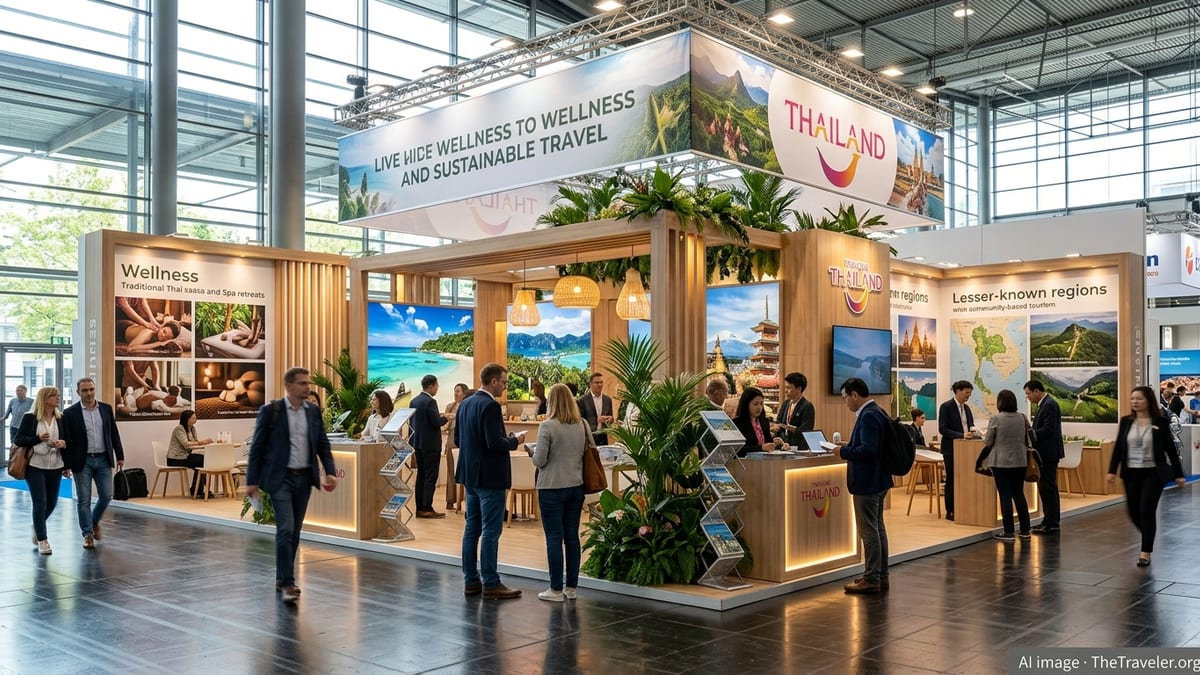
A Strategic Showcase at ITB Berlin’s 60th Anniversary
The Tourism Authority of Thailand unveiled “The New Thailand” at ITB Berlin 2026, positioning the country as a world-class destination for high-value, experience-driven travel. The presentation formed part of the fair’s milestone 60th anniversary edition, held from 3 to 5 March at Berlin ExpoCenter City, where Thailand was among the largest national exhibitors.
Publicly available information indicates that the new vision emphasizes a shift from volume-driven tourism toward quality revenue, aligning with broader government strategies to attract visitors who stay longer and spend more. This approach seeks to strengthen Thailand’s appeal in a competitive global landscape while addressing concerns about overcrowding and environmental pressure in popular resort areas.
Reports from ITB Berlin highlight that the rebranding effort is aimed particularly at long-haul source markets, with Germany and wider Europe viewed as crucial to sustaining year-round demand. Organizers describe Thailand’s presence as part of a strong international line up that underlines ITB Berlin’s role as a platform for innovation, business and sustainable growth in tourism.
The New Thailand message builds on previous campaigns that promoted sustainable and high-value travel but places renewed emphasis on health, wellness and nature-based experiences. The overall goal is to refresh perceptions of Thailand beyond its most famous beaches and nightlife, presenting a more multifaceted image of the destination to trade and consumer audiences.
Healing as the New Luxury for European Travelers
Central to the New Thailand concept is the idea that “healing is the new luxury,” a theme that reflects growing global demand for wellness focused travel. According to published coverage, Thailand’s pavilion at ITB Berlin 2026 highlighted spa retreats, holistic wellness programs and nature immersion experiences as core elements of the country’s offer to European visitors.
This positioning taps into Thailand’s long established reputation for traditional massage, spa therapies and medical tourism, reframing these strengths for a post pandemic era in which travelers are prioritizing mental well being, rest and reconnection with nature. Industry analysis suggests that these segments also tend to generate higher per trip spending and longer stays, fitting the country’s value over volume strategy.
The wellness narrative is not limited to luxury resorts. Information released around the fair indicates that Thailand is also promoting smaller eco resorts, wellness focused boutique stays and community based experiences that invite visitors to slow down and engage more deeply with local culture. This approach is intended to appeal to discerning travelers seeking authenticity alongside comfort.
By centering its European outreach on healing led experiences, Thailand is aiming to differentiate itself from regional competitors that focus heavily on price or mass market beach holidays. The messaging at ITB Berlin positions the country as a destination where restorative travel and cultural immersion can be combined within a single journey.
Sustainable Routes and Hidden Gems Take the Spotlight
Another major pillar of the New Thailand vision is the promotion of sustainable routes and lesser known destinations. Public information from the Tourism Authority of Thailand highlights efforts to disperse visitors beyond long established hotspots such as Phuket, Pattaya and parts of Bangkok, in order to reduce pressure on crowded areas and spread economic benefits more widely.
At ITB Berlin 2026, Thailand’s exhibits and presentations drew attention to secondary cities, rural provinces and island groups that offer nature, culture and adventure without the congestion associated with the country’s busiest resorts. These “hidden gems” include national parks, mountain regions and coastal communities where community based tourism projects and conservation initiatives are being developed.
Reports indicate that sustainable tourism frameworks, including partnerships with international certification schemes and local destination management efforts, are playing a larger role in how Thailand structures and markets these new routes. Emphasis is placed on low impact activities such as hiking, cycling, diving on protected reefs and village homestays that channel spending toward local businesses.
The strategy aligns with international recognition Thailand has recently received for its progress in sustainable tourism development, including awards at ITB Berlin that highlight destinations meeting high environmental and community engagement standards. By tying The New Thailand to these achievements, tourism officials are signaling that responsible travel is no longer a niche but a central part of the country’s mainstream tourism offer.
Germany and Europe as Growth Engines for Long Haul Demand
Germany remains one of Thailand’s most important long haul markets, and the timing of the New Thailand launch in Berlin reflects this reality. According to tourism data released for 2025 and early 2026, German arrivals have been recovering steadily, with nearly one million visitors recorded from Germany in 2025 and a further increase noted at the start of 2026.
These travelers are known for relatively long stays and diverse interests, from beach and family holidays to wellness, cultural discovery and nature based travel. Publicly available figures show that average stays for German visitors exceed two weeks, making them a key segment for regions seeking more stable, higher yielding tourism.
To support this focus, Thailand is pursuing a proactive airline strategy aimed at maintaining and expanding connectivity between European hubs and major Thai gateways such as Bangkok, Phuket and Chiang Mai. Information shared around ITB Berlin outlines objectives to secure year round routes, improve seasonal capacity and encourage multi destination itineraries that pair major cities with emerging regional destinations.
European markets beyond Germany, including the United Kingdom, Scandinavia and central European countries, are also targeted through Thailand’s Berlin presence. Trade reports describe coordinated meetings with tour operators, online travel agencies and airline partners designed to translate the New Thailand vision into new products and marketing campaigns for the 2026 to 2027 travel seasons.
Soft Power, Gastronomy and Citywide Promotion in Berlin
The presentation of The New Thailand at ITB Berlin 2026 has been reinforced by wider soft power initiatives across the German capital. Public information shows that in parallel with the trade fair, Thailand has staged the Amazing Thailand Fest 2026 under the theme “The Wholesome Taste of Thai” at an iconic Berlin department store from 2 to 14 March.
This citywide activation transforms window displays and interior spaces into a showcase of Thai cuisine, crafts and contemporary lifestyle, designed to capture the attention of both Berlin residents and international visitors in town for the trade fair. By bringing Thai food and culture into a high profile retail setting, tourism planners aim to underline gastronomy as a key driver of destination choice.
The emphasis on food and creative culture reflects Thailand’s broader soft power strategy, which highlights cuisine, festivals, fashion, film and design as integral parts of the tourism story. Observers note that these sectors help differentiate Thailand from competitors and provide additional reasons for repeat visits focused on new experiences rather than first time sightseeing alone.
The combination of trade focused activity at ITB Berlin, public engagement through city events and a clear thematic narrative around healing, sustainability and hidden gems is intended to give the New Thailand vision strong visibility in one of Europe’s most influential travel markets. How quickly this fresh positioning translates into bookings will become clearer as airlines, tour operators and digital platforms begin to incorporate the new messaging into their offers for late 2026 and beyond.