

More news on this day
Thailand has announced sweeping relief measures for foreign nationals stranded in the country by the sudden closure of Middle East airspace, waiving overstay fines and granting essential visa extensions as authorities race to shield visitors from the fallout of a fast-moving regional crisis.
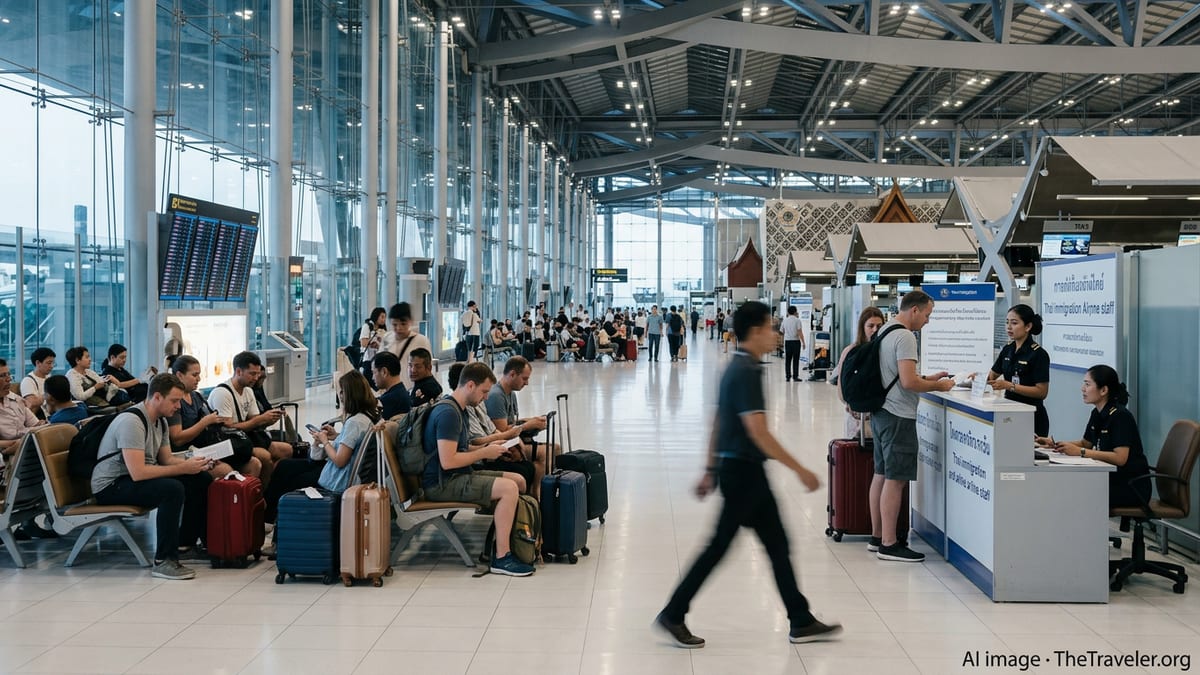
Emergency Measures as Airspace Closures Disrupt Global Routes
Thai immigration and tourism officials have moved quickly in recent days as the conflict in the Middle East triggered widespread flight cancellations and rerouting across major aviation hubs. Airspace closures since 28 February 2026 have disrupted key transit corridors linking Thailand with Europe, the Gulf and parts of Africa, leaving thousands of passengers unable to depart as planned.
On 4 March, the Immigration Bureau formally announced urgent measures for foreign nationals whose permission to stay expired on or after 28 February and who are unable to leave because of the crisis. The core decision is a temporary amnesty on overstay penalties for affected travelers, a significant departure from Thailand’s traditionally strict enforcement of immigration rules.
Authorities framed the policy as a humanitarian response to an extraordinary situation while stressing that the goal is to keep visitors in legal status rather than punish them for circumstances beyond their control. Senior officials said the move aims to preserve Thailand’s image as a safe and welcoming destination at a moment of intense uncertainty for global tourism.
The measures come as tourism data show a softening in arrival numbers and growing concern that prolonged disruption on Middle East routes could weigh on the peak high-season outlook. Policymakers have been keen to avoid headlines of stranded tourists facing fines or blacklisting, which could damage long-term confidence in the Thai travel market.
Overstay Fines Waived and Airport Procedures Simplified
At the heart of the new policy is a blanket waiver of overstay fines for foreign nationals who remained in Thailand legally until the crisis began and who can demonstrate that flight cancellations or airspace closures prevented them from leaving. Travelers whose visas or visa-exempt stays ran out from 28 February onward will not be charged the standard daily overstay penalties when they exit.
Immigration officers at international airports have been instructed to process these departures without collecting fines, provided passengers show evidence such as canceled tickets or airline notifications linked to the Middle East disruptions. Officials say the aim is to ensure that stranded visitors can leave smoothly once flights resume or alternative routes are secured.
The waiver is particularly significant given Thailand’s usual stance, where even short overstays can attract fines and may leave a negative mark on future entries. By setting those penalties aside in this case, authorities are sending a signal that stranded tourists will not be penalized for a crisis entirely outside their control.
Immigration checkpoints at land borders have also received guidance not to impose overstay penalties on eligible travelers departing the country. However, officials are urging foreign nationals to retain all documentation related to their canceled travel to avoid delays during exit processing.
Stay Extensions and Legal Pathways for Stranded Visitors
Beyond waiving fines at departure, the Immigration Bureau has opened a legal pathway for foreign nationals who need to remain in Thailand while they wait for new travel options. Stranded tourists can apply for a temporary extension of stay, typically up to 30 days, by presenting proof of disruption at local immigration offices.
These discretionary extensions are designed to prevent visitors from slipping into irregular status while airlines and aviation authorities work through complex rerouting challenges. Officials have emphasized that applicants must still meet standard security checks, but processing is being prioritized for those directly affected by the Middle East airspace crisis.
Travel agents and hotel operators have been instructed to inform guests of the new rules and encourage them to regularize their stay if it becomes clear that departure will be delayed beyond their original visa validity. Industry groups said clearer guidance from immigration has helped reduce confusion after the initial wave of cancellations.
Legal experts note that while the relief is temporary and tied to a specific crisis, it sets an important precedent for how Thailand could respond to future large-scale disruptions. Maintaining transparent options for extensions, they argue, is crucial for a tourism-driven economy that remains vulnerable to external shocks.
Financial Aid and Accommodation Support Ease Immediate Hardship
Alongside immigration relief, the Ministry of Tourism and Sports has activated a package of financial and practical assistance aimed at easing the burden on stranded foreign visitors. Officials confirmed that the Foreign Tourists Assistance Fund can now be used to provide emergency support of up to 2,000 baht per person per day, capped at 20,000 baht per traveler, in force majeure cases linked to the airspace closures.
The payments are intended to help cover essential living costs, particularly for tourists who budgeted for short stays and suddenly face unplanned extra nights in Thailand. Priority will be given to those with limited financial means, including families and solo travelers caught in transit without confirmed onward flights.
The ministry has also coordinated with the Thai Hotels Association to secure discounted room rates for affected guests. Participating hotels are being encouraged to waive rescheduling and, where necessary, cancellation fees, as well as to offer special long-stay packages at reduced prices. Tourism officials say this cooperation is crucial to prevent visitors from being forced into precarious situations while they wait for flights to resume.
Transport and tour operators have been asked to offer flexible rebooking and reduced prices on domestic travel so that stranded tourists can continue to explore the country safely, rather than remain confined to airport areas or expensive city hotels. Authorities argue that allowing visitors to move around within Thailand, with proper documentation, also helps sustain local businesses during a period of international uncertainty.
Regional Context and Thailand’s Bid to Protect Its Tourism Brand
Thailand’s rapid response places it among a growing group of tourism-dependent countries crafting emergency protections for foreign visitors stranded by the Middle East turmoil. Several destinations in Asia and the Indian Ocean region have rolled out similar amnesties on overstay fines and temporary stay extensions to prevent travelers from being penalized for disrupted flight corridors.
For Bangkok, which has worked aggressively in recent years to rebuild tourist confidence after the pandemic and other regional shocks, the current crisis is both a challenge and an opportunity. Analysts say the country’s handling of stranded visitors will be closely watched by airlines, tour operators and foreign governments as a measure of reliability.
Tourism officials acknowledge that prolonged instability in Middle East airspace could weigh on Thailand’s arrival numbers in the weeks ahead, especially among European travelers who rely on Gulf carriers and hub airports for long-haul connections. However, they argue that proactive immigration relief, clear communication and tangible financial support can help offset reputational damage and encourage future bookings once the situation stabilizes.
For now, the focus remains on ensuring that those already in the country are treated fairly and can navigate a complex and evolving situation without fear of fines, detention or future entry bans. In a moment when global aviation remains deeply vulnerable to regional conflict, Thailand is betting that decisive, visitor-friendly policies will reinforce its standing as one of the world’s most resilient and responsive travel destinations.