

More news on this day
Thailand has announced an overstay fine waiver and emergency visa relief for foreign travelers stranded in the country after airspace closures over parts of the Middle East triggered mass flight cancellations and route suspensions since February 28, 2026.
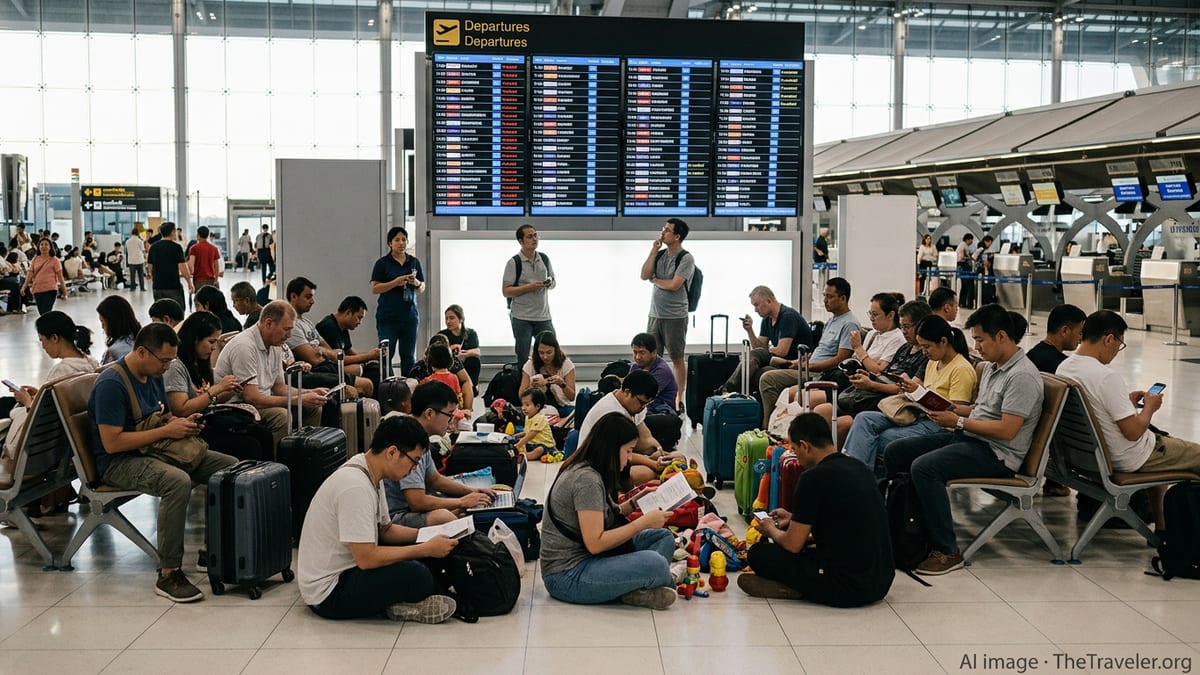
New Overstay Waiver Aims to Protect Stranded Visitors
Thailand’s Immigration Bureau has confirmed that foreign nationals whose permission to stay expired on or after February 28, 2026, and who were unable to depart due to Middle East airspace closures, will be exempt from standard overstay penalties when they leave the country. Under normal rules, visitors who remain beyond their permitted stay face fines of 500 baht per day, up to a maximum of 20,000 baht, and risk future entry bans. The temporary waiver removes that liability for travelers able to show that grounded or rerouted flights prevented their timely departure.
Officials said the waiver is designed to ensure that genuine tourists are not punished for circumstances beyond their control as airlines suspend or reroute services that normally transit the Gulf and surrounding airspace. The measure applies primarily to travelers whose itineraries required connections via major Middle East hubs, including those flying with carriers such as Emirates, Qatar Airways, Etihad Airways and Gulf Air, many of which have sharply reduced schedules in recent days.
Immigration authorities emphasized that the waiver is linked to departure. Travelers who simply overstay for unrelated reasons will still face normal penalties, and border officers retain discretion to request documentation such as cancelled or rebooked tickets, airline notifications, and correspondence with carriers. The bureau has urged affected visitors to keep all evidence of disruption to support their case at departure counters.
According to preliminary figures from Thailand’s airport operator, more than 49,000 passengers on hundreds of flights were impacted between February 28 and March 4 alone, underscoring the scale of disruption as corridors over parts of the Middle East remain restricted or closed.
Temporary Visa Extensions Available for Those Who Must Stay On
Alongside the overstay fine waiver for departing passengers, Thai immigration offices have been instructed to facilitate short visa extensions for stranded tourists who need to remain in the country while waiting for replacement flights. In general, eligible travelers may be granted up to 30 additional days of stay per application, subject to standard background checks and documentation requirements.
Authorities have clarified that the legal framework distinguishes between visitors who are already in an overstay position and those whose permission is about to expire. Travelers applying for an extension before their permission ends are expected to follow the usual process at local immigration offices, submitting passport details, proof of accommodation, and evidence of disrupted or rescheduled flights.
For those who have already overstayed but wish to remain in Thailand temporarily rather than leave immediately, officials indicate that standard fine procedures may still apply before an extension is issued. In practice, that means some travelers could be asked to settle accumulated overstay fines in person at immigration before a fresh period of temporary stay is granted, even as fines are waived for those exiting the country. The distinction has prompted calls from tourism operators for clear, multilingual guidance so visitors can better understand which path applies to their situation.
Immigration leaders insist that the dual approach balances compassion with legal integrity. The goal, they say, is to protect stranded visitors from harsh penalties while maintaining a documented record of all foreigners staying in the kingdom during a period of heightened global travel disruption.
Tourism and Local Authorities Coordinate Support on the Ground
Thailand’s Ministry of Tourism and Sports has moved quickly to coordinate assistance for stranded travelers in key destinations, including Bangkok, Phuket and other popular resort areas. Officials are working with provincial authorities, hotel associations and local tourism councils to encourage flexible booking policies, special room rates and practical support for visitors whose stays have been unexpectedly extended.
In Phuket, for example, the provincial governor and tourism leaders have urged hotels to waive rebooking and cancellation fees where possible, and to offer discounted nightly rates to guests forced to remain until alternative flight options become available. Similar discussions are taking place in Bangkok and other hubs near major international airports, where airport hotels and city properties are reporting a noticeable uptick in walk in guests looking for short notice stays.
The Tourism and Sports Ministry has also outlined a plan to channel limited financial assistance to the most vulnerable stranded tourists who can demonstrate hardship, including those who have exhausted their travel budgets or face difficulties accessing funds from home. Officials say the intention is to provide a basic safety net while airlines, insurers and foreign embassies work through rebooking backlogs and emergency consular support.
At Bangkok’s Suvarnabhumi Airport, help desks staffed by tourism and immigration officers are directing passengers to information on visa options, overstay relief and accommodation. Airport authorities report crowded transfer and ticketing halls as travelers await updates on rerouted services via Europe or East Asia that avoid closed Middle Eastern corridors.
Global Airspace Closures Ripple Through Thailand’s Tourism Economy
The overstay fine waiver comes as Thailand’s tourism sector grapples with the sudden shock of widespread airspace closures triggered by a sharp escalation in conflict in the Middle East. Key air corridors used by long haul carriers connecting Europe and Asia via Gulf hubs have been heavily restricted since February 28, affecting not only flights to and from the region but also onward connections for travelers bound for Southeast Asia.
In Thailand, Airports of Thailand has reported several hundred cancellations and significant delays across its network of international airports over the past week. Suvarnabhumi, the country’s main gateway, has been hardest hit, with tens of thousands of passengers facing disrupted itineraries. Many European and North American visitors heading home from winter holidays in Thailand were scheduled to transit via Doha, Dubai, Abu Dhabi or other regional hubs now affected by closure orders and shifting no fly zones.
Industry analysts warn that if the crisis and associated airspace restrictions persist for several more weeks, Thailand could see a temporary dip in new arrivals from long haul markets just as it works to consolidate a broader post pandemic tourism recovery. However, they also note that flexible policies such as overstay waivers and streamlined visa extensions may help preserve the country’s reputation as a visitor friendly destination during a challenging period.
Thai authorities are in regular contact with airlines, foreign embassies and regional partners to monitor route changes and coordinate information for passengers. Officials stress that all six international airports under the state operator remain open and operational, with carriers progressively exploring alternative routing that skirts affected Middle Eastern airspace.
What Travelers in Thailand Should Do Now
Authorities are advising foreign visitors currently in Thailand to closely monitor airline communications and official announcements, keep all documentation related to flight cancellations or rebookings, and avoid making unnecessary last minute changes that could complicate their immigration status. Travelers whose permission to stay is due to expire soon are encouraged to visit a local immigration office before the deadline to discuss extension options tied to the airspace closures.
Those already in overstay because their flights were cancelled after February 28 are being told not to panic. For travelers who have confirmed onward flights and are ready to depart once a route is available, the overstay fine waiver will be processed at departure counters, provided they can show reasonable evidence that the disruption was caused by the Middle East airspace situation. Immigration checkpoints at major airports have been briefed on the special measures and are working to fast track eligible cases.
Travelers who prefer to remain in Thailand while waiting for more stable flight schedules should be prepared to spend time at immigration offices to regularize their stay, and may wish to seek advice from their embassy or consulate. Tourism officials note that many hotels are now familiar with the situation and are offering flexible arrangements to affected guests, including allowing late check outs and short extensions as flight plans change.
With the global aviation picture still fluid, Thai authorities say the overstay waiver and emergency visa policies will remain under review. Travelers are urged to rely on official government channels and airline notices rather than social media rumors, and to build extra time and flexibility into any upcoming international travel plans that could be affected by the continuing Middle East airspace crisis.