

More news on this day
Thailand is entering 2026 with a renewed tourism push built around fast-rising Chinese arrivals, expanded air links and a new wave of visitor-focused initiatives that aim to restore the country’s position as a must-visit destination in Asia.
Get the latest news straight to your inbox!
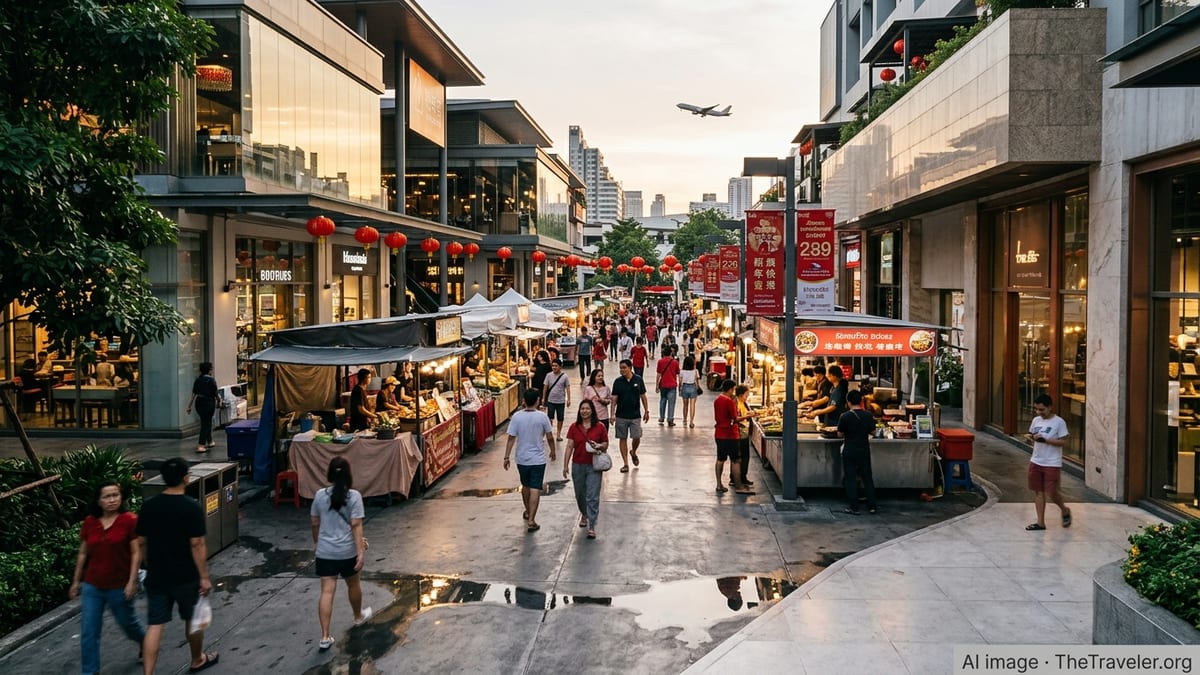
Chinese Arrivals Rebound as Thailand Sets Ambitious 2026 Targets
After a volatile two years for inbound travel, publicly available data show that Thailand is banking on a Chinese comeback to power its next tourism boom. The Tourism Authority of Thailand has framed 2026 as a year of recovery and renewed growth, highlighting China as the pivotal market for both volume and high spending power.
Recent figures covering the opening weeks of 2026 indicate that foreign visitor numbers have passed the five million mark, with Chinese travelers once again among the leading source markets. Reports from Thai media note that from January to late February 2026, China’s share has strengthened noticeably compared with the same period a year earlier, helped by targeted marketing and peak Lunar New Year travel.
Tourism planners are using these early numbers as a springboard for the rest of the year. Forecasts cited by local financial and industry reports point to total foreign arrivals in 2026 approaching or exceeding the high thirties in millions, with various scenarios placing Chinese visitors in the range of six to nine million, depending on economic conditions and flight capacity. Analysts see this upswing as critical for hotels, airlines and retail operators that rely heavily on short-haul Asian demand.
Market outlooks from Thai securities firms and independent consultancies describe 2026 as a turning point for the sector, with hotel revenue indicators and airport slot allocations both trending higher. While the overall industry is still short of its pre-pandemic peak, the consensus presented in recent research is that China’s gradual return will be the main driver of a more broad-based recovery.
New and Restored China Flights Underpin the Travel Boom
The air corridor between China and Thailand is at the center of the country’s 2026 strategy. Flight-tracking and aviation analyses show that scheduled capacity between the two countries has steadily improved since late 2024, with airlines restoring popular routes and adding frequencies to meet rising demand from both tour groups and independent travelers.
Chinese carriers and regional low cost airlines have been increasing services to Bangkok and key resort destinations such as Phuket and Chiang Mai. Public flight schedules for the 2025 and 2026 northern winter seasons point to a notable uplift in weekly seats from major Chinese cities, including Shanghai, Guangzhou and Chengdu, into Thailand’s primary gateways. Some carriers have shifted capacity away from weaker routes elsewhere in the region to prioritize Thailand, which remains one of the best-known outbound destinations for Chinese holidaymakers.
Network expansion is not limited to trunk routes. Secondary Chinese cities are reconnecting with Thai leisure hubs, giving travelers in inland provinces more direct access to beach and cultural destinations without needing to transit through Beijing or Shanghai. Aviation data show growing numbers of point to point flights linking emerging Chinese markets with Phuket and Chiang Mai, a pattern that industry observers say will help spread visitor spending more evenly across Thailand’s regions.
Despite a few announced suspensions of underperforming services, the overall trend in seat capacity between China and Thailand is upward for 2026. Airline planning documents and airport slot filings cited in regional business media point to double digit growth in international passenger volumes for Thailand’s main airports in the current northern winter timetable, reinforcing expectations of a busy high season stretching into mid year.
Visa Policies and ‘Closer Than Family’ Campaign Shape New Era
Thailand’s recent visa moves and branding campaigns are another pillar of its 2026 tourism push. The country introduced and later expanded visa exemption measures for Chinese passport holders from late 2023 onward, and officials have signaled an intention to keep entry relatively straightforward for short stay visitors, even as the exact length of visa free stays continues to be debated.
While there have been discussions about adjusting stay durations and tightening rules in response to concerns over long term stays and informal work, public clarifications in early 2026 reaffirmed that mainstream visitors arriving for holidays are still able to enter under visa exemption as long as they comply with existing conditions. Travel industry groups report that simplified entry continues to be a core selling point in China, particularly compared with destinations that retain more complex visa procedures.
At the same time, Thailand has launched a high visibility marketing effort tailored to Chinese travelers under the banner often translated as “China and Thailand, close like family.” Coverage in Thai and Chinese language media describes this initiative as a coordinated program of roadshows, cultural events and seasonal campaigns designed to rebuild confidence after safety concerns and shifting travel patterns dampened demand in previous years.
Elements of the campaign focus on practical reassurance as much as emotion, highlighting upgraded safety measures, digital payment compatibility and Chinese language services in major tourism centers. The combination of easier entry, targeted messaging and the familiarity of Thailand’s established destinations is widely viewed within the industry as a powerful mix for turning renewed interest into confirmed bookings throughout 2026.
Groundbreaking Digital and Infrastructure Initiatives Redefine the Experience
Beyond flight capacity and visas, Thailand is using 2026 to roll out what officials describe in public documents as a new generation of travel infrastructure. One of the most visible changes for international visitors is the introduction of the nationwide digital arrival card, which replaced the long standing paper form in 2025. According to information published by the Thai Immigration Bureau, travelers are now required to complete an online form before arrival, streamlining the entry process at airports.
Industry observers say this move is part of a wider shift toward a more connected travel experience. Airports in Bangkok and major regional centers have invested in biometric gates, upgraded baggage systems and clearer passenger flows, aiming to cut wait times and improve the first impression for new arrivals. Chinese travelers in particular are expected to benefit from smoother transfer experiences and better integration with mobile payment platforms widely used in China.
Tourism planners are also aligning these physical upgrades with broader economic goals. Government strategy documents and local business reports for 2026 emphasize value over sheer volume, encouraging the development of higher yielding segments such as meetings and incentives, wellness travel and sports events. This approach is visible in new convention facilities, refreshed beachfront promenades and upgraded public transport links in resort cities.
Observers note that these changes are especially important for Chinese visitors who are increasingly traveling independently rather than in tightly scripted tour groups. More reliable public infrastructure, clearer signage and digital information services in multiple languages make it easier for first time travelers from China’s inland provinces to explore beyond the traditional Bangkok and Phuket combination.
Regional Competition Rises, but Thailand Leans on Diversity
Thailand’s 2026 tourism ambitions are unfolding in a more competitive regional landscape. Neighboring destinations in Southeast Asia and East Asia are courting the same Chinese travelers with new resorts, casino projects and simplified entry schemes. Industry analysis carried in regional media warns that Thailand can no longer rely solely on name recognition and low costs to secure its share of outbound demand.
In response, Thai tourism planners are positioning the country’s geographic and cultural diversity as a key strength. Promotional materials and domestic policy discussions highlight the variety available within a single trip, from urban experiences in Bangkok to northern cultural centers like Chiang Mai and beach destinations along both the Gulf of Thailand and the Andaman Sea. For Chinese visitors facing a growing menu of international options, this breadth is marketed as a way to maximize time and value.
Environmental and community based tourism are also receiving greater attention in 2026 planning documents, reflecting both global trends and the preferences of younger Chinese travelers who are more likely to seek nature experiences and authentic local culture. Provinces that saw fewer international arrivals during earlier boom years are now being featured more prominently in marketing roadshows and trade fairs targeting Chinese tour operators.
Analysts who track the sector caution that Thailand’s success in 2026 will depend on balancing rapid growth with service quality and safety. However, they also note that few destinations in the region combine such a large, improving air network with relatively open visa rules, digitalized entry systems and a finely tuned campaign aimed directly at China. Those ingredients are helping to make Thailand once again stand out on the 2026 travel map for Chinese tourists and the wider global market alike.