

More news on this day
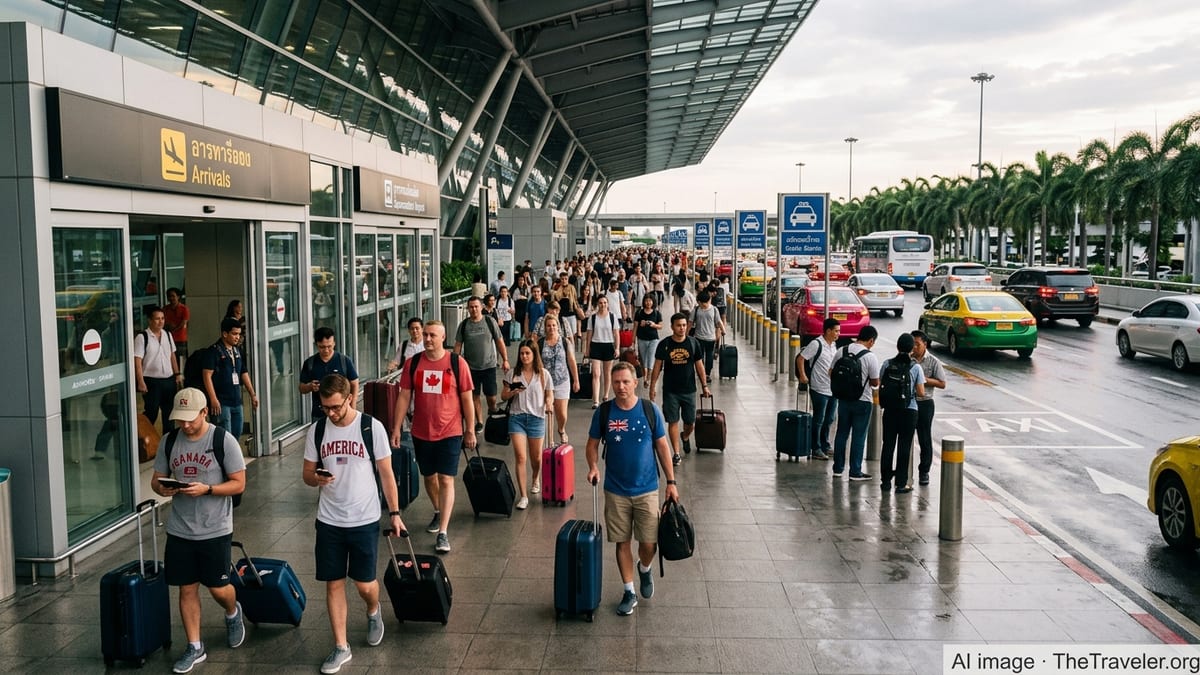
Thailand’s plan to roll back its expanded visa-exemption scheme, cutting stays from 60 to 30 days for visitors from Canada, the United States, Australia and dozens of other countries, is emerging as one of the most closely watched policy shifts in global tourism, signaling a tougher approach to long-stay visitors even as the kingdom courts higher-spending short-term travelers.
Get the latest news straight to your inbox!
A Rapid Reversal From Pandemic-Era Relaxation
In mid-2024, Thailand dramatically loosened its visa rules, extending visa-free stays from 30 to 60 days for nationals of 93 countries in a bid to accelerate the post-pandemic tourism rebound. Publicly available government information shows that this expansion covered major markets including Canada, the United States and Australia, and was explicitly framed as an economic stimulus tool to draw more leisure travelers and short-term business visitors.
By early 2025, however, concerns about misuse began to surface in local media and policy commentary. Reports indicated that some foreigners were stringing together multiple visa-exempt entries and in-country extensions to remain in Thailand for extended periods while operating undeclared businesses or working remotely without appropriate long-stay visas. This prompted calls from policymakers and industry figures to recalibrate the system, bringing stays back toward the traditional 30-day model and tightening oversight of repeat visitors.
Subsequent coverage from Thai and regional outlets described an emerging consensus in principle within Bangkok to revert the visa-exempt period from 60 days back to 30 days, while preserving the broader list of eligible nationalities. The proposal would affect travelers from a wide range of markets, from North America and Europe to Australia and parts of Asia, effectively undoing the generous window introduced less than two years earlier.
What a 30-Day Limit Means for Canada, the United States and Australia
For citizens of Canada, the United States and Australia, Thailand’s shift toward a 30-day visa-exempt stay alters the calculus for winter escapes, gap-year trips and remote working stints that have long relied on flexible entry rules. Under the proposed framework described in multiple policy briefings and travel advisories, travelers would be granted a 30-day stamp on arrival, with the possibility in many cases of a single in-country extension of up to 30 additional days at a local immigration office.
This creates a more compressed but still workable 30 to 60-day window for typical leisure trips. Two-week beach holidays or three-week multi-destination itineraries remain unaffected in practical terms. Where the impact is most acute is for visitors who previously structured longer stays of two to three months entirely on visa exemptions and routine extensions, often combining beach resorts, northern cultural hubs and urban bases such as Bangkok for remote work.
Tour operators in North America and Australia have already begun adjusting sample itineraries and fine print in response to the steadily tightening climate described in public guidance and industry analysis. Package offerings are trending toward clearly defined stays of under 30 days, or toward bundled services that include assistance with appropriate longer-term visas for language study, retirement, business or digital nomad activity, rather than relying on successive visa-exempt entries.
For independent travelers, the change reinforces the importance of planning around a firm exit date, holding confirmed outbound tickets and being prepared to show accommodation bookings and financial proof if questioned at the border. While many travelers are likely to continue entering on visa exemption, the margin for improvising multi-month stays without a dedicated visa is narrowing.
A Strategic Pivot Toward “Quality” Tourists
Thailand’s move sits within a broader regional trend of tightening informal long-stay channels while introducing more targeted visas for specific traveler segments. Publicly available policy papers and law firm briefings highlight Bangkok’s efforts to use tools such as the Destination Thailand Visa for digital professionals and extended-stay visitors, alongside revamped student and retirement categories, to channel long-term residents into clearer legal pathways.
At the same time, immigration-focused publications describe an environment of increased scrutiny on repeat entries and visa runs, particularly from travelers who appear to be living in Thailand on back-to-back visa exemptions. New procedures rolled out since late 2025, including expanded use of digital arrival cards and pre-travel data collection, give border officials more visibility into travel histories and patterns of stay.
Within this context, the return to a 30-day baseline functions less as an isolated cut and more as part of a layered strategy. The policy signals that Thailand still welcomes high-volume tourism but prefers it to be shorter, better documented and more clearly separated from semi-resident lifestyles that previously occupied a legal gray zone. For Canada, the United States and Australia, whose citizens are frequent repeat visitors, that distinction will matter more in future trip planning.
Global Tourism Implications and Competitive Pressures
The potential rollback of Thailand’s 60-day visa exemption is being closely watched across the Asia-Pacific region, where destinations compete aggressively for long-haul travelers from North America and Oceania. Neighboring countries have experimented with their own mixes of lenient visa-free access, digital arrival systems and targeted long-stay visas, often benchmarking against Thailand’s numbers.
Analysts note that Thailand’s experience illustrates the tension between maximizing arrivals and managing the social and economic impacts of long-stay foreigners who may not fit neatly into tourist or resident categories. The shift back to 30 days, particularly if firmly implemented across all eligible nationalities, could spur travelers from Canada, the United States and Australia to diversify their regional itineraries, combining Thailand with nearby destinations that maintain longer visa-free windows.
At the same time, Thailand retains significant competitive advantages: dense international air connectivity, mature tourism infrastructure, and a reputation for good value across accommodation, food and wellness travel. Even on a 30-day limit, the country can comfortably host multi-stop trips that include Bangkok, the southern islands and northern cultural centers, preserving its role as a regional hub while tightening the rules for those who wish to linger.
How aggressively the proposed changes are enforced, and how clearly they are communicated to airlines, tour operators and travelers, will shape their real-world impact. For now, publicly available coverage suggests that Thailand is intent on resetting expectations, steering long-stay visitors toward formal visa categories and redefining what it means to visit the kingdom as a tourist in the era of more regulated global mobility.