

More news on this day
Thailand’s reputation as a world-class beach destination has taken a decisive sustainability turn in 2025, as Koh Kradan in Trang and Bileh Beach on Koh Hong in Krabi secured prestigious five-star ratings under the Beach Star environmental assessment programme, highlighting a new national benchmark for clean, well-managed and eco-conscious island tourism.
Get the latest news straight to your inbox!
A New Environmental Benchmark for Thai Beaches
The five-star Beach Star ratings for Koh Kradan and Bileh Beach are being viewed by tourism observers as a watershed moment for Thailand’s coastal destinations. The programme, introduced to assess beach quality through environmental and visitor management criteria, places a premium on water clarity, waste control, ecosystem protection and community involvement.
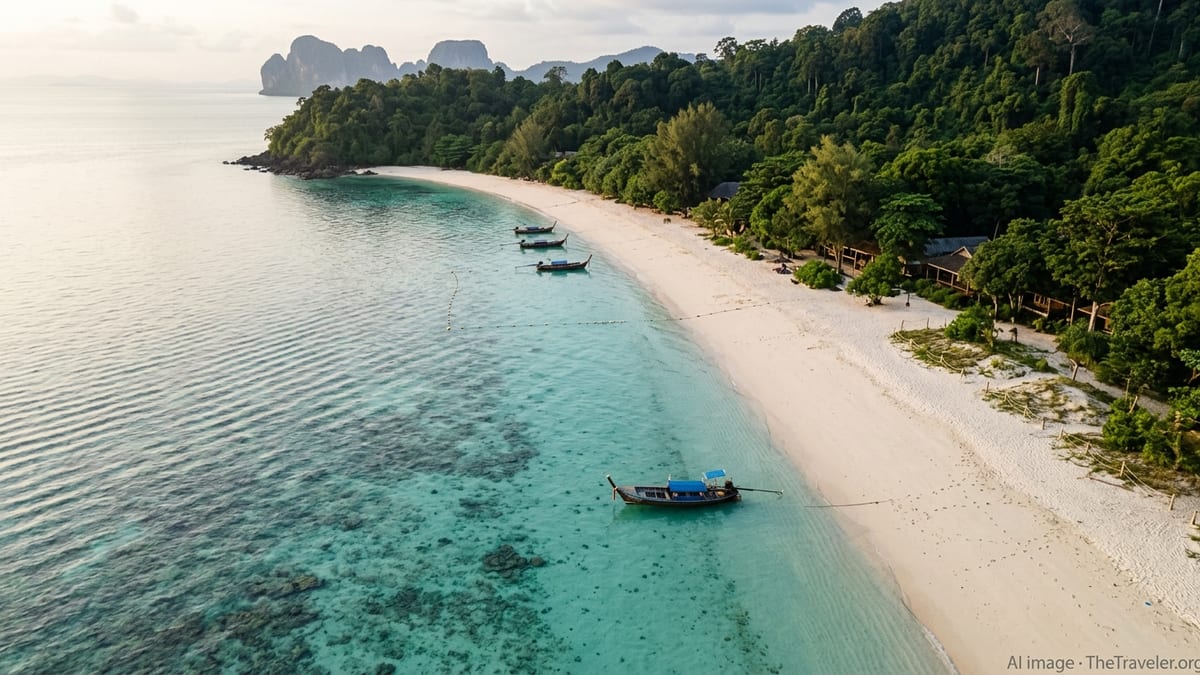
Publicly available information indicates that the two Andaman locations scored at the top of the scale for 2025, reflecting sustained efforts to balance visitor demand with ecological limits. Both beaches are known for clear turquoise waters and soft white sand, but the new rating formally recognizes the systems in place to protect those assets.
The Beach Star framework comes at a time when global travelers are increasingly factoring sustainability into destination choices. Industry reports suggest that Thailand’s ability to demonstrate measurable coastal standards could help differentiate its islands in a crowded regional market that includes Indonesia, the Philippines and Vietnam.
Analysts also note that the programme gives local authorities and tourism operators a clearer roadmap for investment, from wastewater treatment and reef protection to visitor education and controlled carrying capacity.
How Koh Kradan and Koh Hong Reached Five-Star Status
Koh Kradan in Trang province has long been cited in travel features as one of Thailand’s most pristine islands, with shallow reefs close to shore and relatively low-rise development compared with larger destinations. Recent years have seen tighter rules on shoreline construction, mooring practices and marine activities, which travel industry coverage links to improved coral health and reduced beach erosion.
Bileh Beach on Koh Hong in Krabi, part of a protected marine area, has followed a similar path. Day-trip operators have been subject to stricter zoning and time-slot systems, according to local tourism updates, limiting congestion in the small lagoon and giving marine ecosystems more time to recover between boat visits. Simple measures, such as designated swimming areas and clear waste disposal points, have also contributed to the site’s top-tier rating.
The five-star recognition signals that both beaches now meet or exceed multiple environmental and management thresholds. These typically include regular water quality monitoring, visible cleanliness of sand and shoreline, minimal plastic waste, and proactive steps to protect seagrass beds and coral. Visitor information boards, ranger presence and partnerships with nearby communities are increasingly prominent features.
For tour operators, the new status is already being folded into marketing narratives that emphasize low-impact experiences, smaller group sizes and codes of conduct for snorkeling, beach use and wildlife interaction.
Aligning with Thailand’s Broader Sustainable Tourism Drive
The Beach Star ratings dovetail with a wider shift in Thailand’s tourism strategy, where sustainability is being woven into hotel accreditation, island management and national branding. Initiatives such as sustainable tourism star certifications for hotels and the carefully managed reopening of locations like Maya Bay have signaled that environmental limits are being taken more seriously than in the era of mass, unmanaged arrivals.
Across Thai islands, published coverage highlights more properties pursuing green building standards, investing in solar power, and reducing single-use plastics. On islands such as Samui, Phuket and Koh Kood, industry reports describe resorts experimenting with on-site waste sorting, composting, and wastewater recycling in response to both regulatory pressure and guest expectations.
At the policy level, discussions around overtourism and carrying capacity have moved from niche debates to mainstream planning considerations. Some marine parks have introduced seasonal closures or caps on daily arrivals, while others have raised entry fees to fund conservation and infrastructure. These shifts provide context for the Beach Star designations, positioning them as part of a more systematic approach rather than isolated one-off awards.
Travel analysts say that connecting beach-level ratings with national sustainability messaging could help Thailand attract higher-yield visitors who are willing to pay more for well-managed natural experiences, potentially easing pressure on the most overburdened sites.
Implications for Travelers and Local Communities
For travelers, the five-star Beach Star label offers a clearer signal of what to expect on arrival. Visitors to Koh Kradan and Koh Hong in 2025 are likely to encounter cleaner shorelines, clearly marked swimming and snorkeling zones, and more visible guidance on how to minimize their footprint. The rating also suggests a trade-off: improved environmental quality in exchange for greater regulation of access, including time-limited visits or caps on daily arrivals.
Local communities stand to benefit from the heightened profile of certified beaches, but the economic gains are not automatic. Observers caution that revenue must be channeled into conservation, waste management and community projects if the model is to remain credible. In many island districts, informal tourism work has grown faster than formal planning, leading to infrastructure strains that programmes like Beach Star aim to address.
The ratings may also influence the types of businesses that thrive. Eco-focused tour operators, small-scale accommodations with strong environmental practices and community-based tourism ventures could find it easier to market themselves under a recognized sustainability banner. Conversely, operators whose practices conflict with coastal protection priorities may face tighter scrutiny or reduced access to sensitive sites.
Travel media commentary suggests that the success of Koh Kradan and Koh Hong could encourage other destinations, from the Gulf islands to lesser-known Andaman pockets, to pursue similar recognition as a way to future-proof their tourism economies.
Raising the Bar for Future Island Development
The 2025 Beach Star results set a reference point for future island development in Thailand. Planners and investors now have a concrete example of the standards required to earn top-tier recognition, from lagoon circulation studies and reef restoration projects to invisible but critical systems such as sewage treatment and solid waste transport.
Real estate and hospitality analysts note that environmental credentials are increasingly factored into new resort concepts, especially at the luxury end of the market. Beachfront projects that once focused primarily on pool decks and room counts are now more likely to highlight dune preservation, native plant landscaping, nature trails and partnerships with marine parks.
For Thailand’s tourism brand, the emergence of five-star Beach Star sites supports a narrative that balances famous party beaches and resort strips with quieter, conservation-led destinations. If the early results on Koh Kradan and Koh Hong can be maintained, and if more beaches join the upper tier in coming years, the country’s islands may be able to grow visitor numbers while holding firm on environmental guardrails.
As 2025 progresses, attention will focus on whether the Beach Star ratings become a widely recognized seal of quality for international travelers. The experiences on these first five-star beaches are likely to influence how future coastal policies are framed and how Thailand positions its islands in an era when sustainable coastal experiences are rapidly moving from niche preference to mainstream expectation.