

More news on this day
Thailand is increasingly using the Songkran New Year festival as a strategic testbed for aviation and tourism policy, combining extra flight capacity, airport upgrades and festival-linked incentives in a bid to cement its role as a Southeast Asian travel hub.
Get the latest news straight to your inbox!
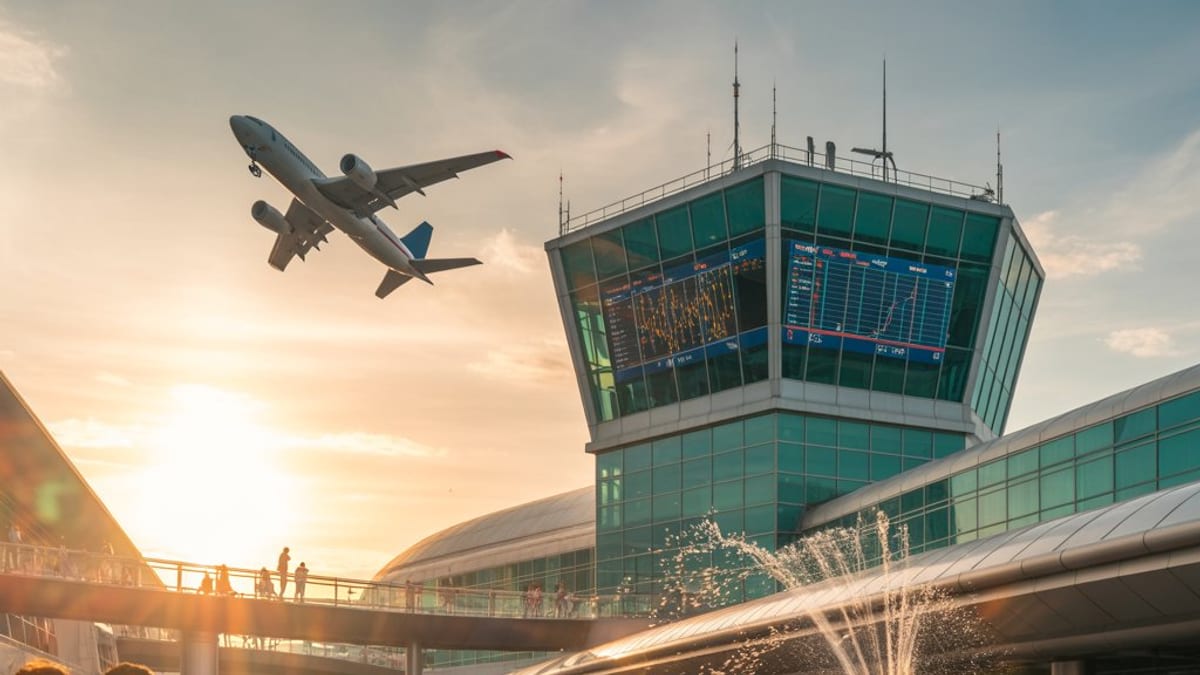
Image by Travel And Tour World
Songkran Becomes a Catalyst for High-Season Capacity Planning
Recent Songkran periods have been treated as a proving ground for Thailand’s wider aviation ambitions, with authorities coordinating closely with airports and airlines to absorb sharp holiday surges. Publicly available information shows that during the 2025 festival week, airports under Airports of Thailand recorded double-digit growth in both flights and passengers compared with the previous year, underlining the role of the holiday as a stress test for the system.
Bangkok’s Don Mueang Airport, a key low-cost carrier base, expected more than 700,000 passengers over the April 11 to 17, 2025 period, averaging upwards of 100,000 travelers a day. Reports indicate this translated into more than 4,300 flights across the week and low single-digit percentage growth in traffic, consolidating Don Mueang’s position as a regional budget hub.
Regional gateways have been folded into the same strategy. Phuket International Airport, for example, prepared for over 50,000 passengers per day in the 2025 Songkran window, supported by local tourism projections that the island would generate billions of baht in holiday revenue. By pushing more Songkran traffic through secondary airports, planners aim to distribute demand more evenly and relieve pressure on Bangkok.
Officials have also used Songkran capacity planning to refine coordination between air traffic control, security screening and passenger processing technologies. Aviation agencies reported pre-positioning additional staff and upgrading common-use check-in and biometric systems at major gateways in time for the 2025 holiday, seeking to reduce queues and signal that Thailand can handle higher volumes year-round.
Targeted Aviation Measures to Ease Holiday Bottlenecks
Thailand’s Songkran aviation strategy is anchored in a set of targeted measures designed to ease bottlenecks without overwhelming infrastructure. Government communications ahead of the 2025 festival outlined five core aviation actions, ranging from temporary capacity increases to operational fine-tuning at the country’s six main international airports.
One headline measure has been the allocation of additional seats and flights on domestic routes linking Bangkok with major regional cities such as Chiang Mai, Phuket and Hat Yai. In early 2024, for instance, regulators approved more than one hundred extra flights around the Songkran holidays, adding nearly 18,000 seats on popular sectors. A similar approach has since been adopted, with the transport ministry announcing roughly 25,000 extra domestic seats for the upcoming 2026 festival period.
Alongside added capacity, Songkran has prompted experiments in demand management. Free or discounted parking at key airports during peak holiday days, introduced for the 2025 festival, was intended to smooth passenger flows by encouraging early arrivals and extended stays. At the same time, air navigation authorities emphasized pre-planned airspace management to handle dense clusters of takeoffs and landings without cascading delays.
Songkran also intersects with broader tourism incentives. Campaigns such as “Amazing Songkran” and “Grand Songkran Grand Privileges” for 2025 have bundled air travel with hotel, retail and transport discounts, effectively turning aviation scheduling decisions into part of a larger national promotion. That alignment of flight planning with tourism marketing is becoming a hallmark of Thailand’s approach.
Songkran Strategy Within Thailand’s Wider Tourism Pivot
The aviation measures deployed around Songkran sit within a wider shift in Thailand’s tourism model, which is now framed around higher-value, longer-stay visitors rather than raw volume growth. Government strategies for 2025 and 2026, including the “Amazing Thailand Grand Tourism and Sports Year,” position the festival as one of several anchor events intended to smooth seasonality and encourage repeat travel.
Songkran’s timing makes it an important bridge between the northern hemisphere winter peak and the quieter shoulder months. By bolstering connectivity and maintaining relatively high seat capacity into mid-April, Thailand is seeking to capture late-booking holidaymakers and regional travelers who might otherwise choose alternative destinations once traditional peak season ends.
Visa policy adds another layer to this strategy. Expanded visa exemptions and longer stays for selected markets, combined with tighter screening for specific high-risk groups at major airports from late 2025 onward, suggest an attempt to balance openness with security. Songkran traffic becomes a real-time test of how these policies influence arrival patterns, passenger mix and traveler perceptions of convenience.
At the same time, Songkran forms part of a much broader calendar of festivals and major sporting events aimed at dispersing demand across the year, including cultural celebrations like Loy Krathong and Yi Peng as well as international tournaments. The success of aviation operations during Songkran helps determine how aggressively authorities can push similar peaks around other events without straining the system.
Global Ripples: Airlines, Hubs and Competing Festivals
Thailand’s use of Songkran as an aviation stress test is increasingly relevant for airlines and competing hubs across the region. As Bangkok’s Suvarnabhumi and Don Mueang airports refine their handling of holiday surges, carriers gain confidence in planning aggressive schedules that bank on quick turnarounds and high aircraft utilization during April.
Regional rivals are watching closely. Cities such as Singapore, Kuala Lumpur and Ho Chi Minh City are also expanding capacity and promoting their own cultural festivals to draw visitors. However, Songkran’s profile as a globally recognized water festival gives Thailand a distinct branding advantage, especially when paired with reliable air connectivity and smoother airport experiences demonstrated during recent peak periods.
Airlines using Bangkok as a transfer point view Songkran demand as an indicator of the strength of Thailand’s long-term hub proposition. As Thai Airways and regional low-cost carriers modernize fleets and open new routes, the ability of airports to manage Songkran volumes without widespread disruption strengthens the case for channeling more connecting traffic through Thai gateways.
The holiday’s aviation footprint also influences aircraft deployment and fare dynamics across wider networks. Additional Songkran flights on Thai domestic and short-haul international routes can free up or reassign capacity elsewhere in Southeast Asia, shaping ticket prices and availability for travelers who have no intention of joining the water fights but still feel the impact of the seasonal spike.
Balancing Growth, Safety and Sustainability
As Thailand moves toward more ambitious tourism revenue targets, Songkran aviation planning is increasingly tied to safety and sustainability considerations. Authorities have highlighted the use of upgraded navigation systems, closer monitoring of weather-related risks and clearer passenger information as part of recent festival preparations.
Environmental factors are also gaining prominence. Discussions in the Thai aviation sector emphasize fuel efficiency, the gradual adoption of sustainable aviation fuel and improved ground operations as ways to contain the environmental footprint of peak travel periods. The ability to move growing numbers of Songkran travelers with fewer delays and more efficient routing is seen as a necessary step if Thailand is to market itself as both accessible and responsible.
Looking ahead to Songkran 2026 and beyond, the festival is likely to remain a focal point for testing new technologies and policies, from biometric boarding to digital immigration systems and dynamic slot management. Each holiday period provides another dataset that shapes route planning, airport investment and tourism promotion tactics.
For travelers, the result is that a traditional water festival increasingly doubles as a laboratory for the future of regional air travel. For Thailand and its competitors, the way those experiments play out during Songkran is helping to redraw the map of where, when and how people move across Southeast Asia.