

More news on this day
Thailand is intensifying its use of aviation policy around the Songkran New Year, combining fare cuts, extra capacity and festival branding to reposition the holiday as a global travel driver rather than just a domestic peak season.
Get the latest news straight to your inbox!
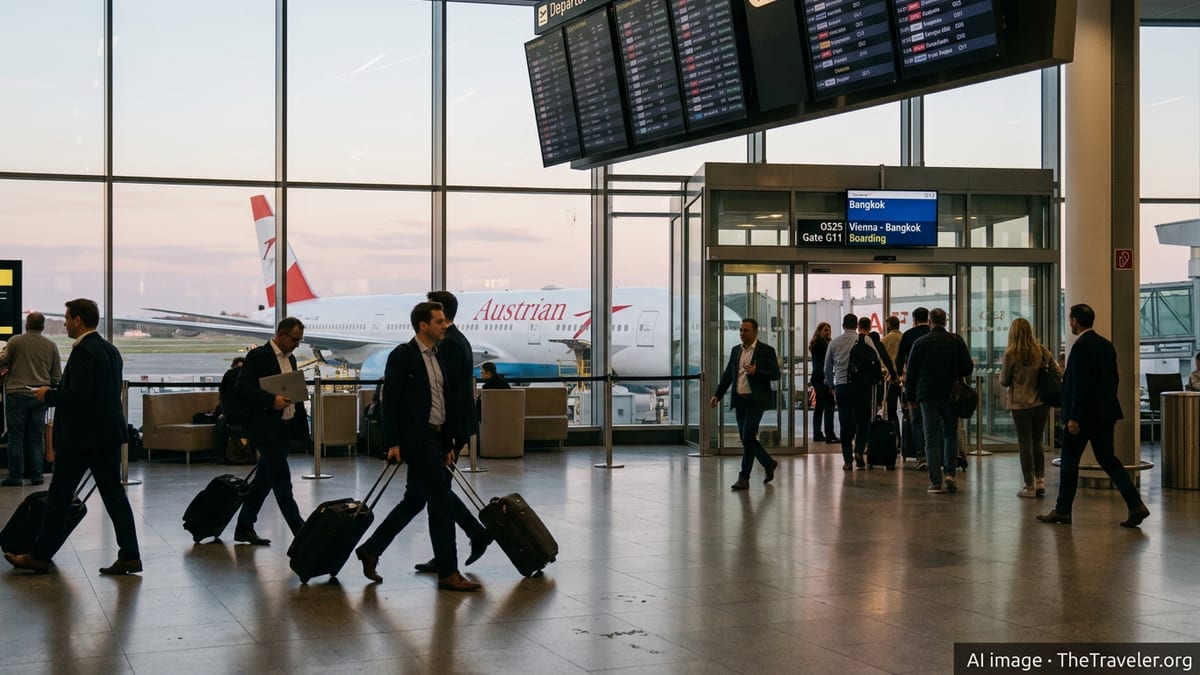
Coordinated Capacity Surge for Songkran 2026
Publicly available information from Thailand’s aviation regulator shows a coordinated plan with six domestic carriers to expand seat capacity and reduce fares for the April 2026 Songkran period. The Civil Aviation Authority of Thailand has outlined a package of nearly 30,000 additional domestic seats and airfare reductions of up to around 30 percent on key routes, positioning air travel as the primary mode for holiday mobility rather than long road journeys.
The additional capacity focuses on trunk routes linking Bangkok with Chiang Mai, Phuket, Hat Yai and other regional hubs that see sharp demand spikes during the festival. Airlines are deploying larger aircraft and denser schedules on these sectors to absorb surging passenger volumes while trying to keep prices in check. Industry coverage indicates that Thai Airways is using wide body aircraft on some domestic routes to maximise available seats during the peak days.
This coordinated approach builds on earlier Songkran initiatives in 2024 and 2025, when the Transport Ministry encouraged carriers to add more than 25,000 domestic seats and temporarily trim fares to mitigate price spikes. The 2026 plan is framed as a further scaling up of that playbook, moving from ad hoc festival adjustments toward a predictable aviation strategy embedded in Thailand’s holiday calendar.
Airport operators are also adapting operations for the festival rush. Preparatory measures at airports such as Phuket for past Songkran periods included temporary parking incentives, expanded ground transport and staffing increases, demonstrating how aviation infrastructure is being fine tuned to cope with a compressed travel surge over several days in April.
Songkran as a Soft Power and Tourism Platform
Songkran’s new role in aviation planning aligns with a broader national strategy that treats cultural festivals as tools of soft power. Government communications and tourism campaigns in recent years have highlighted Songkran as part of a “Grand Festivity” agenda, linking it with music, sports and cultural events intended to keep visitor arrivals strong beyond traditional high season months.
In 2024, Thailand extended Songkran celebrations across much of April under the “Maha Songkran World Water Festival” concept, turning what was historically a three day New Year into a month long cultural showcase. That extension helped shift domestic and regional travel patterns, spreading demand over a longer window and creating more opportunities for airlines to schedule additional flights and promotions tied to specific festival events.
Tourism authorities have since promoted Songkran as a key pillar in attracting higher value long haul visitors rather than simply boosting volume from nearby markets. Reports on the Tourism Authority of Thailand’s airline focus strategy describe partnerships with international carriers to increase seat capacity and launch new routes that align with flagship festivals. Songkran, along with Loy Krathong and emerging summer events, is used to anchor these airline collaborations and to market Thailand as a year round destination.
Despite its global recognition, previous studies concluded that Songkran and other Thai festivals were underutilised as international demand drivers, with limited evidence of sharp arrival spikes in April compared with surrounding months. The current aviation centered approach suggests a deliberate attempt to reverse that pattern by tying flight capacity, fare incentives and festival branding together in a single soft power toolkit.
Airlines Use Songkran to Compete on Price and Network
Thai based carriers are leveraging Songkran to sharpen their competitive positioning in both domestic and regional markets. Low cost operators in particular have aligned promotions with the festival, offering temporary fare discounts and incremental flights that dovetail with government requests to keep travel affordable while maintaining high load factors.
Recent announcements from Thai AirAsia for the 2025 and 2026 periods highlight extra frequencies on core domestic routes such as Bangkok to Chiang Mai, Chiang Rai, Udon Thani, Nakhon Phanom and Ubon Ratchathani. These schedules significantly increase daily departures for a limited time, backed by targeted discounts available through proprietary booking channels. The promotions are presented as support for national policy while simultaneously encouraging travellers to remain within the airline’s ecosystem of apps and direct sales.
Other carriers, including Thai Airways, Bangkok Airways, Nok Air, Thai Lion Air and Thai Vietjet, are also participating in the Songkran capacity build up. Public detail on each airline’s specific schedules varies, but industry reporting indicates that most have identified the festival as an opportunity to fine tune revenue management, test capacity on secondary routes and cross promote ancillary products such as baggage, seat selection and bundled travel insurance.
For the wider Asia Pacific region, these tactics reinforce Thailand’s role as a competitive aviation hub. Songkran related discounts and capacity shifts can influence how travellers route their journeys between markets such as China, India, Malaysia and Singapore. Some carriers are using aggressive regional promotions in the weeks around Songkran to capture connecting traffic, effectively using the Thai New Year as a seasonal trigger to stimulate flows well beyond the country’s borders.
Safety, Modal Shift and Domestic Connectivity
The aviation push for Songkran also intersects with safety and transport planning. Annual statistics on road accidents during the festival, often referred to locally as a particularly dangerous travel period, have prompted authorities and industry stakeholders to promote flying as a safer alternative to long distance driving, especially for families and international visitors unfamiliar with local roads.
By making air travel temporarily cheaper and more abundant, policymakers aim to shift at least part of the domestic holiday exodus into the skies. The coordinated CAAT initiative on fare reductions and seat increases is framed in public reporting not only as an economic measure, but also as a complement to road safety campaigns that encourage people to avoid overnight driving and overloaded interprovincial buses.
Expanded Songkran flight schedules also help reinforce connectivity between major gateways such as Bangkok’s Suvarnabhumi and Don Mueang airports and regional tourism centres including Chiang Mai, Phuket, Hat Yai and Khon Kaen. With airport operators investing in long term capacity upgrades and terminal expansions, the festival period offers a recurring stress test for infrastructure and a live demonstration of how quickly airports can scale operations in response to short term peaks.
For remote or island destinations such as Koh Samui and parts of the Andaman coast, Songkran capacity decisions can significantly influence local tourism revenues. Where airport slots are constrained or dominated by a single carrier, the festival exposes structural limits in Thailand’s connectivity map, prompting ongoing debates about competition, pricing and future infrastructure investment.
Global Implications for Festival Driven Aviation Strategies
Thailand’s Songkran aviation strategy is being watched by other destinations exploring how to better connect cultural festivals with airline planning. The blend of fare incentives, coordinated capacity, soft power branding and long haul targeting offers a potential template for countries that host major religious or seasonal celebrations but have not fully aligned them with aviation policy.
For international travellers, the strategy may gradually reshape when and how trips to Thailand are planned. As Songkran evolves into a month length platform for events and discounted travel windows, it can attract visitors who previously avoided the peak holiday period due to concerns about high prices or congestion. If airlines continue to integrate long haul schedules and regional connections around the festival, Songkran could develop into a cornerstone of Asia’s spring travel calendar.
From a global tourism perspective, the Thai case underscores how aviation policy can amplify or dampen the impact of cultural soft power. Songkran has long been visually iconic, yet its influence on international demand has been uneven. By explicitly linking flight supply, pricing and airport preparedness with festival programming, Thailand is attempting to convert cultural visibility into measurable travel flows and tourism revenue.
The coming Songkran seasons will test whether this aviation focused strategy can deliver sustained gains beyond short term passenger spikes. Performance data on load factors, visitor spending and regional route development over the next few years is likely to shape how other tourism reliant economies design their own festival linked aviation policies, potentially shifting global travel patterns well beyond Thailand’s borders.