

More news on this day
Thailand’s sweeping crackdown on illegal foreign businesses, visa abuse, and unregulated tourism is beginning to bite travelers from Sweden, the United Kingdom, Spain, Brazil, Italy, Germany, Vietnam, Japan, and dozens of other countries, as authorities move from promotion to enforcement in one of the world’s most tourism-dependent economies.
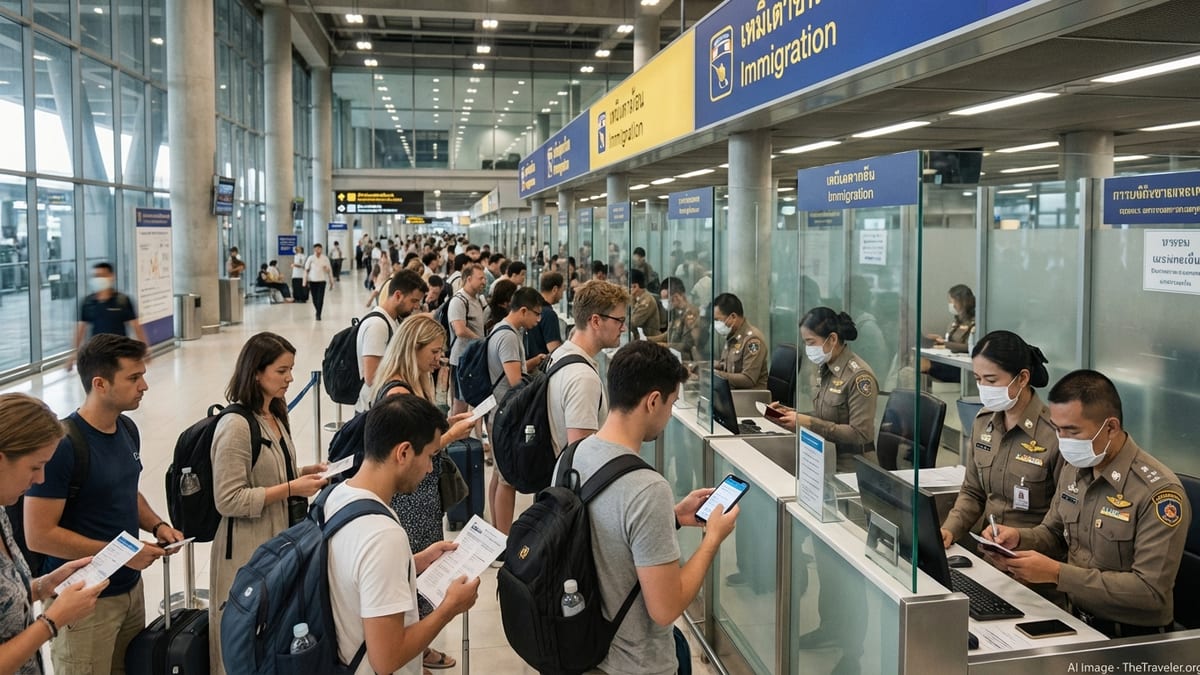
From Open-Door Strategy to Targeted Crackdown
For much of the past two years, Thailand’s message to the world was simple: come back. The government widened visa-free entry to 93 nationalities, extended stays to 60 days and heavily promoted “work-from-Thailand” lifestyles to jump-start a recovery in visitor numbers. In 2024 and early 2025, arrivals climbed back into the tens of millions, led by long-haul tourists from Europe, the United Kingdom, and Scandinavia, as well as growing numbers from Brazil and other Latin American markets.
By late 2025, however, security agencies and economic planners were sounding the alarm over what they described as a parallel economy of “grey” and illegal foreign-run businesses, unlicensed hotels and villas, and foreigners quietly working on tourist or visa-exempt entries. Immigration officials reported rising cases of visitors using back-to-back visa waivers to live in the kingdom semi-permanently, often without paying taxes or holding the correct permits.
The response has been swift. Immigration Bureau officials introduced new screening measures at airports and land borders to identify visa runners, tightened rules on extensions, and coordinated nationwide raids on unlicensed businesses in major tourist hubs. While the authorities insist that “ordinary tourists” have nothing to fear, the practical impact is that travelers from Sweden, the United Kingdom, Spain, Brazil, Italy, Germany, Vietnam, Japan and many others now face more questions, more paperwork, and a much slimmer margin for error at the border.
Officials stress that the policy shift is not about shutting out visitors but about drawing a hard line between genuine tourism and what they see as long-term residency and business activity disguised as holidays. The result is a recalibration of Thailand’s tourism model that is rippling through airlines, tour operators and digital nomad communities globally.
Visa-Free Travel Under Strain for 93 Nationalities
The core of the new enforcement drive centers on Thailand’s visa exemption regime, which allows citizens of 93 countries to enter without a visa for up to 60 days, with the option of a 30-day extension at immigration offices. That list includes Sweden, the United Kingdom, most of the European Union, Japan, South Korea, several Latin American nations including Brazil, and key markets such as Vietnam for short visits.
While the headline rules have not been revoked, immigration officials have quietly layered on stricter interpretations. Travelers who arrive multiple times a year on back-to-back visa exemptions, particularly those without clear onward travel or with limited proof of funds, are now far more likely to be questioned at the counter. Officers have been instructed to treat more than two “visa runs” without an obvious reason as a red flag, and they have explicit authority to refuse entry.
New internal guidelines also limit the number and scope of tourist extensions. In many cases, visitors are being told that only one standard 30-day extension, and in some provinces a short additional period, can be granted within a year. The era in which long-stay foreigners could string together months of de facto residence by combining visa-exempt entries, land-border hops and multiple extensions is effectively over.
These measures apply equally to all nationalities within the visa-exempt scheme, but European travelers and long-haul visitors from countries such as Brazil and Sweden feel the impact acutely. Many structured their work and travel plans around the previous, more flexible environment. Tour operators in the United Kingdom, Spain, Italy and Germany report an uptick in questions from clients who are now reconsidering lengthy multi-entry itineraries through Thailand.
Sweden and Other European Markets Confront New Realities
Among European markets, Sweden has become a prominent case study in how the shifting rules are reshaping travel behavior. Swedes, like many northern Europeans, have traditionally used Thailand for long winter escapes, returning year after year to the same islands and resort towns. Some have blended tourism with remote work, often on repeated visa-exempt entries or short-stay visas.
With the enforcement clampdown, Swedish nationals arriving on one-way tickets or with a history of frequent entries now find their plans under heavier scrutiny. Agents in Bangkok and Phuket say they are advising Scandinavian clients to arrive with printed proof of funds, confirmed accommodation and clear onward or return flights, even when they are technically not mandatory, simply to reduce the risk of being turned away.
Similar concerns are emerging in the United Kingdom, Germany, Spain and Italy, where Thailand has long marketed itself as an easy-entry, sun-and-sea destination. Airlines and tour wholesalers in these countries are closely watching whether the new climate will dampen demand for extended stays, particularly among retirees, long-stay holidaymakers and flexible workers who previously relied on loose interpretations of tourist status.
European embassies in Bangkok continue to tell their citizens that Thailand remains open, but they are also quietly updating travel advice to highlight the need to comply strictly with visa conditions, avoid undeclared work and expect closer questioning at the border, especially for repeat visitors. This subtle but important shift is altering the calculus for many who once saw Thailand as a near-frictionless second home.
Brazilians, Japanese and Regional Travelers Face Added Hurdles
The ripple effects stretch far beyond Europe. Brazil, whose outbound travel to Southeast Asia has grown steadily with new long-haul connections, is seeing its citizens caught up in the same dragnet. Under the expanded visa-exempt policy, Brazilians can enjoy relatively generous stays in Thailand. Yet as with Europeans, multiple long visits, inconsistent answers at immigration or inadequate proof of funds can now trigger interviews and, in some cases, refusal.
In Asia, Japanese and Vietnamese travelers are also encountering a new, more formal tone at Thai checkpoints. Japan has long supplied high-spending tourists and business visitors, while Vietnam’s growing middle class has turned Bangkok and Thai beach destinations into popular short-break options. The new rules do not single out these markets, but the blanket tightening means that even regional visitors accustomed to frictionless travel now have to treat entry as a more serious process.
Regional travel agents report that some clients have been surprised by the introduction of the Thailand Digital Arrival Card, a mandatory online pre-arrival form that went fully into effect in 2025. The system requires all foreign nationals, from Sweden to Japan to Brazil, to submit personal, financial and itinerary details within 72 hours before travel. Authorities say it allows better pre-screening and shorter lines at airports, but it also strengthens the government’s ability to identify patterns of frequent entry and potential misrepresentation.
For destination marketers, the challenge is balancing reassurance with realism. Thailand remains more accessible than many countries that require advance visas or high fees, but the days of casual, paperwork-light border crossings are fading for all but the most clearly short-term tourists.
Crackdown on Illegal Foreign Businesses and “Grey” Operations
In parallel with the visa tightening, Thai police, immigration and business regulators have escalated a campaign against illegal foreign-owned or foreign-controlled businesses in key tourist regions. Recent months have seen high-profile raids in destinations such as Koh Phangan, Phuket and other Gulf and Andaman islands, targeting unlicensed villa complexes, nominee shareholding structures and unregistered hospitality operations.
In one widely publicized operation on Koh Phangan, officers raided luxury beachfront villas marketed to international tourists, citing alleged unlicensed hotel operations, complex company structures and suspected tax evasion. Authorities seized documents, summoned foreign guests and Thai caretakers for questioning and warned that similar actions would expand to neighboring islands including Koh Samui.
Officials describe these cases as emblematic of a broader problem: foreign investors, including some from Europe and Israel as well as other regions, allegedly using Thai nominees and shell companies to skirt ownership caps, hotel licensing rules and tax obligations. The government argues that such practices distort local real estate markets, undercut legitimate operators and erode public trust in the tourism economy.
The message is clear and increasingly global in its audience. From Swedish property buyers considering a holiday villa to British entrepreneurs eyeing a beach bar, the environment is now one of scrutiny rather than tolerance. Consultants who have long facilitated off-the-books arrangements report that clients from Sweden, the United Kingdom, Germany and elsewhere are pausing investments or seeking more robust legal advice before committing capital.
Stricter Enforcement in Popular Tourist Districts
Beyond boardrooms and beachfront villas, enforcement is also visible at street level in some of Thailand’s best-known tourism hotspots. Multi-agency raids have targeted foreign street vendors, bar workers and tour guides operating without proper permits, particularly in nightlife areas of Bangkok and major provincial cities.
Recent operations in districts such as Khao San Road and surrounding streets saw authorities detain foreign nationals selling food and drinks or working in entertainment venues without the correct visas or work authorization. Officials say the goal is to protect Thai jobs and ensure that foreigners who wish to work in the kingdom do so through legal channels and appropriate visa categories.
Tourism police emphasize that tourists acting within the law are not the target. Yet the high-visibility raids, often documented on social media, contribute to a perception that Thailand is taking a zero-tolerance approach to any blurring of the line between visitor and worker. For long-stay travelers from countries including Sweden, the United Kingdom, Spain, Brazil, Italy and Germany, that distinction has sometimes been fluid, particularly in beach and nightlife economies where informal work arrangements were once quietly overlooked.
Local business associations, while broadly supportive of efforts to dismantle illegal competition, are urging authorities to communicate policies clearly in multiple languages. They warn that surprise crackdowns without clear public messaging could chill legitimate investment and scare away cautious high-spending tourists who are sensitive to any appearance of instability.
New Arrival, Data and Environmental Rules Tighten the Net
The visa and business enforcement push coincides with a series of new regulatory tools that collectively reshape the way foreign visitors interact with Thailand. Chief among them is the Thailand Digital Arrival Card, a mandatory online entry form that replaced the traditional paper arrival card in May 2025. Every foreign national, whether entering by air, land or sea, must now complete the form in advance, providing detailed personal, financial and travel information.
Authorities say the digital system improves security, allows for pre-arrival risk assessment, and streamlines processing at airports. It also gives immigration officials a clearer picture of repeat entries, accommodation patterns and even travel histories, data that can be cross-referenced with visa records and enforcement campaigns against overstayers and illegal workers.
At the same time, a wave of environmental regulations, including tightly enforced bans on single-use plastics and stricter rules around national parks and marine areas, has added another layer of compliance for visitors and tourism businesses alike. While these measures are primarily designed to protect fragile ecosystems, they also represent a broader shift toward rule-based tourism in which enforcement, rather than gentle encouragement, is the norm.
For travelers from Sweden and other environmentally conscious markets, these green policies can be a selling point, yet they also highlight the degree to which Thailand is rethinking mass tourism. Visitors can expect more signage about fines, more checks on behavior in protected areas and less tolerance for what was once excused as carefree holiday conduct.
Balancing Tourism Growth With Security and Fairness
Underlying all of these moves is a central dilemma: Thailand still depends heavily on tourism revenue, yet officials argue that uncontrolled or loosely regulated tourism brings security risks, social friction and economic distortions. The clampdown on visa abuse and illegal businesses is framed in Bangkok as a necessary course correction rather than a retreat from openness.
Immigration and tourism authorities insist that genuine short-term tourists remain welcome, pointing to continued visa-free access for a wide range of countries, including Sweden, the United Kingdom, Spain, Brazil, Italy, Germany, Vietnam and Japan. They argue that the burden now falls mainly on those attempting to use tourist channels for work, long-term residence or non-compliant investment, and on the networks that facilitate such practices.
Industry voices, however, caution that the line between “genuine tourist” and “problematic visitor” can be blurry in practice. Many retirees and digital workers from Europe and other regions see themselves as contributing to local economies even if they do not fit traditional tourist categories. If they feel unwelcome or uncertain, travel patterns may shift toward neighboring countries perceived as more predictable or lenient.
For now, Thailand is betting that a rules-based tourism landscape can deliver both higher-quality visitors and greater public confidence. Travelers from Sweden, the United Kingdom, Spain, Brazil, Italy, Germany, Vietnam, Japan and beyond are unlikely to abandon the kingdom’s beaches, food and culture overnight. But they are being put on notice that the era of casual, loophole-driven stays is ending, replaced by a climate where documentation, transparency and strict compliance with visa and business laws are no longer optional.