

More news on this day
America’s tourism balance has quietly tipped into the red, with a recent federal analysis highlighting a $2.2 billion gap as U.S. residents spend more overseas than foreign visitors now spend inside the United States.
Get the latest news straight to your inbox!
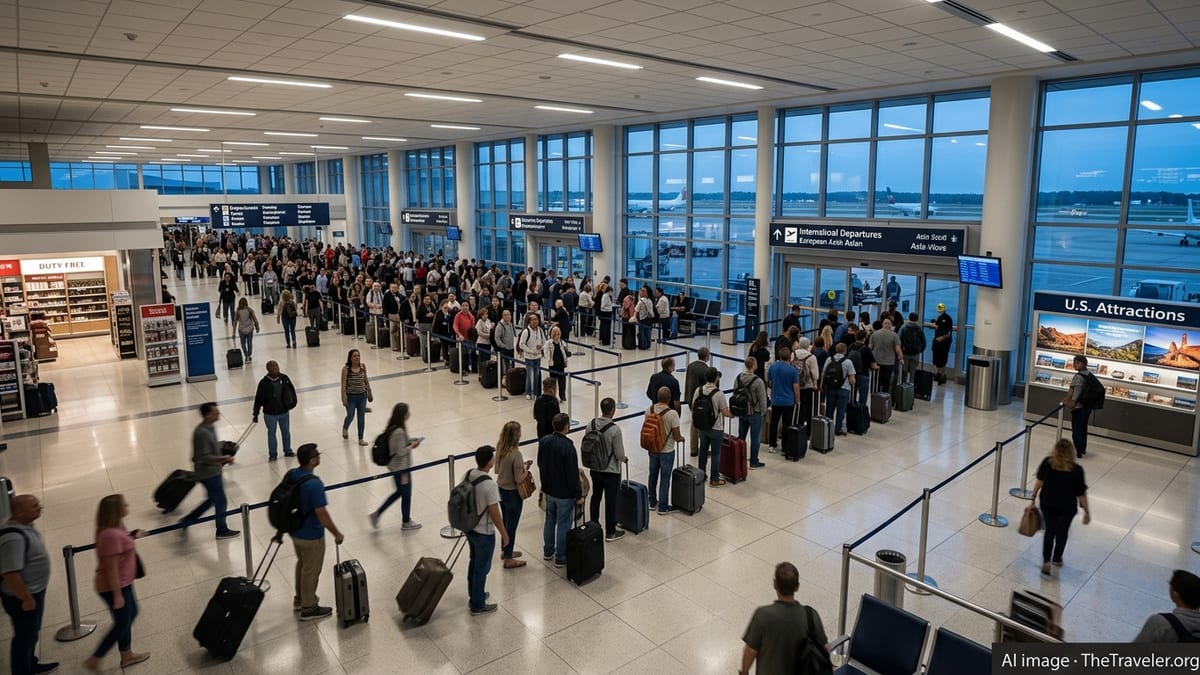
A Surplus Turns to Deficit as the Travel Trade Balance Flips
For decades, the United States reliably earned more from inbound tourists than Americans spent abroad, providing a steady export windfall to the wider economy. That pattern has now reversed. Transportation statistics compiled for 2023 show the U.S. running an estimated $2.2 billion travel trade deficit, meaning outbound spending by Americans outpaced the money international visitors brought into the country.
Publicly available data from the National Travel and Tourism Office and other agencies indicate that international visitors still inject hundreds of billions of dollars into U.S. hotels, restaurants, attractions and retailers each year. Yet the rapid rebound in Americans’ overseas trips since the pandemic, combined with softer inbound demand, has eroded that traditional surplus. Industry analyses for 2024 and early 2025 point to a negative balance persisting as outbound spending continues to climb faster than inbound receipts.
This shift matters because travel exports have historically helped narrow the broader U.S. trade deficit. When the balance turns negative, lost tourism revenue shows up not only in hotel ledgers and attraction ticket sales but also in service-export figures that feed into national economic accounts.
Inbound Tourism Stalls While Americans Pack Their Passports
Travel demand worldwide has largely recovered, but the U.S. is lagging its peers in attracting overseas visitors. Studies by global tourism consultancies report that inbound international spending in the United States is projected to fall in 2025, even as most major destinations continue to grow. Forecasts prepared using federal visitor data suggest a decline of several percentage points in international visitor outlays, translating into billions of dollars less for U.S. businesses compared with 2024.
Government trade updates for 2024 showed moments of strength, with monthly reports citing inbound visitor spending near or above $20 billion. Yet the overall trajectory has softened. Separate modeling by Travel & Tourism Council analysts indicates that international visitor spending in the United States is set to remain well below its 2019 peak in inflation-adjusted terms, keeping the sector from fully regaining its pre-pandemic position.
Outbound travel tells a different story. Payment-network and booking-platform reports for 2024 and early 2026 describe record or near-record levels of Americans flying abroad, from European capitals to Asia-Pacific hotspots. Consumer surveys tracked by research groups such as the Conference Board show intentions to travel internationally at their highest recorded levels, with about one in five U.S. respondents planning an overseas trip within six months.
The result is a widening gap: money flowing out of the country in the form of airline tickets, hotel stays and restaurant meals abroad is growing faster than the tourism dollars coming in, reinforcing the emerging deficit highlighted in federal transportation statistics.
Currency, Costs and Confidence: Why the U.S. Feels Expensive
One of the clearest forces behind the imbalance is the strong U.S. dollar. Financial and tourism industry reports throughout 2024 and 2025 note that the dollar’s strength has made many overseas destinations feel like relative bargains for Americans, even as it renders U.S. cities more expensive for foreign travelers paying in euros, pounds or yen.
Analyses from the World Travel and Tourism Council and private-sector economists point out that U.S. hotel rates, restaurant prices and domestic airfares have risen sharply since 2019. While American households have gradually adjusted to higher costs at home, international visitors often compare those prices with cheaper options in Europe, Asia or competing long-haul destinations. That comparison has become more acute as some rival destinations, helped by weaker currencies, position themselves as better-value alternatives.
Beyond pricing, travel advisories, border policies and political perceptions are shaping decisions. International coverage has regularly highlighted long visa wait times in some source markets, along with tighter screening at U.S. borders. At the same time, surveys of prospective travelers in Canada and Europe show a portion of respondents expressing concern about the overall welcome they expect in the United States, particularly amid heightened political tensions.
For Americans choosing where to go, those same factors often point in the opposite direction. Favorable exchange rates in Japan and parts of Europe, aggressive airfare competition on transatlantic routes and expanding low-cost long-haul options have combined to make international itineraries more accessible, especially for younger and higher-income travelers.
Winners Abroad as U.S. Destinations Feel the Strain
The shift in spending power is being felt unevenly. Internationally, destinations from southern Europe to East Asia are benefiting from the surge in American visitors. Tourism boards in countries such as Spain and Japan have reported record-breaking arrivals and spending by U.S. travelers, crediting both pent-up demand and strong U.S. purchasing power.
Inside the United States, however, the pattern is more fragile. Research commissioned by U.S. tourism and hotel associations shows that gateway cities and resort states that once depended heavily on free-spending overseas visitors are now facing weaker demand from key markets. Forecasts assembled for the national industry forecast a multibillion-dollar shortfall in international visitor spending in 2025 compared with earlier expectations, with some analyses warning of tens of thousands of jobs at risk if trends persist.
Local impacts vary. Major destinations with strong domestic tourism bases and convention traffic have partly offset the international softness, while smaller urban centers and rural gateways that rely on long-haul visitors face a harder adjustment. Many are turning more aggressively to domestic marketing campaigns and regional air connectivity to close the gap.
At the same time, American spending abroad is boosting airlines, hotels and attractions in competing destinations, strengthening their ability to invest in new infrastructure and marketing. That dynamic further intensifies competition for future travelers, putting additional pressure on U.S. destinations to differentiate their offerings and improve the visitor experience.
Policy Responses and the Race to Reclaim Tourism Revenue
Faced with a shrinking share of global tourism receipts, U.S. policymakers and industry partners are experimenting with ways to draw more visitors back. Tourism promotion authorities, including Brand USA and state-level agencies, have stepped up campaigns in core markets such as Canada, the United Kingdom, Germany and Mexico, highlighting lesser-known regions and experiences beyond the traditional coastal gateways.
Recent documentation from federal agencies outlines parallel efforts to tackle structural bottlenecks. These include initiatives to reduce visa processing backlogs in high-growth markets, modernize airport and land-port facilities, and streamline digital travel authorization systems. Industry groups argue that improvements in wait times and entry procedures could yield significant gains in both visitor numbers and average spend.
Analysts note that closing the $2.2 billion travel trade gap will likely require progress on multiple fronts: restoring confidence among international travelers, keeping U.S. travel costs competitive and sustaining the strong appetite among Americans for domestic as well as overseas trips. With global tourism volumes now surpassing 2019 levels in many regions, the race to capture high-spending visitors is intensifying.
For now, the numbers point in one direction. Americans are seizing favorable exchange rates and expanded flight networks to explore the world, while a combination of high costs, a strong dollar and lingering perception challenges weighs on inbound demand. Unless those forces rebalance, the United States appears set to remain a net exporter of tourism spending, with billions of dollars in potential revenue continuing to follow its citizens overseas.