

More news on this day
Global airlines are leaving an estimated billions of dollars in annual profit on the table as “good enough” thinking quietly erodes revenue, raises costs, and undermines traveler loyalty at a time when demand for air travel is strong but margins remain thin.
Get the latest news straight to your inbox!
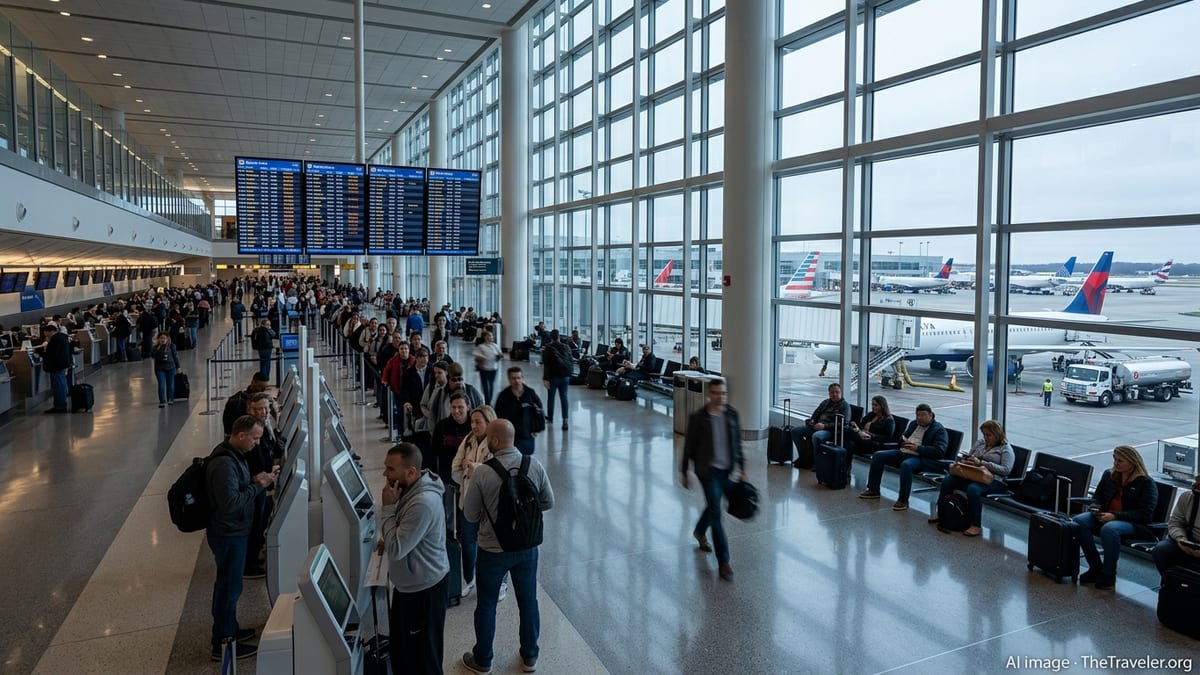
The Hidden Cost of Chronic Disruption
Publicly available financial data shows that airlines collectively face multibillion dollar hits each year from delays, missed connections, and irregular operations, even as passenger volumes return to or exceed pre‑pandemic levels. Industry analyses suggest that when direct compensation, rebooking, crew and aircraft repositioning, and lost future bookings are combined, the true cost of disruption can easily top several billion dollars globally in a single year.
Yet many carriers still treat high levels of delay and cancellation as an inevitable cost of doing business rather than a solvable performance problem. Schedule completion is often framed as acceptable if it is within industry norms, even when those norms translate into tens of thousands of disrupted passengers a day. This mindset effectively bakes chronic inefficiency into airline economics.
Operational specialists note that the most damaging costs are frequently indirect and delayed. A passenger who experiences one severe disruption may quietly switch loyalty or book away from a carrier for years, a pattern that rarely appears clearly in quarterly reports but compounds over time. For airlines competing heavily on brand and network, the long tail of these decisions can shape route profitability far more than any single bad travel day.
When “Good Enough” Operations Become a Strategy
Behind the scenes, many carriers design schedules that are intentionally padded to absorb expected delays, effectively treating suboptimal performance as a given. While this approach may help on punctuality metrics, it reduces daily aircraft utilization, limits the number of flights that can be operated, and dulls incentives to tackle root causes in maintenance, ground handling, and air traffic coordination.
In technology and planning, the pattern often repeats. Reports on airline digital transformation highlight that a substantial share of carriers still rely on legacy systems for crew management, disruption recovery, and customer communication. These tools may be considered adequate because they function reliably enough day to day, but they struggle to optimize complex, network‑wide decisions in real time when severe weather or infrastructure bottlenecks hit.
Customer communication during disruptions is another area where “good enough” has become entrenched. Many travelers still receive limited, fragmented, or late updates about cancellations and rebookings, even as other industries deliver highly personalized real‑time information. That gap between expectation and delivery can turn a manageable delay into a reputational crisis, particularly when passengers document their experiences on social media.
The result is a structural drag on profitability: every padded schedule block, every preventable misconnections wave, and every under‑informed customer interaction adds friction that reduces revenue opportunities and raises operating costs. For a global industry operating at single‑digit margins in many markets, this friction represents a substantial blind spot.
The Data Airlines Already Have but Rarely Fully Use
Ironically, airlines may be better positioned than almost any other travel sector to improve performance, because they sit on vast quantities of operational and customer data. Flight status records, maintenance logs, crew duty data, booking patterns, and airport throughput metrics can all be combined to spot emerging risks and choke points well before they cascade into large‑scale disruption.
However, publicly available industry assessments indicate that many carriers still analyze this information in departmental silos. Operations control, revenue management, maintenance, and customer service may each optimize for their own metrics without a unified view of network‑wide cost and revenue impact. In practice, that can mean an on‑time departure metric is improved at the expense of higher misconnections, or that a maintenance deferral that looks efficient in isolation leads to more out‑of‑service time for an aircraft later in the schedule.
Some airlines have begun rolling out integrated control centers and advanced decision‑support tools that crunch live data to recommend the least damaging course of action during irregular operations. Early adopters highlighted in industry coverage report that these systems can reduce misconnections, shorten recovery time after storms, and improve aircraft utilization. Yet adoption remains uneven, and the upfront cost of modernization continues to be weighed against short‑term financial pressures.
Analysts point out that the potential payoff from better data use is not only lower disruption cost but also more precise capacity planning and pricing. By understanding exactly where networks are most fragile and profitable, carriers can adjust schedules and fleet deployment to capture higher‑yield demand while building targeted resilience into the parts of the system most prone to failure.
Customer Expectations Outpacing Airline Service Models
On the customer side, the gap between what travelers expect and what many airlines deliver has widened. Retail, hospitality, and ground transport providers increasingly offer near real‑time updates, clear options, and frictionless digital refunds or changes. In comparison, airline passengers in numerous markets still encounter opaque fare rules, limited self‑service tools during disruptions, and inconsistent responses across channels.
This mismatch is particularly costly because air travel is often the most expensive and emotionally charged leg of a journey. When a flight failure leads to missed events, nonrefundable hotel nights, or complex multi‑leg rebookings, passengers may attribute the entire experience to the airline, even when external factors played a major role. Surveys regularly show that perceived unfairness or lack of transparency can be more damaging to loyalty than the disruption itself.
Several carriers have launched enhanced passenger‑care policies, clearer vouchers, and more proactive rebooking tools in recent years, often in response to highly publicized operational meltdowns or regulatory pressure. While these steps can reduce the immediate impact of disruption, they also reveal how far the industry still has to go in treating reliable, transparent service as a central profit driver rather than a compliance requirement or marketing theme.
As travelers grow more comfortable comparing airlines on factors beyond price, including reliability scores and customer satisfaction rankings, the financial penalty for delivering only “good enough” service is expected to rise. In highly competitive markets, that can tilt corporate travel contracts and high‑yield leisure demand toward carriers that are perceived to invest more heavily in reliability and care.
From Cost Center to Competitive Advantage
The emerging consensus across aviation consulting reports is that airlines which treat operational excellence and customer experience as strategic investments, rather than unavoidable expenses, are beginning to pull ahead. These carriers tend to modernize core systems, align incentives between departments, and empower integrated operations centers to act on real‑time data instead of static playbooks.
In practical terms, this can mean reworking schedules to prioritize robustness over sheer volume on the most vulnerable days and hubs, investing in predictive maintenance to avoid last‑minute aircraft changes, and designing digital tools that give passengers clear choices when plans change. Although such initiatives require capital and organizational change, they can unlock more reliable revenue streams and lower long‑run disruption costs.
For an industry that has collectively accepted narrow margins for decades, the idea that “good enough” thinking may be obscuring a multibillion dollar profitability opportunity is gaining traction. The carriers that move first to close this gap are likely to shape traveler expectations for years to come, setting new benchmarks that turn reliability from a hidden cost into a visible competitive advantage.