

More news on this day
Global airlines are posting record ancillary revenue and steady profit gains, yet analysts warn that a quiet tolerance for “good enough” operations and customer experience is masking a multibillion-dollar drag on the industry’s bottom line.
Get the latest news straight to your inbox!
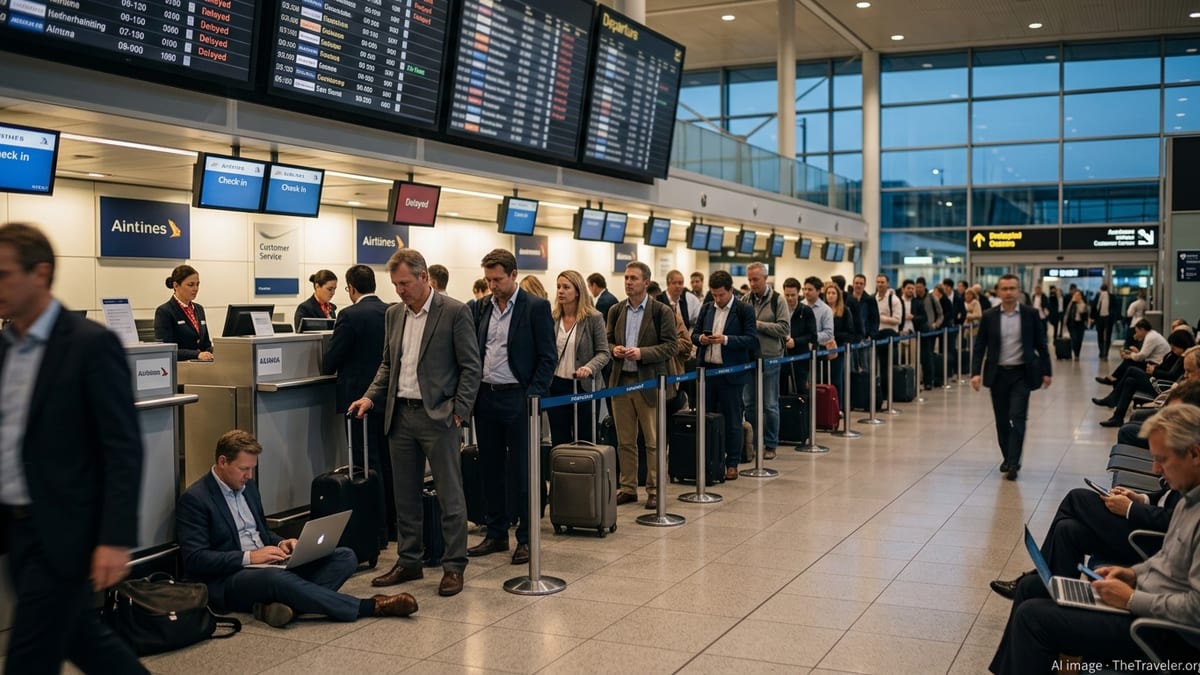
A Profit Boom Built on Fragile Foundations
After years of pandemic volatility, airlines are entering 2026 with healthier financials. Industry outlooks for 2024 and 2025 point to net profits in the tens of billions of dollars worldwide, even as economic growth moderates and fuel costs remain volatile. Publicly available analysis from industry groups indicates that operating profits are expected to rise faster than net margins, suggesting that higher costs and interest expenses are still eating into earnings.
A major share of the recent profit recovery has come from non-ticket income. Research from CarTrawler and IdeaWorksCompany shows global airline ancillary revenue projected at roughly 148 billion dollars in 2024, up sharply from both 2019 and 2023 as carriers lean on bag fees, seat selection, onboard sales and loyalty partnerships. That figure represents a growing slice of total revenue compared with a decade ago, when such income was a niche line on balance sheets.
Yet while airlines celebrate record totals, value-creation studies by consulting firms such as McKinsey continue to show wide gaps in economic profitability across carriers. Many remain barely above break-even once the cost of capital is factored in. Analysts point to a structural risk: airlines have become highly skilled at monetizing the passenger, but less disciplined about elevating the underlying product beyond a baseline that travelers grudgingly accept.
This is where the “good enough” problem emerges. When full planes and robust ancillary sales disguise the cost of missed connections, schedule unreliability and mediocre cabin experiences, management teams may underestimate how much money is quietly being left on the table.
The Hidden Cost of Operational Mediocrity
Operational reliability is emerging as a key fault line between carriers that create durable value and those that simply ride demand cycles. Completion factors in the high 98 percent range and strong on time performance have been linked with rising customer advocacy scores at some large U.S. airlines, according to recent customer experience coverage and corporate reporting. Other carriers, by contrast, have seen satisfaction fall as cancellations and multi hour delays persist, even while unit revenues edge higher.
Industry data sets and benchmark reports on Net Promoter Scores in 2024 and 2025 show that small improvements in reliability often correlate with meaningful jumps in customer loyalty. At the same time, public filings and investor presentations highlight airlines that improved NPS and operational metrics while also growing net income and free cash flow. The pattern has encouraged a handful of carriers to explicitly prioritize reliability and service recovery in their strategies.
However, this is far from universal. Reports tracking U.S. airline performance still describe recurring bottlenecks: misaligned schedules, tight connection windows, under resourced customer support and aggressive schedule padding that helps on time statistics but frustrates travelers who feel trapped in unnecessarily long block times. Academic and trade discussions of schedule padding note that while it can improve reported punctuality, it may also reduce asset utilization and obscure deeper inefficiencies.
The financial impact of those shortcomings is difficult to quantify precisely, but several aviation consultancies and travel management firms estimate that across large markets, preventable disruption and poor service recovery can equate to billions of dollars in lost loyalty, suppressed premium demand and compensation costs. Within that context, a two billion dollar annual profitability gap attributable to “good enough” operations is seen by some analysts as a conservative estimate rather than a worst case scenario.
Premium Cabins and Loyalty: Powerful, but Not a Cure All
To offset volatile ticket yields, airlines have doubled down on premium products and loyalty economics. Major network carriers in North America and Europe increasingly report that a disproportionate share of revenue comes from higher income households and corporate travelers, reinforcing investments in lie flat seats, branded business cabins and upscale airport lounges. Earnings commentary in 2024 and 2025 frequently highlights record takings from co branded credit cards and frequent flyer programs, in some cases measured in the tens of billions of dollars annually for a handful of large U.S. airlines.
Separate analyses of loyalty businesses suggest they can be significantly more profitable than the underlying flying operations, with margins several times higher and a growing percentage of mileage sales occurring to banks and partners rather than directly to passengers. This has led some observers to describe major loyalty schemes as quasi financial services companies attached to airlines, providing a buffer against cyclical swings in demand.
Ultra low cost and hybrid carriers are also moving upmarket in search of yield. Industry yearbooks and earnings presentations describe new bundled “business” fares, the introduction of small first class sections and expanded extra legroom seating aimed at small and midsize corporate accounts. While these initiatives have generated incremental revenue, they also increase complexity in pricing, distribution and onboard service models.
The risk, analysts warn, is that airlines overestimate how far premium and loyalty economics can compensate for weaknesses in the core experience. When a high value traveler paying a business class fare encounters unreliable operations, inconsistent crews or hard to reach call centers, the revenue impact may not show up immediately in a quarter’s figures. Over time, however, shifts in share of wallet toward competitors with more reliable operations can compound into a sizable shortfall.
Ancillary Revenue: Record Highs, Narrow Margins
The surge in ancillary revenue has been one of the defining industry stories of the past decade. Sector level studies indicate that ancillary income has climbed from roughly 5 percent of airline revenue in 2010 to around 15 percent by 2024, with projections for further growth. The latest CarTrawler and IdeaWorksCompany projections suggest that ancillaries could add more than 30 billion dollars in additional revenue between 2023 and 2024 alone.
Despite these impressive figures, travel management firms caution that reliance on fees can create a perception of nickel and diming, especially when the underlying service is only adequate. Corporate travel buyers report that unpredictable seat selection, bag and change fees complicate budgeting and policy compliance. For individual passengers, a base fare that appears competitive at booking can feel far less so once all extras are added, particularly if delays or customer service frustrations mar the journey.
Some carriers have begun experimenting with simpler, more transparent bundles that wrap common ancillaries into a single fare, especially for business travelers. Others are testing dynamic offers that combine operational performance guarantees with value added services. Early results shared in industry reports indicate that where customers perceive genuine improvement in the experience, they are more willing to pay for extras, and satisfaction scores rise in tandem with ancillary yields.
Where the proposition is weaker, fee growth risks hitting a ceiling. Analysts note that as ancillaries take a larger share of total revenue, the sensitivity of profitability to small changes in customer willingness to pay increases. A modest drop in take up of seat upgrades, bags or flexibility products across millions of passengers can erase hundreds of millions of dollars in expected income, bringing the sector closer to that two billion dollar blind spot in aggregate profits.
Closing the Gap: From “Good Enough” to Differentiated
Across the aviation value chain, there is growing recognition that long term profitability depends on more than full planes and creative monetization. Industry think pieces and consulting research highlight a set of recurrent themes among airlines that outperform: rigorous data driven operational decision making, investments in crew training and culture, tighter coordination with airports and suppliers, and clear brand positioning that justifies a premium.
Newer analytics tools are enabling carriers to link specific operational metrics to revenue outcomes more precisely, from the impact of missed connections on lifetime customer value to the relationship between NPS improvements and share of premium cabin bookings. Benchmarking reports for 2025 show several airlines improving both financial and customer metrics after focused programs on on time performance and service recovery, including faster rebooking during disruptions and proactive compensation for affected passengers.
Consultants argue that closing the gap between “good enough” and distinctive performance does not always require dramatic capital expenditure. Targeted investments in aircraft turnaround processes, staffing models at key hubs, more resilient schedules and digital self service tools can, in aggregate, unlock hundreds of millions of dollars in additional value for large carriers. When scaled globally, these incremental gains add up quickly toward the multibillion dollar opportunity that current industry averages may be missing.
For now, the sector’s financial narrative is dominated by record fee income and a solid profit outlook. But as competition intensifies and passengers grow more sensitive to reliability and transparency, the tolerance for “good enough” is narrowing. Whether airlines confront that reality may determine whether today’s recovery solidifies into sustainable returns or fades into yet another boom and bust cycle.