

More news on this day
Hilton’s portfolio now spans more than 7,500 properties worldwide, but a select group of 22 standout hotels has emerged as the brand’s most sought-after addresses for travelers seeking design, service and location at the very highest level.
Get the latest news straight to your inbox!
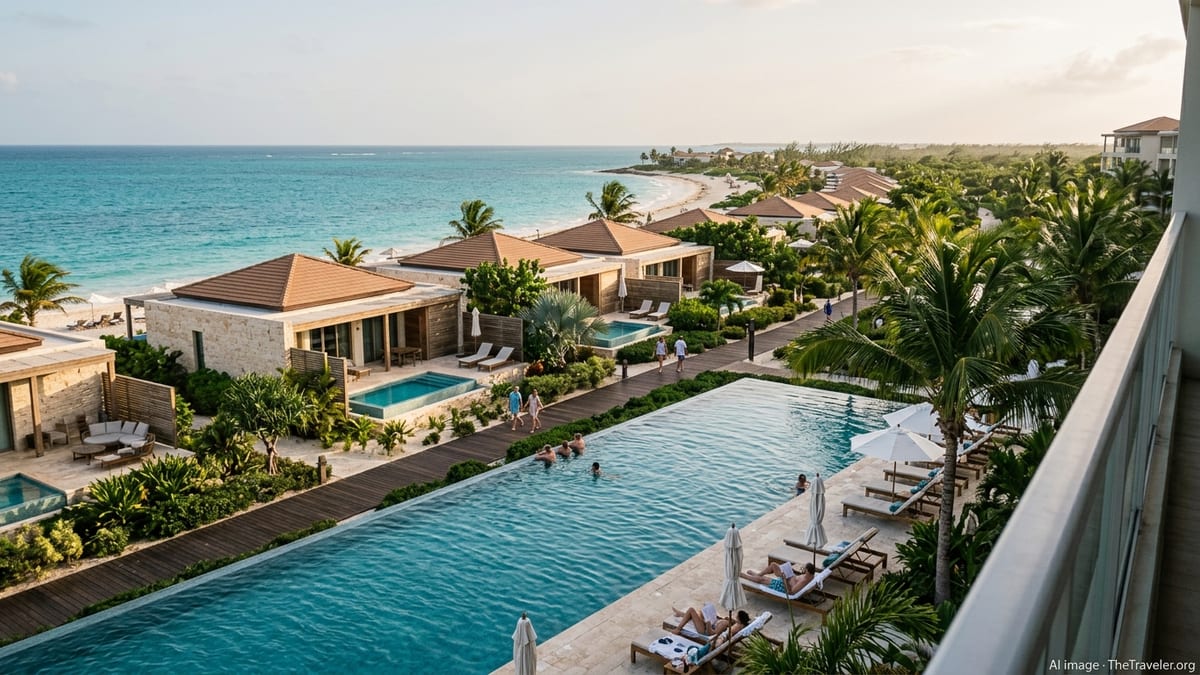
Island Escapes That Define Hilton’s Resort Luxury
Among Hilton’s global standouts, two Indian Ocean and Pacific properties are frequently cited in rankings and reader surveys as flagships for the brand’s resort ambitions. Waldorf Astoria Maldives Ithaafushi is a recurring presence on “best hotels in the world” lists, recognized for its private-island footprint, extensive villa inventory and focus on privacy and personalized service. Travel publications highlight its three-island layout, house reef access and multi-bedroom overwater residences as setting a benchmark for aspirational Hilton redemptions.
In the Caribbean, Waldorf Astoria Costa Rica Punta Cacique is drawing attention as one of the company’s most significant recent openings. Public information from Hilton positions the property as a new reference point for “barefoot luxury,” pairing a dramatic clifftop setting on Costa Rica’s Pacific coast with direct beach access and a strong sustainability narrative. Industry coverage notes that the resort is part of a broader push to place Waldorf Astoria in high-demand resort destinations where rival luxury brands are already entrenched.
On Mexico’s Baja Peninsula, Waldorf Astoria Los Cabos Pedregal continues to be highlighted in awards lists and editorial coverage after a multi-year transformation completed in 2025. Reports emphasize redesigned guestrooms, beachfront casitas and refreshed pools and dining spaces carved into the rocky coastline just outside Cabo San Lucas. The property’s tunnel entrance and dramatic Pacific sunsets remain key calling cards that regularly place it among the most recommended Hilton resorts in the Americas.
Hilton’s expansion in Hawaii has also sharpened focus on LXR Hotels & Resorts, the group’s luxury collection brand. Its debut on Waikiki Beach, created through a reimagining of an existing oceanfront property, has been framed in coverage as an important bridge between traditional Hawaiian resort experiences and a more boutique, design-led sensibility. With an emphasis on curated dining and a quieter stretch of the shore, it has quickly become one of Hilton’s most talked-about openings in the Pacific region.
Urban Icons and New-Generation City Landmarks
Hilton’s city hotels have long been cornerstones of the brand, and several have re-emerged at the top of global rankings after significant investment. In New York, the long-awaited reopening of the Waldorf Astoria, following an extensive restoration, has been widely covered as a milestone in the brand’s luxury repositioning. The project’s mix of hotel rooms and branded residences, along with preservation of Art Deco interiors, has been cited as a template for how heritage city properties in the Hilton system may evolve.
In Europe, Hilton Paris Opera has recently been recognized by historic hotel organizations for the way it balances 19th-century architecture with contemporary guest expectations. The hotel, which opened in 1889, has been spotlighted for its restored public spaces, central location near Saint-Lazare station and role as a gateway to the city for rail and air travelers. This renewed attention has effectively elevated it into the group of must-know Hilton addresses for visitors to Paris.
The company’s luxury push in Asia is also reshaping perceptions of what a Hilton city stay can look like. New and recent Conrad properties in major gateways such as Chongqing and Kuala Lumpur have been profiled for their contemporary interiors, skyline views and focus on art and design programming. Coverage indicates that these hotels are helping Conrad stand out from more traditional full-service competitors, particularly among younger travelers who prioritize architecture and wellness-centric facilities.
Looking ahead, the transformation of the former Hilton Athens into Conrad Athens The Ilisian, slated to reopen in 2026, is being closely watched. The original property was one of the city’s most recognizable hotels, and reports on the redevelopment emphasize larger rooms, updated event spaces and a renewed focus on its expansive outdoor pool. The project is widely viewed as a bellwether for how Hilton intends to handle other legacy city hotels that require a full luxury repositioning.
Heritage Resorts and Classics Reimagined
Some of Hilton’s most admired properties are historic resorts that have been carefully updated for modern travelers. La Quinta Resort & Club in California’s Coachella Valley, now part of Curio Collection by Hilton, completed a comprehensive restoration in early 2025 ahead of its centennial year. Public statements on the project detail refreshed casitas and villas, a redesigned adults-only pool complex and upgraded event venues that aim to preserve the resort’s mission-era character while improving comfort and energy efficiency.
In the American South, properties such as the Arizona Biltmore, repositioned under Hilton’s LXR flag, are frequently referenced in loyalty and travel forums as exemplars of how historic architecture can be integrated into a modern luxury framework. While not all such resorts regularly appear on global top-100 lists, they consistently rank among the most recommended Hilton stays for guests seeking a strong sense of place, extensive leisure facilities and a connection to regional history.
In Europe, Hilton’s strategy around heritage buildings is visible in city hotels that trade heavily on their past. Hilton Paris Opera is one example, but other European Hiltons housed in landmark structures benefit from a wave of recognition by historic hotel associations. These accolades, combined with investment in room product and public areas, help ensure that a core group of 22 or so heritage-led Hiltons are repeatedly cited in roundups of the brand’s most distinctive properties.
Industry observers note that this focus on restoration and rebranding aligns with broader trends in high-end hospitality, where travelers increasingly seek hotels that feel specific to their destination rather than interchangeable. For Hilton, that has meant using its collection and luxury brands to highlight narrative elements like original construction dates, famed previous guests and architectural pedigrees, positioning these properties as experiences rather than simply places to sleep.
Emerging Lifestyle Flags and Strategic Openings
Beyond its flagship Waldorf Astoria and Conrad names, Hilton is investing heavily in lifestyle and collection brands that broaden the definition of what its “best” hotels can be. Company communications on its luxury and lifestyle portfolio describe an accelerated pipeline, with more than 60 new lifestyle hotels expected to open in 2026 alone under banners including Canopy, Motto and Curio Collection. These properties typically emphasize localized design, activated public spaces and smaller keys, aimed at travelers who value individuality alongside loyalty benefits.
New Signia by Hilton projects, including major convention-focused hotels in U.S. cities such as Indianapolis and Orlando, are also being framed as part of the brand’s upper-upscale showcase. While these properties are geared toward meetings and large events, their scale, dining concepts and wellness facilities mean they increasingly appear in discussions of Hilton’s top city hotels. Analysts point out that they help anchor mixed-use districts and bring a higher design standard to a segment often associated with generic convention hotels.
Hilton’s global reach, which industry rankings place among the largest in the world by room count, provides a deep pool of candidates for any “best of” list. Recent awards from consumer travel magazines and trade groups highlight approximately 20 to 25 Hilton properties across categories such as resorts, city hotels and historic hotels, effectively creating an informal canon of the brand’s top addresses each year. That canon is dynamic, with new openings in markets like Costa Rica, Japan and the Middle East steadily joining long-established icons.
For travelers, the practical result is a shortlist of about 22 Hilton hotels that consistently surface across rankings, loyalty forums and editorial coverage as representing the company at its most ambitious. They span overwater villas in the Maldives, canyon-side resorts in the California desert, restored grand dames in Paris and New York and new-build towers across Asia’s megacities, illustrating how far the Hilton name has evolved from its mid-20th-century roots into a multi-brand, multi-segment global luxury player.