

Alabama stretches from Appalachian foothills to the turquoise waters of the Gulf of Mexico, packing an impressive variety of beaches, historic landmarks, and wild landscapes into one state. For travelers deciding where to focus limited vacation time, a regional approach can make the difference between a good trip and a great one. The best regions for sand and surf, civil rights history, and outdoor adventure are distinct yet surprisingly easy to combine in a single itinerary.
Alabama’s Gulf Coast: Classic Beaches and Coastal Wildlife
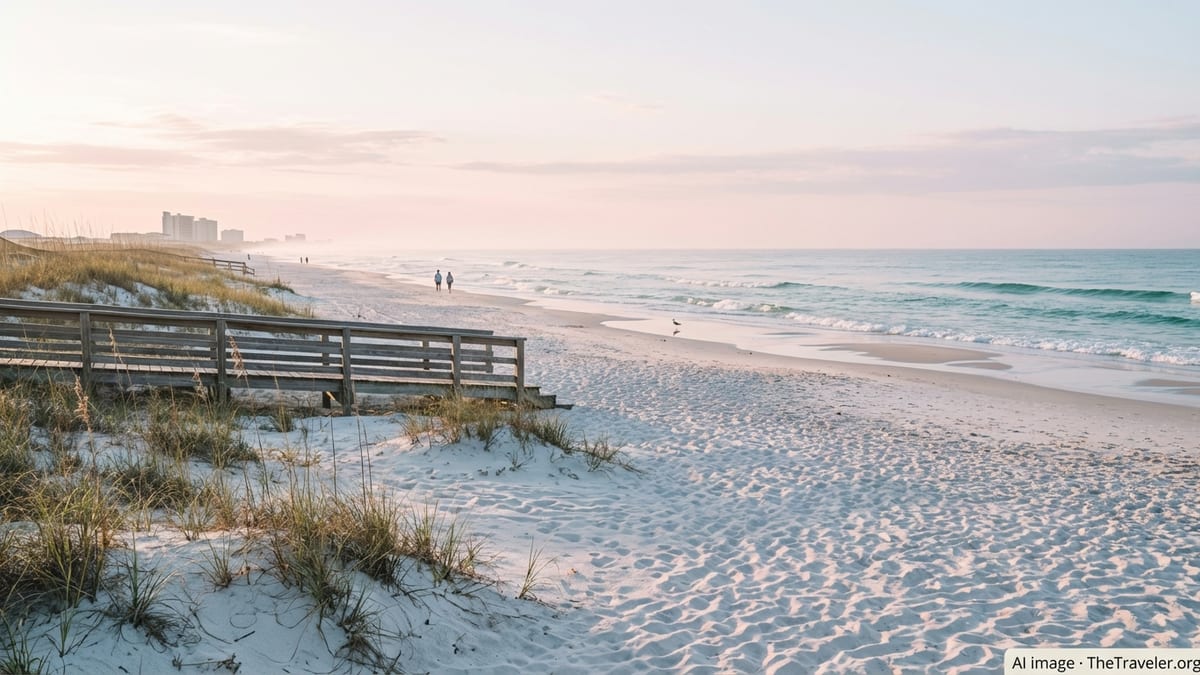
For many visitors, Alabama’s beach story begins and ends on the Gulf Coast, where Gulf Shores, Orange Beach, Fort Morgan, and Dauphin Island offer some of the state’s most famous stretches of sand. This narrow ribbon of coast, just 32 miles long, is known for its soft, sugar-white beaches and warm, generally calm Gulf waters that are ideal for swimming and paddling in the warmer months. Between spring and late fall, the shoreline fills with families building sandcastles, anglers trying their luck from piers, and sunset watchers gathering along the water’s edge.
Gulf Shores and Orange Beach combine wide, well-serviced public beaches with a full slate of restaurants, beach bars, and family attractions. Travelers who prefer a lively, resort-style experience gravitate here, where high-rise condos and hotels line much of the water and where seasonal events draw visitors in spring and summer. Yet even in the busier towns, early mornings and shoulder-season visits often reveal a quieter side, with gentle surf, seabirds patrolling the foam line, and pods of dolphins sometimes visible just offshore.
Just west and east, the coast feels more low-key. The Fort Morgan Peninsula offers long, dune-backed beaches that tend to be less crowded, along with views across Mobile Bay. At its tip sits historic Fort Morgan, a 19th century masonry fort that played a key role in the Battle of Mobile Bay during the Civil War, providing an unexpected layer of history to a day at the beach. Across the bay, Dauphin Island remains a favorite for travelers seeking a slower pace, with small beach cottages, a bird sanctuary, and easy access to marshes and tidal flats that attract herons, egrets, and migrating songbirds.
Nature lovers can pair beach time with exploration of coastal ecosystems. Gulf State Park protects thousands of acres between Gulf Shores and Orange Beach, with freshwater lakes, maritime forest, and dune systems behind the beachfront. Boardwalks and multi-use trails make it easy to step away from the sand to look for alligators, ospreys, and seasonal butterflies. Bon Secour National Wildlife Refuge, on the Fort Morgan Peninsula, feels wilder still, with undeveloped dunes, scrub habitat, and critical nesting areas for sea turtles and coastal birds. These protected pockets show a more fragile side of Alabama’s Gulf Coast and highlight why this strip of sand and marsh is one of the region’s natural treasures.
Mobile Bay and the Delta: Maritime Heritage and Coastal Wetlands
Northwest of the open Gulf, the Mobile Bay region blends maritime heritage with some of the South’s most extensive wetlands. The city of Mobile has long served as a cultural and commercial hub, with a port that predates many others on the Gulf Coast and historic neighborhoods that reflect French, Spanish, British, and American influences. Visitors interested in history can explore downtown streets lined with 19th century architecture, public squares shaded by live oaks, and a waterfront dominated by working docks and naval history sites.
Across the bay, the Eastern Shore communities of Fairhope and Daphne offer a different coastal atmosphere. Here, bluffs and piers face west across the bay, making sunset watching a daily ritual. The towns have cultivated walkable centers with cafes, galleries, and boutique lodging, appealing to travelers who prefer a small-town feel over high-rise development. The bay itself is a working estuary, and seasonal events, from seafood festivals to art shows, reflect how closely local life is tied to the water.
Just north of the bay, the Mobile–Tensaw River Delta introduces a wilder side to the region. Often described as “America’s Amazon” for its biodiversity, this maze of rivers, creeks, bayous, and cypress-tupelo swamps is a haven for paddlers and wildlife watchers. Guided boat tours and kayak trips weave among flooded forests and grassy flats, where visitors may spot alligators, turtles, wading birds, and, with luck, bald eagles or swallow-tailed kites. The transition from busy port city to near-primeval backwaters happens surprisingly quickly, giving travelers easy access to both urban comforts and remote-feeling nature.
For those interested in combining coastal scenery with history, the Mobile Bay area also preserves key sites from the Civil War era. Fort Gaines on Dauphin Island, facing Fort Morgan across the channel, still guards the bay’s entrance with brick walls and cannons. Interpreters and exhibits help bring to life the famous naval battle in which Union Admiral David Farragut reportedly delivered his famous command while forcing a passage into the bay. Together with the wetlands of the delta and the cultural life of Mobile, this region provides a nuanced sense of Alabama’s coastal identity that goes beyond sunbathing and surf.
Central Alabama: Montgomery, Selma, and the Heart of Civil Rights History
For travelers drawn to American history, central Alabama holds some of the most significant civil rights landmarks in the United States. Montgomery, the state capital, is central to the story, with sites that trace the struggle for voting rights and racial equality from the mid-20th century to the present. Around the city center, museums, memorials, and historic churches invite visitors to engage with the legacy of segregation, activism, and legal change that transformed the nation.
Key stops in Montgomery include institutions that interpret the Montgomery Bus Boycott and the broader movement for desegregation, as well as memorials that confront the history of enslavement, racial terror, and mass incarceration. These experiences can be emotionally demanding, but they are carefully interpreted and designed to provide historical context, personal narratives, and space for reflection. Walking between sites, visitors pass government buildings, older commercial blocks, and new public art that together underscore how deeply civil rights history is woven into the city’s fabric.
West of Montgomery, the route to Selma follows the path of the 1965 voting rights marches, now recognized as a National Historic Trail. Selma itself preserves important movement-era sites near the downtown core. The Edmund Pettus Bridge, where peaceful marchers were brutally attacked on what became known as Bloody Sunday, remains a powerful symbol. Nearby churches, museums, and visitor centers help explain how local activists, national leaders, and ordinary citizens combined to push for the federal legislation that followed.
Travelers can experience this region as a focused civil rights journey or include it as part of a larger Alabama road trip connecting beaches, cities, and rural landscapes. Many visitors choose to spend at least one full day each in Montgomery and Selma, allowing time for museum visits, guided tours, and unhurried walks. Because of the subject matter, it is wise to balance days of intense historical learning with quieter moments along the riverfronts, in local parks, or at small-town cafes, where the contemporary life of central Alabama continues around these enduring landmarks.
Birmingham and North-Central Alabama: Urban History and Mountain Foothills
North of Montgomery, Birmingham anchors another region rich in civil rights history, industrial heritage, and outdoor access. Often called the Magic City for its rapid growth in the early 20th century, Birmingham has reimagined itself over recent decades as a cultural and culinary destination while preserving historic districts linked to steelmaking and the struggle for civil rights. Visitors come to walk through areas where major protests, boycotts, and legal challenges reshaped the American South in the 1960s.
The Birmingham Civil Rights District concentrates many of the city’s most important historic sites within a compact area. Here, churches, parks, and museums tell interconnected stories of bombings, marches, and community organizing. Exhibits explore how local leaders, national organizations, and young activists confronted segregation and violent backlash. The district is walkable and often visited with a guide, which can help provide context and answer questions about both past events and their modern resonance.
Beyond its civil rights landmarks, Birmingham has invested in green spaces and trail networks that reflect the surrounding geography. The city rises and falls with the ridges of the southern Appalachian foothills, and former industrial lands now host parks, biking and walking paths, and views across old rail yards and red-soil slopes. Attractions such as urban parks, botanical gardens, and hillside overlooks give travelers a chance to step outside after museum time and see how nature and industry have shaped the region together.
North and east of Birmingham, smaller towns and protected areas extend the experience into more rural landscapes. Old mining communities, historic ironworks sites, and scenic backroads point to the region’s role in fueling American industry, while lakes and reservoirs created by dams offer boating, fishing, and waterfront campgrounds. For travelers with a few extra days, pairing Birmingham’s urban history with a loop through nearby state parks and lakes provides a satisfying blend of culture and countryside.
North Alabama Mountains and Waterfalls: Scenic Ridges and Wild Rivers
In far northern Alabama, the landscape shifts to rolling plateaus, deep canyons, and mountain lakes that appeal to hikers, paddlers, and road trippers chasing views. This region touches the southern end of the Appalachian chain, with a mix of state parks, national forest land, and scenic byways that highlight the state’s lesser-known mountain terrain. Travelers who associate Alabama solely with flat farmland or coastal marshes are often surprised by the scale of the cliffs, the clarity of the rivers, and the prevalence of waterfalls.
Little River Canyon National Preserve, near Fort Payne, is a standout. The Little River runs atop Lookout Mountain before dropping into a sandstone canyon, creating overlooks and trailheads that are among the most dramatic in the state. Seasonal waterfalls, sandstone bluffs, and rocky swimming holes draw visitors from spring through fall, while scenic drives along the rim provide easier access to vistas for those who prefer shorter walks. The preserve also supports rare plant communities and offers opportunities for whitewater paddling during higher flows.
Further west, the Bankhead National Forest and its Sipsey Wilderness protect a network of creeks and ravines known for waterfalls and mossy rock formations. Trails wind through hardwood forests that explode with color in autumn and fill with wildflowers in spring. The region’s sandstone gorges and clear streams have earned it a reputation among hikers as one of the most beautiful corners of the state, despite being less widely publicized than some neighboring Appalachian destinations in Tennessee or Georgia.
North Alabama’s reservoirs and lakes, including those created along the Tennessee River, add yet another outdoor dimension. Marinas, fishing guides, and lakeside cabins cater to anglers and boating enthusiasts, while small towns along the shore supply food, music, and a window into local culture. For an extended road trip, travelers can stitch together a route that connects mountain overlooks, riverside campgrounds, and lakeside towns, balancing backcountry adventures with comfortable overnight stops.
The Black Belt and Rural Heartlands: Cultural Landscapes and Quiet Byways
Running across central Alabama, the Black Belt region takes its name from the dark, fertile soils that once supported extensive cotton plantations. Today it remains largely rural, with small towns, farm fields, and long stretches of two-lane highway linking communities. While it sees fewer visitors than the Gulf Coast or major cities, this region rewards travelers who value cultural landscapes, historic sites, and the slower rhythm of rural life.
The Black Belt encompasses places that were deeply shaped by the history of slavery, sharecropping, and the Great Migration. Courthouse squares, former depots, and older neighborhoods carry traces of these stories, while local museums, churches, and community centers highlight art, music, and foodways rooted in generations of Black and white residents alike. Travelers who take time to talk with local guides, shop owners, and artists often find that personal conversations become the most memorable part of their visit.
Nature in the Black Belt is quieter but no less compelling. Birdwatchers come for seasonal migrations and the chance to see species that favor open fields, wetlands, and mixed woodlands. Rivers and creeks provide opportunities for paddling and fishing, with occasional sandbars that invite a swim or picnic break. Some small lodges and outfitters now cater specifically to hunters, anglers, and birders, reflecting a growing recognition that outdoor recreation can support rural economies while encouraging conservation.
Because services can be more spread out, planning ahead matters here more than in Alabama’s larger tourism hubs. Travelers should check opening hours for museums and restaurants, confirm lodging availability, and carry what they need for longer stretches between towns. In exchange, they find open roads, starry skies, and a perspective on Alabama that foregrounds working landscapes, local resilience, and everyday life beyond the state’s best-known attractions.
Designing Your Trip: Combining Beaches, History, and Nature
One of Alabama’s strengths as a travel destination is how easily its regions connect. Distances between major hubs are relatively modest by American standards, making it practical to combine beach time, civil rights history, and mountain scenery in a single journey of a week to ten days. The challenge is less about what is physically possible and more about matching the pace and emphasis of the trip to your interests and energy levels.
Travelers who begin on the Gulf Coast can spend several days exploring Gulf Shores, Orange Beach, and nearby parks before turning north toward Mobile Bay and the delta. From there, it is straightforward to continue inland to Montgomery and Selma for a deep dive into civil rights history. This sequence moves from pure relaxation toward increasingly reflective experiences, gradually shifting the focus from coastal leisure to museums, walking tours, and conversations about the country’s past and present.
Another popular arc starts in Birmingham and north Alabama, focusing first on the Magic City’s historic districts, then heading into the mountains and national forest lands for hiking, paddling, and scenic drives. From the highlands, travelers can drop south to Montgomery and eventually curve west or east to reach coastal regions, wrapping up their journey with sand and surf. This approach can work especially well in spring and fall, when temperatures are generally milder in both the mountains and on the coast.
Regardless of the route, it is wise to build in rest days and open pockets of time. Civil rights sites in Montgomery, Selma, and Birmingham are powerful and can be emotionally heavy, especially when experienced in quick succession. Similarly, full days of hiking or paddling in the mountains or wetlands can be physically demanding. Alternating intense days with more relaxed ones at a beach, lake, or small-town café helps keep the trip sustainable and leaves room for unplanned discoveries that often become highlights.
The Takeaway
Alabama’s regions reveal a state far more varied than many first-time visitors expect. On the Gulf Coast, broad beaches and maritime forests offer classic sun-and-sand vacations layered with coastal ecology and pockets of Civil War history. Around Mobile Bay, historic neighborhoods give way quickly to tidal marshes and a remarkably biodiverse river delta. Inland, Montgomery, Selma, and Birmingham anchor a network of sites central to the story of American democracy and civil rights, while the Black Belt and other rural areas preserve quieter narratives of work, migration, and community.
Farther north, mountain preserves, waterfalls, and lakes showcase a wild side that contrasts sharply, yet harmonizes, with the state’s coastal and urban environments. By moving thoughtfully between these regions, travelers can weave together days of relaxation, reflection, and exploration into a coherent journey. The result is not just a checklist of attractions but a deeper sense of how landscapes, communities, and history intersect in this corner of the American South.
FAQ
Q1. What is the best time of year to visit Alabama’s beaches?
The most popular time is late spring through early fall, when Gulf waters are warm and most seasonal services are open, although late summer can be hot and humid.
Q2. How many days should I plan for a Gulf Coast stay?
Many travelers find three to five full days ideal for the Gulf Coast, allowing time for beach relaxation, at least one nature excursion, and a visit to a historic site such as Fort Morgan.
Q3. Are the main civil rights sites in Alabama suitable for children?
Yes, many civil rights museums and memorials are designed with younger visitors in mind, but the subject matter can be intense, so parents may want to prepare children in advance.
Q4. Can I visit Montgomery, Selma, and Birmingham on one trip without rushing?
With about four to five days, it is possible to see key sites in all three cities at a comfortable pace, especially if you prioritize a few museums and guided tours in each place.
Q5. Do I need a car to explore Alabama’s nature regions?
In most cases a car is highly recommended, as state parks, national forest areas, and rural attractions are spread out and public transportation is limited.
Q6. Are there quieter alternatives to the busiest Gulf Shores beaches?
Yes, the Fort Morgan Peninsula and Dauphin Island typically feel less crowded than central Gulf Shores and Orange Beach, while still offering access to the same Gulf waters and coastal wildlife.
Q7. What should I wear when visiting civil rights sites and memorials?
Casual but respectful clothing is appropriate, bearing in mind that some sites are active churches or memorial spaces where a more modest style is appreciated.
Q8. Is north Alabama’s mountain region beginner-friendly for hiking?
Many trails in places like Little River Canyon and Bankhead National Forest are suitable for beginners, though conditions vary, so it is wise to check local guidance and start with shorter routes.
Q9. How can I experience Alabama’s wetlands without a lot of outdoor experience?
Guided boat tours in the Mobile–Tensaw River Delta or short boardwalk trails in coastal parks provide safe, accessible ways to see wetlands and wildlife without technical skills.
Q10. Can I realistically combine beaches, history, and mountains in a single week?
Yes, with thoughtful routing it is possible to sample the Gulf Coast, key civil rights cities, and at least one mountain or canyon area in about seven to ten days.