

Turkey stretches from the Aegean to the Caucasus and from the Black Sea to the Mesopotamian plains, and each corner of the country offers a very different kind of journey. Whether you dream of drifting over canyons in a hot air balloon, lingering in ancient ruins above a turquoise bay, or sipping tea in misty mountain villages, choosing the right region will shape your entire trip. This guide breaks Turkey down by experience, helping you match your travel style to the part of the country that will suit you best.
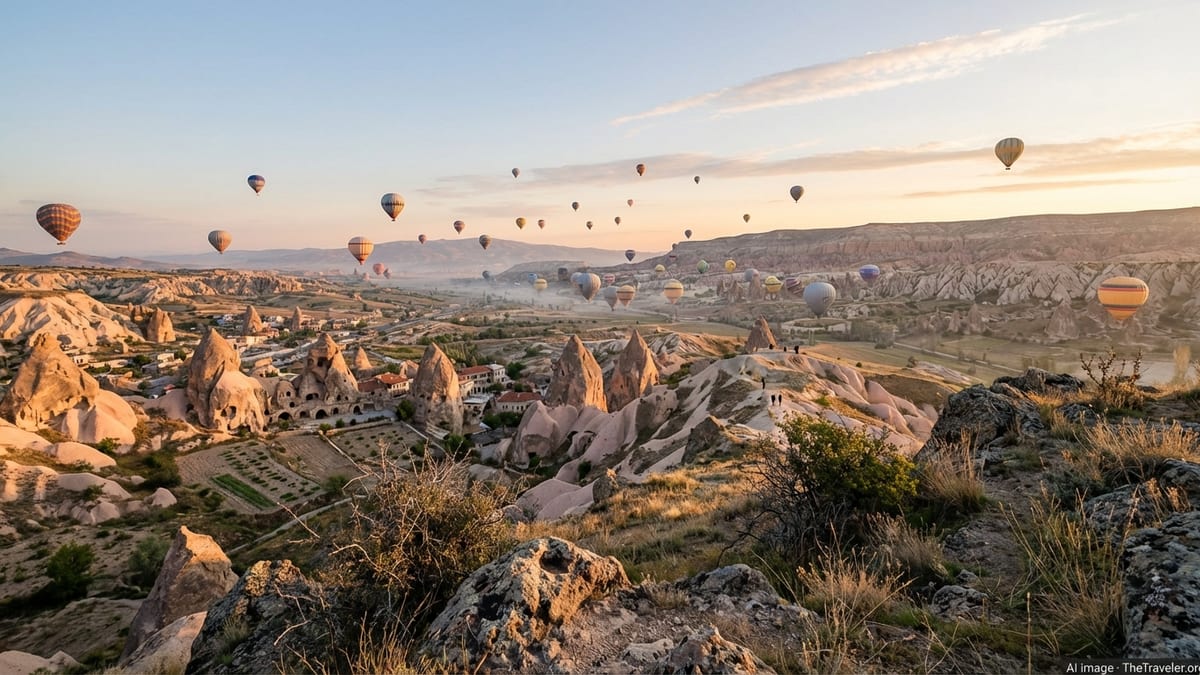
Cappadocia and Central Anatolia for Surreal Landscapes and Balloon Rides
If your ideal Turkey trip is all about otherworldly scenery and unforgettable sunrises, Cappadocia in Central Anatolia is the region to prioritize. Here, soft volcanic rock has been eroded into “fairy chimneys,” canyons and honeycomb cliffs, many of which have been carved out over centuries to create cave churches, monasteries and underground cities. The main hubs of Göreme, Ürgüp and Uçhisar sit amid protected valleys threaded with trails that can be walked in half a day or less.
Most visitors come for the hot air balloons that float at dawn above Rose, Love and Pigeon Valleys, often operating year round when weather allows. It is wise to allow at least two or three mornings for a balloon experience, since flights can be grounded by wind or low cloud. Even if you choose not to fly, watching the balloons lift off in the soft light of sunrise from a rooftop terrace or a viewpoint above town is a highlight in itself.
Beyond the iconic vistas, Cappadocia offers accessible adventure and culture. Short hikes through the valleys reveal rock cut chapels covered in Byzantine frescoes, while longer days out take you to underground cities such as Derinkuyu or Kaymaklı, once used as refuges during invasions. Small towns like Avanos keep pottery traditions alive, and many of the region’s “cave hotels” combine contemporary comforts with ancient stonework.
Central Anatolia also includes the city of Konya, associated with the Sufi poet Rumi and the whirling dervish tradition, and Ankara, the modern capital with its museums and government quarter. For travelers who want to balance Cappadocia’s dramatic landscapes with a deeper sense of Turkey’s recent history and spiritual heritage, combining these stops makes for a well rounded itinerary focused on the country’s inner heartland.
Aegean Coast for Seaside Leisure and Ancient Ruins
Travelers who picture their Turkey experience as a blend of relaxed beach time, whitewashed harbor towns and major archaeological sites should look toward the Aegean coast. Stretching south from Çanakkale and İzmir through Kuşadası, Didim and Bodrum, this region mixes an easygoing Mediterranean atmosphere with some of the most important ruins in the Eastern Mediterranean, including Ephesus, Pergamon and Aphrodisias.
The climate along this coast is typically dry and sunny for long stretches of the year, with seas warm enough for swimming from late spring through much of autumn. Resorts and small hotels line popular beaches, while quieter coves and national parks still exist between the more developed stretches. Places such as Dilek Peninsula National Park near Kuşadası offer hiking, wildlife watching and relatively unspoiled bays, giving nature focused travelers respite from busier resort towns.
Culturally minded visitors are drawn to the monumental remains of Ephesus near Selçuk, where marble streets, temples and theaters evoke the city’s past as a major center of the ancient world. Inland excursions can take you to well preserved Hellenistic and Roman sites, vineyards and small villages where olive oil and local cheeses are central to daily life. Even in lively destinations like Bodrum, it is still possible to step back into history at castle museums and nearby ruins before returning to modern marinas and waterfront promenades.
For a first time visitor who wants a classic coastal holiday without giving up the chance to explore world class heritage sites, the Aegean region is an especially strong option. It works well for couples, families and independent travelers who prefer a base by the sea with easy day trips into the surrounding countryside and historical areas.
Mediterranean and the Turkish Riviera for Sun, Sailing and Coastal Adventure
If your priority is sun, sea and an almost continuous string of beaches and bays, Turkey’s Mediterranean region, often called the Turkish Riviera or Turquoise Coast, delivers that experience in full. Centered around Antalya and stretching west toward Kaş and east toward Alanya, this coastline offers a mix of resort cities, smaller towns and protected inlets that appeal to everyone from package holidaymakers to independent sailors.
Antalya itself combines a busy modern city with an atmospheric historic core known as Kaleiçi, where restored Ottoman era houses cluster above a small marina. Nearby beaches and waterfalls are easy day trips, and the city’s airport provides convenient access to much of the surrounding coast. Farther west, towns such as Kaş and Kalkan have become known for clear water, diving, sea kayaking and boat trips, while the broader region is dotted with remnants of ancient Lycian settlements.
One of the defining experiences of this region is time on the water. Traditional wooden gulets and modern yachts alike ply the bays, offering everything from short excursions to multi day cruises that stop at remote coves, small islands and swimming spots. For active travelers, the long distance Lycian Way hiking route traces sections of this coast, linking mountain villages, pine forests and ruins above the sea. Paragliding, canyoning and sea cave exploration are also available in certain centers, especially around Fethiye and Ölüdeniz, which sit at the transition between the Mediterranean and the southern Aegean.
Because the Mediterranean coast is one of Turkey’s main tourism engines, it tends to have a wide range of accommodations and services at varied price points, along with busy summer crowds in the most popular spots. Travelers seeking nightlife, beach clubs and a sociable atmosphere will find plenty of options, while those looking for quieter stays can still find smaller pensions and rural guesthouses tucked away from the main resorts, especially outside the peak summer weeks.
Marmara Region for City Energy, Crossroads History and Short Stays
For visitors who want their Turkish experience to center on a great city, the Marmara region is dominated by Istanbul, straddling the Bosphorus between Europe and Asia. This is where the country’s layers of Byzantine, Ottoman and modern republican history are most visible, from landmark mosques and churches to palaces, old bazaars and contemporary art spaces. The city’s energy, food scene and waterfront neighborhoods make it the natural starting point for many trips.
Beyond Istanbul, the Marmara region contains secondary cities such as Bursa and Edirne, each with its own historic identity. Bursa preserves early Ottoman architecture and is also a gateway to the Uludağ ski area, while Edirne near the Greek and Bulgarian borders holds monumental mosques and traditional festivals. These smaller cities suit travelers interested in Ottoman history who prefer a more manageable scale than Istanbul, or those looking for a short break combining culture with nearby nature.
In terms of experiences, Marmara is less about beaches or wild landscapes and more about urban exploration. Here you taste regional variations of Turkish cuisine in busy markets, ride ferries between continents, and move quickly between museums, neighborhoods and viewpoints. Day trips across the Sea of Marmara to coastal towns or to the Princes’ Islands add a gentler seaside element without fully committing to a coastal holiday.
For shorter visits or for travelers who enjoy cities above all else, basing yourself in this region and taking selective excursions can make sense. It also pairs smoothly with other parts of Turkey, since transport links by air, road and rail radiate outward from Istanbul to most of the country’s major regions.
Black Sea Highlands for Green Landscapes, Cool Summers and Village Life
Travelers who prioritize lush scenery, cooler temperatures and traditional rural culture often find their ideal Turkey in the Black Sea region, particularly the eastern highlands of Rize, Trabzon and Artvin. Here, tea plantations climb steep slopes above the sea, river valleys cut deep into the Pontic Mountains and cloud forests give way to open alpine meadows known as yaylas. The climate is wetter and cooler than the Mediterranean and Aegean coasts, which makes it especially appealing in high summer.
Centers such as Trabzon provide access to cliffside monasteries, historic churches and Ottoman neighborhoods, while Rize is associated with tea cultivation and offers visits to small plantations and tasting rooms. From these coastal cities, winding roads lead inland to plateaus like Ayder and Pokut, where wooden houses scatter across green hills and local families run simple guesthouses. Hiking, photography and gentle village exploration are the main activities, along with visits to waterfalls, rivers and hot springs.
This is a region where tourism has grown steadily but remains far less intense than along the country’s southern coasts. As a result, the Black Sea highlands tend to suit travelers who value atmosphere over nightlife, and who are comfortable with limited English outside main towns. Road conditions and weather can affect travel times, so patience and flexibility are useful, but the reward is immersion in a landscape and way of life quite distinct from the drier, more exposed parts of Turkey.
For those planning a longer itinerary, the Black Sea can be combined with inland routes across northeastern Anatolia, including high mountain passes and remote lakes. However, if your main goal is to escape summer heat, walk among forests and meadowlands, and experience Turkey’s tea and hazelnut country at a slower pace, focusing on the Black Sea region itself can be deeply satisfying.
Eastern and Southeastern Anatolia for Off the Beaten Path Culture and Cuisine
Eastern and Southeastern Anatolia are regions for travelers who prioritize depth of culture, strong culinary traditions and a sense of being far from standard tourist circuits. These parts of Turkey include high plateaus, volcanic peaks, lake shores and ancient trade routes, along with cities that have absorbed influences from neighboring Middle Eastern and Caucasian cultures over many centuries.
In the east, destinations around Lake Van and the slopes of Mount Ararat appeal to those interested in hiking, birdwatching and archaeological sites in relatively remote settings. The scenery can be stark and dramatic, especially outside the main urban centers, and the tourism infrastructure is more limited than in western Turkey. As a result, this region suits experienced travelers who are comfortable with longer overland journeys and fewer English language services.
Southeastern Anatolia is more densely populated and noted for its historic cities and food culture. Gaziantep is widely praised for its pistachio based baklava, kebabs and rich local cuisine, while Mardin entices visitors with stone architecture cascading along a ridge and views over the Mesopotamian plain. Nearby, Şanlıurfa holds deep religious significance for local communities and preserves older neighborhoods and bazaars shaped by pilgrimage and trade.
Because of their distance from the main coastal hubs, these regions are usually best for travelers with more time and a strong interest in history, religion and food. They can be extremely rewarding, providing context for Turkey’s role as a bridge between Anatolia, the Levant and Mesopotamia. However, it is sensible to keep abreast of current travel advisories and local conditions when planning a trip here, as circumstances may change more quickly than in longer established resort areas.
Choosing Regions Based on Travel Style and Season
Matching your preferred experiences with Turkey’s regions also means thinking realistically about timing, distances and seasonal changes. The Mediterranean and Aegean coasts are at their liveliest from late spring through early autumn, with beach clubs, outdoor restaurants and frequent boat trips. However, high summer can be hot and crowded in the most famous resorts, so shoulder seasons around May to early June and late September to October often offer a more relaxed feel.
Cappadocia and Central Anatolia experience wider swings in temperature, with hot, dry summers and cold winters that can bring snow. Balloon flights are always weather dependent, but many travelers find that clear, crisp mornings in spring and autumn offer ideal conditions. In winter, the valleys take on a quieter, more contemplative character that appeals to photographers and those comfortable with colder conditions.
The Black Sea highlands are at their best for hiking and village stays in the warmest months, typically from July through September, when snow has receded from higher passes and meadows are accessible. Eastern Anatolia’s mountain routes also depend heavily on snow conditions, and some overland itineraries are more practical from late spring to early autumn. Major cities in Marmara and Southeastern Anatolia can be visited year round, though summer heat in the southeast can be intense.
Transport connections also influence how much ground you can reasonably cover. While domestic flights link Istanbul and Ankara with most regional centers, overland journeys between coastal and inland areas can still take many hours. Travelers who prefer a slower pace often find it more enjoyable to choose two or three regions that match their interests, rather than trying to cross the entire country in a single trip.
The Takeaway
Turkey is not a single experience but a mosaic of very different regions, each rewarding in its own way. The same country that offers hot air balloons over volcanic valleys also provides sleepy fishing coves, misty tea plantations, packed bazaars and ancient capitals. Deciding where to go begins with deciding what you most want to feel: the salt wind of the Mediterranean, the cool air of mountain plateaus, the energy of a global city or the quiet weight of history in a stone built old town.
For first time visitors looking for a balanced trip, combining Istanbul in the Marmara region with either Cappadocia or a stretch of the Aegean or Mediterranean coast works particularly well. Repeat visitors, or those with specific passions for hiking, food or archaeology, can dive deeper into the Black Sea, Eastern or Southeastern Anatolia, where the tourist infrastructure may be lighter but the sense of discovery is stronger. Whatever mix you choose, planning your route around experiences rather than simply ticking off names on a map will help you create a journey that feels coherent, memorable and uniquely your own.
FAQ
Q1. What is the best region in Turkey for a first time visitor?
For many first time visitors, a combination of the Marmara region for Istanbul and either Cappadocia or the Aegean or Mediterranean coast offers a strong introduction, blending culture, landscapes and accessible infrastructure.
Q2. Where should I go in Turkey for the best beaches?
The Mediterranean coast, often called the Turkish Riviera, has many of the country’s best known beaches, while the southern Aegean around Bodrum and Fethiye also offers excellent bays and swimming spots.
Q3. Which region is best if I want cooler weather in summer?
The eastern Black Sea highlands around Rize, Trabzon and Artvin generally stay cooler and greener in summer than the Mediterranean and Aegean coasts, making them popular with travelers escaping heat.
Q4. Is Cappadocia worth visiting if I do not want to take a balloon ride?
Yes, Cappadocia remains rewarding without a balloon flight, thanks to its hiking trails, rock cut churches, underground cities and atmospheric cave style accommodations.
Q5. Which regions are best for food focused travel?
Southeastern Anatolia, especially cities like Gaziantep and Mardin, is renowned for rich, distinctive cuisine, while coastal regions and major cities offer strong seafood, meze and modern Turkish dining.
Q6. Where can I combine history and seaside relaxation most easily?
The Aegean coast is ideal for pairing major archaeological sites such as Ephesus and Pergamon with relaxed days in harbor towns and nearby beaches.
Q7. Are Eastern and Southeastern Anatolia suitable for first time visitors?
They can be, but these regions usually suit experienced travelers who are comfortable with longer journeys, fewer English language services and a focus on culture rather than classic resort tourism.
Q8. What region should I choose for hiking and outdoor activities?
Strong options include Cappadocia’s valleys, the Lycian Way along the Mediterranean coast and the Black Sea and Kaçkar highlands, which offer cooler mountain routes in summer.
Q9. How many regions can I realistically visit in a two week trip?
Most travelers find that two or at most three regions allow for a comfortable pace in around two weeks, for example Istanbul plus Cappadocia and one coastal area.
Q10. Which region is best if I want mainly city experiences?
The Marmara region, centered on Istanbul, offers the densest concentration of urban experiences, with Bursa and Edirne adding smaller historic cities within reach of the main hub.