

Sitting where Lake Huron narrows into the St. Clair River, Sarnia offers an easygoing mix of sandy beaches, big-sky lake views, and strollable riverfront paths. Travelers come for Canatara Beach and the sight of freighters sliding beneath the Blue Water Bridge, then stay for park picnics, waterfront patios, and sunset walks along the shoreline. Whether you are planning a day trip or a long weekend, Sarnia rewards anyone who slows down and follows the water’s edge.
Getting Oriented on Ontario’s Blue Coast
Sarnia sits in southwestern Ontario, close to the United States border, where Lake Huron funnels into the St. Clair River. The city’s character is shaped by this meeting of lake and river: wide sandy shores on the lake side and a busy shipping channel on the riverfront, where lake freighters and pleasure boats share the same blue-green water. For visitors, this geography makes Sarnia feel like both a beach town and a river city, with most of its highlights concentrated along the waterfront.
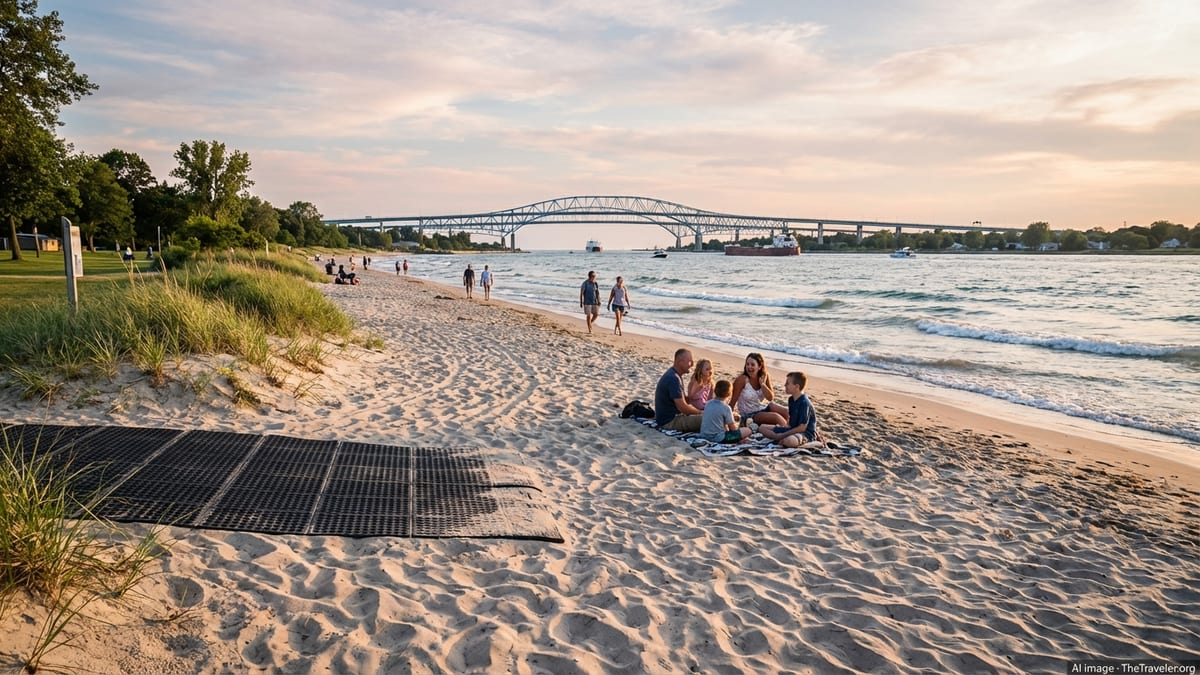
The city’s signature crossing, the twin-span Blue Water Bridge, connects Sarnia with Port Huron, Michigan. Standing beneath the bridge at the river’s edge, you can watch vessels navigate the current, hear the hum of traffic overhead, and feel the breeze roll down from the lake. From this vantage point, Sarnia’s layout becomes clear: Lake Huron beaches to the north and northwest, a ribbon of parkland and trails following the St. Clair River southward, and compact residential neighborhoods stretching inland.
For travelers, this compact scale is a major advantage. Many of Sarnia’s key sights are only a short drive or bike ride apart, and several can be linked on foot using waterfront paths. Visitors often base themselves near the central waterfront or in the north end close to Canatara Park, then spend their days moving between lake and river. With thoughtful planning, you can swim in Lake Huron in the morning, walk the riverfront under the Blue Water Bridge in the afternoon, and end your day at a park watching the sunset burnish the water.
Sarnia’s climate shapes the rhythm of the city. The main beach season runs through the warmer months, when lake temperatures are more appealing and seasonal amenities such as lifeguards and concessions are in full swing. Shoulder seasons in spring and fall, however, are ideal for quieter walks, cycling, and birdwatching along the shoreline. Even in winter, locals continue to use the riverfront paths, bundling up to watch ice and ships share the channel in moody, steel-grey light.
Canatara Park and Beach: Sarnia’s Lakeside Heart
Canatara Park is Sarnia’s flagship green space and the center of its beach culture. Originally laid out in the 1930s and now covering roughly 174 acres along Lake Huron, the park combines a wide sandy beach with forest, meadows, lagoons, and family-focused attractions. It is the place where many visitors first encounter Sarnia’s shoreline, stepping out of the trees onto a long arc of pale sand and open water.
Canatara Beach stretches for nearly a kilometer along Lake Huron near the mouth of the St. Clair River. It has earned internationally recognized Blue Flag status for many years, a designation that reflects ongoing commitments to high water quality, safety practices, and environmental management. Lifeguards are typically on duty during core summer weeks, when the city monitors conditions closely and posts up-to-date advisories on site. Even outside peak season, the presence of marked swimming areas, visible lifeguard towers, and clear rules creates an atmosphere of order and care.
Accessibility and inclusivity have become a defining feature of Canatara Beach. Rubber mat pathways laid over the sand make it easier for people using wheelchairs, mobility devices, or strollers to move from the park down toward the water. An accessible beach wheelchair is kept on site in season, and designated parking areas are set close to key access points. City plans call for further improvements, including an updated lifeguard station with integrated washrooms and a raised boardwalk to protect sensitive dune grass while improving step-free access along the shore.
Beyond the beach itself, Canatara Park is divided into several zones that each offer a different experience. A forested area provides shade on hot days and a place for quieter walks, while the lake and meadow zones are ideal for picnics, informal sports, and nature watching. The event zone near the outdoor stage hosts gatherings such as Canada Day celebrations, live music, and seasonal festivals, anchoring the park’s role as a community hub as much as a visitor attraction.
Beaches, Water Quality, and Staying Safe
Spending time on Sarnia’s waterfront is all about relaxation, but it is worth approaching the water with the same respect locals do. The Blue Flag designation at Canatara Beach signals a strong track record on water quality and safety, yet conditions in Lake Huron can change with weather and runoff. The city conducts regular water testing in season and posts advisory notices if swimming is not recommended. Before entering the water, visitors should check on-site signage and follow guidance from lifeguards when they are present.
While Canatara is the primary urban beach, stretches of shoreline also run through nearby neighborhoods toward Bright’s Grove and other points along the coast. These areas vary in terms of facilities and monitoring, so it is sensible to treat them as more informal spaces for walking and beachcombing rather than guaranteed swimming spots. Erosion and fluctuating lake levels have reshaped some sections of shoreline in recent years, changing the width of beaches and the nature of entry into the water. Where beaches narrow, currents can feel stronger and footing can be uneven.
Local authorities also balance recreation with environmental protection. Sensitive dune ecosystems near Canatara, for instance, are roped off to prevent trampling, and visitors are asked to avoid walking in tall dune grass. Rules typically prohibit glass containers, open fires, barbecues, and motorized vehicles on the sand, both for safety and to keep the beach clean. Pet restrictions are common on Blue Flag beaches, including Canatara, because the presence of domestic animals can affect water quality and disturb wildlife. Travelers visiting with dogs should look for signed off-leash areas elsewhere in the city or explore alternative lakeshore parks that explicitly allow pets.
In the water, simple precautions go a long way. Lake Huron can feel deceptively calm, but currents are influenced by wind, weather, and the nearby river mouth. Swimmers should stay within marked zones, avoid climbing on groynes or rock structures, and keep an eye on changing conditions. Families will find that the gradual entry and sandy bottom at Canatara suit children well on calm days, particularly when combined with the reassurance of lifeguards. On windier days, many locals simply shift to beach walks, kite flying, or riverfront strolls instead of swimming.
Riverfront Walks Under the Blue Water Bridge
If Canatara is Sarnia’s lakeside heart, the riverfront under the Blue Water Bridge is its front porch. Here, the St. Clair River flows swiftly past as ships move between the upper Great Lakes and points downriver. Visitors gather to watch freighters navigate the channel, enjoy a snack from seasonal vendors, or simply walk the paved paths that follow the water. The combination of infrastructure and scenery gives this stretch of waterfront a distinctive energy.
Centennial Park, set along the river close to downtown, anchors much of this riverfront experience. Landscaped lawns, flowerbeds, and seating areas face west toward the channel, providing ideal views of both recreational craft and commercial vessels. Playgrounds and splash pads help make the park a family favorite in warm weather, while festivals and community events frequently choose its open spaces for stages and tents. A continuous path along the water links Centennial Park to other public spaces, making it easy to extend a short stroll into a longer walk.
North of Centennial Park, the riverfront path continues toward the Blue Water Bridge. Under and around the bridge, the atmosphere becomes more focused on ship-watching. This is where visitors often pause to identify different vessel types, watch the interaction between strong river currents and lake waves, and feel the shadow of the bridge sweep overhead. Benches and railings along the walkway invite you to linger. The view extends across to Port Huron and its own shoreline walkways, tying the two communities together visually even as the bridge and border separate them.
Even away from the main parks, smaller access points and viewing areas let you approach the water. Some stretches of the riverfront integrate restored natural shorelines with stone and native vegetation, softening the edge between land and river. In the evening, as the light drops and the bridge and waterfront structures begin to glow, the riverfront walk takes on a different mood. Locals come out for after-dinner strolls, joggers share the path with cyclists, and the lights of passing ships slide silently by against the darkening current.
Beyond the Shore: Parks, Trails, and Neighborhoods
While Sarnia’s identity is closely tied to its waterfront, venturing slightly inland reveals a network of parks and trails that extend the city’s outdoor appeal. Within Canatara itself, a mix of paved and unpaved paths wind through forest, meadow, and around Lake Chipican, offering quieter loops for walking, running, and cycling. Early mornings are particularly rewarding, with birds active in the trees and lake mist sometimes hanging low over the water.
Family visitors often gravitate to Canatara’s Seaway Kiwanis Children’s Animal Farm, a long-running attraction within the park. Here, children can see and learn about farm animals in a compact, park-like setting, complementing a day that might also include beach time and picnics. A nearby BMX and bike track invites older kids and teens to burn off energy, while the miniature train operated seasonally by community volunteers adds a nostalgic note to summer days.
Elsewhere in the city, neighborhood parks and multi-use trails provide additional options for stretching your legs. Cycling routes link the north end to central areas, allowing more confident riders to move between lakeside neighborhoods and the downtown riverfront without relying entirely on car travel. Smaller playgrounds, ball fields, and shaded greens act as community anchors, and travelers who prefer slower exploration can wander residential streets to get a sense of Sarnia’s everyday life beyond its headline attractions.
Shopping and dining opportunities cluster a short drive from the waterfront, including at established retail centers such as Lambton Mall and along main commercial corridors. While these areas are more practical than scenic, they can be useful stops for stocking up on picnic supplies, beach gear, or road-trip necessities. Many visitors choose to combine an inland errand run with a return to the shore for an evening walk or late-day swim, making the most of Sarnia’s compact layout.
Seasonal Experiences and When to Visit
Planning the ideal Sarnia itinerary depends heavily on the time of year. The peak beach season typically runs from late June through August, when daytime temperatures are warmest and Lake Huron offers the most comfortable swimming. During this period, lifeguards are usually on duty at Canatara Beach for core hours, seasonal food trucks and kiosks are more likely to appear near busy waterfront spots, and community events fill the calendar in parks such as Canatara and Centennial.
Spring and early summer can be an appealing time for travelers focused on walking and scenery rather than swimming. Trees leaf out across the city’s parks, migrating birds stop along the shoreline, and the riverfront paths feel lively but not overcrowded. Water temperatures remain cool, so many visitors opt for shoreline walks, photography, and cycling instead of full beach days. Shoulder-season weekdays can feel especially tranquil, allowing you to experience big-sky lake views with fewer people on the sand.
Autumn brings its own pleasures. Cooler air and changing foliage in Canatara’s forest and meadow zones give familiar paths a new look, while sunsets over Lake Huron often feel more dramatic thanks to shifting weather patterns. On calm fall evenings, locals still gather under the Blue Water Bridge for riverfront walks and ship-watching, pulling on light jackets and lingering on benches as the lights of passing freighters trace slow lines on the water.
Winter in Sarnia is quieter from a tourism perspective but no less connected to the waterfront. Snow may cover sections of park paths, but cleared routes along the riverfront and in major parks remain in regular use. The lake can take on a stark, icy beauty, with floating ice and low, slate-colored clouds. For travelers comfortable with cold-weather walking, this can be a striking time to explore, particularly if you are interested in photography or simply want to see another side of the Great Lakes. Many amenities are reduced or closed in the off-season, so it pays to arrive with flexible expectations and a focus on simple outdoor experiences.
Practical Tips for a Smooth Sarnia Stay
Most visitors arrive in Sarnia by car, using Highway 402 from the Ontario side or crossing the Blue Water Bridge from Michigan. Parking for major sights such as Canatara Park and the central riverfront is generally straightforward, with free or low-cost lots near park entrances and along the waterfront. In busy summer periods, lots closest to the beach can fill by midday, so arriving earlier in the morning or later in the afternoon can reduce stress and walking distances.
Within the city, getting around by car is easy, but the scale also lends itself to cycling and, in some corridors, walking. Bringing or renting bicycles allows active travelers to link beaches, parks, and downtown in a single day without worrying about parking at each stop. Many waterfront paths are shared between pedestrians and cyclists, so patience and courtesy keep things comfortable for everyone.
For day trips focused on the water, packing thoughtfully makes a difference. Beyond standard beach items such as towels and sunscreen, consider water shoes for navigating pebbly sections of shoreline, light layers to adapt to breezes off the lake, and a reusable water bottle to stay hydrated. Weather on Lake Huron can change quickly, so checking the forecast and keeping an eye on conditions while you are out is wise. Even in midsummer, evenings can cool rapidly along the water, making a sweater or light jacket useful if you plan to stay for sunset.
Accommodation options in and around Sarnia range from chain hotels near main routes to smaller inns and motels closer to the waterfront. Booking ahead is advisable in summer, especially on holiday weekends and during major regional events. If you are combining Sarnia with wider exploration of Ontario’s Blue Coast, consider structuring your trip so that you have at least one full day with no long drives, devoted entirely to walking, swimming, and relaxing along the lake and river.
The Takeaway
Sarnia’s appeal lies less in headline-grabbing attractions than in the way its landscapes fit together. A day might start with a quiet walk among trees and dunes in Canatara Park, continue with a swim in Lake Huron’s clear water, and finish with a slow stroll along the St. Clair River as ships slide beneath the Blue Water Bridge. The city invites you to move at walking pace, adjusting your plans according to wind, light, and mood.
For travelers who value water views, easy access to green space, and the feeling of being close to both a Great Lake and a working river, Sarnia delivers a complete experience in a compact, approachable package. Thoughtful amenities such as accessible beach mats, monitored swimming areas, and evolving park plans show a community investing in its shoreline for residents and visitors alike. Whether you come for a single afternoon or an extended stay, the combination of beaches and riverfront walks is likely to linger in your memory long after you have driven away.
FAQ
Q1. Where is the best place to experience both the beach and riverfront in Sarnia?
The most effective way to experience both is to split your time between Canatara Park on Lake Huron and the central riverfront parks near the Blue Water Bridge and downtown. They are only a short drive or bike ride apart, which makes it easy to move from a sandy beach setting to paved riverfront walkways with views of freighters and the bridge.
Q2. Is Canatara Beach suitable for families with young children?
Yes. Canatara Beach has a long sandy shoreline, gradual water entry on calm days, and lifeguards on duty during core summer weeks. The surrounding park includes playgrounds, picnic areas, and attractions such as the children’s animal farm and a miniature train, giving families several ways to build a relaxed day around the beach.
Q3. How accessible is Sarnia’s waterfront for visitors with mobility challenges?
Accessibility has been a growing priority along Sarnia’s shoreline. At Canatara Beach, rubber mat pathways help wheelchairs, walkers, and strollers move across the sand, and an accessible beach wheelchair is typically available in season. Park designs and future plans emphasize step-free routes, accessible washrooms, and improved boardwalks to make it easier for more people to reach the water’s edge.
Q4. When is the best time of year to visit Sarnia for beach activities?
The most reliable beach weather usually falls between late June and August, when daytime temperatures are warmest and lifeguards are generally on duty at Canatara Beach. Early and late summer can also be pleasant for beach walks and shoreline picnics, even if the water feels cooler. Outside of this window, many visitors focus more on walking, cycling, and riverfront views than swimming.
Q5. Are dogs allowed on Sarnia’s beaches and waterfront trails?
Rules differ by location. To help protect water quality and sensitive dune ecosystems, dogs are typically restricted from Blue Flag beaches such as Canatara during main use periods. Leashed dogs are more commonly seen on certain trails and in other parks away from designated swimming areas. Visitors should always check posted signs at each site and plan alternative walks if traveling with pets.
Q6. Can I swim anywhere along Sarnia’s shoreline, or only at Canatara Beach?
While stretches of shoreline exist beyond Canatara, not all of them are monitored or equipped for swimming. Canatara Beach is the main urban swimming area, with regular water quality checks and defined swim zones. Other sections of coastline are better treated as places for walking, paddling at the edge, or enjoying the view unless local guidance clearly indicates that swimming is appropriate.
Q7. What should I know about safety and currents in Lake Huron near Sarnia?
Conditions can change with wind and weather, and currents are influenced by the nearby mouth of the St. Clair River. Swimmers should stay within designated areas, respect posted advisories, and follow any instructions from lifeguards. On days when waves or currents seem strong, many locals choose to remain on the sand or switch their plans to riverfront walks instead.
Q8. Is Sarnia a good destination for a car-free or low-car trip?
Sarnia is easiest to reach by car, but once you are in the city, several key attractions cluster along the shoreline within cycling distance of one another. Confident cyclists can move between Canatara Park, waterfront parks under the Blue Water Bridge, and downtown using a mix of paths and city streets. Walking works well within each individual area, though covering all of them in a single day without any vehicle support can be tiring.
Q9. What kind of accommodations can I expect in and around Sarnia?
The city offers a range of chain hotels, motels, and smaller independent properties, many of them clustered near main routes and commercial corridors. Some lodging lies a short drive from the waterfront rather than directly on it, so visitors usually combine hotel stays with daily drives or bike rides to reach beaches and riverfront paths. Booking ahead is sensible in peak summer and on holiday weekends.
Q10. How many days should I plan to fully enjoy Sarnia’s beaches and riverfront walks?
A single day is enough to visit either Canatara Beach or the central riverfront, but two or three days allow a more relaxed pace. With a long weekend, you can devote one full day to Canatara Park and Lake Huron, another to riverfront parks and ship-watching under the Blue Water Bridge, and a flexible third day to repeat your favorite spots or explore additional trails and neighborhoods.