

More news on this day
Drivers crossing France may feel they are simply following directions, yet an expanding family of road signs is quietly turning the country’s motorways and backroads into an open-air lesson in culture, safety and the environment.
Get the latest news straight to your inbox!
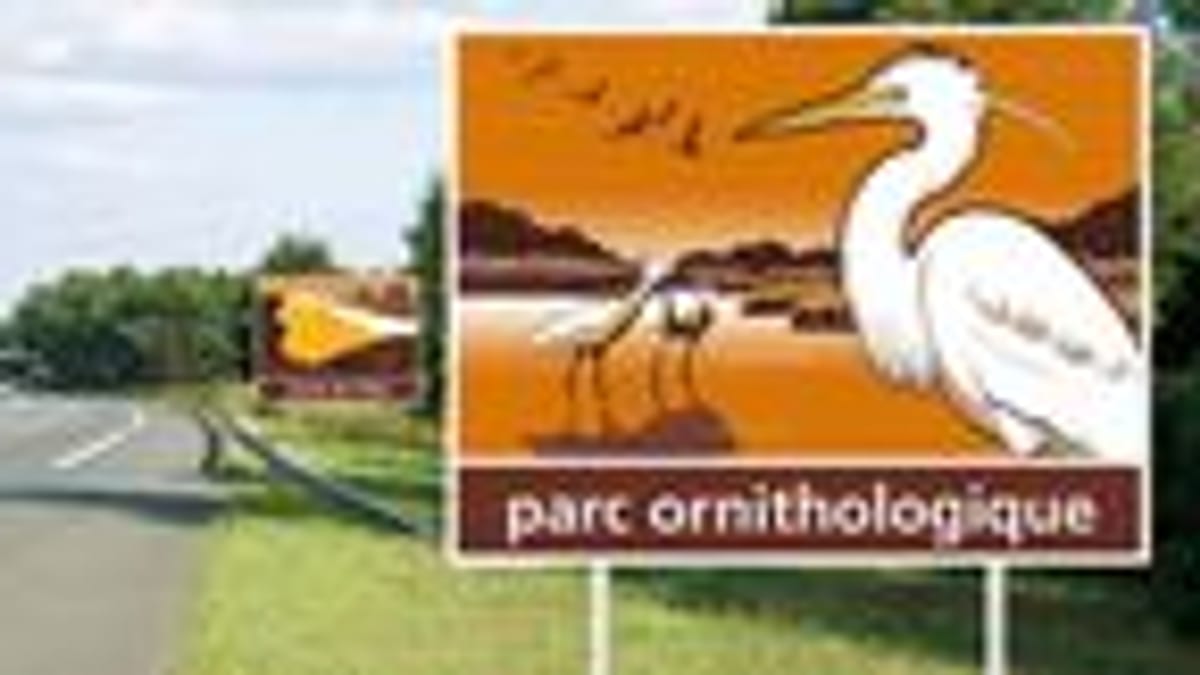
Image by BBC Travel
Brown signs that turn motorways into cultural corridors
One of the most visible ways France teaches visitors from behind the wheel is through its brown tourist signs, a colour now widely associated across Europe with cultural or leisure attractions. Publicly available information describes these panels as part of a broader international trend, but in France they have become a dense patchwork of hints to nearby castles, vineyards, regional parks and UNESCO-listed sites.
On major autoroutes, these signs often appear well before exits, giving drivers time to decide whether to leave the high-speed corridor for a detour into a historic town or scenic valley. Names of chateaux, abbeys or gorges are paired with simple pictograms, allowing non-French speakers to understand at a glance whether the sign is pointing toward a viewpoint, museum or recreation area.
Service areas have joined this educational approach. Images from 2024 show rest-stop signs that do more than mark fuel and food, highlighting regional identity in their names and graphics. A stop might reference a nearby river, forest or historic route, gently encouraging travellers to see the motorway as a thread through living landscapes rather than an anonymous strip of tarmac.
Tourism agencies have increasingly used this roadside canvas to reinforce regional branding. Reports indicate that brown signs are often planned alongside broader destination strategies, helping drivers connect what they see on the road with what they will later encounter in brochures or visitor centres.
New eco-signs teaching low-impact driving
In recent years, a wave of new road symbols has appeared in France with a distinctly educational aim: changing driving habits in the face of climate and pollution challenges. Coverage in French media highlights a growing use of signs that encourage more environmentally responsible behaviour, particularly near sensitive natural areas.
Among the most discussed additions is the carpooling lane symbol, a white diamond shape on a blue background signalling lanes reserved for vehicles carrying at least one passenger. Reports describe its deployment on approaches to cities such as Lyon, Grenoble and Strasbourg, often accompanied by radar systems capable of estimating how many people are in each vehicle. While the primary objective is to reduce single-occupancy traffic, the prominent new symbol also serves to familiarise residents and visitors with car-sharing as a normal part of daily mobility.
Another set of signs is used to mark eco-zones and areas where lower emissions are encouraged or required. These panels may appear alongside information about local air-quality measures or restrictions related to vehicle pollution stickers. For foreign travellers, encountering these symbols is often their first introduction to France’s environmental regulations, effectively turning the roadside into a briefing on how cities are trying to protect air quality.
Road authorities have framed the early years of these signs as a learning period, with communication campaigns explaining the symbols and the reasons behind them. For visitors who cross multiple European borders by car, the French panels form part of a patchwork of national approaches, but the underlying message is consistent: modern road signs are no longer only about speed and direction, they are also tools for nudging behaviour toward lower-impact travel.
Safety labels that grade whole towns
Not all of France’s educational road signs are about individual drivers. Some tell a story about the communities they mark. One of the more recent examples is the blue-and-white “ville prudente” panels, which appear at the entrance to selected towns and villages. According to published coverage, the signs are awarded by a national road safety association to communes that demonstrate active efforts to reduce accidents.
The signs display up to five blue hearts, creating a simple visual scale that anyone can interpret without speaking French. For local councils, the hearts act as a badge of honour, signalling that work has gone into safer crossings, reduced speeds near schools, or awareness campaigns aimed at pedestrians and cyclists. For visitors, encountering the sign can subtly change expectations about how people move in that place.
This system gives travellers a quick snapshot of local priorities. A village with several hearts on its sign is presenting itself as a place that has invested in safety and calm traffic. The message is indirect but clear: drivers are entering an environment where slower speeds and greater attention are valued. As more communes obtain the label, the cumulative effect is to turn entire regions into living examples of how road design and public policy can reshape behaviour.
The “ville prudente” initiative also illustrates how roadside information can make abstract policy visible. Instead of reading about national strategies in a report, drivers see them embodied in the landscape, learning as they pass that road safety is not only a matter for enforcement but also for community action and recognition.
Heritage, detours and the art of the French backroad
Beyond motorways and safety campaigns, France’s dense network of departmental and local roads is a lesson in geography and heritage delivered through signs. Black-and-white destination boards, often mounted on stone or metal posts, identify villages, rivers and mountain passes whose names rarely appear in international guidebooks. For travellers willing to leave the main routes, these modest panels act as invitations to explore lesser-known France.
In rural regions, directional signs are frequently paired with small brown plaques indicating walking trails, cycling routes or heritage circuits. These signs draw attention to Romanesque churches, wine routes or wartime memorials that might otherwise be overlooked from the car window. Together they build a layered narrative about the country, from prehistoric sites to industrial-era canals and modern engineering landmarks.
Reports from tourism bodies suggest that this granular signage supports a broader push to spread visitor numbers more evenly across the territory. By clearly marking points of interest away from saturated hotspots, planners hope that drivers will be tempted into quieter valleys and small towns, bringing economic benefits while easing pressure on famous destinations.
The result is that even a simple drive between two well-known cities can become an improvised journey through regional stories. Each junction and roundabout presents a new set of names, symbols and distances, inviting travellers to piece together their own mental map of France, one road sign at a time.
From symbols to stories for international visitors
For travellers arriving from countries with different signing traditions, France’s panels can initially be a puzzle. Yet many aspects of the system are designed with international comprehension in mind. The country aligns its signs with European standards that favour pictograms over text, which helps bridge language barriers for visitors from across the continent and beyond.
Over time, regular drivers begin to decode the visual language: the brown background that signals tourism, the blue that marks motorways, the green for major routes, the white for local destinations. Newer icons related to electric charging, shared mobility or environmental protection gradually join older symbols for railways, ferries and viewpoints, reflecting how travel itself is changing.
Travel reports frequently note that these visual cues shape decisions on the move. A last-minute stop at a viewpoint, a detour to a lakeside village, or a more cautious approach through a “careful town” often begins with a brief glance at a roadside panel. In this way, the French road network not only guides vehicles but also curates experiences, teaching visitors about culture, safety and sustainability without a single spoken word.