

More news on this day
From wind-assisted luxury liners to eclipse-chasing expeditions, the cruise industry is using 2026 as a launchpad for a new kind of voyage, pairing headline-grabbing onboard experiences with some of the most ambitious environmental upgrades the sector has ever seen.
Get the latest news straight to your inbox!
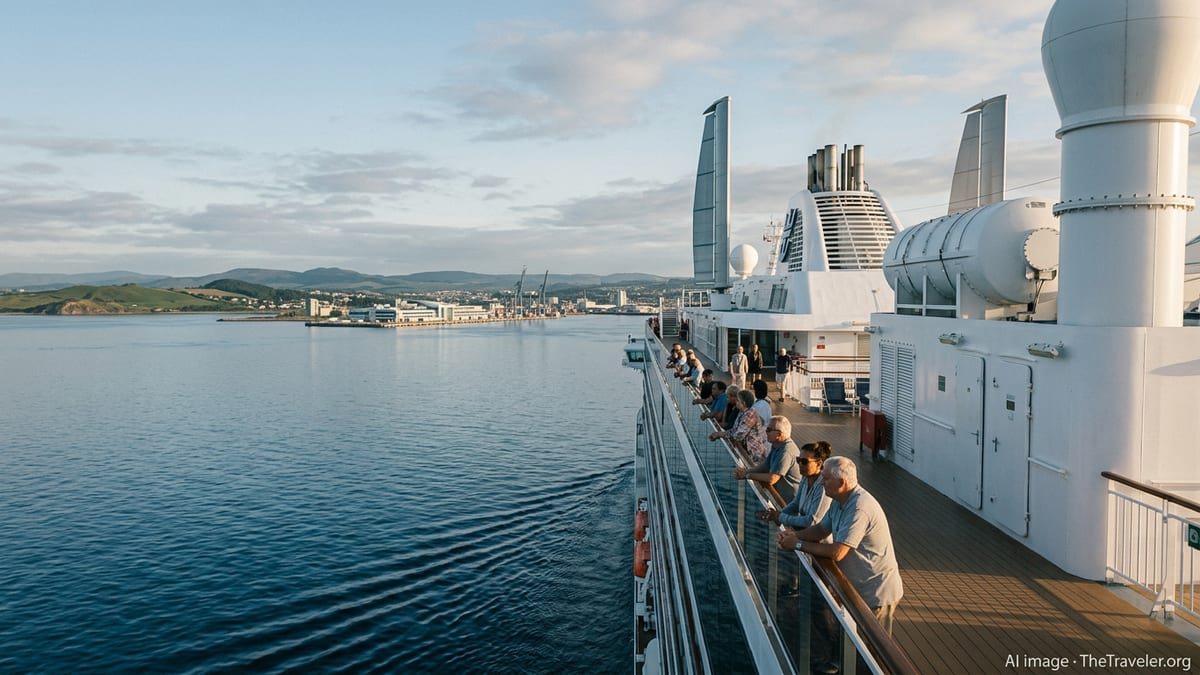
New Ships, New Ideas: 2026’s High-Seas Experiments
The global orderbook for 2026 is packed with diverse new vessels, from mega-resorts at sea to intimate yachts, reflecting how quickly cruising is evolving. Lines are betting that travelers want more than just bigger ships; they want richer storytelling, deeper immersion in destinations, and experiences they cannot easily replicate on land.
Mass-market brands are rolling out feature-packed flagships with waterparks, themed neighborhoods and elaborate dining districts, tailored to multigenerational families and groups of friends seeking a floating city break. At the same time, luxury and so-called “yacht-style” operators are introducing smaller ships with fewer guests and more space per passenger, aiming to deliver a quieter, slower form of travel that still feels indulgent.
Many of these 2026 debuts are being purpose-built for specific regions or themes. Some are optimized for year-round Mediterranean or Caribbean operations, while others are designed with polar-class hulls, extended range and reinforced bows for Arctic and Antarctic routes. The result is a fleet that looks less uniform than in previous decades, with vessels engineered to match distinct travel styles and environmental conditions.
That diversity is central to how cruise companies now frame the future of travel. Rather than a one-size-fits-all ocean crossing, the pitch for 2026 is that the high seas can serve as a mobile basecamp for everything from family adventure to slow luxury and citizen science.
Wind, LNG and Renewable Fuels: Cleaner Power at Sea
Alongside new guest amenities, the most consequential changes for 2026 are happening below the waterline and deep inside engine rooms. Shipyards and cruise lines are doubling down on alternative propulsion, hybrid systems and more efficient hull designs to curb emissions and prepare for tightening climate regulations through the 2030s.
Several high-profile 2026 launches feature dual-fuel engines capable of running on liquefied natural gas as well as conventional marine fuels, a configuration that offers immediate cuts in local air pollutants and a pathway to run on bio-LNG when supply scales up. Other projects are centered on wind-assisted technologies, including rigid sails and advanced kite systems designed to capture wind power and reduce overall fuel burn on suitable routes.
Meanwhile, fuel suppliers and cruise groups are entering long-term agreements to introduce renewable marine fuels in major ports, with biofuel blends slated to begin regular use on selected itineraries from 2026 onward and renewable methanol to follow later in the decade. These early contracts are still limited in volume and geography, but they are widely seen as proof-of-concept steps toward a broader low-carbon fuel mix.
Even incremental gains in efficiency are being pursued aggressively, from more streamlined hull coatings that reduce drag to data-driven maintenance schedules aimed at keeping underwater surfaces as clean as possible. For passengers, most of these upgrades remain invisible, but they are central to how the industry argues that a holiday at sea can be compatible with long-term climate goals.
Shore Power and Stricter Rules in Port Cities
As ships get cleaner at sea, ports are moving quickly to tackle emissions at berth, where large vessels have traditionally relied on diesel generators while hotel operations continue for thousands of guests. Shore power, which allows a ship to plug into the local grid and switch off its main engines, is emerging as the defining infrastructure upgrade of this decade.
Cities around northern Europe and North America are accelerating installation of high-voltage connections at cruise terminals, often supported by national or regional climate funding. Ports that pioneered early plug-in capabilities are now expanding capacity to every berth, while latecomers are fast-tracking new projects to stay competitive as more ships arrive with shore-power hardware already installed.
Regulation is pushing the pace. In several European hubs, 2026 is a preparatory year ahead of legal mandates that will make plugging in effectively compulsory before the end of the decade for any vessel fitted with the technology. Some local authorities have already signaled that priority berthing will go to ships able to connect, creating a direct commercial incentive for operators to invest in compatible systems.
For port communities, the shift is more than a technical milestone. Cutting engine use while ships are docked brings immediate reductions in local air pollutants, including fine particles and nitrogen oxides, which have long been a flashpoint in debates over cruise tourism in dense urban harbors.
Expedition, Science and Solar Eclipses: Experiences You Cannot Stream
While environmental upgrades shape how ships operate, the itineraries and onboard programs planned for 2026 are redefining why people go to sea in the first place. Expedition and small-ship lines are leaning into science-led voyages, partnering with universities and non-profits to offer guests a front-row seat to climate and wildlife research in fragile regions.
On certain Arctic and Antarctic routes, passengers can already join marine biologists in plankton sampling, seabird counts or microplastic surveys, with preliminary results shared in nightly briefings. For 2026, operators are expanding these offers with longer stays in remote anchorages, more zodiac time near glaciers and ice floes, and lecture programs that connect daily sightings to broader climate trends.
Elsewhere, mainstream lines are building full seasons around headline events, most notably the total solar eclipse due in August 2026. Dozens of ships are being scheduled to intersect the path of totality, turning a few minutes of celestial darkness into the focal point of weeklong cruises that blend astronomy talks with themed entertainment and shoreside excursions.
These kinds of itineraries underscore a broader shift toward “unrepeatable” moments at sea. From limited-season sailings timed to wildlife migrations or northern lights displays, to themed voyages with chefs, authors and scientists, the industry is betting that travelers will pay a premium for experiences they cannot simply download or binge-watch at home.
From Floating Resorts to Moving Neighborhoods
Underlying all of these developments is a reframing of what a cruise ship represents in the broader travel landscape. Operators increasingly describe their vessels as moving neighborhoods or mobile resorts that bring guests to multiple destinations while concentrating much of the environmental impact into a single, highly regulated platform.
Newbuilds entering service in 2026 are being designed with this philosophy in mind. They feature more outward-facing public spaces, larger promenade decks and expanded alfresco dining to keep guests connected to the sea and the cities they visit. Some are introducing onboard “destination hubs” where local partners come aboard to run pop-up markets, craft workshops or tasting sessions that preview upcoming ports of call.
At the same time, cruise lines are under pressure to demonstrate that their growth will not overwhelm host communities. Many are working with port authorities to stagger arrival times, extend seasons beyond the traditional summer peak and encourage guests to explore lesser-known districts rather than only the busiest historic centers.
For travelers weighing how to see more of the world with a lighter footprint, the message from the cruise sector in 2026 is clear: the high seas are not just a backdrop, but a testing ground for cleaner technology and new forms of immersive, slow-burn adventure.