

More news on this day
Air travel across Europe has been hit by a wave of disruption as nearly 1,900 Air France and KLM flights were delayed in quick succession, snarling major hubs from Paris to Amsterdam and leaving passengers grappling with hours-long queues, missed connections and rapidly changing rebooking rules.
Get the latest news straight to your inbox!
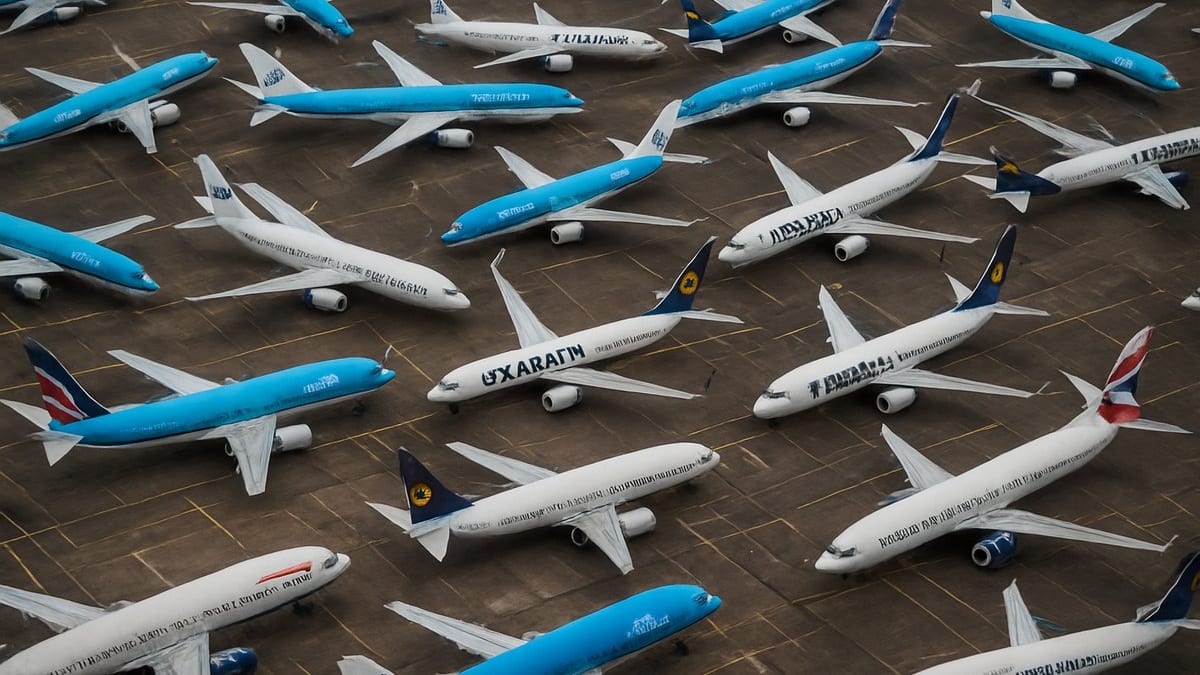
Backlogs Ripple Across Key European Hubs
Publicly available operational data and travel-industry reporting indicate that 1,899 Air France and KLM flights were affected in what many observers are already dubbing a “Great European Grounding.” The disruption concentrated on the airlines’ main hubs at Paris Charles de Gaulle, Paris Orly and Amsterdam Schiphol, but knock-on delays spread quickly to secondary airports across France, the Benelux region, Germany and Switzerland.
Real-time tracking platforms and aviation analytics point to a pattern of rolling delays rather than a single concentrated shutdown. Aircraft and crews ran late on early rotations, causing subsequent departures to push back progressively over the day. By late afternoon, short-haul sectors within Europe were taking the brunt of the disruption, with turnaround times stretched and arriving passengers struggling to make tight connections.
Regional gateways reported growing bottlenecks as the day progressed. Reports from Zurich, Geneva, Brussels and Vienna highlighted clusters of delayed Air France–KLM services layered on top of existing congestion affecting other European airlines. For many passengers, especially those traveling on multi-leg itineraries, the compounding effect turned what began as a minor delay into an overnight stranding.
Operationally, the backlogs created a classic recovery challenge for hub-and-spoke networks. Once aircraft and crew resources slipped out of their assigned banks at the hubs, airlines were forced to choose between protecting long-haul departures, maintaining minimum service on key business routes, and repositioning aircraft to where they were most needed for the following day.
Causes: From Weather and Congested Skies to IT Fragility
Early assessments from aviation analysts and flight-disruption trackers suggest that the wave of delays had multiple overlapping triggers. Seasonal weather systems crossing northwestern and central Europe created temporary airspace restrictions, while high traffic volumes stretched capacity at already busy hubs. Air traffic flow management measures, designed to keep skies safe when weather or congestion flare up, effectively throttled departures and arrivals during key bank periods.
At the same time, the situation has refocused attention on the digital backbone supporting Air France and KLM operations. In recent years, both airlines, like many global carriers, have experienced occasional booking-platform glitches, check-in slowdowns and loyalty-program access issues. Industry observers note that while not every IT hiccup leads directly to mass delays, even small interruptions can complicate recovery when the operation is already under stress from weather or airspace constraints.
The wider backdrop is a European aviation system that has been repeatedly tested by storms, industrial action and infrastructure works. European network reports highlight that French airspace constraints and local strikes have periodically generated outsized delay minutes for airlines embedded in the region. When an operator has major hubs in both France and the Netherlands, as Air France–KLM does, those systemic pressures are particularly hard to avoid.
Some commentators also point to how closely timed hub banks, designed to maximize connectivity, can amplify the impact of even modest disruptions. If one inbound wave arrives late, the outbound wave that distributes passengers across the network is delayed in turn, with long-haul departures often prioritized and regional services bearing the brunt of schedule trimming or extended ground holds.
Passenger Experience: Long Queues, Missed Trips and Confusing Options
For travelers on the ground, the numbers translated into frayed nerves and disrupted plans. Social media feeds and travel forums filled with accounts of missed weddings, lost business meetings and abandoned weekend breaks as Air France and KLM passengers faced rebookings, overnight stays and unplanned detours through alternative hubs.
Reports indicate that queues at customer-service desks and transfer counters at Paris Charles de Gaulle and Amsterdam Schiphol stretched well beyond their usual footprint, particularly during late afternoon and evening peaks. Many travelers turned to airline apps and websites to rebook, only to encounter periods of slow response or limited availability on alternative flights, reflecting the strain on both the physical and digital sides of the operation.
Travel advisories from passenger-rights organizations and compensation specialists urged affected travelers to keep all boarding passes and disruption notices, document their actual arrival times, and consider their potential entitlements under European passenger-protection rules. While each case depends on the exact cause and length of delay, the surge in affected flights is expected to drive a fresh wave of claims across the Air France–KLM network.
Business-travel managers and corporate travel agencies were also forced into rapid-response mode, rerouting key personnel through less congested airports or shifting last-minute meetings online. Duty-of-care policies, which have become a higher priority since the pandemic, are being tested once again as companies reassess how much buffer time they need to build into high-stakes itineraries involving major European hubs.
Operational Response and Recovery Efforts
As the backlog built, publicly available information from the airlines’ travel-alert pages and booking channels showed a progressively more flexible approach to changes. Passengers whose flights were significantly delayed or who missed onward connections were generally offered free rebooking within a defined time window, and in many cases the choice of rerouting via partner hubs operated by alliance and joint-venture carriers.
In the short term, recovery has centered on three levers: stabilizing core hub operations, repositioning aircraft and crew to where they are most needed, and smoothing the passenger experience during irregular operations. Aviation analysts expect Air France and KLM to lean on overnight positioning flights, tactical use of larger aircraft on busy routes, and targeted schedule thinning on lower-demand sectors to restore regularity.
Across Europe, airport operators are coordinating with airlines to manage late-night and early-morning waves as delayed flights push into less typical operating hours. Some airports have indicated via public updates that they will temporarily relax slot-use expectations or provide additional staff support during peak recovery periods to help clear passenger backlogs more quickly.
Despite these efforts, residual delays are likely to continue for at least several rotations after the peak of the disruption, especially for aircraft and crews far from their normal bases. Travelers connecting through Paris and Amsterdam over the coming days are being advised by industry observers to allow extra connection time, monitor flight status frequently and prepare for possible gate or terminal changes at short notice.
What This Means for Future Trips Through Europe
The scale of the Great European Grounding is prompting wider questions about resilience at the continent’s largest airline groups. Industry commentary has increasingly focused on how quickly airlines can bounce back when multiple stressors hit at once, and whether network design, staffing levels and IT systems have kept pace with the post-pandemic rebound in demand.
For Air France–KLM, this episode adds to a growing body of scrutiny from frequent travelers who have experienced repeated smaller disruptions, from delayed baggage to connection mismanagement, over the past two years. Passenger forums and consumer-advocacy groups are already discussing what improvements they expect to see in communication, rebooking tools and proactive care when schedules unravel at scale.
For travelers planning upcoming trips, the episode is a reminder to build more resilience into their own itineraries. Travel experts suggest booking longer connection windows at major European hubs, especially during seasons prone to storms or air-traffic constraints, and considering early-morning departures, which statistically have a better chance of leaving on time before daily delays accumulate.
While Europe’s aviation system remains fundamentally robust, the latest wave of 1,899 delayed Air France and KLM flights highlights how quickly localized issues can cascade across a tightly interconnected network. For now, passengers, airlines and airports alike are working through the immediate aftermath, even as discussions begin about how to prevent the next great grounding from being quite so disruptive.