

More news on this day
TAAG Angola Airlines is in the middle of a quiet but far-reaching transformation, rolling out new routes, aircraft and partnerships that are turning Luanda into one of Africa’s most strategic connection points for travelers heading between the continent, Europe and South America.
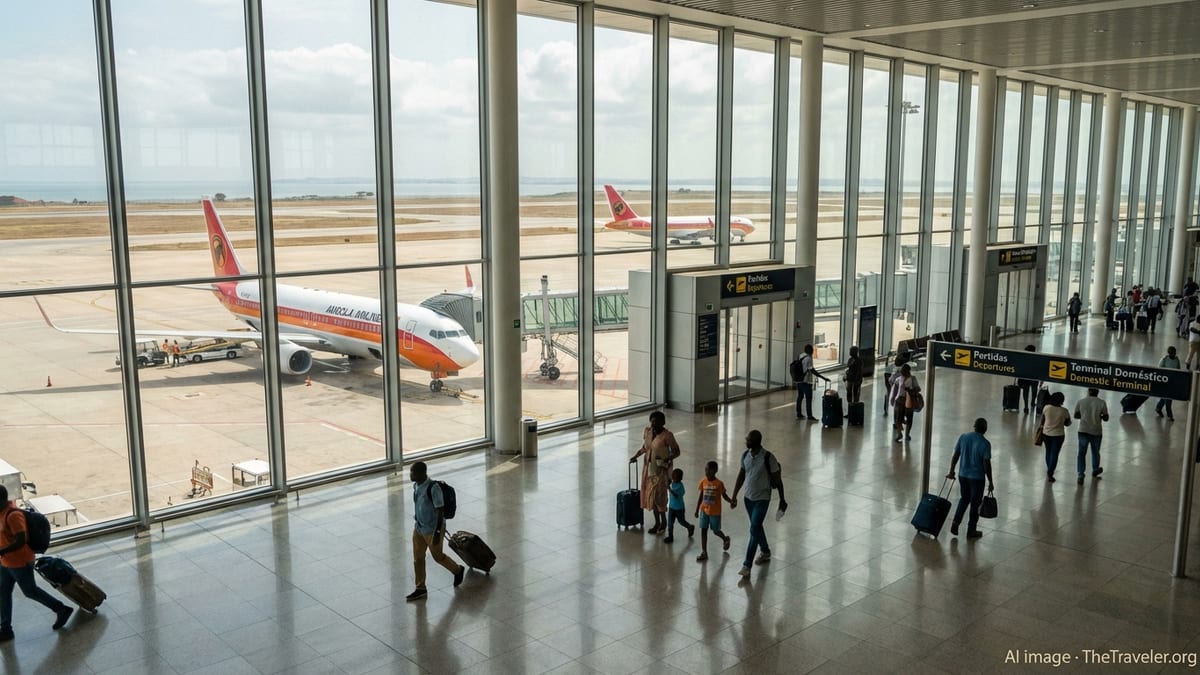
Luanda’s New Hub: A Faster Gateway Between Continents
The shift of TAAG’s international flights to Luanda’s new Dr. António Agostinho Neto International Airport in October 2025 is more than an operational move. For passengers, it is the foundation of a modern hub designed around faster connections, better facilities and a more predictable experience on multi-leg journeys. All long-haul and key regional routes, including services to Lisbon, Porto, São Paulo, Johannesburg, Cape Town, Lagos, Windhoek, São Tomé, Maputo, Nairobi and Havana, are now centralized at the new airport, simplifying how travelers move through Angola.
The new hub is built to handle growing transfer traffic, with expanded check-in areas, upgraded baggage systems and more generous runway capacity than the old Luanda airport. For connecting passengers, this means fewer ground delays, shorter taxi times and a more streamlined path between flights. The centralization of operations also makes it easier for TAAG to coordinate schedules, allowing for tighter connection windows between regional African flights and long-haul departures to Europe and Brazil.
There is a window of opportunity that early adopters are already exploiting. While the airport ramps up and traffic volumes are still catching up to its design capacity, transfer passengers often enjoy relatively uncrowded gates, shorter queues at security and immigration and a smoother overall transit compared with more congested African or European hubs. As TAAG’s expansion gathers pace and new partners arrive at the airport, that breathing space is likely to shrink.
Codeshare With South African Airways: One Ticket, Two Networks
One of the most powerful changes in TAAG’s network is not a single new route but a partnership. In December 2025, TAAG and South African Airways launched a reciprocal codeshare agreement, linking their networks through Luanda, Johannesburg and Cape Town. This effectively turns three Southern African cities into interchangeable connection points for travelers, broadening the map without forcing passengers to piece together separate tickets.
Under the arrangement, South African Airways places its code on TAAG-operated flights from Johannesburg and Cape Town to Luanda, and onward from Luanda to Lisbon and São Paulo. In turn, TAAG gains access to SAA-operated services from Johannesburg to key regional destinations such as Durban, Gqeberha, Harare, Lusaka and Port Elizabeth. For travelers, the practical impact is significant: more city pairs can now be booked on a single ticket, in local currency, with integrated check-in and through-checked baggage.
For leisure and business passengers moving between Southern Africa and Europe or Brazil, that integration translates into less risk and more certainty. Instead of juggling multiple reservations, dealing with separate customer service teams or worrying about misaligned schedules, itineraries can now be structured as one continuous journey. If a first flight is delayed, the through-ticket and shared systems make it easier to be reprotected on later services. Checked bags are tagged to the final destination, reducing the likelihood of needing to re-clear and re-check luggage mid-journey.
This codeshare is particularly valuable for travelers departing secondary cities in South Africa or neighboring countries. A passenger from Durban or Lusaka can now combine a domestic or regional leg on South African Airways with a TAAG flight from Johannesburg to Luanda and onward to Lisbon or São Paulo, all within one booking. That creates fresh alternatives to established hubs such as Johannesburg for Europe or São Paulo for Africa, often with competitive pricing and shorter overall journey times.
New African Links: Nairobi, Lagos and a Stronger Intra-Continental Web
TAAG’s investment in new routes across Africa is reshaping how travelers can move within the continent. A key example is the planned Luanda–Nairobi service, set to launch in September 2025 with three weekly flights. Nairobi is one of East Africa’s most important aviation gateways, connecting traffic from across the region to Europe, the Middle East and Asia. By linking Luanda directly to Nairobi, TAAG is stitching together Southern and Eastern Africa in a way that reduces reliance on distant hubs.
The Nairobi route complements existing services to cities such as Maputo, Lagos, Windhoek, São Tomé, Brazzaville and Kinshasa, building a dense regional network centered on Luanda. For travelers, this means more options to construct multi-stop itineraries within Africa without flying through Europe or the Gulf. A business traveler can, for instance, combine Angola and Kenya on a single trip, or a leisure traveler can pair a safari with a coastal or cultural stay in Angola or its neighbors, using TAAG as the backbone of the journey.
There are hidden advantages in terms of scheduling and competition as well. Emerging routes often debut with attractive introductory fares and more flexible inventory as airlines work to stimulate demand. On relatively new or recently upgraded services, load factors can be lower in the early months, improving the chances of securing window or aisle seats, extra legroom options or last-minute redemptions with partner loyalty programs. For travelers willing to experiment with a less familiar carrier, these early stages of a route’s development can offer both comfort and value.
Strategically, TAAG’s growing African web supports its ambition to act as a pan-continental connector rather than a purely national airline. As more routes are added or increased in frequency, the network benefits compound for passengers. Each new link provides additional opportunities for smooth same-day connections, particularly when schedules are optimized to feed into long-haul banks at Luanda’s new hub.
European and Brazilian Gateways: Luanda as a Smart Connection Point
On the intercontinental front, TAAG’s focus remains sharply set on Europe and Brazil, markets with long-standing economic and cultural ties to Angola. The airline operates double daily flights to Lisbon and seasonal services to Porto, positioning Portugal as a primary entry point into Europe. On the South American side, São Paulo remains the dominant gateway, with TAAG flights channeling traffic between Brazil and multiple African destinations via Luanda.
What has changed is how easy it has become for travelers from third countries to use Luanda as a smart connection point. Through the new codeshare with South African Airways and the consolidation of long-haul operations at the new airport, passengers from cities like Johannesburg, Cape Town, Durban or Lusaka have additional one-stop options to reach Portugal or Brazil. Rather than routing through more congested European or Gulf hubs, they can connect via Luanda on tightly timed itineraries that are designed to work as a single journey.
For price-sensitive travelers and those searching for alternatives to mainstream carriers, this opening is especially attractive. Emerging hubs often feature competitive fares on long-haul sectors, and TAAG’s route mix between Angola, Portugal and Brazil creates opportunities for triangulated itineraries that can undercut traditional pricing. For example, a traveler flying between South Africa and Brazil can now consider a Johannesburg–Luanda–São Paulo routing alongside more established options, sometimes discovering lower fares or better timings.
There are also practical comfort considerations. Mid-sized hubs like Luanda’s new airport often mean shorter walking distances, faster security checks and less crowded lounges compared with global mega-hubs. For passengers connecting between overnight long-haul flights and shorter regional legs, those differences can have an outsized impact on how rested they feel on arrival, particularly on complex journeys involving multiple time zones.
Fleet Upgrades and the Rise of the Airbus A220
Behind the network changes sits a significant fleet modernization program that directly shapes the passenger experience. TAAG is introducing Airbus A220-300 aircraft on an expanding list of regional and medium-haul routes, including services from Luanda to Cape Town, Lagos and Maputo. These aircraft, which began appearing more widely in the schedule from 2025, are configured with a two-class cabin and around 137 seats, giving them a distinctly different feel from older-generation jets on comparable distances.
The A220 is designed for efficiency, lower noise and improved passenger comfort, with wider seats in many configurations, larger windows and a noticeably quieter cabin. For travelers, that translates into a more modern onboard environment on routes that were historically served by aging narrowbodies. On sectors of three to five hours, including Luanda–Cape Town or Luanda–Lagos, the difference in cabin noise levels, air quality and perceived space can be particularly marked.
Fleet renewal also sets the stage for longer-range network ambitions. TAAG has begun acquiring Boeing 787 aircraft to replace older 777-200ERs, a move linked not only to fuel efficiency and operating costs but also to potential future routes such as Luanda–Houston. While the timeline for non-stop services to the United States depends on regulatory steps, including Angola achieving a Category 1 safety rating from US authorities, the presence of new long-haul aircraft underscores the airline’s intention to compete on comfort as well as connectivity.
For passengers booking now on routes already operated by the A220 or newer widebodies, there is a near-term advantage: the chance to secure seats on the latest aircraft types while average loads and awareness are still growing. On many airlines, the most popular new aircraft quickly become heavily booked as word spreads. Early adopters often enjoy a period where superior hardware is paired with more availability and occasionally keener promotional pricing.
Digital Tools, Through-Ticketing and Smoother Journeys
TAAG’s network expansion has been accompanied by investment in digital tools aimed at smoothing the passenger journey from booking to boarding. The launch of the FlyTAAG mobile application in late 2025 gives travelers a single interface to search flights, manage bookings, access boarding passes and tap into ancillary services such as seat selection. For passengers navigating multi-leg itineraries across a growing route map, these digital layers reduce friction at key points in the trip.
The integration of TAAG’s systems with those of South African Airways within the codeshare framework amplifies these benefits. Through-ticketing and coordinated check-in mean fewer handoffs between airlines and a lower probability of misaligned information on flight changes, gate assignments or baggage status. Travelers can expect more consistent handling if disruptions occur, reducing the need to negotiate separately with multiple carriers.
As these tools mature, early users often find that response times at call centers and airport desks are shorter than they will be once traffic reaches full scale. Passengers booking into this evolving ecosystem in 2025 and 2026 are likely to experience a sweet spot in which the technology is already in place but the volume of users is still relatively modest, resulting in faster processing and more personalized service when issues arise.
For frequent flyers who value predictability and control, the combination of a fresh digital platform, centralized hub operations and coordinated partnerships can be especially compelling. It allows for more reliable self-management of trips, from same-day schedule changes to last-minute seat moves, particularly on journeys that span several countries.
Why Acting Now Matters for Savvy Travelers
TAAG’s evolving route network, new aircraft and partnerships are creating a dynamic window in which the airline can often offer more generous fares, better availability and a higher comfort-to-cost ratio than many entrenched competitors. As the codeshare with South African Airways beds in, the new Luanda hub gains momentum and additional A220s and 787s join the fleet, demand is expected to grow, with pricing and capacity gradually adjusting to match a more mature market.
For travelers willing to plan ahead, there are clear advantages to booking sooner rather than later. Introductory and ramp-up fares on new or expanded routes can offer substantial savings compared with prices once a route has established steady demand. Early bookings also improve the odds of securing preferred cabins, specific seat types and ideal connection times through Luanda or Johannesburg on itineraries that link regional African cities with Europe or Brazil.
There is also an experiential benefit to exploring a network while it is still in a growth phase. Airports, lounges and cabins tend to feel less crowded, staff often have more time to assist, and airlines are especially focused on winning repeat customers. Feedback from early users can shape schedules, onboard products and digital features, meaning that travelers who book now are not only taking advantage of favorable conditions but also helping to define what the next phase of TAAG’s expansion will look like.
As Angola’s national carrier continues to reposition itself as a connector between Africa, Europe and the Americas, the current moment stands out as a rare alignment of new infrastructure, emerging routes and competitive pricing. For passengers looking to discover fresh routings, avoid traditional bottlenecks and experience next-generation aircraft on key African and transatlantic corridors, the hidden perks of TAAG’s new network are already within reach for those ready to book.