

More news on this day
Across major cities and resort towns, a growing number of hotels are being conceived not around room counts or meeting space but around the kitchens, bars and food markets that anchor them, as developers respond to travelers who are choosing where to sleep based first on what and where they will eat.
Get the latest news straight to your inbox!
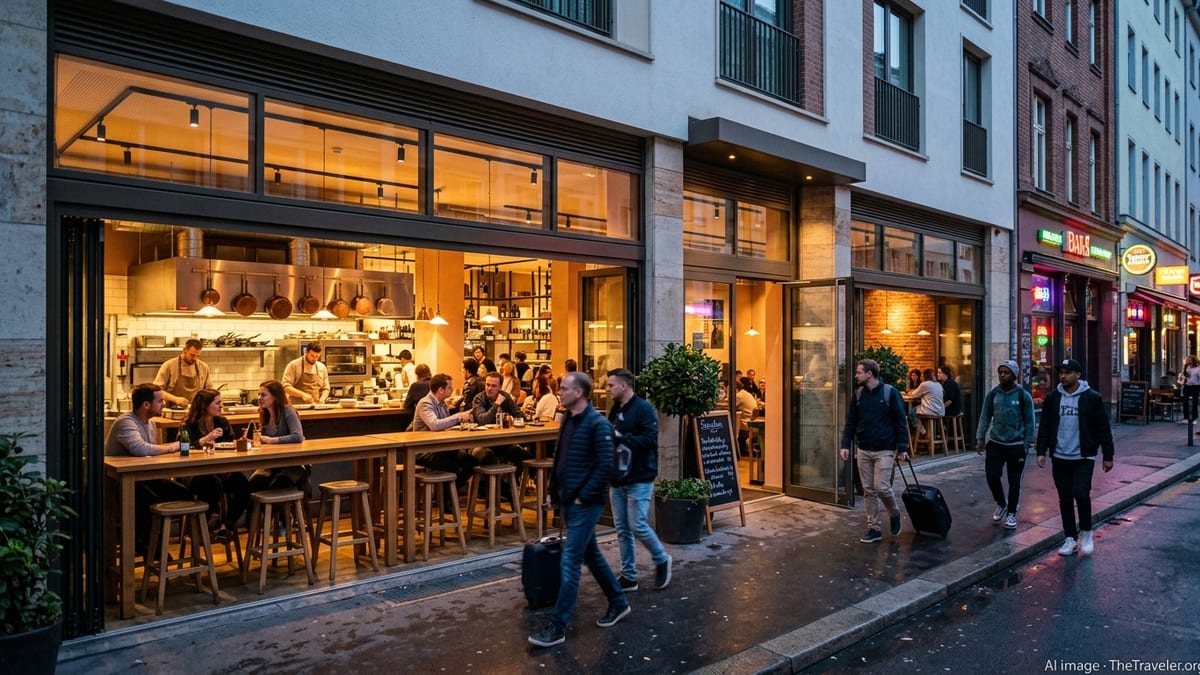
Restaurants Move From Hotel Perk to Primary Draw
Industry reports and recent openings indicate that food and beverage are no longer secondary amenities for many new hotels. Instead, signature restaurants, chef partnerships and market-style dining halls are increasingly shaping the entire concept of a property. Analysts note that travelers, especially younger guests, are willing to pay more for memorable meals and locally rooted experiences, and hotel investors are recalibrating their plans accordingly.
Major urban projects illustrate how dining now sets the tone. In Las Vegas, large-scale resorts that opened or expanded in the past two years have promoted multi-venue restaurant lineups as core to their identity, highlighting steakhouse awards and celebrity chef concepts alongside room categories and pool decks. Similar strategies are visible in New York, London and Dubai, where hotel press materials devote extensive space to tasting menus, rooftop bars and food halls aimed at both guests and residents.
This shift is reinforced by destination marketing campaigns that spotlight hotel restaurants as stand-alone reasons to visit a city. Culinary media kits from tourism boards in North America and Europe now routinely group notable hotel bars and dining rooms alongside independent hotspots, signaling that the line between traditional street-side restaurants and hotel-based venues has largely dissolved in the eyes of food-focused travelers.
New Builds Designed Around Food Halls and Hybrid Spaces
Beyond single flagship restaurants, some of the most prominent recent hotel developments are organized around food halls and multi-use culinary spaces. Published coverage of resort and casino projects in the United States shows lobbies opening directly into promenades of casual counters, specialty coffee bars and dessert stands, arranged to function as public gathering places throughout the day. Guest rooms and meeting spaces are then layered above or behind these hubs.
Developers describe these venues as anchor attractions intended to pull in locals as well as visitors. The aim is to create a steady flow of diners who keep public areas active, rather than relying solely on in-house guests. Design details such as open kitchens, communal seating and visible cocktail stations are used to blur the boundary between lobby and restaurant, turning what was once a transitory zone into a primary social stage.
Global hotel groups are also launching lifestyle brands where the main public space combines café, bar, co-working lounge and grab-and-go market in a single concept. Brand descriptions emphasize all-day food and beverage service as the heart of the guest experience, positioning these hotels as neighborhood hangouts with rooms upstairs. This format is being rolled out in markets from Memphis to Tokyo and Shanghai, suggesting that the food-first blueprint is being standardized across continents.
Historic and Boutique Properties Lean Into Culinary Heritage
The rush to build hotels around food is not limited to new glass towers. Historic hotels and small boutique properties are rebranding themselves around culinary heritage and destination dining as they compete for attention in a crowded marketplace. A 2025 list from an international historic hotels organization, for example, highlighted properties chosen specifically for their signature recipes, long-running dining rooms and links between local history and hotel kitchens.
In Europe and the Caribbean, beachfront inns and heritage estates are promoting on-site restaurants and beach clubs as central to their identity, sometimes with only a handful of rooms attached. Coverage from travel publications notes that these properties market hyper-local menus, from ocean-caught fish to regionally specific pastries, as part of a broader narrative of place. In some cases, the restaurant effectively becomes the brand, with the hotel component framed as an extension of the dining experience.
Urban boutique hotels in cities such as Boston and San Francisco are also leaning into food to differentiate themselves. Tourism and dining guides for these destinations now refer to hotel bars and rooftop restaurants as culinary landmarks, citing collaborations with well-known chefs and cocktail programs that attract residents as much as overnight guests. For owners, this strategy can boost both room rates and non-room revenue while deepening ties to local neighborhoods.
From Chef-Led Restaurants to Chef-Led Hotels
Another strand of the trend involves restaurants and chefs driving hotel projects from the outset. Trade publications covering hospitality development point to cases where a successful city restaurant becomes the inspiration for an adjacent hotel or a full-scale resort, with the restaurant brand carrying over into the property’s name, design language and marketing. In these projects, the lodging component is often framed as a way for diners to extend a meal into an overnight stay.
Recent examples include boutique hotels in North America and Europe that center their identity on a single acclaimed restaurant, sometimes with tasting-menu experiences that must be booked well in advance. The restaurants may operate semi-independently, attracting non-guest patrons who secure reservations months ahead, but the hotel benefits from constant visibility and a reputation for culinary excellence that spills over into room demand.
Hospitality consultancies note that this chef-led model can offer financial advantages for both sides. For chefs, association with a hotel can provide access to capital, built-in clientele and event space. For hotel owners, a high-profile restaurant can act as a marketing engine, draw affluent travelers and create differentiated experiences that command premium pricing across the property, from suites to private dining rooms.
Challenges Behind the Food-First Hotel Strategy
Despite its momentum, the strategy of building hotels around food comes with challenges. Operating complex restaurant portfolios is labor intensive, and many markets are still navigating staffing shortages and rising wage costs. Industry reports also note that food and beverage margins can be thinner than room revenues, making careful menu engineering and cost control essential if culinary concepts are to support, rather than strain, a hotel’s finances.
There is also the risk of concept fatigue. As more properties add rooftop bars, tasting menus and Instagram-ready dessert programs, it becomes harder to stand out. Analysts caution that the most successful food-centric hotels are those that deliver a strong sense of place, drawing on local ingredients, neighborhoods and cultural narratives, rather than relying solely on imported celebrity names or generic design tropes.
Even with these hurdles, development pipelines suggest that food will remain a central driver of hotel design over the next several years. Projects scheduled to open through 2027 prominently feature open kitchens, chef’s counters and integrated markets in their plans. For travelers, this means that choosing a hotel increasingly involves weighing not just bed type and location, but whether the lobby smells like fresh bread, craft coffee or charcoal from a live-fire grill.