

More news on this day
As premium economy cabins expand across long haul fleets, one technical measurement has become the decisive factor separating a genuine upgrade from a marginal tweak: seat pitch, the distance from one point on a seat to the same point on the seat in front, and the clearest proxy for real legroom.
Get the latest news straight to your inbox!
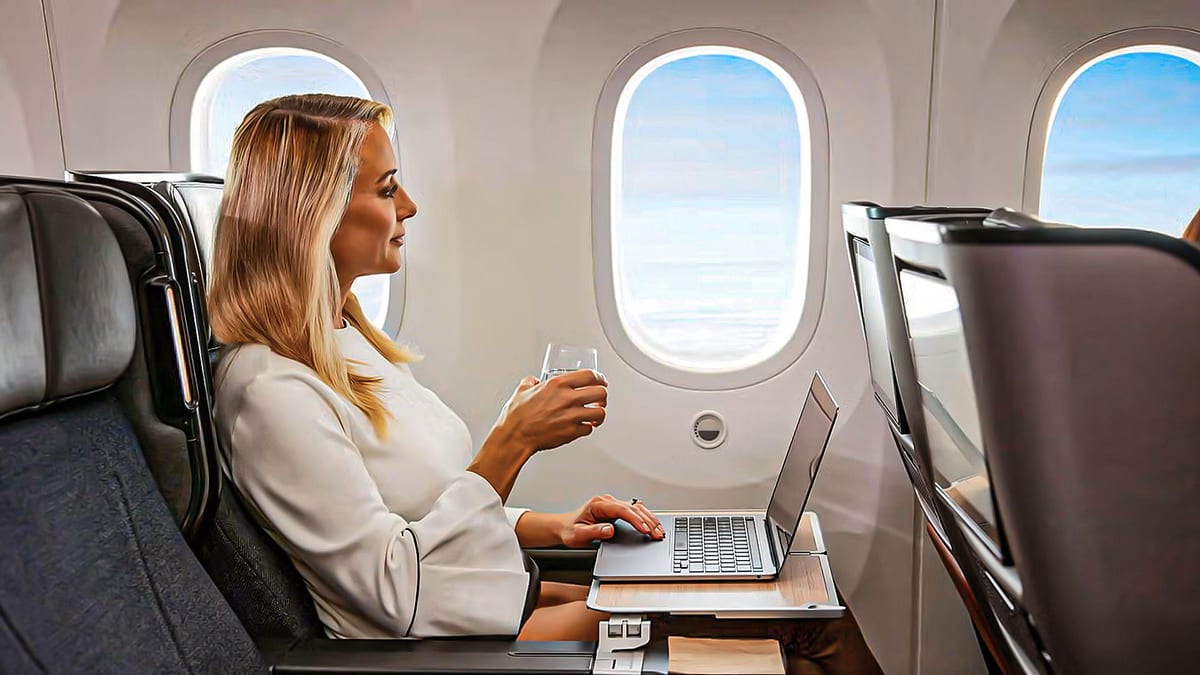
Image by Simple Flying
Why Seat Pitch Has Become the Real Premium Divider
Seat pitch has long been used by the aviation industry as a basic yardstick for comfort, but in 2026 it has effectively become the one metric that defines whether a premium economy cabin feels meaningfully different from standard economy. Global legroom surveys suggest average economy pitch now sits around 31 inches on many carriers, compared with 34 to 36 inches or more in the 1970s, tightening space even as passenger numbers and flight lengths have grown.
This steady reduction in economy legroom has created a gap that premium economy is designed to fill. Industry trackers and airline marketing materials consistently highlight pitch first when describing premium cabins, ahead of softer selling points such as upgraded meals or amenities. Analysts point out that seat pitch and width remain the most objective measures of comfort at a time when other aspects of the experience, from service levels to entertainment, are harder to compare across airlines.
As more carriers refine their cabin layouts, pitch is increasingly used to position products relative to rivals. A difference of four to six inches between economy and premium may not look dramatic on paper, but cabin design specialists note that those extra inches translate directly into knee clearance, the ability to shift position and the likelihood of being able to sleep on overnight sectors.
The growing focus on pitch also reflects simple economics. Premium cabins, including premium economy, account for a disproportionate share of airline revenue relative to their seat count. That has encouraged carriers to add extra rows of economy and then use more generous pitch numbers to justify higher fares for a smaller number of premium economy seats in the same aircraft footprint.
How Airlines Use Pitch to Differentiate Their Premium Cabins
While pitch varies across fleets and even within airlines, recent product launches show how carriers are using this single measurement to distinguish their premium economy offerings. Emirates, for example, has promoted a premium economy seat with pitch of up to 40 inches, significantly above typical economy layouts and positioned as a step between its dense main cabin and full lie flat business class.
In Asia, several long haul operators have leaned on generous pitch figures to attract higher paying leisure travelers. Air Premia, a South Korean hybrid carrier, brands its cabins around the number of inches between rows, with its premium economy product marketed at 42 inches and standard economy at 35 inches. That branding approach effectively turns pitch into the headline promise, rather than a technical detail buried in seat maps.
Other airlines highlight premium economy pitch in contrast to extra legroom products in regular economy. Delta, for instance, sells both Comfort Plus, a main cabin seat with roughly mid 30 inch pitch, and Premium Select, a separate premium economy cabin with greater space, leg rests and enhanced recline. Publicly available fleet data shows that positioning allows the airline to charge multiple price steps for incremental increases in pitch.
Independent rankings and awards have reinforced the focus on legroom. Specialist aviation sites and consumer publications tracking premium cabins commonly list pitch alongside width for each airline, and recent roundups of the longest premium economy legroom in 2026 single out carriers offering pitches in the high 30s to mid 40s on selected aircraft. Those rankings, widely circulated via travel media, encourage passengers to compare cabins by a single figure before they consider softer elements of the experience.
From Numbers to Night’s Sleep: What Pitch Means in Practice
For travelers, the effect of pitch is most obvious on overnight and ultra long haul routes. Cabin ergonomics research collated in recent comfort studies indicates that once pitch drops below roughly 32 inches, taller passengers struggle to adopt varied sitting positions, increasing the risk of discomfort, poor sleep and stiffness. By contrast, premium economy pitches of 38 to 42 inches allow many to extend their legs more fully and recline without pressing directly into the person behind.
Passenger accounts gathered in travel forums and tall traveler communities highlight similar thresholds. At pitches around 31 to 32 inches, those over 6 feet 2 inches often describe knees pressing into the seat ahead, even before recline. At 38 inches and above, many report being able to sleep for extended periods, suggesting that a relatively small numerical increase can have an outsized impact on perceived comfort.
Pitch also determines how usable other premium features really are. A deeper recline, leg rest or foot bar can be counterproductive if there is not enough linear space between rows to accommodate the change in posture. Design documents for newer premium cabins, such as KLM’s Premium Comfort and various Asian and Middle Eastern products, show that airlines are pairing modest increases in recline with carefully calibrated pitch so passengers can tilt back without severely encroaching on the row behind.
Beyond sleep, pitch affects day to day functionality on board. More space between rows makes it easier to work on a laptop without the screen being forced down when the person in front reclines, and reduces the need to stand up whenever a neighbor passes by. Although amenities such as larger entertainment screens, improved catering and priority boarding are highly visible, traveler satisfaction surveys suggest that the basic ability to sit, move and rest comfortably dominates how passengers evaluate value for money in premium economy.
The Data Behind Passenger Satisfaction and Seat Strategy
Recent airline satisfaction studies segment results by cabin, including premium economy, and show that comfort and value scores are closely aligned with physical space. Research published by a major travel analytics firm for the 2025 period notes that customers in cabins where pitch exceeds mid 30 inch levels are more likely to rate flights as good or excellent, even when service elements are similar to those in the main cabin.
Consultancy reports on global airline trends also suggest that competition in premium economy is intensifying as corporate travel policies and high spending leisure passengers trade down from business class. Airlines are responding by fine tuning seating density. Some have marginally compressed economy to free space for premium rows, while others are reconfiguring cabins entirely to insert new premium sections, often citing pitch and legroom improvements in marketing material to justify the change.
At the same time, consumer organisations in Europe and elsewhere have drawn attention to how much passengers are being asked to pay for those extra inches of space. A recent analysis from one prominent watchdog found that on some routes premium economy fares can be close to double the price of standard economy, while not all products deliver a substantial pitch increase. Those findings have reinforced advice to check aircraft type and published seat maps carefully, rather than assuming all premium economy tickets offer the same legroom.
Industry observers note that as carriers pursue revenue growth, the temptation to trim pitch, even in premium cabins, remains. Fleet reconfigurations discussed in airline and passenger forums indicate that minor reductions in pitch behind premium rows are already occurring in some markets, underlining how volatile legroom can be from one season or aircraft subtype to another.
How Travelers Can Use Pitch to Judge Real Value
For passengers faced with a choice between staying in economy, paying for an extra legroom seat or moving to premium economy, pitch provides a starting point for deciding whether the premium is justified. Travel analysts generally suggest looking for a gap of at least four to six inches between the advertised pitch in premium economy and the airline’s regular economy seats on the same aircraft to feel a clear difference.
Comparing products across airlines is more complex, but publicly available fleet tables and route specific seat maps allow travelers to identify which flights carry newer premium cabins with the most generous pitches. On some carriers, premium economy sections on widebody jets can reach 40 inches or more, while the same airline’s narrowbody aircraft offer less space, even when sold under the same branding.
Experts in cabin design stress that pitch is not the only measurement that matters. Seat width, cushioning, recline mechanics and layout all shape the experience. Yet in practice, pitch is the one figure that appears consistently in independent rankings, airline marketing and third party booking tools, making it the most practical comparator for travelers planning long haul trips.
As airlines continue to adjust configurations and introduce new premium products, this single measurement is likely to retain its status as the defining number in premium economy. For travelers weighing a higher fare against the prospect of a more restful journey, checking the pitch figure before pressing buy has never been more important.