

Germany has become one of the world’s major destinations for international migrants, skilled workers and students, with more than 20 percent of residents now born abroad or holding foreign citizenship. For prospective movers, the headline question is not simply whether Germany is welcoming on paper, but how daily life actually feels in practice for non‑Germans. This briefing examines the structural advantages and limitations foreigners typically encounter when living in Germany, to support realistic relocation decisions.
Scale and Reality of Germany’s Foreign-Born Population
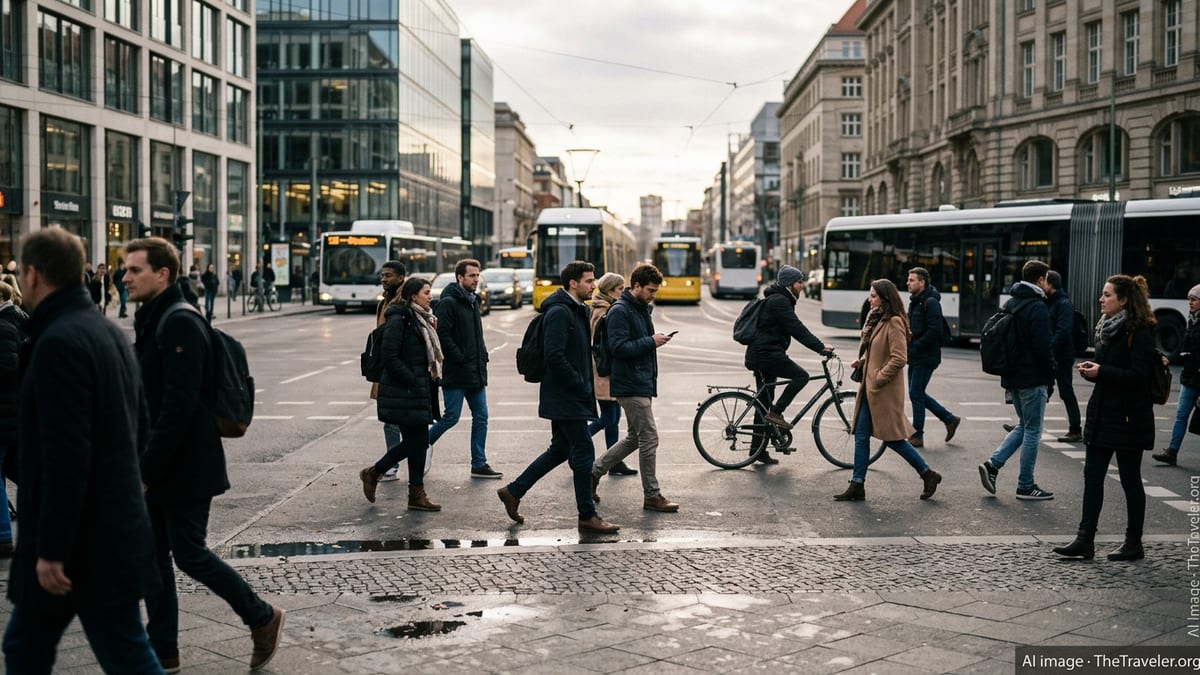
Germany is today one of the most internationally diverse countries in Europe in absolute numbers. Recent demographic data indicates that roughly one in five people living in Germany is foreign-born and close to one in three has some form of migration background, including second-generation residents. This means that in larger cities foreigners are a visible and long-established part of the social fabric, not an exception.
The proportions vary strongly by region. Major metropolitan areas such as Berlin, Frankfurt, Munich and Düsseldorf typically have foreign-resident shares well above the national average, while several eastern federal states have foreign-population shares below 10 percent. For foreign residents this regional imbalance can translate into very different everyday experiences in terms of acceptance, availability of language support and the presence of international schools or communities.
The growth of the foreign population over the last decade has been driven both by EU free movement and by arrivals from outside the European Union. Non-German EU citizens constitute a significant share of foreign nationals, but there are also large communities from Turkey, Syria, Ukraine, the Western Balkans and increasingly India and other Asian countries. This diversity offers opportunities for foreign residents to find peer communities, but also contributes to complex debates around integration and social cohesion.
For individuals considering relocation, the size and diversity of the foreign population are generally positive indicators. They suggest mature administrative procedures for residence, education and labor-market participation of foreigners, and a policy environment that recognizes Germany’s status as an immigration country. However, the same dynamics also place pressure on housing, schools and public services in some urban areas, which can affect daily life for newcomers.
Integration Climate and Attitudes Toward Foreigners
Public opinion surveys over the past several years show a mixed but relatively stable picture of attitudes toward foreigners in Germany. A majority of respondents consistently agree that immigration is necessary for the labor market and demographic stability, and large segments support long-term integration of migrants who work, learn German and follow the legal framework. This pragmatic acceptance underpins many federal and state-level integration initiatives.
At the same time, there is clear regional and political polarization. Support for anti-immigration parties is significantly stronger in some eastern regions and smaller towns, where personal contact with foreign residents is often lower but media coverage of migration is high. Foreigners living in such areas report a higher incidence of verbal hostility or social exclusion compared with those in large, cosmopolitan cities. These contrasts mean that the choice of location within Germany can strongly influence subjective experience of welcome or rejection.
Institutionally, Germany has invested in integration courses, language programs and advisory centers for migrants. Federal integration courses are structured around language training combined with civic orientation modules. Municipal “welcome centers” and non-governmental organizations offer counseling on schooling, job recognition and local participation. These structures provide a systematic framework that can make integration more predictable and less dependent on informal networks compared with some other destinations.
Nonetheless, reports from foreign resident organizations and academic studies highlight recurring issues such as discrimination in the housing market, unequal treatment in nightlife or retail settings, and difficulties for people with non-German names securing job interviews despite equivalent qualifications. For many foreigners, the integration climate is therefore characterized by a combination of formal support and occasional informal barriers or prejudices that are not always visible in official policy documents.
Language Environment and Practical Use of English
For many potential movers, a central question is whether it is feasible to live in Germany long term without fluent German. Germany ranks among the top global performers for adult English proficiency, and in larger cities a high proportion of younger professionals have strong English skills. In corporate environments, especially in technology, finance and research-intensive sectors, English is often used as a working language and company documentation may be fully bilingual.
In everyday life, however, German remains dominant. Public administration, health care, schools and most small businesses primarily operate in German. While ad hoc assistance in English is increasingly common, especially in major urban centers, the expectation from authorities is that residents will manage core interactions in German or bring an interpreter. This is particularly true outside the largest cities. Foreigners who do not invest in German language learning typically encounter growing frustration over time dealing with formal procedures, letters from agencies and interactions with public services.
From a structural perspective, German language ability is also directly tied to long-term security. Legal frameworks for permanent residence and naturalization require at least intermediate German skills, commonly benchmarked at B1 or higher on the European language scale. Language ability is also a key determinant of labor-market outcomes, with research showing that improved German proficiency strongly reduces the risk of skill downgrading and underemployment among immigrants.
The realistic assessment is that it is possible to arrive in Germany with minimal German, particularly for high-demand professional roles or international academic programs, but sustainable integration depends on systematically building language skills. For many foreigners, this is both a significant time investment and one of the main “costs” of choosing Germany as a destination compared with countries where English functions as an official or dominant language.
Bureaucracy, Administrative Culture and Impact on Foreigners
Germany is widely perceived as administratively orderly, yet in practice foreigners often experience the system as rigid and paperwork-intensive. Many processes still require original documents, official translations and in-person appointments. Digital services are expanding, but implementation is uneven across federal states and municipalities, and foreign users may encounter German-only online forms and guidance.
For foreigners, this environment has specific implications. First, administrative interactions such as registration with the local municipality, address changes, vehicle registration or applying for certain benefits can be time consuming and require preparation. Without sufficient German or local support, misunderstandings are common and may delay processes. Second, rule-based consistency can be a double-edged sword. On one hand, criteria are usually clearly defined and there is limited room for arbitrary decisions at the counter. On the other hand, there is limited flexibility for individual circumstances that fall outside standard categories, which can be stressful for international families or careers that do not fit traditional patterns.
Waiting times for appointments at local registration offices or immigration authorities vary considerably by region and current demand. In high-immigration cities, appointment scarcity can create practical difficulties, for example delaying address registration, which is needed to open a bank account or sign certain contracts. Although these are not exclusively foreigner issues, they disproportionately affect newcomers who must complete multiple administrative steps in their first months.
On the positive side, once procedures are correctly followed, outcomes are generally predictable and supported by written documentation. Official letters can be dense and formal but they clearly specify legal bases and rights of appeal. For foreigners willing to adapt to this procedural culture, Germany offers a relatively high level of legal certainty in daily life. Those who strongly prefer highly flexible or informal systems may find German administrative culture particularly challenging.
Labor Market Inclusion and Workplace Realities for Foreigners
Germany’s labor market currently faces ongoing skills shortages in many technical, health care and engineering occupations. This structural demand has made the country increasingly proactive in attracting foreign professionals, with employers frequently recruiting internationally and providing on-the-job language support. For highly skilled foreigners in sought-after fields, employment prospects are comparatively strong, and career progression can be stable once integration into a firm is achieved.
Despite these opportunities, evidence indicates that foreigners often enter the German labor market at lower positions or with lower pay than native workers with similar formal qualifications. This gap is influenced by several factors: incomplete recognition of foreign degrees or experience, limited German language proficiency, lack of local references and employer caution about unfamiliar educational systems. Over time, many migrants close part of this gap through skill upgrades, additional German qualifications or firm-specific progression, but the initial phase can be marked by underemployment or skill downgrading.
Discrimination in hiring and career progression remains an issue for some groups. Experimental studies using fictitious applications have shown that applicants with non-German names receive fewer interview invitations than equivalent German-named candidates, particularly in smaller firms or customer-facing roles. Foreign women and people wearing visible religious symbols may face an added layer of bias. While anti-discrimination law exists and is enforceable, actual litigation is relatively rare due to evidentiary challenges and the desire of many foreigners to avoid conflict with prospective employers.
Workplace integration experiences are mixed. In many international companies and research institutions, teams are used to multinational colleagues and working languages are flexible. In more traditional small and medium-sized enterprises, foreign employees may find that socializing remains mainly in German and that informal networks play an important role in career advancement. Overall, Germany offers substantial long-term employment stability and social protection, but foreign workers should anticipate an adaptation period in which professional status, communication style and expectations must be aligned with local norms.
Social Integration, Daily Life and Belonging
Beyond formal structures, the everyday experience of living as a foreigner in Germany depends heavily on social integration and the possibility of building a sense of belonging. Many foreign residents report that German colleagues and neighbors are polite and reliable, but that building deeper friendships takes time. Social circles can be relatively stable and long-standing, making spontaneous inclusion of newcomers less common than in some more mobile societies.
At the same time, the large number of people with migration backgrounds means there are diverse community organizations, cultural associations and language meetups in most big cities. International schools, sports clubs and parent networks can act as important integration channels for foreign families. For singles and young professionals, coworking spaces, university networks and international professional associations often provide entry points into local social life.
Experiences of racism or xenophobia vary significantly by appearance, religion and region. People who are visibly non-European or who speak German with a strong foreign accent are more likely to report occasional hostile comments or unfair treatment, particularly in nightlife, housing search or random public encounters. At the same time, there is strong civil-society mobilization against extremism and discrimination, and many municipalities actively promote diversity and anti-racism initiatives.
For long-term residents, a key turning point in perceived belonging is often achieving higher levels of German proficiency and, where desired, citizenship. Naturalization reforms in recent years have shortened standard residence periods required for citizenship and expanded access to dual nationality, which can reinforce the message that foreigners who commit to the country are valued long-term members of society. Nevertheless, the emotional transition from “guest” to “neighbor” can be slower than formal status changes, and expectations about cultural adaptation remain relatively high compared with some other immigration countries.
The Takeaway
Living in Germany as a foreigner offers a complex mixture of structural advantages and practical challenges. On the positive side, the country has a large and diverse foreign-born population, relatively strong public support for necessary labor migration, and formal integration instruments that provide clear pathways for learning the language, entering the labor market and ultimately securing long-term residence or citizenship. In many sectors there are real professional opportunities for qualified foreigners, and the rule-based administrative environment delivers legal certainty once its logic is understood.
On the negative side, foreigners confront a demanding language environment, a bureaucracy that can feel inflexible, and an integration climate that varies sharply by region and personal background. Initial labor-market downgrading, discrimination in specific contexts and slower social inclusion are recurring themes in research and in many personal accounts. For those who relocate without a strategy for German language acquisition and without realistic expectations about adjustment time, disappointment is a significant risk.
From a relocation-planning perspective, Germany is most suitable for foreigners who value stability, long-term security and clear rules, and who are willing to invest in language learning and structured integration over several years. Decision-makers should assess not only job offers and headline economic indicators, but also the intended region within Germany, the availability of support networks and the family’s capacity to navigate a strongly German-speaking institutional landscape. For those whose preferences align with these conditions, Germany can offer a solid and predictable environment for building a long-term life.
FAQ
Q1. Can a foreigner live in Germany long term speaking only English?
It is possible to function professionally in some sectors and cities using primarily English, but long-term living without German is impractical. Administrative procedures, health care, schooling and many daily interactions are conducted mainly in German, and intermediate German is usually required for permanent residence or citizenship.
Q2. Is Germany generally welcoming toward foreigners?
Overall public attitudes are mixed but broadly pragmatic. Large cities with long immigration histories tend to be more welcoming and accustomed to diversity, while some smaller towns and eastern regions show more skepticism. Foreigners committed to learning German and integrating usually find acceptance, although isolated incidents of hostility still occur.
Q3. How difficult is it for foreigners to deal with German bureaucracy?
Foreigners often find German bureaucracy demanding due to extensive paperwork, formal language and the need for in-person appointments. However, rules are clearly defined and outcomes are predictable once requirements are understood. Using professional relocation support or local advisory centers can substantially reduce friction.
Q4. Do foreigners face discrimination in the German labor market?
Studies suggest that foreigners, especially those with non-German names or visible minority backgrounds, may receive fewer interview invitations and often start in lower-level roles than their qualifications would suggest. Over time, language improvement, local experience and internal promotions typically narrow these gaps, but initial disadvantages are common.
Q5. Are there strong foreign communities and networks in German cities?
Yes. Major cities host sizable communities from many countries, along with international schools, cultural associations and professional networks. These communities can provide practical support, language-specific services and social connections, particularly in the early years of relocation.
Q6. How important is the choice of region within Germany for foreigners?
The choice of region is critical. Large metropolitan areas usually offer more international employers, English-friendly services and diverse communities, but also higher competition for housing and services. Smaller towns may provide lower living costs and a calmer environment, yet can be less accustomed to foreigners and offer fewer language or integration resources.
Q7. Do foreign qualifications transfer well to Germany?
Many foreign degrees are recognized, especially from EU and major international institutions, but the process can be complex and time consuming. In regulated professions such as medicine, teaching or engineering, formal recognition is essential, and temporary underemployment while navigating recognition procedures is common among newcomers.
Q8. How long does it typically take for a foreigner to feel integrated in Germany?
Integration timelines vary, but a realistic expectation is several years. The first one to two years are often focused on administrative tasks and language learning, while deeper professional and social integration usually develops over three to five years, depending on individual effort, region and existing networks.
Q9. Is Germany a good choice for foreign families with children?
For many families, Germany offers advantages such as structured schooling and relative social stability, but integration requires effort. Children often adapt quickly, especially when starting school at younger ages, while parents need to manage language learning, administrative steps and building new social networks.
Q10. What profiles of foreigners tend to benefit most from relocating to Germany?
Foreigners with in-demand skills, a willingness to learn German and an interest in long-term stability typically benefit most. Those looking for short-term, English-only experiences or highly fluid, informal environments may find Germany less aligned with their expectations.