

I had always pictured Coronado as a sun drenched, endlessly warm Pacific postcard where every day felt like a hotel commercial. After visiting several times in different seasons over the last few years, I can say that image is only half true. Coronado is beautiful, yes, but it changes more than I expected between winter, spring, summer, and fall. Some trips felt close to perfect.
Others were a tug of war between crowds, chilly breezes, and hotel rates that made me question why I crossed the bridge at all. This is my honest, first hand take on what Coronado is really like in different seasons, and what I wish I had known before I went.
My First Impressions: Postcard Perfect, With Fine Print
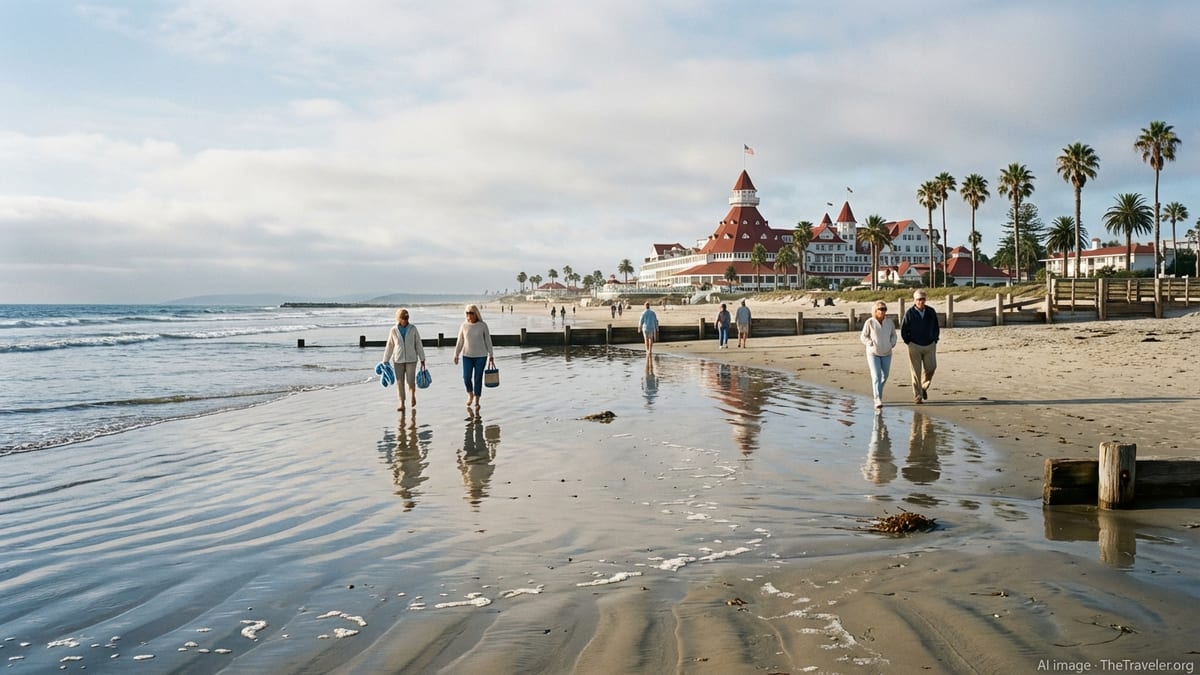
Crossing the Coronado Bridge the first time, with the San Diego skyline on one side and the sweep of the Pacific on the other, I understood why people romanticize this place. The water looked impossibly calm, the red turreted roof of the Hotel del Coronado glowed in the sun, and the whole island felt like it had been designed for vacation mood boards. I arrived expecting some version of summer all year, easy parking, and a sleepy small town with a beach problem. I was wrong on at least two of those.
On that first trip, in early July, the light was soft, the sand sparkled with that famous mica sheen, and the beach really did feel like one of the best in the country. But by mid morning the reality set in. Families with tents and coolers claimed huge swaths of sand, the line for coffee on Orange Avenue snaked out the door, and parking near the beach turned into a stressful game of circling and praying. Coronado may look slow and peaceful in photos, but in peak season it hums with people and logistics.
Later visits in quieter months gave me a more nuanced view. Coronado does have that relaxed, timeless charm people describe, but it also has sharp edges: premium prices, limited parking, and marine layer mornings that can turn an expected beach day into a sweatshirt walk. My expectations of a flawless, always perfect island softened into appreciation for a place that is genuinely lovely but requires smart timing and a bit of compromise.
Summer in Coronado: Golden Afternoons, Crowded Mornings
My summer stays in Coronado were the closest to the fantasy, and also the most frustrating. On paper, it is ideal. Average highs hover in the mid 70s, the Pacific is at its warmest by local standards, and the town layers on seasonal events. I wandered through Spreckels Park with live music in the evenings, watched Fourth of July festivities spill across town, and saw how summer transforms Coronado into a full blown beach resort.
The downside is that everyone else gets the same memo. From roughly late May through early September, especially around July and August, Coronado feels busy in a way that never shows up in brochures. By 9 or 10 in the morning on weekends, beach parking near the Hotel del Coronado and the central lifeguard towers was either full or about to be. I spent far more time than I care to admit inching through residential streets hoping someone would pull out. Street parking is free but time limited in many areas, so I constantly watched the clock instead of the waves.
The beach itself in summer is a mix of delightful and mildly chaotic. The sand is soft, clean, and wide, and in the afternoon the light turns everything honey colored. At the same time, I had to accept a wall of beach tents and bluetooth speakers, especially on holiday weekends. It is not a wild party beach, but it is not quiet either. The water conditions were generally friendly, with smaller waves and plenty of people wading, but the Pacific here is still cooler than many visitors expect. More than once I watched people in brand new swimsuits take one dip, gasp at the temperature, and retreat to their towels.
Summer pricing is another reality check. Hotel rates, especially near or at the big beachfront properties, spike sharply. I looked up prices for a last minute July weekend and saw numbers that made downtown San Diego look like the budget option. For me, summer in Coronado is at its best when I treat it as a carefully planned stay, not a spontaneous getaway. Booking early, coming midweek instead of on weekends, and renting bikes or a golf cart instead of relying on a parking miracle turned what could have been a stressful trip into something closer to the golden image I had in my head.
Spring and Fall: The Sweet Spot With Trade Offs
My favorite visits to Coronado landed in what most people call the shoulder seasons. In March, April, and again in late September and October, the island loosened its shoulders a bit. The temperatures were still mild and comfortable, the palm trees swayed the same way, but the pace slowed down. I could actually hear waves without competing with five conversations and three competing playlists.
In spring, I found that mornings could swing cool and gray thanks to the marine layer, especially in May. I packed for warm beaches and ended up glad I had a light jacket. Some days the gray burned off by late morning and turned into beautifully clear afternoons. Other days it lingered, and the beach felt more like a place for long walks than long swims. I still enjoyed those days, but the experience did not match my mental image of endless blue sky. If your heart is set on guaranteed sunbathing weather, spring in Coronado is a bit of a gamble.
Fall was a different story and, for me, the sweet spot. After Labor Day, the crowds thinned noticeably but the water and air stayed pleasantly warm. In late September and early October, I could arrive at the beach late morning and still find parking within a reasonable walk, which felt almost miraculous after my summer battles. Restaurant waits were shorter, and strolling down Orange Avenue felt relaxed instead of congested. I paid less for lodging than I did in high summer, though Coronado never truly becomes cheap.
The trade off in the shoulder seasons is unpredictability. Events and concerts are fewer, some seasonal offerings quiet down, and the vibe tilts less toward “resort party” and more toward “low key coastal town.” I liked that balance, but it might feel too sleepy if you are expecting a nonstop festival atmosphere. For me, spring and fall are when Coronado feels most livable and least like a performance staged for tourists, but you have to be comfortable with layers, flexible plans, and the possibility that your planned beach day turns into a long walk in a sweatshirt.
Winter in Coronado: Mild, Empty, and Sometimes Too Quiet
Coronado in winter surprised me most. Coming from colder parts of the country, the idea of walking a beach in January without freezing felt luxurious. When I visited in winter, daytime highs hovered in the 60s, and there were long stretches of bright, clear weather that made it easy to forget what month it was. The beach was peaceful, the sunsets were gentle and pastel, and I could park close to the sand without a single loop.
But winter also exposed the limits of Coronado as a beach getaway. The Pacific was cold enough that I abandoned any fantasy of casual swimming. I saw surfers in full wetsuits and the occasional brave person darting in and out of the waves, but for most visitors the water was more of a backdrop than an actual playground. The breeze off the ocean could feel chilly fast, especially in the late afternoon. I spent more time in jeans and a light sweater than in shorts, which was fine for me but would disappoint anyone who thinks “California winter” means “high summer.”
On the plus side, winter had a calmer, almost local feeling. Side streets were less crowded, and it was easier to chat with servers, baristas, and shop owners who had time to talk. I walked through town without constantly stepping off the sidewalk to make room for crowds. Iconic spots like the Hotel del Coronado still put on a show, especially around the holidays, with elaborate seasonal decor and ice skating by the sea. It felt festive but not overwhelming.
The downside is that winter can border on too quiet. Some outdoor activities lose their appeal when your fingers are cold after ten minutes. A windy, gray day in January on Coronado can feel surprisingly bleak, especially if you came specifically for the beach. There were moments when I looked out at the empty sand and wondered if I should have stayed in central San Diego where there was more to do indoors. For me, winter in Coronado works best as part of a broader San Diego trip, not the sole focus, and with realistic expectations about limited beach time.
Dealing With Crowds, Parking, and Getting Around
No matter the season, logistics in Coronado shape the experience more than glossy photos ever admit. By my second trip, I realized that how I moved around the island mattered just as much as when I came. Driving over the Coronado Bridge with my own car felt freeing at first, but parking quickly eroded that feeling, especially near the beach and along Orange Avenue in busier months. Free street parking is common but often timed, and lots closer to the sand can be paid and competitive.
Eventually, I started leaving the car behind more often. Taking the ferry across the bay felt like stepping into a slower rhythm. The ride is short, scenic, and, in my experience, reliably on schedule. It dropped me at Coronado Ferry Landing where I could rent a bike or simply walk into town. On one spring visit, I spent an entire day without touching a steering wheel: ferry over in the morning, stroll Orange Avenue, cut over to the beach, linger for sunset, and ferry back under a darkening sky with the downtown lights reflected on the water. It was a much less stressful day than the ones I spent circling for parking.
Bikes and golf carts turned out to be underrated solutions. Coronado is flat and compact, which makes biking practical in every season, as long as you are prepared for cooler breezes in winter and the midday sun in summer. Renting a cart in summer let me park once and then forget about it. The downside is cost, which adds up fast, and the occasional feeling that the streets are oversaturated with small vehicles driven by distracted vacationers.
If I could redo my first few trips, I would plan my transportation before anything else. I would avoid arriving by car in the late morning on a weekend in peak season, and I would not assume that a short drive automatically equals a short search for parking. Coronado rewards people who either arrive early, arrive without a car, or are willing to walk farther than the average visitor. Once I accepted that, my visits felt less like a logistical battle and more like a beach town escape.
The Hotel del Coronado and Staying on the Island
Staying on Coronado is a very different experience from popping over for the day, and nowhere is that more obvious than at the Hotel del Coronado. My first glimpse of The Del from the sand felt almost surreal. The red roofline, the historic wooden architecture, and the way it anchors the curve of the beach really do live up to the hype. Inside, the recent renovations show. The public spaces feel polished, the dining options are far more upscale than they used to be, and the whole property leans hard into polished coastal luxury.
As striking as it is, staying there comes with real trade offs. The price tag is eye watering in high season, and even in the supposedly quieter months I found rates that made me pause. For that money, I wanted perfection. What I got was an undeniably memorable setting, solid service, and some truly lovely moments sitting on the terrace watching the sunset, but also the occasional reminder that I was in a very busy, very popular resort. Shared spaces felt crowded during peak times, on site restaurants could involve waits or reservations, and the beach immediately in front of the hotel was rarely quiet.
On other trips, I tried smaller inns and rentals tucked into Coronado’s residential streets. Those stays felt less glamorous but more human. I could walk or bike to the beach in ten or fifteen minutes, sleep in quieter neighborhoods, and pay less than the headline grabbing beachfront rates, especially in shoulder seasons and winter. The downside is that even these smaller places are not cheap by many standards. Coronado in general has a price floor that can feel steep, particularly for solo travelers or budget conscious families.
If I return, I would still consider a short stay at The Del for the experience, but I would pair it with nights elsewhere in San Diego to keep costs reasonable. Coronado shines as part of a broader itinerary. Treating it as the sole center of a weeklong trip, especially in summer, stretched both my budget and my patience more than I expected.
Unexpected Seasonal Moments: Events, Atmosphere, and Small Joys
One thing I did not anticipate was how much Coronado’s mood shifts with its event calendar. In summer, the island layers in concerts in the park, patriotic celebrations, and beach oriented happenings. On a warm June evening, sitting in Spreckels Park listening to live music with locals and visitors scattered across blankets, I felt like I had stumbled into a small town movie scene. Those were some of my favorite memories, and they made the crowds earlier in the day feel a little more worthwhile.
In late fall and around the holidays, the tone changes again. The historic architecture, particularly at The Del, becomes a backdrop for elaborate seasonal decor and themed experiences. Walking the property at night with lights reflected in the windows and the surf a few yards away felt quietly magical, even on colder evenings when I clutched a hot drink for warmth. It was a reminder that Coronado is not only a summer destination, even if that is how it is often marketed.
Winter and early spring revealed different, subtler pleasures. I found myself lingering at the Tuesday farmers market near the ferry, watching locals chat with vendors under soft winter light. I took long, almost empty walks along the shoreline where the only sounds were waves and the occasional military aircraft in the distance. There were days when the wind stung and I questioned why I was on a beach at all, but there were also moments when Coronado felt like a quiet refuge just a short distance from a major city.
These seasonal shifts do come with inconveniences. Some days of a trip can be effectively written off because of gray skies, wind, or unexpected crowds tied to special events. Once, I wandered into town on what turned out to be a particularly busy weekend and found parking tighter, restaurants busier, and the general vibe more hectic than I wanted. Had I checked the local calendar, I might have shifted my plans. Coronado rewards a bit of homework, especially if you care about peace and quiet.
The Takeaway: Who Coronado Is Really For, and When
Looking back across my visits in different seasons, my feelings about Coronado are complicated in a good way. The island is undeniably beautiful. The combination of a broad, clean beach, historic architecture, and the dramatic approach over the bridge is hard to beat. At the same time, Coronado is not the always sunny, hassle free paradise its most flattering photos suggest. It is a small town with global attention, limited space, and prices and crowds that reflect that reality.
If you crave a classic American beach vacation and are willing to pay for convenience, summer in Coronado can still be wonderful. Just accept that you will share it with a lot of other people, plan parking and transportation carefully, and book lodging well in advance. For many families, the trade off between crowds and warm, event filled days will still feel worth it.
If, like me, you care more about atmosphere and walkable calm than nonstop sunbathing, fall is the sweet spot. Late September through October gave me the best balance of pleasant weather, manageable crowds, and slightly saner prices. Spring is a close second if you are prepared for marine layer mornings and a bit of weather roulette. Winter, in my experience, is best if you want quiet walks, mild temperatures, and the possibility of combining Coronado with broader San Diego sightseeing, not if you are chasing a tropical feeling beach escape.
I would not repeat my earliest approach of treating Coronado as a spontaneous peak season destination where everything would magically work out. Instead, I would think honestly about what I wanted most: beach time, events, quiet, or value. Coronado can deliver on all of those at different times of year, but rarely all at once. With the right expectations, it is still worth crossing the bridge for. Just bring layers, a flexible attitude, and the understanding that even the prettiest postcards have a back side.
FAQ
Q1. Is Coronado warm enough for swimming year round?
The air is mild most of the year, but the Pacific stays cool. In my experience, summer and early fall feel best for casual swimming without a wetsuit.
Q2. When is the least crowded time to visit Coronado?
I found the weeks after Labor Day through October and midwinter weekdays to be noticeably quieter, with easier parking and fewer people on the beach.
Q3. Is summer in Coronado worth the crowds and higher prices?
If you want peak beach energy, warmest water, and lots of events, yes, but you have to accept packed beaches, tough parking, and premium hotel rates.
Q4. Do I need a car on Coronado?
No. On several trips I relied on the ferry, walking, bikes, and golf carts. That approach reduced stress, especially in busier months when parking is difficult.
Q5. What should I pack for a spring or fall visit?
I always bring layers: a light jacket or sweater for cool mornings and evenings, plus typical beachwear for afternoons when the sun finally breaks through.
Q6. Is Coronado a good winter destination?
For mild weather, quiet walks, and holiday atmosphere, yes. For long days of swimming and sunbathing, winter felt too cool and windy for my taste.
Q7. How many days do I really need in Coronado?
A full day is enough to sample the beach and main streets, but I preferred two or three days paired with time elsewhere in San Diego for variety.
Q8. Is the Hotel del Coronado worth the cost?
For history, setting, and a one time experience, it can be. But it is expensive and busy, so I would not stay there expecting seclusion or value pricing.
Q9. Is Coronado better for couples, families, or solo travelers?
I found it works for all three, but couples and families who value calm over nightlife will probably appreciate it most, especially outside peak summer weekends.
Q10. Would I visit Coronado again in a different season?
Yes. I would prioritize early fall or late spring, avoid major holiday weekends, and plan transportation and lodging more carefully than I did on my first trips.