

More news on this day
Tourism across the Middle East is facing one of its sharpest shocks in years, with new estimates suggesting that armed conflict and flight disruptions are draining nearly US$600 million in travel-related revenue every day, challenging a region that has spent the past decade positioning itself as one of the world’s fastest-growing visitor destinations.
Get the latest news straight to your inbox!
A Daily US$600 Million Hit to a Once-Booming Region
Recent assessments by industry bodies and regional analysts indicate that the current phase of conflict involving the United States, Israel and Iran, layered on top of the ongoing Gaza war, has pushed Middle Eastern tourism into a severe downturn, with daily losses approaching US$600 million in travel and tourism revenue. Publicly available information attributes that figure largely to calculations by the World Travel & Tourism Council, which has highlighted the scale of the shock to hotels, airlines and visitor services across the region.
The economic setback follows several years in which many Middle Eastern destinations had been hailed as post-pandemic success stories. Gulf hubs such as Dubai, Abu Dhabi and Doha recorded record visitor arrivals in 2023 and 2024, while Saudi Arabia, Egypt and Jordan all reported strong growth in tourism receipts, supported by new visas, cultural mega-projects and aggressive airline expansion. The sudden reversal underlines how dependent these gains remain on perceptions of safety and reliable connectivity.
Reports from industry trackers show that air travel through key Middle East hubs has fallen sharply as carriers trim schedules, reroute aircraft around high-risk airspace and face fluctuating demand from long-haul passengers. Major airports that typically handle more than half a million passengers a day combined are now contending with cancellations and load factors below previous averages, contributing directly to the estimated daily revenue shortfall.
Beyond immediate income losses, analysts warn that every month of depressed demand risks undermining longer-term investment plans, from new resorts and museums to cruise terminals and conference centers. The region’s tourism-heavy economies, already exposed to volatile oil prices and shipping disruptions in the Red Sea, now face a more complex web of risks that investors are watching closely.
Airspace Restrictions and Airline Rerouting Redraw the Tourism Map
Air connectivity has long been the backbone of the Middle East’s tourism boom, turning Gulf hubs into global crossroads and funnelling visitors onward to Red Sea beaches, historic cities and desert attractions. The latest conflicts have disrupted this model by prompting temporary airspace closures, heightened insurance costs on certain routes and precautionary schedule cuts by international airlines.
Published aviation data and travel-industry reports show that carriers are flying longer routings to avoid sensitive areas, including parts of Iraq, Syria and western Iran, adding time and fuel costs to Europe–Asia links that traditionally depend on Middle East stopovers. On some days, regional skies that were once crowded with transcontinental jets now see visibly lighter traffic, a change that filters down directly to airport retailers, ground handlers and city hotels that rely on transit passengers.
Forward bookings to some Levant and Red Sea destinations have weakened in the wake of missile and drone incidents and elevated government travel advisories, while searches and reservations have held up more strongly for countries perceived as more insulated from front-line tensions. Industry analysis suggests that this divergence is reshaping itineraries, as tour operators reduce multi-country packages that combine Israel, Jordan and Egypt, and instead steer cautious travellers toward single-country or Gulf-only stays.
At the same time, several Middle Eastern airlines are attempting to preserve network relevance by shifting capacity toward markets where demand remains resilient and by promoting stopover tourism to capture value from passengers still transiting the region. These efforts, however, may only partially offset the broader downturn as long as security concerns keep a segment of long-haul travellers away.
Contrasting Fortunes: Gulf Resilience vs. Levant and Red Sea Strain
The financial pain of the current crisis is not being felt evenly. Tourism-dependent economies bordering conflict zones or closely tied to multi-country Holy Land circuits are seeing sharper declines than diversified Gulf hubs that have invested heavily in branding and infrastructure.
In Jordan, publicly available tourism figures and local coverage describe a clear drop in arrivals since the Gaza war began, affecting iconic sites such as Petra, the Dead Sea and Wadi Rum. Hotels have reported weaker occupancy than forecast for key seasons, and tour operators reliant on combined Israel–Jordan itineraries have seen cancellations as group travel planners reassess risk. Similar concerns are evident in Lebanon and parts of Egypt, where the combination of security worries and Red Sea shipping tensions has weighed on already fragile economies.
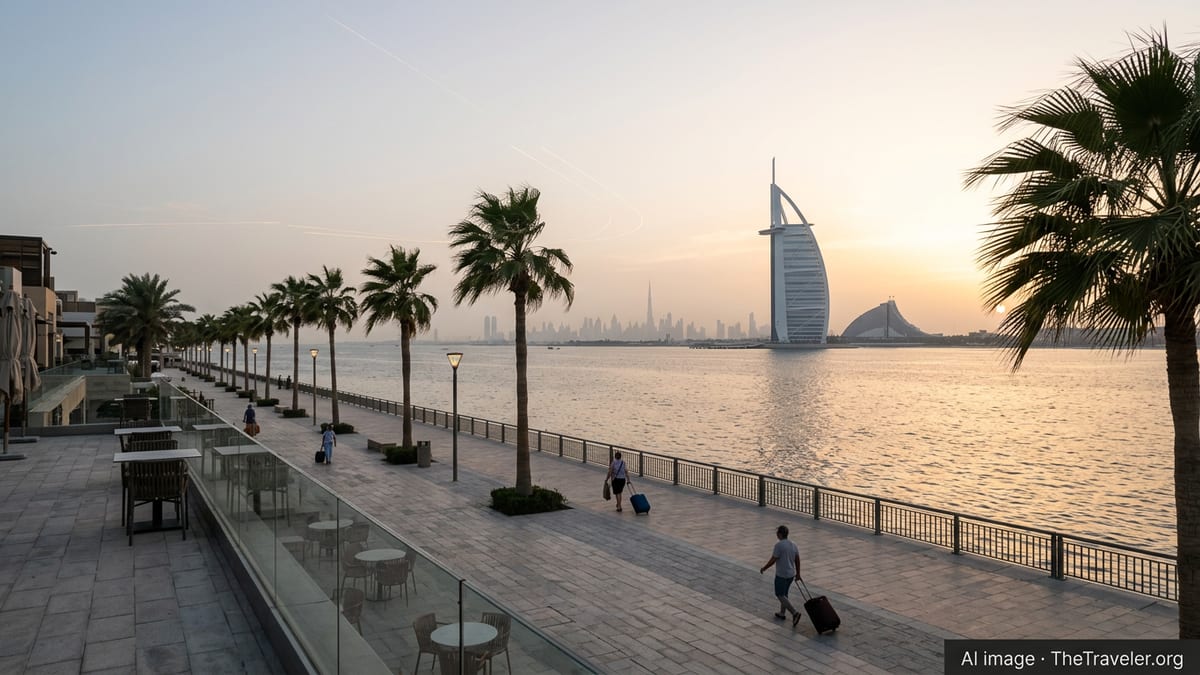
In contrast, Gulf destinations such as the United Arab Emirates, Saudi Arabia and Qatar appear to be weathering the storm relatively better. Recent coverage notes that inbound visitor numbers to some Gulf states continued to grow year-on-year in 2024, supported by major events, new attractions and strong air connectivity. Nevertheless, even these markets are not immune: reports from Dubai show quieter-than-usual beaches, souqs and waterfronts as some potential visitors defer trips in response to images of regional conflict and reports of drone and missile incidents.
The divergence underscores a broader shift in traveller behaviour. Tourists with flexibility increasingly gravitate toward destinations that project political stability, clear security protocols and reliable crisis communications. This trend benefits some Gulf states but raises questions for countries with fewer resources to rebrand or invest in large-scale resilience measures.
Strategies to Steady the Sector Amid Turbulence
Governments and tourism boards across the Middle East are moving quickly to limit the damage and prepare for a possible rebound once tensions ease. Public statements and policy documents highlight a mix of measures, from targeted marketing campaigns in nearby source markets to temporary fee waivers and credit facilities for small tourism businesses facing cash-flow strains.
Some destinations are doubling down on regional visitors, particularly from Gulf Cooperation Council countries, on the assumption that short-haul travellers with cultural and linguistic familiarity are more likely to return first. Jordan, for example, has promoted shorter family holidays and wellness breaks around the Dead Sea and Aqaba, even as long-haul group bookings from Europe and North America soften. Egypt is continuing to preview high-profile openings such as new museum projects in Cairo and Giza to keep global attention focused on culture rather than conflict.
Industry bodies are also calling for better coordination on aviation and security messaging. Analysts argue that clear, timely information about flight paths, airport operations and contingency plans can help counter the perception that the entire region is uniformly unsafe. Some airlines and hotel groups are revisiting crisis-management protocols, training staff and upgrading digital channels to answer traveller questions more quickly and transparently.
At a structural level, the latest crisis is prompting a renewed push for diversification within tourism itself. Destinations are looking beyond traditional sun-and-sea packages toward niches such as medical tourism, conferences, sports, and religious pilgrimages that may be less seasonally volatile and, in some cases, more resilient to geopolitical swings.
Long-Term Outlook: Fragile Recovery and the Risk of Shock Fatigue
Forecasts produced by international financial institutions and regional think tanks suggest that, if current tensions de-escalate, Middle East tourism could resume a growth trajectory over the medium term, though from a lower base than previously expected. The region’s fundamentals remain strong: world-class infrastructure, ambitious cultural investments and a central geographic position between Europe, Asia and Africa.
Yet the experience of successive crises, from the pandemic to shipping disruptions in the Red Sea and now the latest military escalation, has exposed how vulnerable the sector is to external shocks. Economists warn of the risk of “shock fatigue” among both investors and travellers, who may gradually discount even strong recovery narratives if they see too many interruptions over a short period.
For now, tourism stakeholders are focusing on preserving capacity, maintaining employment where possible and signalling that key destinations remain open, even if visitor numbers are below earlier peaks. The estimated US$600 million in daily losses serves as a stark reminder of how integral tourism has become to Middle Eastern economies and how quickly those gains can be put at risk when the region’s skies no longer feel like an open gateway to the world.