

Few trips capture the breadth of Turkey like a journey from Istanbul to Cappadocia. In a single itinerary you move from Byzantine domes and Ottoman bazaars to honeycombed caves and lunar valleys, crossing the Anatolian plateau along routes used for centuries. With improving transport links, steady tourism infrastructure and clear guidance on where it is safe and sensible to travel in 2026, it has never been easier to build a focused, rewarding trip between these two icons.
Why Istanbul to Cappadocia Is Turkey’s Essential Journey
Linking Istanbul and Cappadocia in one itinerary distills Turkey to its essentials. Istanbul is the country’s cultural and historical showcase, a city of palaces, mosques and museums perched on the Bosphorus. Cappadocia, in central Anatolia, feels worlds away: a soft volcanic landscape carved by time into chimneys, canyons and cave dwellings, now one of the country’s most distinctive tourism regions. Traveling between them allows you to combine big-city energy with rural stillness and sky-wide horizons.
From a practical standpoint, this route stays firmly within Turkey’s main tourism corridor. Istanbul and Cappadocia sit hundreds of kilometers from the Syrian and Iraqi borders, in areas that current Western government advisories broadly classify as lower-risk for tourism. That means solid transport networks, a wide range of accommodation, and established safety protocols in airports and major bus terminals. Visitors who follow local advice, avoid demonstrations and give border regions a wide berth can usually move between Istanbul and Cappadocia with confidence.
Timing this trip well is crucial. Spring and autumn offer the best combination of mild weather, clearer skies for balloon flights and more manageable crowds in Istanbul’s historic core. Summer brings intense heat in Cappadocia and heavy visitor numbers across the country, while winter can be atmospheric but occasionally disruptive, especially if snow affects road travel in central Anatolia. Many travelers find that 7 to 10 days lets them experience both destinations without rushing, though even a 5-day trip is workable if you prioritize and use flights.
Planning this route is also about understanding pace. Istanbul rewards slow exploration of specific neighborhoods rather than an attempt to see everything, while Cappadocia’s appeal lies in repeating simple pleasures: sunrise balloons, late-morning hikes, long lunches, and sunsets over the valleys. The best itineraries build in breathing room, choosing a few high-impact experiences instead of ticking off every possible site.
How Many Days You Really Need
For most travelers, the sweet spot for an Istanbul to Cappadocia itinerary is 8 or 9 days. This allows three full days in Istanbul, three in Cappadocia and time for the travel in between. You will see headline sites such as Hagia Sophia, the Blue Mosque, Göreme Open-Air Museum and at least one major valley, while still leaving space for wandering, café stops and unhurried evenings.
If you only have 5 to 6 days, you can still make the journey work by trimming your wish list. Two or three intense days in Istanbul, followed by an early flight to Cappadocia and two nights in Göreme or Ürgüp, gives you a snapshot of both worlds. The trade-off is less time for side trips to places like Uçhisar or underground cities, and a tighter window for weather-dependent activities like balloon flights.
Those with more than 10 days can slow the pace and add depth. Extra time in Istanbul lets you explore Asian-side districts such as Kadıköy or Üsküdar and lesser-known museums, while an extended Cappadocia stay makes it feasible to visit multiple valleys, try different hikes and include both Kaymaklı and Derinkuyu underground cities. With two weeks or more, some travelers choose to insert a stop in Ankara or Konya along the overland route, using Turkey’s high-speed rail and intercity bus network.
When deciding trip length, factor in arrival and departure times. Many long-haul flights into Istanbul land early in the morning, leaving travelers jet-lagged on day one. Building a lighter first day into your Istanbul plan and avoiding late-night transfers to Cappadocia on arrival day can make the overall itinerary feel less exhausting. Similarly, try to avoid packing your final day with both a balloon flight and an evening international departure if flight delays or weather cancellations would cause undue stress.
Getting From Istanbul to Cappadocia in 2026
The most efficient way to travel between Istanbul and Cappadocia in 2026 is by domestic flight. Multiple daily services link Istanbul’s main airport to Kayseri and, to a lesser extent, Nevşehir, the two airports serving the region. Flight time is typically around 1.5 hours, and with check-in and transfers the overall journey usually takes 3 to 4 hours door-to-door. Scheduled services on major carriers and low-cost airlines make it possible to fly early in the morning or late at night, depending on your plans at each end.
From Kayseri or Nevşehir, pre-arranged shuttle services and taxis connect to Göreme, Ürgüp and other key towns. Shared shuttles, which you can book through hotels or local agencies, are often the best balance of cost and convenience, especially if you are carrying standard luggage. Private transfers are widely available for those who prefer a direct door-to-door service, have sporting equipment, or are arriving very late at night. It is wise to share your flight details with your hotel so they can monitor for delays and adjust pick-up times.
Overland options remain viable for travelers prioritizing budget or keen on seeing more of central Anatolia. Comfortable overnight buses connect Istanbul with Cappadocia, typically taking 9 to 11 hours depending on the route and operator. Modern coaches usually offer reclining seats, personal entertainment screens on some routes and rest stops along the way. While this can save a night’s accommodation, it is not restful for everyone, and those sensitive to motion or light sleep may arrive tired.
Driving is another option, particularly for visitors who enjoy road trips and want flexibility to stop in Ankara, Konya or lesser-known small towns. The distance between Istanbul and Cappadocia is roughly 700 to 800 kilometers depending on route, with major segments covered by good-quality motorways. In practice, this is an all-day journey of 7 to 9 hours of actual driving, not counting breaks. Local authorities continue to upgrade highways and plan faster links between Istanbul and Ankara, but for now, realistic travel times remain closer to those of a traditional long-distance drive or rail journey.
A Suggested 8-Day Istanbul to Cappadocia Itinerary
An 8-day journey offers a balanced introduction to both regions without excessive rushing. One logical structure is to begin in Istanbul, where international connections are strongest, and then move east once you have adjusted to the time zone and rhythm of the country. This sequence also means you end the trip in Cappadocia’s calmer landscapes, a softer landing before your return home.
Days one to three can be devoted to Istanbul. Start with the historic peninsula, exploring landmarks such as Hagia Sophia, the Blue Mosque, the Hippodrome area and nearby bazaars. Devote another day to the Bosphorus and neighborhoods on either side, perhaps including a ferry ride, a palace visit and an evening in a restaurant with a view of the water. On your third day, consider the Asian side or less-visited districts, weaving in museums or contemporary galleries according to your interests.
On day four, fly to Cappadocia in the morning if possible. After arriving in Göreme, Ürgüp or Uçhisar and checking into your accommodation, keep the itinerary relatively light. Stroll through town, explore a nearby viewpoint at sunset and settle into your cave hotel or guesthouse. This day sets the tone for a slower-paced second half of the trip and gives you time to confirm last-minute details for balloon flights or tours.
Days five to seven can then focus on Cappadocia’s landscapes and heritage. A typical pattern is to dedicate one day to the Göreme Open-Air Museum and nearby valleys, another to a guided tour that includes an underground city and farther-flung viewpoints, and a third to hiking or horseback riding through lesser-known valleys. If you plan a hot-air balloon flight, schedule it for your first or second morning in the region to allow a backup day in case weather forces a postponement. On day eight, travel back to Istanbul or onward to your next destination, leaving enough time to absorb delays without endangering onward connections.
Experiencing Istanbul: Key Neighborhoods and Moments
While it is easy to reduce Istanbul to a checklist of monuments, the city is best experienced as a series of neighborhoods and moments. The historic district around Sultanahmet squares monumental architecture with intensely local scenes in side streets, from tea houses and pastry shops to small mosques tucked away from the main flow. Spending a morning in this area, then taking a break in a shaded café before returning to a museum in the late afternoon, helps you avoid both crowds and fatigue.
Beyond the historic core, the districts of Karaköy, Galata and Beyoğlu offer a different mood, with steep cobbled streets climbing away from the Golden Horn, independent boutiques, galleries and a mix of historic apartment buildings and newer developments. Walking from the Galata Bridge up to the Galata Tower and onward toward İstiklal Avenue gives a sense of the city’s layering, though it is worth detouring into side streets to escape the busiest stretches.
On the Asian side, Kadıköy and Moda provide a welcome contrast to the more touristed European districts. Ferry rides from Karaköy or Eminönü to Kadıköy give classic Bosphorus views, and once ashore you can explore markets, bookshops and a thriving food scene. Many visitors appreciate the more local feel here, especially in the evenings when streets fill with people meeting friends at cafés and casual restaurants. If time allows, adding a sunset stroll along the water in Moda can be a highlight of an Istanbul stay.
For those with additional days, exploring lesser-known mosques, visiting contemporary art spaces or taking a longer Bosphorus cruise further north can deepen your sense of the city. Whatever you choose, remember that Istanbul is a place where simple routines, such as sipping tea while watching ferries cross the strait, can be as memorable as any single landmark.
Experiencing Cappadocia: Landscapes, Balloon Flights and Cave Stays
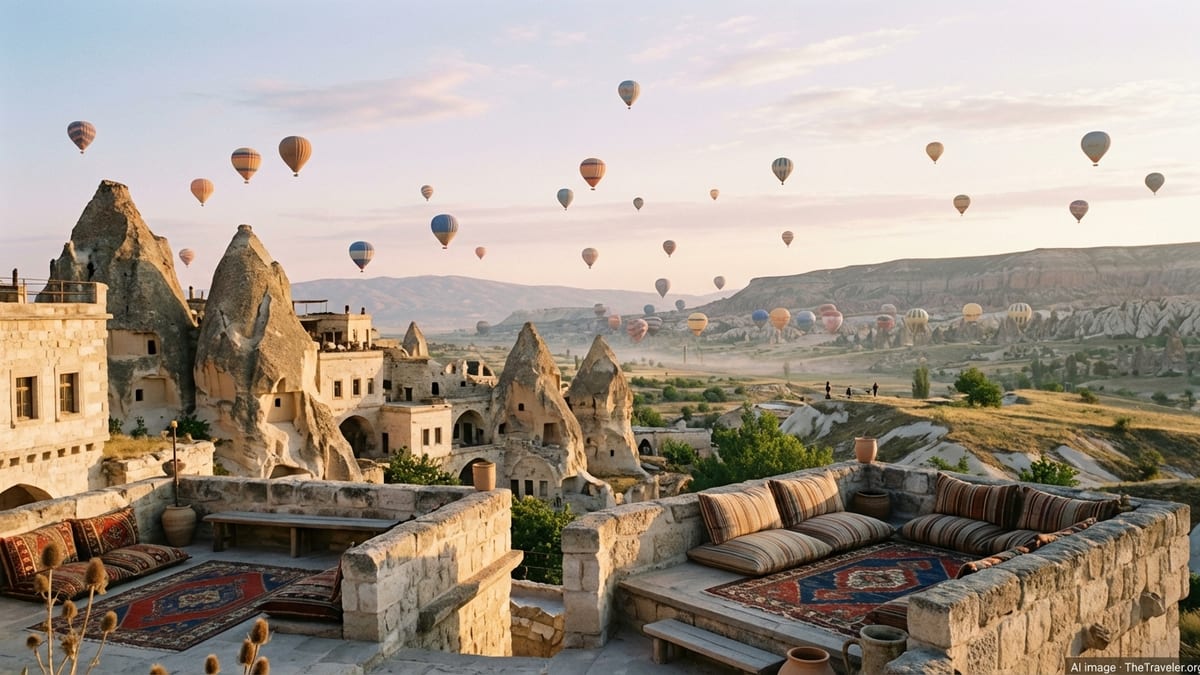
Cappadocia’s appeal lies first in its landscape, a soft volcanic plateau eroded into ridges, pinnacles and valleys that seem almost otherworldly yet are very much real. Towns such as Göreme, Ürgüp and Uçhisar have grown up around and into the rock, with traditional cave houses adapted into boutique hotels. Waking up in a room carved from stone, with rough-hewn ceilings and cool walls, is part of the region’s signature experience and does not require sacrificing modern comforts, as many properties have invested heavily in amenities.
Hot-air balloon flights remain the most sought-after experience, with sunrise launches offering sweeping views of valleys and fairy chimneys. Operators monitor weather conditions closely, and flights can be canceled on days with strong winds or poor visibility. In high season, balloon slots sell out, so even though there are numerous companies, advance booking is advisable. To reduce disappointment, schedule the flight early in your stay to allow time for rebooking if conditions are not favorable on the first attempt.
On the ground, Cappadocia rewards exploration at walking pace. Well-marked trails thread through valleys filled with rock formations, vineyards and small orchards. Some routes can be tackled independently with a basic map and appropriate footwear, while others are best approached with a guide, especially if you want to understand the history of cave churches and frescoes. For those less inclined to hike, short guided drives or horse rides offer alternative ways to reach viewpoints without strenuous climbing.
A good Cappadocia itinerary balances structured days, such as guided tours that include underground cities and major sites, with unscheduled time to wander through villages, linger over meals and find quiet vantage points for sunset. Evenings can be surprisingly lively in the main towns, with a mix of traditional restaurants, small wine bars and panoramic terraces. Packing layers is essential, as temperatures can swing significantly between pre-dawn balloon launches and warm afternoons, especially in spring and autumn.
Safety, Culture and Practical Tips for 2026
In 2026, Turkey as a whole remains a popular destination, and the Istanbul-to-Cappadocia corridor continues to function as one of its most developed tourism routes. However, travelers should remain aware of safety advisories, which consistently warn against visiting border areas near Syria and Iraq while framing core tourism regions like Istanbul, Nevşehir and the Mediterranean coast as viable with normal precautions. Staying updated through your home country’s foreign ministry or embassy information before and during the trip helps you respond appropriately to any local developments.
Within cities and tourist hubs, everyday risks tend to mirror those in other major destinations. Petty theft can occur in crowded areas, so carrying only what you need for the day, using hotel safes where available and keeping a close eye on phones and wallets in busy markets and public transport is sensible. As in many countries, travelers are often advised to be cautious about unsolicited invitations to bars or clubs, especially where drink prices are not clearly advertised. Choosing well-established venues and arranging transport back to your accommodation in advance reduces the chance of unwelcome surprises.
Respect for local customs also contributes to a smoother experience. While Turkey is diverse and major cities can feel cosmopolitan, it is still courteous to dress modestly when visiting mosques, covering shoulders and knees and using headscarves where requested for women. During Ramadan, which in 2026 is expected to fall between February and March, some travelers choose to avoid eating or drinking in public during daylight hours in very traditional neighborhoods, both out of respect and to avoid awkwardness. At the same time, many restaurants, especially in visitor-focused areas, continue to serve non-fasting guests discreetly.
Language is less of a barrier than many first-time visitors expect. In central districts of Istanbul and in Cappadocia’s main towns, people working in tourism usually speak at least basic English, and some speak multiple languages. Learning a few simple Turkish phrases, such as greetings and words for “please” and “thank you,” is appreciated and can make everyday interactions more enjoyable. Contactless payments are increasingly common in cities, but it remains helpful to carry some local currency for small purchases, tips and rural areas.
The Takeaway
An itinerary from Istanbul to Cappadocia is one of the most rewarding ways to experience Turkey in a focused trip. By combining a world-class historic city with one of the planet’s most distinctive landscapes, you experience both the urban and rural faces of the country, all within a manageable time frame and transport network. With a realistic number of days, a clear sense of your priorities and an understanding of current travel conditions, this route can feel adventurous without being unduly complicated.
For most visitors, flying between Istanbul and Cappadocia, staying in well-situated neighborhoods and allowing room for weather or schedule changes leads to a smooth journey. Balancing “must-see” highlights with time for unscripted discovery, whether that means lingering on a Bosphorus ferry or watching dawn break over a valley full of balloons, keeps the trip from feeling like a race. Above all, this itinerary works best when you let the contrasts between city and landscape, history and daily life, reveal themselves at their own pace.
FAQ
Q1. How long should I plan for an Istanbul to Cappadocia trip?
Most travelers find 7 to 9 days ideal, with three days in Istanbul, three in Cappadocia and extra time for travel days or slower exploration.
Q2. What is the fastest way to travel from Istanbul to Cappadocia?
The fastest option is a direct domestic flight from Istanbul’s main airport to Kayseri or Nevşehir, followed by a pre-booked shuttle or taxi to your hotel.
Q3. Is it safe to visit Istanbul and Cappadocia in 2026?
Current advisories generally consider core tourism areas like Istanbul and Cappadocia suitable for travel with normal precautions, though you should avoid border regions and monitor official guidance.
Q4. Do I need to rent a car for this itinerary?
No, you can comfortably complete the route using flights, shuttles and local tours. Renting a car is optional and best for confident drivers who want added flexibility.
Q5. When is the best time of year to go for good weather and balloon flights?
Spring and autumn usually offer mild temperatures and more stable conditions for balloon flights, while summer can be very hot and winter brings colder but atmospheric landscapes.
Q6. Should I book my Cappadocia hot-air balloon in advance?
Yes, especially in busier months. Balloon slots often sell out, and pre-booking with a reputable operator increases your chances of flying during your stay.
Q7. Which Cappadocia town is best to stay in: Göreme, Ürgüp or Uçhisar?
Göreme suits first-time visitors who want to be in the heart of the action, Ürgüp offers a slightly quieter feel, and Uçhisar is ideal for those prioritizing panoramic views.
Q8. What should I wear when visiting mosques in Istanbul?
Dress modestly, covering shoulders and knees. Women may be asked to cover their hair with a scarf, and everyone should remove shoes before entering prayer areas.
Q9. Can I visit Cappadocia as a day trip from Istanbul?
A same-day visit is technically possible by air but very rushed. Most travelers find that at least two nights in Cappadocia are needed to appreciate the region properly.
Q10. Is English widely spoken in Istanbul and Cappadocia?
In main tourist areas, many people working in hotels, restaurants and tour companies speak English, though learning a few basic Turkish phrases is still helpful and appreciated.