


More news on this day
Flight delays were once a pure hassle. Now, a growing number of travelers are quietly turning those same disruptions into cash payouts, travel credits and even side-hustle income, by learning how to work the fine print of passenger rights and airline incentives.
Get the latest news straight to your inbox!
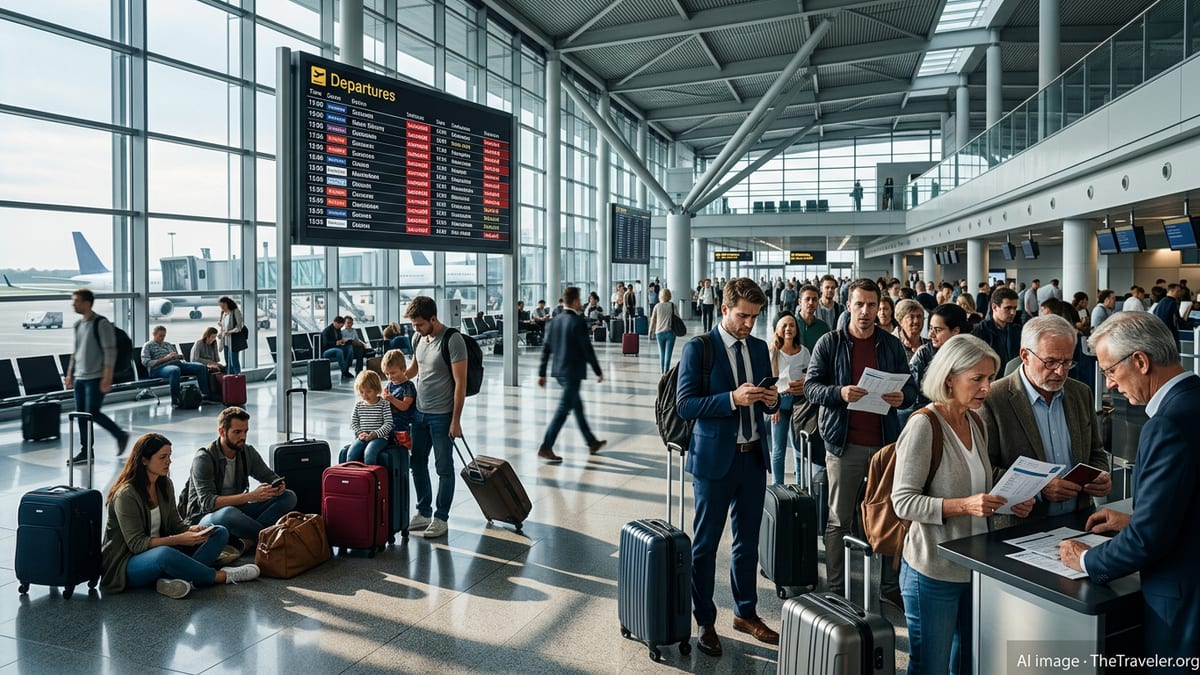
From Frustrated Passengers to Delay Opportunists
Long delays and cancellations have become a defining feature of modern air travel, creating fertile ground for a new kind of traveler who treats disruption as an asset rather than a setback. Surveys highlighted in recent business coverage show that well over four in five travelers now expect some form of disruption during peak seasons, and many are actively planning around it instead of simply hoping for an on time departure.
According to published coverage, this shift is visible at the gate. When airlines face an overbooked flight, they often escalate offers in real time, starting with modest vouchers and pushing into four figure territory to persuade enough people to give up their seats. Viral social media clips and travel blogs have documented instances of volunteers walking away with thousands of dollars in credits or cash equivalents for accepting a delay of only a few hours.
At the same time, governments in North America and Europe have been tightening rules on refunds and compensation, particularly where delays are within an airline’s control. Publicly available information shows that in the United States, new regulations finalized in late 2024 will require automatic cash refunds when airlines cancel or significantly change flights, while Europe’s long standing EU261 and similar regimes in the United Kingdom and Canada continue to guarantee fixed payouts for qualifying delays.
The combination of stricter consumer rules, overloaded schedules and increasingly savvy passengers has created what some analysts describe as a “delay economy,” in which information, timing and flexibility can quickly translate into money.
How Travelers Are Gaming the System
The most visible aspect of this trend involves volunteers on oversold flights. Airlines, which routinely sell more tickets than seats available to offset no shows, must offer compensation when too many passengers actually arrive. Reports in mainstream outlets explain that carriers usually begin by asking for volunteers, raising the offer until enough people accept. For travelers with flexible schedules, this has become a calculated play: arrive early, travel with carry on only and be prepared to take a later flight in exchange for escalating compensation.
Some frequent flyers now actively watch for peak travel days and busy hub routes where overselling is common, then schedule looser connections or overnight stays that make it easier to accept a bump. Travel advisories and online communities describe people timing trips around conferences, holiday weekends or major events, essentially placing a bet that their flights will be prime candidates for lucrative offers at the gate.
Another, more controversial, tactic has surfaced around strict European compensation rules. Online forums have discussed cases in which travelers monitor inbound aircraft and operational logs, then book itineraries that already show signs of severe delay, hoping to trigger set payouts of several hundred euros once the schedule officially slips past EU261 thresholds. While industry lawyers warn that airlines can update contracts of carriage or contest claims they see as abusive, the discussions highlight how detailed public flight data has given passengers new leverage.
Travel policy specialists caution that these strategies are not risk free. Seats on later flights may be scarce, weather or air traffic issues can erase compensation rights, and airlines are increasingly scrutinizing unusual booking patterns that appear designed solely to unlock payouts.
The Rise of “Set and Forget” Compensation Apps
Behind the scenes, a growing ecosystem of third party services is trying to industrialize what used to be a tedious paperwork battle. European focused claim firms and global flight rights platforms now encourage travelers to submit their bookings or email confirmations, then automatically scan for compensation opportunities under EU, UK and Canadian rules as well as carrier specific policies.
According to publicly available information, some of these services take a commission only when they secure a payout, handling everything from correspondence with airlines to legal filings if a claim is contested. Others operate as subscription based tools that track current and past trips, flagging when a delay, cancellation or missed connection might qualify for cash. Social media posts and travel forums are filled with stories of passengers discovering months later that an old delay from a work trip or vacation actually entitled them to money.
For corporate travelers, this has quietly opened up a new gray area. Online discussions describe employees who long assumed any compensation belonged to their employer or corporate card provider, only to learn that regulations typically view the named passenger as the rightful beneficiary. Some travelers now treat compensation recovered from work flights as a form of personal travel fund, even as companies revisit internal policies to clarify who owns what.
Law firms and consumer advocates note that airlines are pushing back. Data released by a prominent UK based legal practice in June 2026, for example, suggests more carriers are refusing to settle claims until court proceedings are initiated, stretching out timelines and making automated services more attractive to passengers who do not want to chase paperwork themselves.
New Rules, Shifting Incentives
Regulatory changes are amplifying the incentives around delay savvy behavior. In Europe, debate continues over the long term impact of EU261 style compensation, which trade groups argue costs airlines billions of euros annually without significantly reducing delays. Yet even critics acknowledge that the regime has given travelers a clear, rules based path to fixed payouts whenever disruptions meet specific thresholds and are within an airline’s control.
In North America, policy has historically focused less on cash compensation and more on refunds and disclosures. That balance is starting to shift. Federal rulemaking in the United States, finalized at the end of 2024, is set to require automatic refunds in cash or original payment form when carriers cancel or dramatically change flights, instead of pushing customers toward vouchers and credits. Consumer groups say this could encourage more travelers to walk away from problematic itineraries early, then rebook on competing airlines using refunded funds.
At the same time, insurers and travel technology companies are experimenting with new products that treat delay risk as something to be priced and potentially monetized. Some platforms now offer optional extras that issue fixed cash payments after a delay of a specified length, credited directly to a traveler’s account regardless of what the airline provides. Others blend delay coverage with concierge style rebooking services, promising to secure alternative flights or hotels the moment an itinerary goes sideways.
Industry analysts warn that as more money flows around delay events, incentives for both sides will evolve. Airlines may adjust schedules, tighten definitions of controllable delays or update contracts of carriage, while regulators weigh whether existing protections are being gamed by either carriers or consumers.
Where the Trend Goes Next
For now, the ability to turn a headache into a payout still depends heavily on geography, airline choice and personal flexibility. Travelers flying within the European Union or on EU carriers tend to have clearer rights than those on purely domestic routes in regions without strong compensation laws. Low cost airlines sometimes set higher hurdles for processing claims, even where regulations mandate payment, while legacy carriers may use targeted offers and loyalty perks to nudge customers toward vouchers instead of cash.
What is changing most quickly is awareness. News reports, viral videos and dedicated travel rights communities are making the rules behind disruptions far more visible than in the past. Instead of accepting the first reroute or snack voucher, informed passengers increasingly pause to check whether they would be better off waiting for a later flight, asking for cash, or filing a formal claim.
That shift in behavior hints at a future where delays remain frustrating but are no longer purely a sunk cost. As airlines, regulators, technology providers and travelers continue to test the boundaries of compensation, the simple act of watching a departure board may become as much a financial calculation as a logistical one.