

More news on this day
Tourism rebounds and social media exposure are pushing some UNESCO-listed national parks to record visitation, concentrating global demand for wild landscapes in a small group of flagship protected areas.
Get the latest news straight to your inbox!
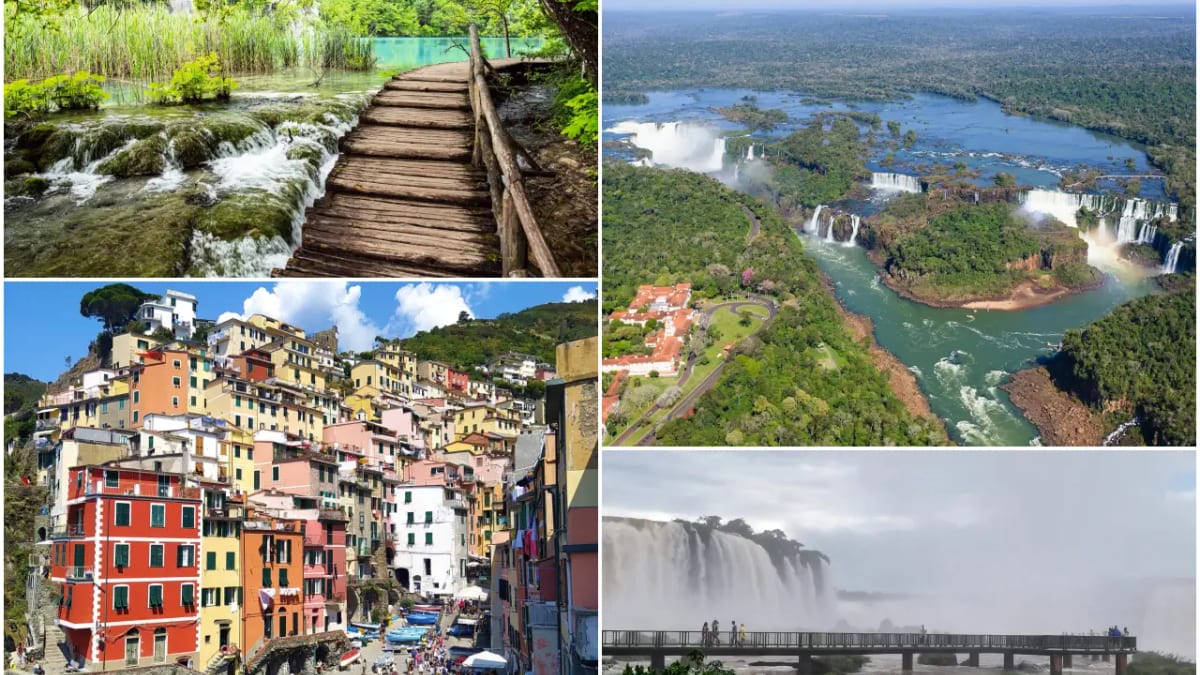
Image by Focus on Travel News
How UNESCO Status Fuels Park Popularity
UNESCO World Heritage inscription has become a powerful tourism driver, and national parks are among its biggest beneficiaries. Travel industry analysis shows that destinations with multiple World Heritage properties tend to attract more international arrivals, and protected landscapes that carry the UNESCO badge often feature prominently in global marketing campaigns. Operators and national tourism boards routinely highlight the World Heritage label as a shorthand for exceptional scenery and cultural value.
Available visitation statistics reveal that only a limited share of UNESCO-listed national parks receive very high annual footfall, often exceeding one million visitors a year. These flagship parks cluster in North America, Europe and parts of Africa, where transport links, established tourism industries and strong branding help funnel large numbers of travelers into relatively compact protected areas. Recent reports indicate that this concentration is intensifying as post-pandemic travel growth skews toward well-known sites.
Comparing data from conservation agencies, academic overviews and tourism reports suggests a rough top tier of the world’s most-visited UNESCO national parks. While precise rankings vary from year to year, Banff and Jasper in Canada’s Rockies, Yellowstone and Grand Canyon in the United States, Serengeti and Kilimanjaro in Tanzania, South Africa’s iSimangaliso Wetland Park, Croatia’s Plitvice Lakes, Australia’s Great Barrier Reef and the Galápagos Islands in Ecuador consistently appear among the most popular World Heritage-listed protected areas.
Rocky Mountain Icons: Banff and Jasper
Banff National Park in Alberta, part of the Canadian Rocky Mountain Parks World Heritage Site, illustrates how UNESCO recognition and national park status can combine to produce sustained high visitation. Publicly available figures and recent Canadian coverage describe Banff as one of North America’s most visited national parks, drawing well over three million recreational visitors annually. The surrounding mountain highways channel even more people through the park, turning its lakes and viewpoints into global postcards of the Rockies.
Neighboring Jasper National Park, also within the Canadian Rocky Mountain Parks inscription, records lower but still substantial visitation, typically in the low millions. Together, the two parks form a heavily traveled spine of scenic driving routes, ski resorts and hiking circuits that dominate international itineraries in western Canada. Their World Heritage designation is widely used in destination branding, reinforcing perceptions of the region as a premier wilderness experience accessible by road and rail.
This popularity has prompted debates over congestion, wildlife disturbance and housing pressures in the mountain towns that sit inside or on the edge of the parks. Management plans now emphasize visitor-use zoning, seasonal restrictions and transit initiatives aimed at reducing private car traffic to celebrated sites such as Lake Louise and the Icefields Parkway. The experience of Banff and Jasper is closely watched by planners in other UNESCO national parks facing similar pressures.
US Flagships on the World Heritage List
In the United States, several of the National Park Service’s busiest “crown jewels” also hold UNESCO World Heritage status, placing them firmly in the global top tier. Yellowstone, the world’s first national park, routinely records annual visitation in the range of three to five million, with geyser basins and wildlife viewing corridors drawing year-round traffic. Grand Canyon National Park posts comparable numbers, with publicly available visitor data indicating that pre-pandemic peaks exceeded six million arrivals in some years.
Yosemite and Great Smoky Mountains, while not always highlighted in international rankings, also combine very high visitation with portions recognized for their outstanding natural value. The World Heritage label, where applied, supports a narrative that these are not only national icons but landscapes of global importance. Park managers have responded with timed-entry systems, shuttle networks and trail restoration projects designed to keep heavily visited valleys and viewpoints from being degraded by constant use.
Recent National Park Service visitation summaries show that a small fraction of park units, including these World Heritage sites, account for a disproportionate share of total visits. This concentration mirrors broader patterns across UNESCO-listed parks worldwide, where a handful of well-known destinations receive intensive use while many lesser-known sites remain comparatively quiet.
Safari Superstars: Serengeti and Kilimanjaro
In Africa, Tanzania’s Serengeti National Park and Kilimanjaro National Park stand out as the most internationally recognizable UNESCO-listed protected areas and rank among the continent’s busiest. Government tourism statistics and industry analyses describe annual visitation measured in the hundreds of thousands to over a million, with seasonal peaks tied to the Serengeti’s wildebeest migration and the dry-season climbing window on Kilimanjaro.
The Serengeti’s inscription highlights its vast savanna ecosystem and the spectacle of large mammal migrations, which have become central to the global safari brand. Tour operators market multi-day itineraries that combine Serengeti with nearby Ngorongoro Conservation Area and other reserves, concentrating tourist activity in a relatively small region of northern Tanzania. Kilimanjaro’s appeal lies in its status as Africa’s highest peak and one of the world’s most accessible high-altitude climbs, attracting trekkers from across the globe.
Both parks demonstrate how UNESCO status can intertwine with adventure and wildlife tourism, generating significant revenue while raising concerns over ecological impacts. Studies of safari traffic patterns and climbing routes point to trail erosion, crowding at popular campsites and pressure on surrounding communities. Conservation strategies increasingly focus on dispersing visitors, diversifying routes and promoting lesser-known Tanzanian parks to relieve pressure on these flagship World Heritage landscapes.
From Coral Reefs to Waterfalls: Other Global Hotspots
Beyond North America and East Africa, a diverse group of UNESCO World Heritage national parks rounds out the list of the world’s most visited. Australia’s Great Barrier Reef, inscribed for its vast coral ecosystem, records millions of visitor-days annually across its network of marine parks and coastal hubs. Tourism authorities note that reef excursions remain a pillar of Queensland’s visitor economy, even as coral bleaching and climate impacts draw heightened scrutiny to the sustainability of marine tourism.
In Europe, Croatia’s Plitvice Lakes National Park is widely cited as one of the continent’s busiest UNESCO-listed landscapes, with pre-pandemic visitor counts exceeding one million per year in a relatively small valley of interconnected lakes and waterfalls. Seasonal crowding on wooden boardwalks and at key viewpoints has prompted authorities to introduce advance ticketing, timed entry and tighter daily caps to protect fragile karst formations.
In Latin America, Ecuador’s Galápagos Islands combine strict conservation rules with strong international demand. The archipelago’s national park and marine reserve together form a World Heritage site that receives on the order of a quarter to half a million visitors annually, depending on the year and regulatory conditions. Visitor itineraries are tightly controlled, yet the steady growth of cruise and land-based tourism keeps the Galápagos near the top of global discussions about balancing access with ecological integrity in iconic protected areas.
Managing Popularity in a Heating Travel Market
As international arrivals recover and the heritage tourism sector expands, the world’s most popular UNESCO national parks are facing renewed pressure. Market forecasts project steady growth in spending related to heritage and nature tourism through at least the early 2030s, suggesting that demand for headline sites will remain strong. For heavily visited parks, the challenge is less about attracting travelers and more about steering how, when and where they move within protected areas.
Recent management documents and conservation assessments highlight a convergence of strategies: stricter daily visitor caps, advance reservation systems, investments in mass transit and fees earmarked for habitat restoration. UNESCO monitoring reports increasingly call attention to visitation as a key factor in assessing a site’s conservation outlook, placing tourism management alongside climate change, pollution and land-use change as a central concern.
For travelers, the dominance of a small group of parks among the world’s most visited UNESCO sites underscores both the appeal and the fragility of these landscapes. Industry observers note a gradual rise in interest for lesser-known World Heritage parks, from highland reserves in Asia to coastal wetlands in Africa and Latin America, as tour operators look to spread demand. How quickly that diversification occurs may determine whether today’s most popular UNESCO national parks remain both accessible and intact for future generations.