

Florida’s airports are among the busiest in the United States, funnelling tens of millions of travelers each year to theme parks, cruise ships, beaches and fast-growing cities. From global hubs like Miami and Orlando to fast-rising regional gateways along both coasts, these airports sit at the heart of the state’s tourism and business economy. As passenger totals keep climbing, they are investing heavily in new terminals, gates and technology to keep people and planes moving.
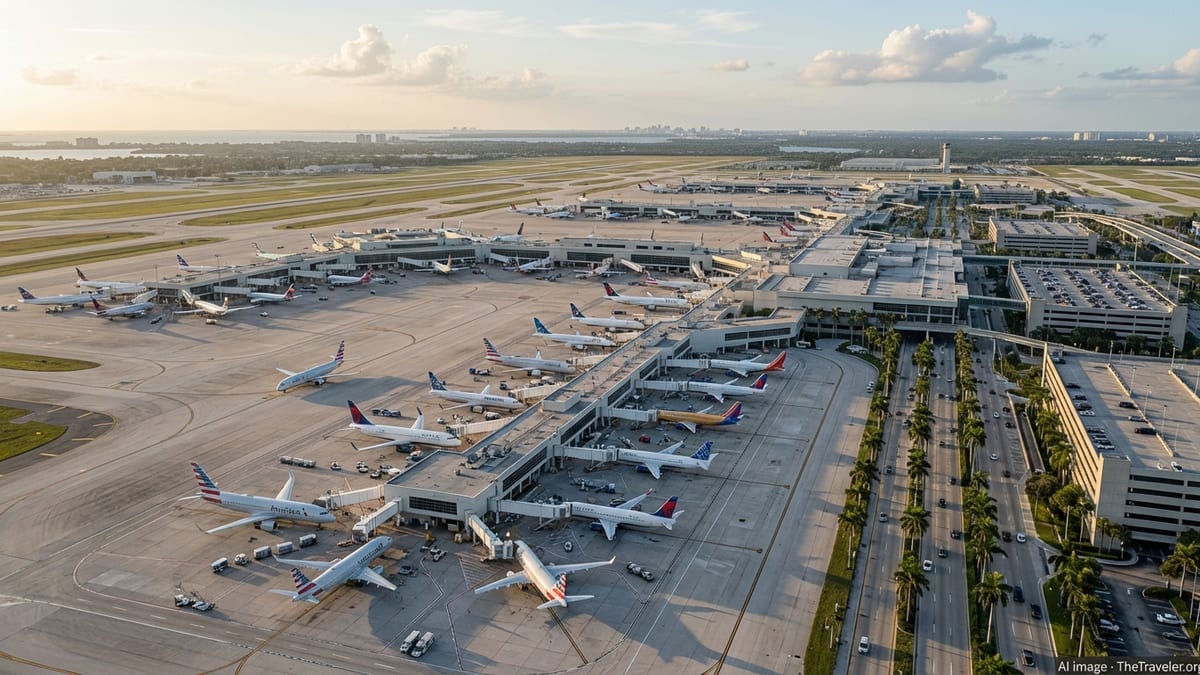
How Florida Became an Aviation Powerhouse
Few states depend on air travel quite as much as Florida. Tourism remains a cornerstone of the economy, and the state’s geography means that many trips, both domestic and international, naturally begin or end at one of its major airports. A mix of leisure, business and cruise-related traffic has driven steady long term growth, with several Florida airports now ranking among the nation’s busiest for total passengers and international travel.
Several hubs in Florida routinely handle tens of millions of passengers a year, putting them in the same conversation as major gateways across the country. Miami International Airport has surpassed roughly 55 million passengers annually in recent years, while Orlando International has approached the mid 50 million range, supported by theme park demand and a deep roster of domestic and international routes. Fort Lauderdale, Tampa and others add tens of millions more, underscoring the scale of Florida’s aviation network.
That growth has not been a temporary post pandemic spike. Airports across the state continue to report record or near record passenger counts, with strong demand from Latin America, Europe and within the United States. Even when national aviation growth has cooled, Florida’s largest airports have often outpaced broader trends, helped by the state’s population gains and year round visitor appeal.
The result is a network of busy, evolving airports that are constantly expanding and rethinking how to move travelers efficiently. From new terminals to runway extensions and people mover systems, Florida’s busiest airports are in an intense phase of modernization designed to meet both current crowds and future demand.
Miami International Airport: Global Gateway to the Americas
Miami International Airport has firmly established itself as one of the country’s leading global gateways. In 2024 and 2025 the airport handled on the order of 55 million passengers annually, supported by a powerful hub operation and Miami’s role as a bridge between North America and Latin America. Miami is also among the nation’s busiest airports for international passengers and a top cargo hub, with several consecutive years of record freight volumes reported.
The airport’s growth has been driven in large part by its dominant hub carrier, which operates hundreds of daily flights and extensive connections across the Americas and to Europe. A deep roster of international airlines adds links to major cities throughout Latin America, Europe, the Caribbean and beyond. This mix of connecting traffic and origin and destination passengers headed to South Florida’s beaches, cruise terminals and business districts helps keep the terminals busy from early morning to late night.
To keep up with surging demand, Miami International is in the midst of an ambitious multibillion dollar modernization program that stretches into the next decade. Officials have outlined plans totalling around 9 billion dollars in capital improvements, aimed at refreshing aging terminals, replacing and upgrading elevators, escalators and moving walkways, and improving baggage systems and boarding bridges. The airport has already invested hundreds of millions of dollars in basic but critical infrastructure like restrooms and conveyance systems in recent years.
One of the most closely watched projects is a roughly 1 billion dollar overhaul and expansion of Concourse D, the home of the airport’s main hub carrier. The plan calls for replacing ground level regional gates with full size contact gates served by jet bridges, providing more comfortable boarding areas and better protection from summer storms and intense heat. Additional work will bring more dining, retail and passenger amenities to the concourse, part of a broader effort to push the airport’s facilities in line with its status as a major global hub.
Orlando International Airport: Mega Hub for Theme Park Travel
While Miami leans heavily on international and connecting traffic, Orlando International Airport thrives as a destination gateway. It serves as the primary air portal for millions of visitors headed to world famous theme parks and resorts across Central Florida, as well as a growing local population. In recent years the airport has reported annual passenger volumes in the 50 million range, placing it among the top handful of airports in the United States for total traffic.
Orlando’s traffic profile skews toward domestic travel, with an especially dense network of routes from across the eastern and central United States. Major carriers, low cost airlines and ultra low cost operators all maintain sizable schedules, competing aggressively on key leisure markets. International travel has also recovered strongly, with flights from Canada, Europe and Latin America feeding demand for family vacations and convention travel.
To manage its growth, Orlando International has pursued one of the most significant terminal projects in Florida. The opening of a large new terminal building south of the original complex added dozens of gates and modern security, immigration and baggage facilities. The new complex features high ceilings, abundant natural light and an array of contemporary concessions, reflecting a design strategy that seeks to impress visitors at the very start of their Florida holidays.
Beyond the new terminal, Orlando’s airport has invested in roadway improvements, parking facilities and an integrated rail station that connects with intercity passenger rail service. That station positions the airport as a potential multimodal hub, linking long distance trains, local transit and air travel. With Central Florida continuing to grow both in residents and visitor numbers, the airport’s expanded footprint and capacity will be central to sustaining the region’s tourism economy.
Fort Lauderdale and Tampa: High Growth Coastal Gateways
On Florida’s Atlantic and Gulf coasts, Fort Lauderdale Hollywood International Airport and Tampa International Airport have emerged as powerful secondary hubs that together handle tens of millions of passengers a year. Each serves a distinct metropolitan region while also absorbing overflow leisure demand that might otherwise funnel through Miami or Orlando.
Fort Lauderdale Hollywood International Airport, located just north of Miami, has become a particular stronghold for low cost and ultra low cost carriers. The airport handled roughly 32 million passengers in 2025, placing it solidly among the country’s busiest mid sized hubs. A mix of domestic routes and an expanding roster of Caribbean, Latin American and transcontinental services has made it a popular alternative to Miami for price sensitive travelers and cruise passengers sailing from nearby Port Everglades.
Tampa International Airport anchors the rapidly growing Tampa Bay region, which stretches across St. Petersburg, Clearwater and a string of Gulf Coast beach communities. In recent years Tampa has reported passenger levels in the mid 20 million range, supported by a strong base of domestic service and increasing international connections. The airport has earned a reputation for passenger friendly design, thanks to its compact landside terminal linked by automated people movers to satellite concourses with short walking distances.
Both Fort Lauderdale and Tampa are investing heavily in terminal refreshes, new gates and airfield improvements. Fort Lauderdale has upgraded runways and expanded terminal capacity to accommodate the heavy schedules of low cost carriers, while also pursuing long term planning for additional growth. Tampa has recently completed or advanced projects to modernize its main terminal, expand curbside and rental car facilities, and improve roadway access, positioning itself to handle the region’s surging population and tourism numbers.
Fast Growing Regional Hubs Across the State
Beyond Florida’s four largest commercial airports, a constellation of regional hubs quietly handles millions of additional passengers and plays an outsized role in local economies. Airports such as Southwest Florida International in Fort Myers, Palm Beach International in West Palm Beach, Jacksonville International in North Florida and Pensacola International in the Panhandle have all benefited from the state’s growth and evolving airline strategies.
Southwest Florida International serves the communities around Fort Myers, Naples and Cape Coral, drawing a mix of seasonal residents, vacationers and year round travelers. Its route map is heavily domestic, but with seasonal international links to Canada and Europe that cater to winter visitors. The airport has pursued terminal expansions and airfield projects over the past two decades to transition from a modest regional facility to a busy medium hub.
Palm Beach International Airport offers an alternative to the larger and busier airports to the south. While its passenger totals are smaller than those of Miami or Fort Lauderdale, it still handles several million travelers annually, particularly on domestic routes tied to New York, New Jersey and other Northeast markets. Its more compact size, shorter lines and proximity to wealthy coastal communities make it a preferred choice for many frequent travelers.
In the Panhandle, Pensacola International Airport has recorded steady growth, recently surpassing approximately 3 million annual passengers. Expanded service from low cost carriers and additional routes to major hubs have helped turn what was once a modest regional outpost into a key connector for Northwest Florida. Similar patterns can be seen at airports in Tallahassee, Panama City Beach and Destin, where airline schedules have expanded as the region becomes a more prominent year round destination rather than just a spring and summer hotspot.
Infrastructure Strain and Modernization Efforts
Rapid growth has come with challenges. Many of Florida’s busiest airports are contending with aging infrastructure that was never intended to support present day passenger volumes. At Miami International, some terminal elements date back more than half a century, while Orlando and Tampa must balance expansions with the constraints of existing road networks, nearby communities and environmental considerations.
In response, airport authorities and local governments have embarked on long range capital plans measured in the billions of dollars. These programs typically combine terminal overhauls, gate expansions, new or refurbished runways, parking garages and roadway improvements. At Miami, the Modernization in Action plan targets everything from upgraded boarding bridges to new security checkpoints. Orlando’s south terminal project is designed as a generational expansion, giving the airport room to absorb millions more passengers.
Even medium sized airports are investing aggressively. Fort Lauderdale has pursued runway extensions and terminal renovations to improve on time performance and passenger flow, while Tampa’s multi phase program has added an updated rental car center and improved connections between terminals and parking. Regional hubs such as Fort Myers and Pensacola have tackled targeted terminal expansions and airside improvements to keep pace with new routes and seasonal peaks.
Funding for these projects generally comes from a mix of airport generated revenue, passenger facility charges, federal grants and the sale of revenue bonds. The scale and duration of the work means travelers can expect to see construction zones and temporary detours across many Florida airports for years to come. Airport managers argue that the inconveniences are necessary to secure capacity and reliability for future generations of travelers.
Traveler Experience at Florida’s Busiest Airports
For travelers, the impact of Florida’s airport boom is felt most directly in crowding, wait times and available amenities. At peak holiday periods, Miami, Orlando and Fort Lauderdale can see daily passenger counts that rival or exceed many larger North American hubs. Security queues, immigration lines and checked baggage delivery can all lengthen during these surges, particularly when strong thunderstorms or tropical weather disrupt schedules.
To address these pressures, many airports have rolled out new technologies and process changes. Expanded use of automated passport control kiosks and facial recognition systems has helped speed international arrivals at some facilities. Additional Transportation Security Administration lanes, more flexible checkpoint layouts and programs such as TSA PreCheck and CLEAR provide relief for frequent travelers willing or able to enroll.
Amenities have also improved significantly. Modernized terminals increasingly feature open, light filled designs, local restaurant brands and expanded shopping options. Free high speed Wi Fi is now a standard expectation, and many Florida airports have invested in comfortable seating areas with plentiful charging points. At Orlando, the new terminal’s architecture and curated art installations seek to create a sense of arrival that reflects Central Florida’s mix of leisure and innovation.
Still, traveler satisfaction can vary from airport to airport and even from concourse to concourse within the same facility. Older sections of Miami and Fort Lauderdale, for example, may feel more crowded and dated than newly renovated wings. Construction zones can temporarily reduce seating or dining options. Savvy travelers often plan extra time at the airport during peak seasons, choose flights at less busy hours and use mobile apps to track security wait times and gate changes.
The Takeaway
Florida’s major airports have become indispensable engines of mobility and economic growth, handling tens of millions of travelers every year. Miami and Orlando rank among the nation’s true mega hubs, supported by strong international networks, powerful hub operations and relentless demand from tourists and residents alike. Fort Lauderdale, Tampa and a network of regional airports round out a statewide system that connects Florida not only to the rest of the country but to much of the world.
That success has created clear pressures on terminals, runways and access roads. Airports are racing to modernize, with multibillion dollar plans aimed at replacing outdated infrastructure, expanding gate capacity and improving the traveler experience. These projects will shape how passengers move through Florida for decades, even as they introduce short term disruptions and construction detours.
For travelers, the message is straightforward. Expect Florida’s largest airports to be busy, particularly during holidays and peak vacation seasons, but also increasingly modern and better equipped to handle the crowds. With thoughtful planning and a bit of extra time built into itineraries, flying into or out of the Sunshine State’s busiest gateways can be a smooth start or finish to a Florida trip.
FAQ
Q1. Which Florida airport handles the most passengers each year?
Miami International Airport typically leads the state in total annual passengers, with Orlando International Airport close behind and sometimes within a few million travelers.
Q2. What makes Miami International Airport so important internationally?
Miami serves as a primary gateway between the United States and Latin America and the Caribbean, with extensive connections across the Americas and a large roster of international airlines.
Q3. Why is Orlando International Airport so busy with domestic traffic?
Orlando’s airport is the main air gateway for visitors headed to Central Florida’s theme parks, resorts and convention centers, drawing heavy year round domestic demand.
Q4. How busy is Fort Lauderdale Hollywood International Airport?
Fort Lauderdale handles on the order of 30 million passengers annually, supported largely by low cost and ultra low cost carriers serving both domestic and nearby international routes.
Q5. Is Tampa International Airport considered a major hub?
Tampa is not a mega hub on the scale of Miami or Orlando, but it is a significant medium to large hub that serves the fast growing Tampa Bay region with millions of passengers a year.
Q6. Which regional Florida airports are growing the fastest?
Airports such as Southwest Florida International in Fort Myers, Pensacola International and others along the Gulf Coast and in North Florida have recorded strong growth as the state’s population and tourism expand.
Q7. Are Florida airports investing in new terminals and expansions?
Yes. Miami, Orlando, Fort Lauderdale, Tampa and several regional airports are all engaged in multiyear capital programs that include new terminals, gates and infrastructure upgrades.
Q8. When are Florida’s airports most crowded?
They are typically busiest during winter and spring holiday periods, long weekends, school vacations and major events, when daily passenger counts can reach or exceed record levels.
Q9. How can travelers reduce stress when flying through busy Florida airports?
Arriving early, using mobile boarding passes, enrolling in trusted traveler programs and checking security wait time tools can help smooth the experience, especially during peak seasons.
Q10. Do smaller Florida airports offer an easier travel experience?
Many travelers find that regional airports such as Palm Beach, Fort Myers or Pensacola offer shorter lines and a more relaxed pace, though with fewer nonstop route options than the largest hubs.