

More news on this day
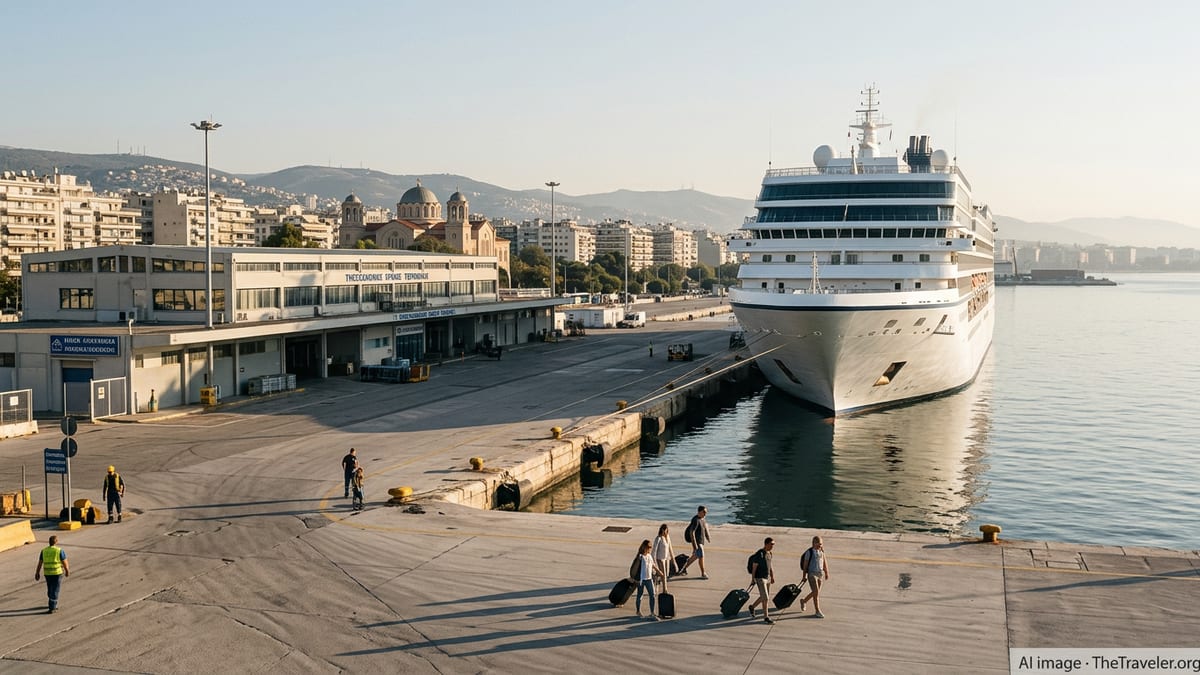
Thessaloniki Port Authority has entered a new strategic collaboration with cruise destination specialist Five Senses Consulting, aiming to accelerate cruise tourism growth, attract more homeporting operations and channel greater visitor spending into the city’s economy.
Get the latest news straight to your inbox!
A Strategic Move in Greece’s Fast-Growing Cruise Market
The partnership aligns Thessaloniki with a consulting firm that has built a strong track record in cruise destination development across Greece and internationally. Publicly available information shows that Five Senses Consulting works with more than 60 ports and destinations worldwide, supporting them in designing cruise strategies, improving guest experience and strengthening their position with global cruise lines.
Industry coverage indicates that the consultancy has played a role in several Greek ports that have seen their cruise presence grow in recent years, including Kavala, Lixouri and a range of Aegean and Ionian destinations. Thessaloniki is now positioning itself within this network, seeking to turn rising regional interest in Greek itineraries into stable, long-term traffic.
The move comes as Greece continues to consolidate its role as a core Mediterranean cruise destination. Reports on Greek cruise performance highlight that a significant share of national cruise traffic already flows through ports supported by Five Senses Consulting, suggesting that Thessaloniki’s decision is designed to plug into a tested model for attracting calls and optimizing the overall product.
By formalizing cooperation with a cruise-focused specialist rather than a general tourism agency, Thessaloniki Port Authority is signaling that it views cruise as a dedicated business line that requires its own strategy, data and commercial outreach.
Building Thessaloniki as a Competitive Homeport
A central objective of the collaboration is to strengthen Thessaloniki’s role as a homeport, where cruises start and end rather than serving only as a transit call. Homeporting is widely regarded in the industry as the segment that delivers the greatest local economic impact, due to extended hotel stays, transfers, provisioning and technical services that accompany turnarounds.
Publicly available information on Five Senses Consulting shows that its work typically includes assessing port infrastructure, vessel handling capacity, passenger flows and connectivity with airports and land transport. For Thessaloniki, this is expected to translate into a clearer roadmap on how to host more turnaround operations, especially for medium-sized and premium ships focused on Eastern Mediterranean itineraries.
Thessaloniki’s location gives it access to multiple routing options, linking Adriatic, Aegean and Black Sea-oriented cruises when geopolitical conditions allow. The cooperation is therefore likely to explore how the port can serve as an embarkation point not only for classic Greek island routes, but also for itineraries that highlight Northern Greece, the Balkans and cross-border cultural circuits.
Reports on cruise deployment trends point to continued interest in diversified Greek products beyond the most heavily visited islands. Thessaloniki’s urban character, year-round connectivity and large hinterland may allow it to present itself as a flexible homeport, able to support both peak summer schedules and shoulder-season itineraries.
Translating Cruise Calls into Local Economic Impact
Beyond traffic growth, a key theme of the partnership is how to transform cruise activity into tangible benefits for the local community. According to published coverage of Five Senses Consulting’s projects in other destinations, the company places emphasis on designing shore experiences, guest circulation patterns and stakeholder coordination in ways that spread spending more evenly and mitigate congestion.
For Thessaloniki, this focus is expected to encompass collaboration with municipal tourism bodies, local businesses and cultural venues to ensure that cruise visitors are encouraged to explore beyond the immediate port area. The city’s historic waterfront, Byzantine monuments, gastronomy and commercial districts provide multiple touchpoints where passenger spending can support small and medium-sized enterprises.
Industry analyses of homeporting underline that passengers embarking or disembarking at a port are more likely to use local hotels, restaurants and transport before and after their cruise. If the Thessaloniki–Five Senses plan succeeds in capturing even a modest increase in pre- and post-cruise stays, the impact for the city’s hospitality sector could be significant, especially during shoulder seasons when demand traditionally softens.
Public information on similar Greek collaborations also highlights efforts to integrate cruise planning with broader destination management, from signage and information services to digital tools that guide visitors. Thessaloniki could adopt comparable measures to encourage dispersal into neighborhoods and thematic routes, enhancing both visitor satisfaction and revenue distribution.
Leveraging Data, Strategy and International Networks
The cooperation is expected to draw heavily on data-driven planning. According to articles profiling Five Senses Consulting’s work, the firm typically combines traffic statistics, fleet deployment trends and cruise line feedback to recommend capacity targets and product positioning for each port. Applying this methodology in Thessaloniki would give the port authority a clearer view of realistic growth scenarios rather than relying solely on headline call numbers.
Thessaloniki’s cruise strategy is likely to differentiate between volume-driven growth and higher-value segments, such as luxury and expedition ships that seek authentic urban and regional experiences. Publicly available material on the consultancy’s recent projects suggests an emphasis on aligning the scale of cruise development with the character and capabilities of each destination, an approach that may resonate with Thessaloniki’s dual identity as both a working port and a cultural city.
In parallel, the collaboration gives Thessaloniki structured access to international cruise networks through industry events, trade forums and direct engagement with itinerary planners. Reports on Greek participation in major cruise conferences indicate that specialized advisors often play a bridging role, presenting destinations, arranging meetings and communicating new port developments to cruise executives.
By aligning its messaging and technical proposals with sector expectations, Thessaloniki Port Authority aims to present itself as a reliable, well-prepared partner capable of handling increased cruise volumes without compromising service quality or city life.
Positioning Northern Greece on the Mediterranean Cruise Map
While much of Greece’s cruise narrative has traditionally centered on the southern Aegean and well-known island hubs, Thessaloniki’s latest move reflects a broader effort to bring Northern Greece more firmly onto the Mediterranean cruise map. Reports indicate that regional tourism stakeholders have been seeking to connect coastal and inland destinations through more integrated itineraries that showcase culture, nature and gastronomy.
The new partnership can be seen as part of this trend, with Thessaloniki acting as a gateway to nearby archaeological sites, wine regions, religious heritage locations and mountainous landscapes. Structured cruise development may encourage more tour products that extend into Central and Western Macedonia, spreading the benefits of visitor flows over a wider area.
As cruise lines continue to look for distinctive ports that complement the busiest Mediterranean hubs, Thessaloniki’s combination of modern port infrastructure, historic urban fabric and diversified hinterland could prove attractive. The collaboration with Five Senses Consulting is intended to convert these attributes into a coherent, market-ready cruise proposition.
Over the coming seasons, observers across the Greek tourism sector will be watching how Thessaloniki’s cruise figures evolve and to what extent increased homeporting and higher-quality calls translate into measurable gains for local businesses, employment and public revenues.